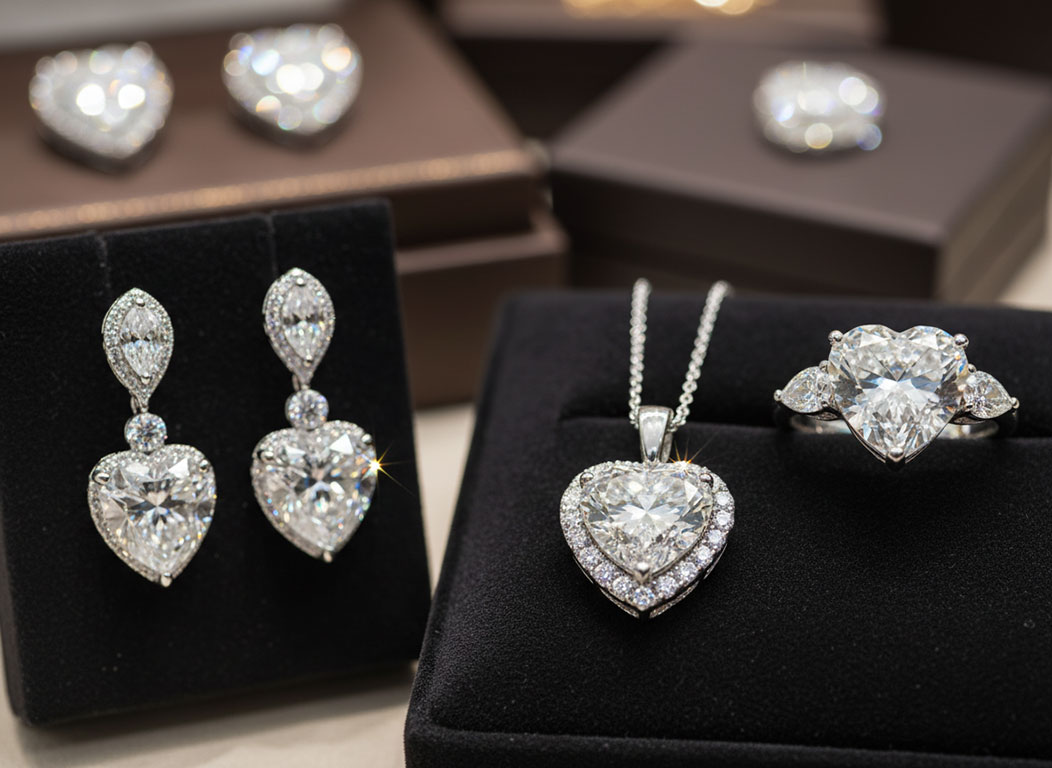
The heart shaped diamond is the ultimate symbol of love in diamond form. A modified brilliant cut, the heart shape requires exceptional skill from the diamond cutter to achieve perfect symmetry and a well-defined cleft. While it represents a small percentage of the overall market, it holds deep sentimental value for romantics and makes a truly unique engagement ring choice.
Getting the Shape Right
The heart shape is one of the most difficult shapes to cut well. A beautiful heart diamond requires:
- Defined cleft: The V-shaped notch at the top should be clearly visible and distinct
- Symmetrical lobes: Both rounded halves should be mirror images in size and shape
- Clean point: The bottom point should be sharp and centered
- Even wings: The curved sides should flow smoothly from lobes to point
Because the shape is so specific, you should always view a heart diamond before purchasing. Small asymmetries that might be acceptable in other shapes are very noticeable in a heart.
Ideal Proportions
| Parameter | Ideal Range |
|---|
| Length-to-Width Ratio | 0.90 – 1.10 |
| Table % | 56% – 62% |
| Depth % | 56% – 62% |
Size Matters for Hearts
The heart shape is best appreciated in larger sizes — generally 1 carat and above. Below 0.75 carats, the distinctive heart silhouette becomes difficult to discern, and the stone may just look like a slightly odd round or pear. If you want a clearly recognizable heart shape, aim for 1 carat or larger.
Best Settings
Heart diamonds look best in settings that showcase their unique shape — prong settings with a V-tip prong protecting the point are ideal. Three-prong and five-prong settings are both popular. Bezel settings can also work but may obscure the distinctive cleft at the top.