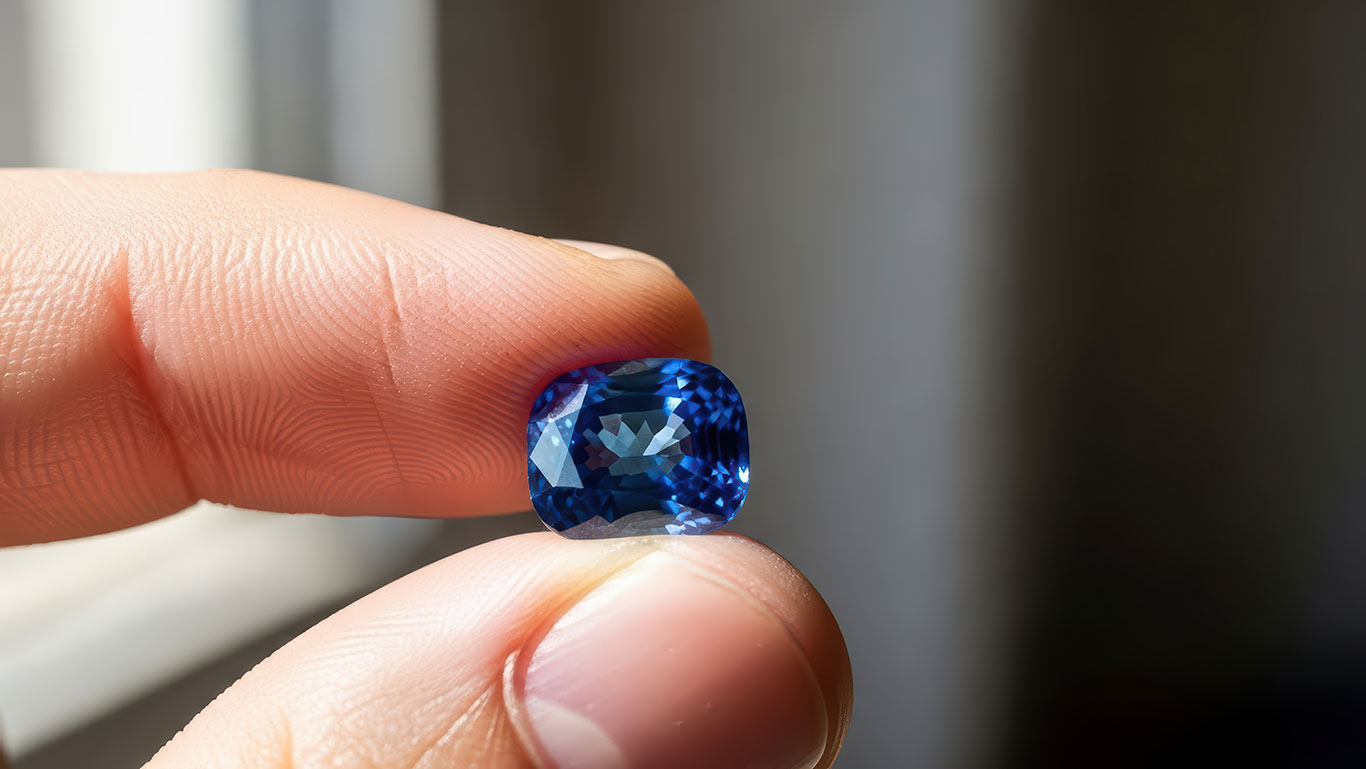
Sapphire
| Property | Details |
|---|
| Mineral | Corundum |
| Mohs Hardness | 9 |
| Refractive Index | 1.762 – 1.770 |
| Birthstone | September |
| Anniversary | 5th & 45th |
| Major Sources | Sri Lanka, Myanmar, Madagascar, Tanzania, Kashmir, Montana |
| Treatments | Heat treatment (standard, widely accepted) |
Overview
Sapphire is the blue variety of corundum, though this versatile gemstone actually comes in every color except red (which is ruby). Blue sapphires range from pale sky blue to deep, velvety midnight blue, with the most valued shade being a rich, medium-dark blue with strong saturation. Kashmir sapphires, with their legendary cornflower blue color and velvety appearance, are considered the finest ever found and command the highest prices at auction.
History & Lore
Ancient Persians believed the earth rested on a giant sapphire, and its reflection colored the sky blue. During the Middle Ages, clergy wore sapphires to symbolize heaven and attract divine blessings. Kings wore sapphires as protection from harm and envy. The most famous modern sapphire is the 12-carat blue Ceylon sapphire engagement ring that belonged to Princess Diana and is now worn by Catherine, Princess of Wales, sparking renewed global interest in sapphire engagement rings.
Color & Varieties
While blue is the classic sapphire color, fancy sapphires in pink, yellow, orange (padparadscha), green, and purple offer stunning alternatives. Padparadscha sapphires, with their delicate pink-orange hue reminiscent of a lotus blossom, are among the rarest and most valuable fancy sapphires. Star sapphires display a six-rayed star effect called asterism. Color-change sapphires shift between blue in daylight and violet-purple under incandescent light. The finest blue sapphires show a pure blue hue with strong saturation and no visible color zoning.
Quality & Value Factors
Color is the dominant value factor. Kashmir sapphires command the highest prices due to their legendary cornflower blue and velvety appearance caused by microscopic inclusions. Sri Lankan (Ceylon) sapphires are prized for their bright, lively blue. Burmese sapphires display a rich, royal blue. Clarity is important but secondary to color—a sapphire with slight inclusions but exceptional color will always be worth more than a clean stone with mediocre color. Cut quality affects color presentation, and carat weight increases value significantly above 5 carats.
Treatments
Heat treatment is extremely common for sapphires and is widely accepted in the industry. It permanently improves color saturation and clarity. Unheated sapphires of fine color command a significant premium. Some sapphires are treated with beryllium diffusion to create or improve certain colors, which must be disclosed.
Care & Cleaning
Sapphire ranks 9 on the Mohs hardness scale, making it one of the best gemstones for everyday rings and all types of jewelry. It can be safely cleaned with warm soapy water, ultrasonic cleaners, or steam cleaners. Sapphire is an excellent choice for engagement rings that will withstand decades of daily wear.
Shop Sapphire Jewelry
Browse our collection of blue sapphire jewelry and pink sapphire jewelry including rings, earrings, pendants, and bracelets set in gold and platinum.
Frequently Asked Questions
What is a Kashmir sapphire?
Kashmir sapphires come from mines in the Zanskar range of the Himalayas that were active primarily from 1881 to 1887. They display a legendary cornflower blue color with a unique velvety appearance caused by microscopic rutile inclusions that scatter light within the stone. Because the mines are essentially depleted, Kashmir sapphires are extraordinarily rare and command the highest prices of any sapphire, regularly exceeding $200,000 per carat at auction for fine examples.
What is a padparadscha sapphire?
Padparadscha is a rare fancy sapphire with a delicate pink-orange color reminiscent of a lotus blossom. The name comes from the Sinhalese word for lotus flower. Authentic padparadscha sapphires must display both pink and orange hues simultaneously, and the most prized stones show a balanced blend of both colors. They are among the rarest and most valuable fancy sapphires, primarily found in Sri Lanka, Madagascar, and Tanzania.
Are sapphires good for engagement rings?
Sapphires are one of the best gemstones for engagement rings. At 9 on the Mohs scale, they are second only to diamond in hardness and extremely resistant to scratching. They have no cleavage concerns and excellent toughness. The popularity of sapphire engagement rings has surged since Princess Diana received her iconic blue Ceylon sapphire ring, now worn by Catherine, Princess of Wales.
What is the difference between natural and heated sapphire?
Natural (unheated) sapphires have not undergone any heat treatment to improve their color or clarity, while heated sapphires have been subjected to high temperatures to permanently enhance their appearance. Both are genuine, natural sapphires from the earth. Heat treatment is standard, permanent, and widely accepted. However, unheated sapphires of fine color are significantly rarer and typically command a premium of 20% to 50% or more over comparable heated stones.
Do sapphires come in colors other than blue?
Yes, sapphires occur in virtually every color except red (which is classified as ruby). Fancy sapphires include pink, yellow, orange, green, purple, and colorless varieties. Some sapphires display color-change properties, shifting between blue in daylight and violet-purple under incandescent light. Star sapphires show a six-rayed star effect. Each fancy color has its own grading standards and value considerations.
Specialty & Collector Gemstones