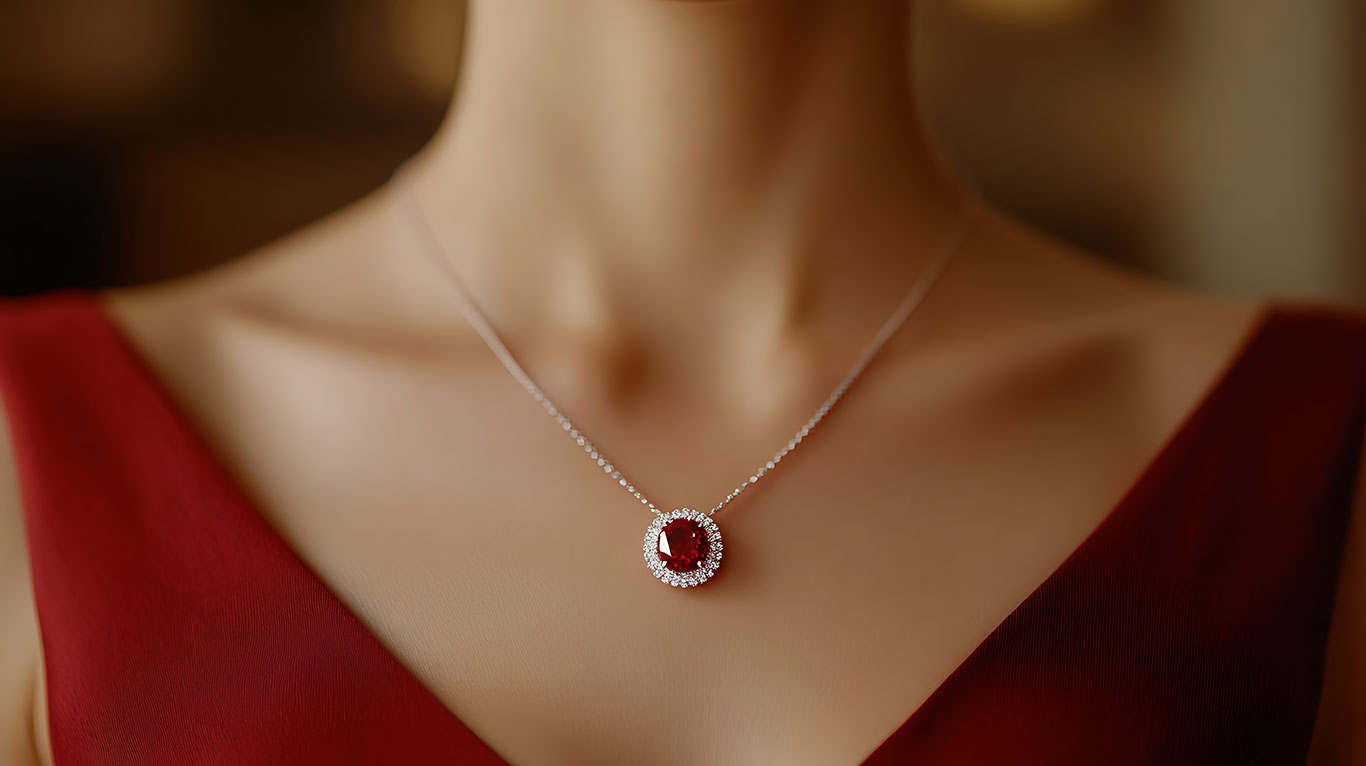
Ruby, the birthstone for July, is often called the king of gemstones. This fiery red gem has captivated humanity for centuries with its intense color and exceptional brilliance. Rubies are said to guarantee health, wisdom, wealth, and success in love, making them a powerful symbol of passion and vitality. Among all colored gemstones, ruby consistently commands the highest per-carat prices at auction.
History and Origin
The word ruby comes from the Latin rubeus, meaning red. In ancient Sanskrit, ruby was called ratnaraj, meaning king of precious stones. Rubies have been prized throughout history by rulers and warriors, who believed the stone granted invincibility in battle. Ancient Hindus offered rubies to the god Krishna in the hope of being reborn as emperors. The legendary rubies of Myanmar, formerly Burma, have set the standard for quality for centuries. The Mogok Valley, known as the Valley of Rubies, has produced some of the finest specimens ever discovered.
In medieval Europe, rubies were associated with the sun and believed to be the most powerful talisman of all gemstones. Kings embedded rubies in their crowns, armor, and swords. The Black Prince's Ruby, a famous stone set in the British Imperial State Crown, was long believed to be a ruby but is actually a large spinel, illustrating how coveted the name "ruby" has been throughout history. Modern sources of fine ruby include Mozambique, Madagascar, and Tanzania, all of which produce exceptional stones.
Symbolism and Meaning
Ruby symbolizes love, passion, courage, and protection. In medieval Europe, rubies were believed to guarantee health, wealth, wisdom, and success in love. The deep red color has long been associated with the life force of blood, and many cultures believed rubies held the power of life itself. Warriors in Burma implanted rubies into their skin before battle, believing the stones made them invincible. Today, ruby remains one of the most emotionally significant colored gemstones, making it an ideal gift for those born in July.
Ruby is the traditional gemstone for the 15th and 40th wedding anniversaries. Its bold red color makes it a powerful symbol of romantic love, and ruby engagement rings have surged in popularity among couples seeking an alternative to traditional diamond. Ruby's combination of beauty, durability, and deep symbolism make it one of the most meaningful gems you can give.
Colors and Varieties
Ruby is a variety of the mineral corundum, the same species as sapphire. What distinguishes ruby from sapphire is its red color, caused by the presence of chromium. The most prized color is a vivid, medium-dark red with a slight purplish hue, known in the trade as pigeon blood red. If the stone is too light or leans too heavily toward pink, it may be classified as a pink sapphire rather than a ruby. Rubies can also display a phenomenon called asterism, where a six-pointed star appears to float across the surface of a cabochon-cut stone, creating the prized star ruby.
The boundary between ruby and pink sapphire is not always clear-cut and can differ between gemological laboratories. Generally, the stone must display sufficient color saturation and a dominant red hue to be classified as ruby. Burmese rubies are traditionally prized for their pure red fluorescence, while Mozambican rubies are celebrated for their slightly purplish red tones and excellent transparency.
Durability and Care
Ruby ranks 9 on the Mohs hardness scale, making it the second hardest natural gemstone after diamond. This exceptional hardness makes ruby an excellent choice for everyday jewelry, including engagement rings and pendants. Heat treatment is the most common enhancement for rubies and is widely accepted in the gem trade to improve color and clarity. Rubies can be safely cleaned with warm soapy water or an ultrasonic cleaner. For more care advice, visit our jewelry care guide.
The finest rubies come from Myanmar, Mozambique, Madagascar, and Sri Lanka. Whether set in a classic solitaire ring or a vintage-inspired pendant, a ruby is a bold and meaningful July birthday gift that speaks of deep love and lasting strength.
Shopping Tips
When shopping for ruby, color is paramount. The most desirable rubies display a vivid, saturated red with medium to medium-dark tone and strong fluorescence. Avoid stones that are too dark, as they can appear almost black, or too light, which may technically be classified as pink sapphire. A slight purple or blue secondary hue is normal and can actually enhance the stone's beauty.
Ruby is one of the most commonly treated gemstones, so always ask about treatments. Heat treatment is standard and acceptable, but glass-filled or composite rubies are significantly less valuable. Look for transparency from a trusted seller who discloses all treatments. Because fine ruby is among the most expensive colored gemstones per carat, consider prioritizing a vivid color in a smaller stone over a larger stone with lesser color. Explore our gemstone rings, earrings, and pendants to find the perfect ruby piece.
Frequently Asked Questions
What is pigeon blood ruby?
Pigeon blood is a trade term for the most prized ruby color: a vivid, saturated red with a slight purplish or bluish undertone and strong red fluorescence. The term originated in Myanmar (Burma), where the finest rubies from the Mogok Valley have historically displayed this color. Pigeon blood rubies command the highest per-carat prices of any colored gemstone.
Are rubies more expensive than diamonds?
Per carat, fine-quality rubies can actually exceed diamond prices, especially at larger sizes. A top-quality Burmese ruby over 5 carats can sell for more per carat than a comparable colorless diamond. However, commercial-quality rubies are more affordable. The price depends heavily on color, clarity, treatment, and origin.
What is the difference between ruby and pink sapphire?
Ruby and pink sapphire are both varieties of the mineral corundum. The distinction is based on color saturation: stones with sufficient red color intensity are classified as rubies, while lighter, pinker stones are classified as pink sapphires. The exact boundary can vary between gemological laboratories, making this one of the most debated topics in gemology.
How durable are rubies?
Rubies are extremely durable, ranking 9 on the Mohs hardness scale, second only to diamond. They are highly resistant to scratching and chipping, making them excellent choices for rings, bracelets, and any jewelry worn daily. Ruby is one of the toughest gemstones available and will maintain its beauty for generations with basic care.
What is a star ruby?
A star ruby is a ruby that displays asterism, a star-shaped pattern of light that appears to glide across the surface of a cabochon-cut stone. The star is caused by needle-like inclusions of the mineral rutile arranged in three intersecting directions. The finest star rubies show a sharp, well-centered six-rayed star over a vivid red body color.
Explore Other Birthstones