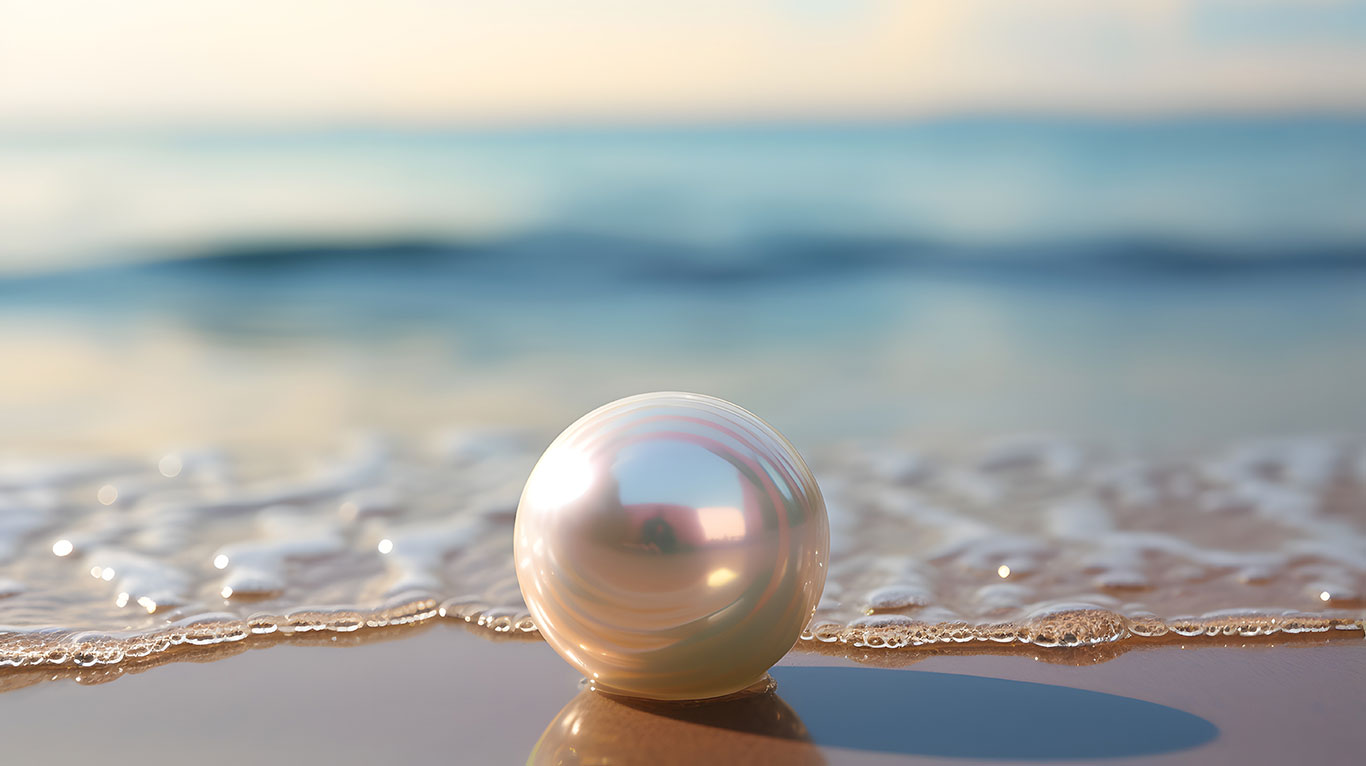
Pearl, the birthstone for June, is one of nature's most elegant and timeless treasures. Unlike all other gemstones, pearls are created by living organisms, requiring no cutting or polishing to reveal their natural beauty. For thousands of years, pearls have symbolized purity, innocence, and wisdom gained through experience, making them a fitting choice for the month that marks the beginning of summer.
History and Origin
Pearls have been used as adornments for centuries, valued by virtually every culture in the world. They were one of the favorite gem materials of the Roman Empire, where Julius Caesar passed a law limiting pearl wearing to the ruling classes. In Tudor England, the 1500s were known as the Pearl Age, as the gemstone adorned clothing, hair, crowns, and jewelry of the elite. The modern pearl industry changed forever in 1893, when Kokichi Mikimoto of Japan successfully created the first cultured pearl by manually introducing an irritant into an oyster, prompting it to form a pearl around the nucleus.
Before Mikimoto's breakthrough, natural pearls were among the rarest and most expensive gems in the world, found only by chance in wild oysters. The development of pearl culturing techniques in Japan, and later in China, Australia, and French Polynesia, made pearls widely available for the first time in history. Today, the cultured pearl industry produces millions of pearls annually, offering a stunning range of sizes, colors, and qualities to suit every taste and budget.
Symbolism and Meaning
Across cultures, pearls symbolize purity, loyalty, and integrity. In ancient Greek mythology, pearls were believed to be the tears of joy shed by Aphrodite, the goddess of love. In Chinese culture, pearls represent wisdom and are said to form inside the heads of dragons. Many traditions hold that pearls bring good fortune to brides and are considered ideal wedding jewelry. As a June birthstone, pearl represents honesty and a calm spirit.
Pearls are also the traditional gift for 3rd and 30th wedding anniversaries. Their organic origin and gentle luster make them a symbol of understated elegance. In many societies, a strand of pearls is considered a rite of passage, given to young women to mark important milestones. Pearls pair effortlessly with both formal and casual attire, making them perhaps the most versatile gem in any jewelry collection.
Colors and Varieties
Pearls come in a stunning range of types and colors. Akoya pearls, primarily from Japan and China, are the classic white or cream-colored round pearls. South Sea pearls from Australia, Indonesia, and the Philippines are among the largest and most valuable, available in white, silver, and golden hues. Tahitian pearls, cultivated in French Polynesia, are prized for their exotic dark colors, from charcoal gray to peacock green and deep black. Freshwater pearls, mainly from China, are the most abundant and affordable, offering a wide variety of shapes and colors including white, pink, lavender, and peach.
When evaluating pearl quality, key factors include luster (the sharpness and intensity of the surface reflection), surface quality (fewer blemishes is better), shape (round is most valued), size, and nacre thickness. Understanding these factors is essential when comparing pearls from different sources and price ranges.
Durability and Care
Pearls are relatively soft, ranking just 2.5 to 4.5 on the Mohs hardness scale. They require gentle care to maintain their luster. The rule for pearls is last on, first off, meaning they should be put on after applying cosmetics, perfume, and hairspray, and removed first at the end of the day. Pearls should be wiped with a soft damp cloth after wearing and stored separately from other jewelry to prevent scratching. Have pearl strands restrung periodically to prevent breakage. For detailed advice, visit our jewelry care guide.
Whether you choose a strand of classic white Akoya pearls or a dramatic Tahitian pearl pendant, pearls remain one of the most beloved and versatile gemstones for June birthdays and every occasion.
Shopping Tips
When shopping for pearls, luster is the single most important quality factor. A pearl with high luster will show sharp, mirror-like reflections on its surface, while low-luster pearls appear chalky or dull. After luster, consider surface quality, shape, and size. Perfectly round pearls command the highest prices, but baroque (irregular) shapes can be strikingly beautiful and offer excellent value.
For classic pearl earrings or a single pearl pendant, Akoya pearls deliver exceptional luster and the iconic round shape. For larger, more dramatic pieces, South Sea or Tahitian pearls make a stunning statement. Freshwater pearls are the most affordable option and come in a wonderful variety of shapes and pastel colors. When purchasing a pearl strand, ensure the pearls are well-matched for size, color, and luster. Always buy from a reputable jeweler who can describe the pearl type, origin, and any treatments applied.
Frequently Asked Questions
What is the difference between cultured and natural pearls?
Natural pearls form spontaneously when an irritant enters a wild oyster or mollusk, while cultured pearls are created by deliberately implanting a nucleus into a farmed oyster. Both are real pearls made of nacre. Natural pearls are extremely rare and expensive. Virtually all pearls sold today are cultured, and they are available in a wide range of qualities and prices.
How do I care for pearl jewelry?
Pearls require gentle care. Apply cosmetics, perfume, and hairspray before putting on pearls. Wipe them with a soft, damp cloth after each wearing to remove oils and residue. Store pearls in a soft pouch separate from other jewelry to prevent scratching. Avoid exposing pearls to chemicals, vinegar, or chlorinated water. Have strands restrung annually if worn frequently.
What types of pearls are there?
The main pearl types are Akoya (classic white round pearls from Japan and China), South Sea (large, lustrous pearls from Australia, Indonesia, and the Philippines in white, silver, and gold), Tahitian (exotic dark pearls from French Polynesia), and Freshwater (abundant, affordable pearls from China in a variety of shapes and colors).
Are freshwater pearls valuable?
Freshwater pearls can be quite valuable, particularly high-quality specimens with exceptional luster, round shape, and large size. However, most freshwater pearls are more affordable than saltwater varieties like Akoya, South Sea, or Tahitian pearls. Top-grade freshwater pearls, sometimes called Edison pearls, can rival Akoya pearls in luster and beauty.
Can pearls be worn every day?
Pearls can be worn daily with proper care, but they are softer than most gemstones and more vulnerable to scratching and chemical damage. Pearl earrings and pendants are the safest choices for everyday wear. Pearl rings should be removed during activities like dishwashing, gardening, or exercising. With gentle handling, pearls will maintain their beauty for generations.
Explore Other Birthstones