South Sea Pearls
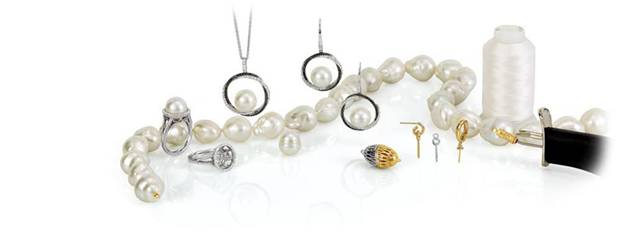
South Sea pearls are the largest, rarest, and most valuable cultured pearls in the world. Produced by the Pinctada Maxima oyster in the warm waters of the South Pacific, these pearls are prized for their extraordinary size, satiny luster, and thick nacre that gives them a glow unlike any other pearl variety. If you are looking for a pearl that commands attention and holds its beauty for generations, the South Sea pearl is the pinnacle of the pearl world.
History and Origins
From the 1800s onward, Australia was the primary source of natural South Sea pearls, and Australian pearl divers became legendary for the risks they took harvesting the wild Pinctada Maxima. By the mid-20th century, Australian pearl farmers successfully pioneered cultured South Sea pearl production, coaxing the sensitive oyster into yielding pearls of remarkable size and quality in controlled farm environments.
Today, South Sea cultured pearls are farmed in Australia, Indonesia, Myanmar, and the Philippines. However, the characteristics and quality vary significantly by region. Australian waters and oyster stocks are generally credited with producing the largest and finest pearls, including extremely rare red-gold specimens that are among the most sought-after pearls on earth. Indonesia and Myanmar produce mainly white to golden tones, while the Philippines are known for deep golden South Sea pearls.
Size and Color
South Sea cultured pearls typically range from 10.0 to 15.0 mm in diameter, though exceptional specimens can reach 20.0 mm or even larger. This makes them significantly bigger than Akoya pearls (2–9 mm) and comparable in size to the largest Tahitian pearls. The size alone sets them apart, but it is the color range that truly distinguishes South Sea pearls.
South Sea pearls come in three primary color families: white, with overtones of pink, silver, or cream; silver, with cool, luminous overtones; and golden, ranging from light champagne to deep, saturated gold. Golden South Sea pearls are especially prized in Asian markets and have become increasingly popular worldwide. The overtone—the subtle secondary color that floats across the pearl's surface—adds depth and dimension that photographs struggle to capture. You truly have to see a fine South Sea pearl in person to appreciate the way light moves through its nacre.
What Makes South Sea Pearls So Valuable
Several factors combine to make South Sea pearls the most expensive pearl variety. The Pinctada Maxima oyster is rare and will not survive outside the narrow band of its natural tropical environment, making cultivation extremely difficult and geographically limited. Farms are located in remote coastal regions, and the labor involved in tending these oysters is intensive. Each Pinctada Maxima can grow only one pearl at a time—unlike freshwater mussels, which can produce dozens simultaneously.
Good quality South Sea pearls typically require two years to grow. Larger, more valuable specimens may take four to six years. Not every oyster produces a gem-quality pearl, and the Australian government strictly enforces production quotas to protect wild oyster stocks. All of these constraints keep supply limited and prices high.
The defining quality factor is nacre thickness. South Sea pearls have the thickest nacre of any cultured pearl, typically at least 3.0 mm and often exceeding 6.0 mm. This thick nacre produces the deep, satiny luster—sometimes described as a soft inner glow rather than a sharp mirror reflection—that is the hallmark of fine South Sea pearls. That luster is permanent and will last for generations with proper care.
Evaluating South Sea Pearl Quality
Luster is the single most important quality factor. The finest South Sea pearls display a deep, warm glow with sharp light reflections on the surface. Pearls with dull or chalky luster are significantly less valuable regardless of size. Surface quality matters too—all natural pearls have some surface characteristics, but fewer and smaller blemishes indicate higher quality. Shape affects value as well: perfectly round South Sea pearls are the rarest and most expensive, followed by near-round, oval, drop, and baroque shapes. However, well-formed baroque South Sea pearls with exceptional luster can be strikingly beautiful and represent excellent value.
All of USA Jewels pearl strands feature exceptional natural luster and arrive with a guarantee that the color and luster are natural, not enhanced by artificial means. The meticulous matching required to create an extraordinary South Sea pearl strand can take years, as each pearl must be paired with others of matching size, color, luster, and surface quality.
South Sea Pearl Jewelry and Care
South Sea pearls make stunning statement necklaces, dramatic pendant drops, and elegant earrings. Their large size means even a single South Sea pearl on a simple chain creates a bold, sophisticated look. For strands, USA Jewels offers both uniform and graduated options to maximize choice.
To care for South Sea pearls, wipe them with a soft, damp cloth after each wearing to remove body oils and residue. Store them in a soft pouch away from other jewelry that could scratch the nacre. Avoid exposing pearls to perfume, hairspray, cosmetics, and household chemicals. Have pearl strands restrung periodically—the silk thread weakens over time, and professional restringing with knots between each pearl protects your investment. With proper care, the thick nacre of South Sea pearls ensures they will maintain their luster for a lifetime.