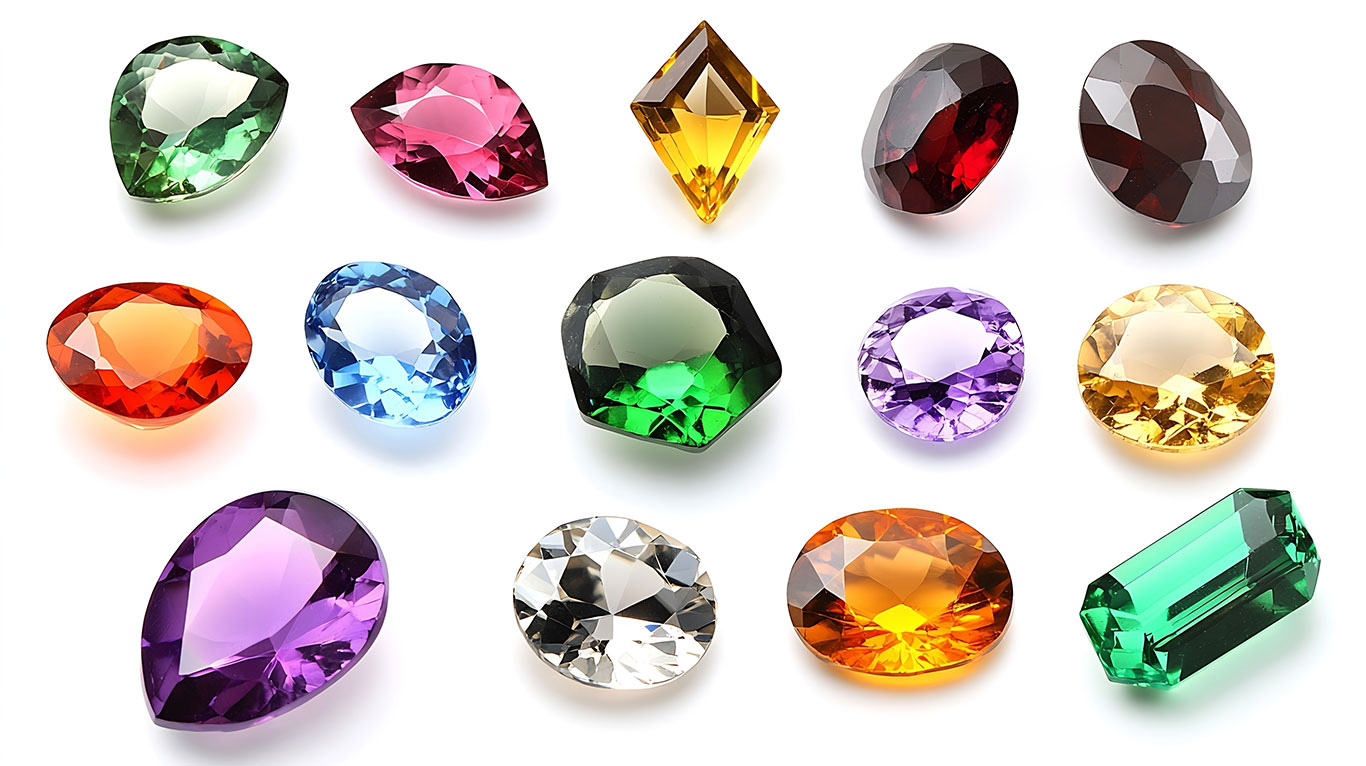
Gemstone Basics
Gemstones are naturally occurring minerals, rocks, or organic materials that have been cut and polished for use in jewelry. Each gemstone has its own unique combination of color, hardness, brilliance, and rarity that determines its beauty and value. When set in fine jewelry—whether a pair of earrings, an engagement ring, or a tennis bracelet—a gemstone's true character comes alive. The interplay of a colored gemstone with diamonds and a quality metal setting can create something genuinely extraordinary.
Throughout history, gemstones have carried deep personal meaning. They symbolize milestones, mark celebrations, and serve as tokens of love and achievement. Each month of the year is associated with a specific birthstone, and certain gemstones are traditionally given for wedding anniversaries. Beyond symbolism, gemstones are prized simply for their beauty—there is a gemstone to match every personality, style, and budget.
Gemstones are divided into two traditional categories: precious gemstones (diamond, ruby, sapphire, and emerald) and semi-precious gemstones (everything else). While this classification is historical and somewhat outdated—a fine tanzanite or alexandrite can exceed many rubies in value—the terminology remains common in the jewelry trade. Below are the main factors used when evaluating any gemstone.
Gemstone Color
Color is the single most important factor in determining a colored gemstone's value. A gemstone's color is evaluated by three characteristics: hue (the actual color, such as red, blue, or green), tone (how light or dark the color is), and saturation (how vivid or intense the color is). The most valuable gemstones typically display a vivid, strongly saturated color in a medium to medium-dark tone. A stone that is too light appears washed out, while one that is too dark can look black and lifeless.
Many gemstones are routinely treated to improve their color. Heat treatment is the most common and widely accepted enhancement, used on sapphires, rubies, tanzanite, aquamarine, and many other stones to deepen or improve their color. These treatments are permanent and considered standard practice in the gem trade. USA Jewels discloses all known treatments so you can make an informed purchase.
Gemstone Clarity
Clarity refers to the presence or absence of internal characteristics (inclusions) and surface blemishes in a gemstone. Unlike diamonds, which have a standardized clarity grading scale, colored gemstones are evaluated more flexibly. Some gemstones are expected to have visible inclusions—emeralds, for example, almost always contain inclusions known as jardin, and their presence is accepted and even considered part of the stone's character. Other gemstones, such as aquamarine and topaz, are expected to be eye-clean.
The general rule: a gemstone should be as clean as possible for its type. Eye-clean stones (no inclusions visible without magnification) are the most desirable for jewelry.
Gemstone Cut
A well-cut gemstone does three things: it reflects light evenly across the surface, it displays symmetrical proportions, and it shows a high-quality polish. Unlike diamonds, where cut grading is highly standardized, gemstone cutting is more of an art. Cutters must balance maximum color display, light return, and weight retention from the rough crystal. Popular gemstone shapes include oval, round, cushion, emerald cut (step cut), pear, and marquise. The best cut for a particular gemstone depends on the stone's natural crystal shape, color distribution, and intended setting.
Gemstone Size and Carat Weight
Gemstones are measured by carat weight (one carat equals 0.2 grams), but because different gemstones have different densities, two stones of the same carat weight can appear quite different in size. A one-carat sapphire, for example, will appear smaller than a one-carat emerald because sapphire is denser. For this reason, gemstone dimensions in millimeters are just as important as carat weight when selecting a stone for a particular setting.
Gemstone Hardness
The Mohs hardness scale rates a mineral's resistance to scratching on a scale of 1 (talc) to 10 (diamond). Hardness matters for jewelry because softer gemstones are more prone to scratching and require more careful handling. Gemstones rated 7 and above are generally considered suitable for rings and everyday wear. Stones rated below 7—such as opal, pearl, and turquoise—are better suited for earrings, pendants, and brooches where they are less exposed to abrasion.
Explore Individual Gemstones
Click on any gemstone below to read our complete buying guide with history, quality factors, care instructions, and shopping tips.
Precious Gemstones
Popular Gemstones
Specialty & Collector Gemstones
Choosing the Right Gemstone
With dozens of gemstone varieties available, choosing the right one comes down to personal preference, intended use, and budget. For engagement rings and jewelry worn daily, prioritize gemstones with a Mohs hardness of 7 or above—sapphire, ruby, spinel, topaz, and tourmaline are excellent choices alongside diamond. For earrings, pendants, and occasion wear, softer stones like tanzanite, opal, moonstone, and pearl can be enjoyed without concern about everyday abrasion.
Color is personal. Choose a gemstone whose color speaks to you rather than following trends. The finest gemstone for your jewelry is the one that makes you stop and look twice. Visit our birthstone guide for more detailed information on stones associated with each month of the year, or browse our pearl buyers guide for everything you need to know about pearl jewelry.