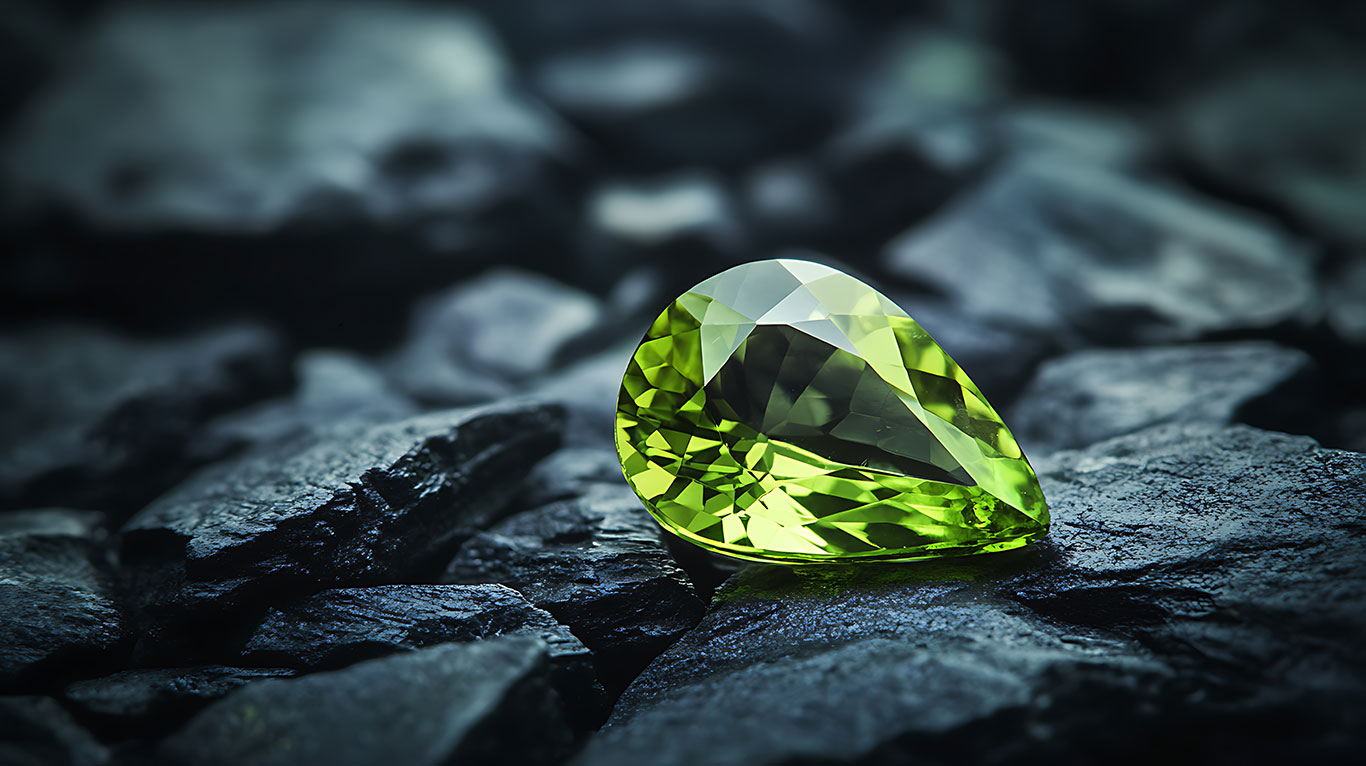
Peridot
| Property | Details |
|---|
| Mineral | Olivine |
| Mohs Hardness | 6.5 – 7 |
| Refractive Index | 1.654 – 1.690 |
| Birthstone | August |
| Anniversary | 16th |
| Major Sources | Arizona (USA), Pakistan, Myanmar, China |
| Treatments | Rarely treated |
Overview
Peridot is the gem variety of the mineral olivine, displaying a distinctive olive to lime green color that is one of the few gemstone colors caused by the stone's basic chemical composition rather than trace impurities. This means peridot only comes in green—the shade varies from yellowish-green to a rich, pure green depending on iron content.
History & Lore
Peridot is one of only two gemstones (along with diamond) found in meteorites, and it forms deep in the earth's mantle, brought to the surface by volcanic activity. Ancient Egyptians called it the gem of the sun. Cleopatra's famous emerald collection is now believed to have actually been peridot. The volcanic island of Zabargad in the Red Sea was the primary source for thousands of years. Today, the San Carlos Apache Reservation in Arizona is a major source.
Quality & Value Factors
The most desirable color is a rich, lime green without brown or yellow overtones. Larger stones display more vivid green. Clarity should be eye-clean. Peridot is one of the few gemstones that is rarely treated—the color is entirely natural. Pakistani peridot from the Kashmir region produces some of the finest, most saturated stones available today.
Care & Cleaning
Peridot ranks 6.5 to 7 on the Mohs scale. While suitable for most jewelry, it should be worn with care in rings. Peridot is sensitive to acids and should never be cleaned with acidic solutions. Warm soapy water and a soft brush are the safest cleaning method. Avoid ultrasonic and steam cleaners.
Frequently Asked Questions
Is peridot found in meteorites?
Yes, peridot is one of only two gemstones (along with diamond) that have been found in meteorites. Pallasitic meteorites contain olivine crystals (the mineral that produces peridot) embedded in an iron-nickel matrix. While most meteoritic peridot is too small or fractured for gem use, faceted extraterrestrial peridot specimens do exist and are highly prized by collectors. The vast majority of gem peridot, however, comes from terrestrial volcanic sources.
Why does peridot only come in green?
Unlike most colored gemstones, where the color comes from trace impurities, peridot's green color is caused by iron that is a fundamental part of its chemical composition (magnesium iron silicate). Because the color-causing element is integral to the mineral itself rather than an impurity, peridot always appears green. The shade varies from yellowish-green to a pure, rich green depending on the ratio of iron to magnesium.
Where does the best peridot come from?
The finest peridot comes from Pakistan's Kashmir region and Myanmar, where stones display a rich, saturated green with minimal yellowish or brownish tints. Arizona (San Carlos Apache Reservation) is a major commercial source producing good-quality material in smaller sizes. Historically, the volcanic island of Zabargad (St. John's Island) in the Red Sea produced legendary peridot for thousands of years. Chinese peridot is widely available but tends to be lighter in color.
Is peridot durable enough for everyday jewelry?
Peridot ranks 6.5 to 7 on the Mohs hardness scale, making it moderately durable. It is suitable for earrings, pendants, and brooches worn daily, and it can work in rings with protective settings. However, peridot is softer than sapphire, ruby, and diamond, so rings should be removed during heavy physical activities. Peridot is also sensitive to acids, so avoid contact with household chemicals and acidic foods.
What is the difference between peridot and emerald?
Peridot and emerald are different minerals with different properties. Peridot is olivine (Mohs 6.5-7) with a warm, yellowish-green to lime green color. Emerald is beryl (Mohs 7.5-8) with a cooler, bluish-green color. Emeralds are typically included and treated with oil, while peridot is usually eye-clean and untreated. Emerald is significantly rarer and more expensive. Both are beautiful green gemstones, but they differ considerably in color tone, durability, and price.
Specialty & Collector Gemstones