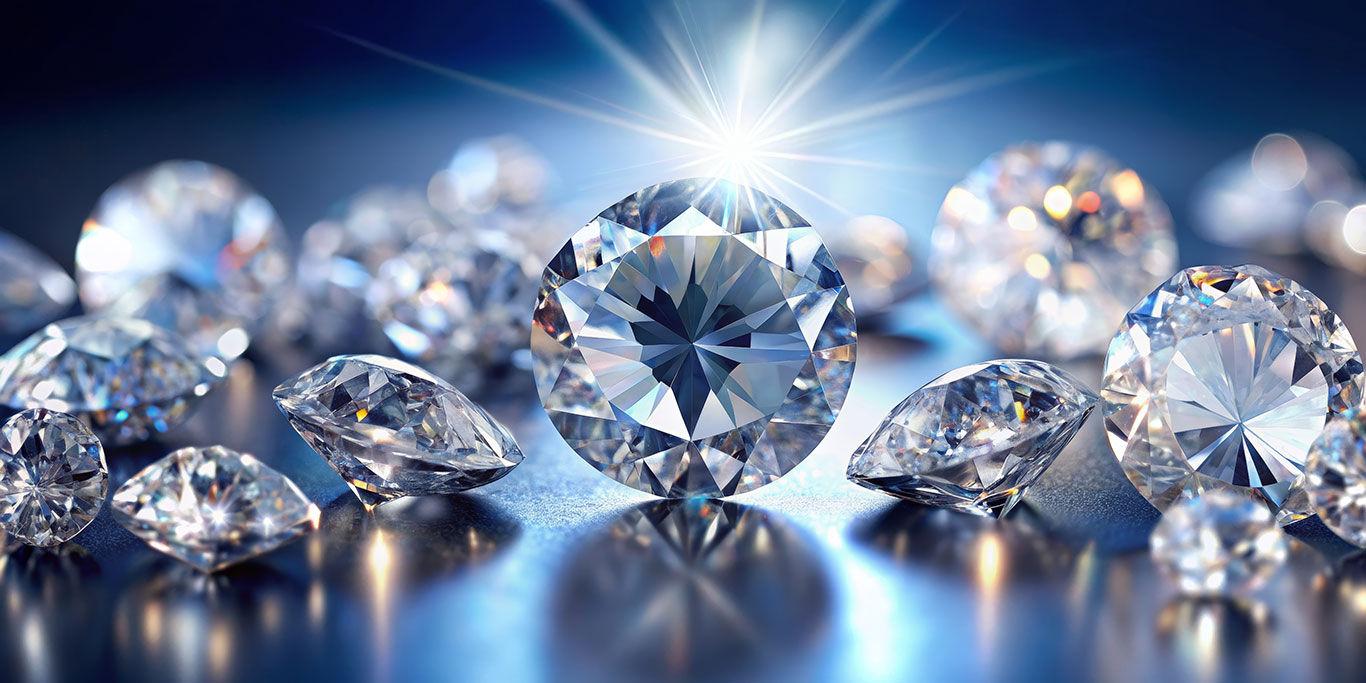
When shopping for an engagement ring or fine jewelry, you will likely encounter moissanite as an alternative to diamond. Moissanite has become the most popular diamond alternative on the market, and for good reason — it is genuinely beautiful, extremely durable, and costs a fraction of a diamond. But it is not a diamond, and the differences matter depending on what you value most.
This guide provides a thorough, honest comparison of moissanite and diamond so you can make a confident, informed decision.
What Is Moissanite?
Moissanite was first discovered in 1893 by French chemist Henri Moissan in a meteor crater in Arizona. He initially thought he had found diamonds, but later identified the crystals as silicon carbide (SiC) — a completely different chemical compound. Natural moissanite is extraordinarily rare, so virtually all moissanite sold in jewelry today is lab-created.
Modern moissanite is grown in laboratories using controlled processes that produce gem-quality crystals with excellent optical properties. The leading producer, Charles & Colvard, introduced moissanite as a jewelry gemstone in 1998. Since then, manufacturing has improved dramatically, resulting in stones with better color, fewer inclusions, and more diamond-like appearance than earlier generations.
What Is a Diamond?
A diamond is crystallized pure carbon — the hardest natural substance known, rating 10 on the Mohs hardness scale. Natural diamonds formed over one to three billion years deep within the Earth's mantle under extreme heat and pressure. Lab-grown diamonds are created in weeks using HPHT or CVD technology but are chemically identical to natural diamonds.
For this comparison, both natural and lab-grown diamonds are considered together since they share the same physical, chemical, and optical properties. Where price comparisons are relevant, we distinguish between natural and lab-grown diamond pricing.
Side-by-Side Comparison
| Property |
Diamond |
Moissanite |
| Composition | Pure carbon (C) | Silicon carbide (SiC) |
| Hardness (Mohs) | 10 | 9.25 |
| Refractive Index | 2.42 | 2.65 |
| Fire (Dispersion) | 0.044 | 0.104 |
| Brilliance | High | Higher (more rainbow flashes) |
| Price (1ct equivalent) | $800 – $8,000 | $200 – $600 |
| Resale Value | Moderate to good | Very limited |
| Certification | GIA, AGS, IGI | GRA (limited grading) |
| Origin | Natural or lab-grown | Lab-created only |
| Passes Diamond Tester? | Yes | Often yes (thermal testers) |
Brilliance and Fire: The Visual Difference
This is where moissanite and diamond differ most noticeably, and it is the factor that most people will see with their own eyes.
Diamonds have a balanced combination of white light brilliance and colored light fire. When light enters a diamond, it reflects and refracts in a way that produces a classic sparkle — primarily white flashes with subtle rainbow colors. This is the familiar "diamond sparkle" that most people associate with fine jewelry.
Moissanite has a higher refractive index (2.65 vs 2.42) and more than double the dispersion (0.104 vs 0.044) of diamond. In practice, this means moissanite produces significantly more colorful rainbow flashes — sometimes described as a "disco ball" effect, especially in direct sunlight or under bright lighting. Some people love this extra fire. Others find it looks less natural or less elegant than diamond sparkle.
In smaller stones (under 0.5 carats), the visual difference between moissanite and diamond is very subtle. As stone size increases, the difference becomes more noticeable. A 2-carat moissanite will show noticeably more rainbow fire than a 2-carat diamond.
Hardness and Durability
Diamond is the hardest known natural material, scoring a perfect 10 on the Mohs hardness scale. Moissanite scores 9.25, making it the second hardest gemstone used in jewelry. For practical purposes, both stones are extremely scratch-resistant and suitable for everyday wear, including engagement rings.
To put this in perspective, sapphire — widely considered an excellent choice for daily-wear jewelry — scores 9 on the Mohs scale. Moissanite is harder than sapphire, so durability concerns should not be a deciding factor between moissanite and diamond. Both will maintain their polish and brilliance over a lifetime of wear.
Moissanite also has excellent toughness (resistance to chipping and breaking), comparable to diamond. Neither stone will cloud, fade, or change color over time.
Color Comparison
Early moissanite (pre-2015) often had a noticeable yellow or green tint, which was one of its biggest drawbacks. Modern moissanite has improved dramatically. Today's premium moissanite — often marketed as "colorless" or "DEF" color — is genuinely near-colorless and closely matches diamonds in the D-F color range.
That said, moissanite can still show a slight warm or grayish tint in certain lighting conditions, particularly in larger stones. This is not a flaw in the stone — it is a characteristic of silicon carbide's optical properties. Most people will not notice this in normal viewing conditions, but side-by-side with a high-color diamond under controlled lighting, a trained eye can sometimes spot the difference.
Price Comparison
Price is where moissanite shines brightest (pun intended). The savings are dramatic:
| Size |
Natural Diamond |
Lab Diamond |
Moissanite |
| 0.5ct equiv. | $1,500 – $3,000 | $400 – $700 | $100 – $250 |
| 1.0ct equiv. | $5,000 – $8,000 | $800 – $1,500 | $250 – $500 |
| 1.5ct equiv. | $8,000 – $15,000 | $1,200 – $2,500 | $350 – $600 |
| 2.0ct equiv. | $15,000 – $30,000 | $2,000 – $4,000 | $400 – $700 |
Prices are approximate for round brilliant stones with good to excellent quality. Diamond prices assume VS2 clarity, G color, Excellent cut.
Moissanite costs roughly 90 percent less than a comparable natural diamond and 50 to 70 percent less than a lab-grown diamond. This means a budget of $5,000 could get you a 1-carat natural diamond, a 2-carat lab-grown diamond, or an enormous 3+ carat moissanite stone. For couples where maximizing visual impact for the budget is the top priority, moissanite offers extraordinary value.
Resale Value
Natural diamonds retain roughly 30 to 50 percent of their retail value on the secondary market. Lab-grown diamonds have limited but declining resale value. Moissanite has essentially no meaningful resale market — its low production cost and unlimited supply mean pre-owned moissanite has very little monetary value.
If you view jewelry as a purchase to wear and enjoy (rather than an investment), this difference may not matter. But if long-term value retention or heirloom potential is important to you, diamond — particularly natural diamond — is the stronger choice.
Does Moissanite Pass a Diamond Tester?
This is a common question, and the answer depends on the type of tester:
- Thermal conductivity testers (the most common type): Moissanite will often register as "diamond" because moissanite has thermal conductivity similar to diamond. This is why basic diamond testers are unreliable for distinguishing between the two.
- Electrical conductivity testers: These can reliably distinguish moissanite from diamond because moissanite conducts electricity while diamond does not (with rare exceptions for Type IIb blue diamonds).
- Dual testers (measuring both thermal and electrical): These are the most reliable and will correctly identify moissanite every time.
Most reputable jewelers have dual testers and can easily identify moissanite. And of course, any gemological laboratory will identify it immediately.
Can People Tell It Is Moissanite?
In most everyday situations, no one will be able to tell your moissanite is not a diamond just by looking at it. The differences in brilliance and fire are real but subtle to the untrained eye, especially in smaller stones set in jewelry.
However, some factors can make moissanite more identifiable:
- Larger stones (over 1.5 carats) show more obvious rainbow fire that differs from diamond sparkle
- Direct sunlight amplifies moissanite's rainbow flashes compared to diamond's more balanced sparkle
- Side-by-side comparison with a diamond makes the visual difference more apparent
- Jewelers and diamond enthusiasts can often spot the difference, but this is a small percentage of the population
Moissanite vs Lab-Grown Diamond: Which Is the Better Alternative?
If budget is your main concern but you still want something diamond-like, both lab-grown diamonds and moissanite are worth considering:
- Lab-grown diamonds are actual diamonds — chemically, physically, and optically identical to natural diamonds. They cost 60 to 85 percent less than natural diamonds. If you want a real diamond at a reduced price, this is the answer.
- Moissanite is not a diamond but is a beautiful gemstone in its own right. It costs 90+ percent less than natural diamonds. If you want maximum visual impact for the lowest price and do not mind that it is a different gemstone, moissanite is an excellent choice.
Which Should You Choose?
Choose diamond if:
- Tradition, symbolism, and the emotional significance of a diamond matter to you
- Resale value and heirloom potential are important considerations
- You prefer the classic, balanced sparkle of a diamond over rainbow fire
- Certification and standardized grading (GIA, IGI) are important to you
- You want a stone that is universally recognized and valued
Choose moissanite if:
- Budget is the primary consideration and you want the most stone for your money
- You love extra sparkle and colorful fire
- You care about appearance and beauty more than origin or tradition
- You do not plan to resell the stone and will enjoy it as a piece of jewelry
- You are comfortable with moissanite as its own gemstone, not as a "fake diamond"
Both moissanite and diamond are beautiful, durable stones that will last a lifetime. The right choice depends entirely on what matters most to you — and there is no wrong answer.
Frequently Asked Questions
Is moissanite a fake diamond?
No. Moissanite is a different gemstone entirely — silicon carbide rather than carbon. It is not a diamond simulant in the same category as cubic zirconia. It is a genuine, naturally occurring mineral (though jewelry-grade moissanite is lab-created) with its own unique properties. Calling it "fake diamond" would be like calling a ruby a "fake sapphire" — they are simply different stones.
Does moissanite get cloudy over time?
No. Moissanite is extremely stable and will not cloud, fade, or change color over time. It will look the same decades from now as it does today. Occasional cleaning to remove oils and dirt is all that is needed to maintain its sparkle.
Can a jeweler tell the difference between moissanite and diamond?
A trained gemologist can usually tell by examining the stone's optical properties, and modern dual-mode testers (thermal + electrical) will identify moissanite immediately. However, casual observation — even by jewelry professionals — may not reveal the difference, especially in smaller stones.
Is moissanite good for an engagement ring?
Yes. Moissanite's 9.25 Mohs hardness makes it extremely durable for daily wear. It will not scratch, chip, or lose its brilliance over time. Many couples choose moissanite engagement rings and are very happy with the choice. The key is to choose moissanite because you genuinely appreciate it, not as a compromise.
Shop Diamonds at USA Jewels
At USA Jewels, we carry both natural and lab-grown diamonds in a wide range of shapes, sizes, and qualities. Whether you choose a diamond for your engagement ring or any other piece of fine jewelry, we are here to help you find the perfect stone. Browse our engagement ring collection or design your own ring with the diamond of your choice.