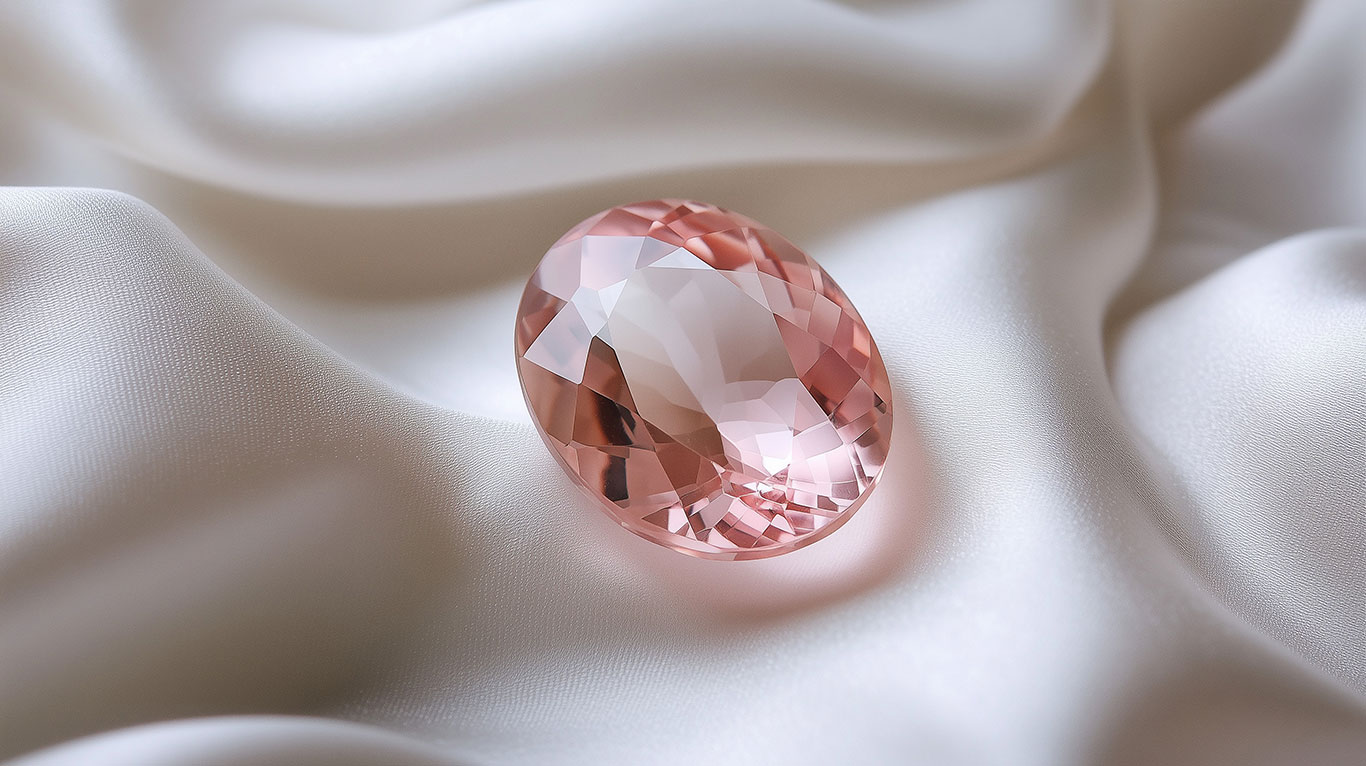
Morganite
| Property | Details |
|---|
| Mineral | Beryl |
| Mohs Hardness | 7.5 – 8 |
| Refractive Index | 1.577 – 1.583 |
| Major Sources | Brazil, Madagascar, Afghanistan, Mozambique |
| Treatments | Heat treatment to improve pink color (standard) |
Overview
Morganite is the pink to peach variety of beryl (a sister stone to emerald and aquamarine), named after the financier and gem collector J.P. Morgan. Its soft, warm color ranges from pastel pink to salmon to a deeper rose, and it has become extremely popular in engagement rings over the past decade, particularly in rose gold settings that complement its warm hue.
Why Morganite Is Popular for Engagement Rings
Morganite's rise in popularity stems from its combination of romantic pink color, excellent durability (7.5–8 Mohs), and affordability relative to pink diamonds and pink sapphires. It is typically found in large, eye-clean crystals, making it accessible for the substantial center stones that modern engagement ring styles favor. The warm pink pairs beautifully with rose gold, creating a cohesive, romantic aesthetic.
Quality & Value Factors
The most valued color is a saturated, pure pink without brownish or orangish overtones. Larger stones display more color intensity. Clarity should be eye-clean, which is standard for beryl. Heat treatment to improve the pink color and remove any yellowish or orangish tints is common, permanent, and widely accepted.
Care & Cleaning
Morganite ranks 7.5 to 8 on the Mohs scale, providing good durability for daily-wear rings. It can be cleaned with warm soapy water or ultrasonic cleaners. An excellent choice for engagement rings and everyday jewelry.
Frequently Asked Questions
Is morganite good for an engagement ring?
Yes, morganite is an excellent choice for an engagement ring. At 7.5 to 8 on the Mohs hardness scale, it is durable enough for daily wear. It has no problematic cleavage and good toughness. Its romantic pink color and affordability compared to pink sapphire and pink diamond make it one of the most popular alternative engagement ring stones. Morganite pairs particularly well with rose gold settings.
What is the difference between morganite and pink sapphire?
Morganite and pink sapphire are different minerals with different properties. Morganite is a pink beryl (Mohs 7.5-8) with a soft, warm pink color that is often pastel in smaller sizes. Pink sapphire is a corundum (Mohs 9) with a more vivid, saturated pink that remains strong even in small stones. Pink sapphire is harder, rarer, and significantly more expensive per carat. Morganite offers a beautiful pink gemstone at a fraction of the cost, with the trade-off of slightly less hardness and less intense color in smaller sizes.
Why does morganite look better in rose gold?
Morganite's warm pink tones harmonize beautifully with the coppery warmth of rose gold, creating a cohesive, romantic color palette. Rose gold also tends to enhance morganite's pink appearance by reflecting warm-toned light through the stone. In contrast, white gold or platinum can make morganite appear more peach or salmon because the cool metal tones highlight the stone's warm secondary hues. Yellow gold also pairs well with morganite for a vintage aesthetic.
Is morganite heat-treated?
Most morganite on the market has been heat-treated to improve its pink color by removing yellowish or orangish tints. This treatment is permanent, stable, and widely accepted in the gem industry. Raw morganite often has a salmon or peach color that heat treatment refines to a purer pink. Heat-treated morganite is not less valuable than untreated material, as this is considered a standard industry practice.
How large can morganite gemstones get?
Morganite naturally occurs in large crystal sizes, which is one reason it is so popular for engagement rings with substantial center stones. Eye-clean morganite gemstones of 5, 10, or even 20 carats are readily available at reasonable prices. This accessibility in large sizes sets morganite apart from rarer pink gemstones like pink sapphire and pink diamond, where large sizes command exponentially higher prices. The larger the morganite, the more saturated its pink color appears.
Specialty & Collector Gemstones