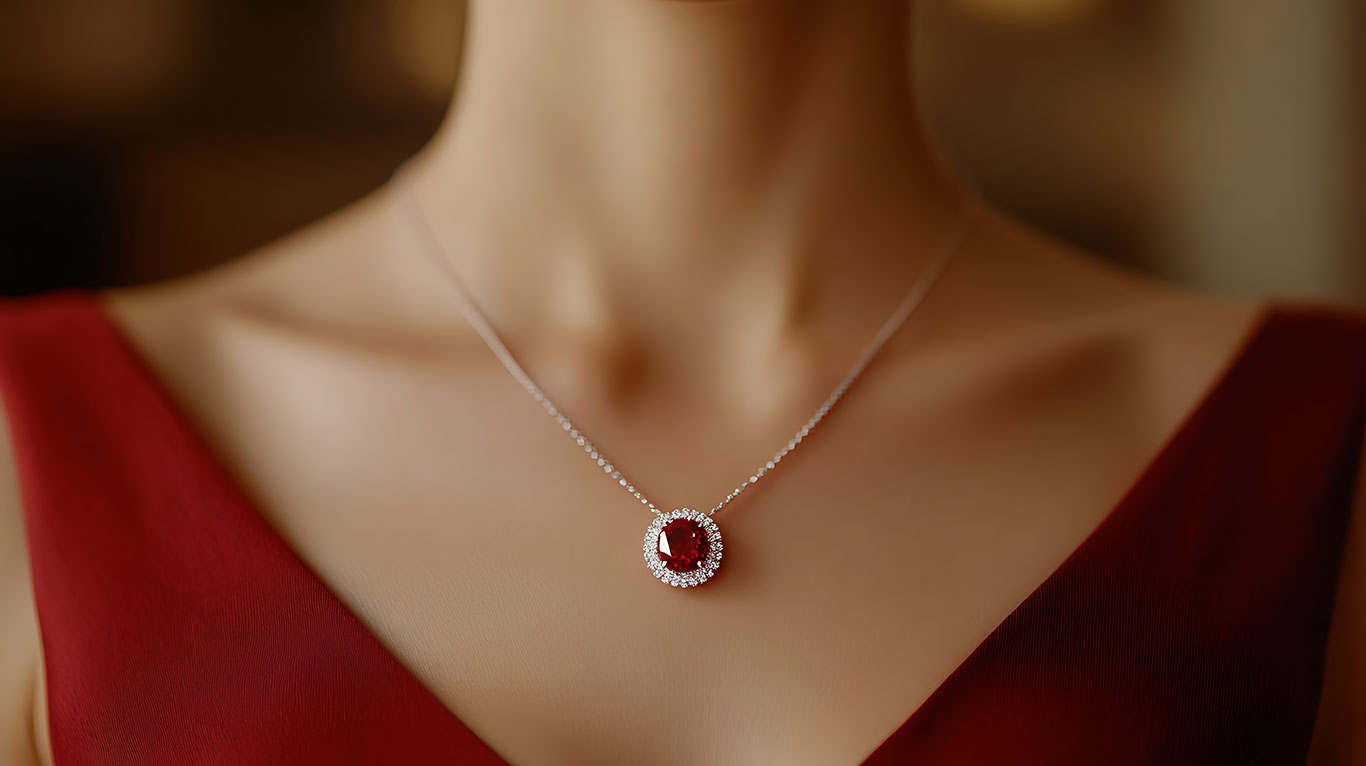
Ruby and diamond are the two most valuable gemstones in the world. Fine rubies, particularly those displaying the coveted "pigeon blood" red, can actually exceed diamonds in per-carat price at the highest quality levels. Both stones are exceptionally durable and steeped in centuries of history and symbolism, making them outstanding choices for important jewelry pieces.
While diamond has dominated the engagement ring market for over a century, ruby has been the gemstone of royalty and passion since ancient times. In Sanskrit, ruby is called ratnaraj — the king of precious stones. If you are choosing between these two legendary gemstones, this comparison will help you understand their differences and find the right stone for your needs.
What Is Ruby?
Ruby is the red variety of the mineral corundum (aluminum oxide), the same mineral that produces sapphire. The vivid red color comes from traces of chromium replacing some of the aluminum atoms in the crystal lattice. Ruby is classified as one of the four precious gemstones alongside diamond, sapphire, and emerald.
The finest rubies come from Myanmar (Burma), particularly the legendary Mogok Valley, known for producing pigeon blood rubies with an intense, slightly purplish red and a natural fluorescence that makes them appear to glow from within. Mozambique has emerged as a major source of high-quality rubies in recent decades. Other notable sources include Madagascar, Sri Lanka, and Tanzania.
Natural rubies of fine quality are genuinely rare, especially in sizes above 2 carats. This rarity is reflected in their pricing: exceptional rubies regularly sell for more per carat than comparable diamonds at auction. Lab-grown rubies exist but represent a small segment of the ruby market compared to the growing lab-grown diamond industry.
Side-by-Side Comparison
| Property |
Diamond |
Ruby |
| Composition | Pure carbon (C) | Aluminum oxide (Al₂O₃) / Corundum |
| Hardness (Mohs) | 10 | 9 |
| Refractive Index | 2.42 | 1.762 – 1.770 |
| Fire (Dispersion) | 0.044 | 0.018 |
| Color Range | Colorless to light yellow/brown | Red to pinkish-red |
| Price (1ct) | $5,000 – $8,000 (natural) | $1,000 – $15,000 |
| Birthstone | April | July |
| Resale Value | Moderate to good (natural); Limited (lab) | Good (precious gemstone) |
| Common Treatments | Laser drilling, fracture filling (uncommon) | Heat treatment (standard) |
| Best For | Engagement rings, all jewelry, heirloom | Statement rings, heirloom pieces |
Color Comparison
Color is the defining feature that separates ruby from diamond in the most fundamental way. Ruby is celebrated for its intense, passionate red — a color that no other gemstone displays with quite the same saturation and fire. The most prized shade is "pigeon blood" red: a vivid, medium-dark red with a slight purplish or bluish secondary hue that seems to radiate from within the stone.
Diamonds, in contrast, are traditionally valued for being colorless. The less body color a white diamond shows, the more valuable it is (in the D–Z range). Red diamonds do exist as fancy-colored diamonds, but they are astronomically rare — there are fewer than 30 known true red diamonds in the world, and they sell for millions per carat.
This makes ruby the clear choice if you want bold, vivid color in your jewelry. A fine ruby delivers an intensity of red that is unmatched in the gemstone world. The chromium that creates ruby's red also causes natural fluorescence in many stones, giving Burmese rubies their characteristic internal glow under natural light.
Hardness and Durability
Ruby shares the same exceptional hardness as sapphire, scoring 9 on the Mohs scale — just one step below diamond at 10. This makes ruby one of the most durable gemstones available and perfectly suited for jewelry that will be worn daily, including engagement rings.
In terms of toughness (resistance to chipping and breaking), ruby is actually rated as excellent and comparable to diamond. Ruby has no cleavage planes, meaning there are no inherent structural weaknesses that would make it prone to splitting. Warriors in ancient Myanmar implanted rubies under their skin before battle, believing the stones would protect them — a testament to the stone's perceived and actual toughness.
For all practical jewelry purposes, the durability difference between ruby and diamond is negligible. Both will maintain their polish, resist scratching from everyday wear, and last for generations. Ruby is a significantly more durable option than softer colored gemstones like tanzanite (6–7) or opal (5.5–6.5).
Price Comparison
| Size |
Ruby |
Natural Diamond |
Lab Diamond |
| 0.5 ct | $500 – $3,000 | $1,500 – $3,000 | $400 – $700 |
| 1.0 ct | $1,000 – $15,000 | $5,000 – $8,000 | $800 – $1,500 |
| 1.5 ct | $3,000 – $25,000 | $8,000 – $15,000 | $1,200 – $2,500 |
| 2.0 ct | $6,000 – $50,000 | $15,000 – $30,000 | $2,000 – $4,000 |
Prices are approximate for good to fine quality stones. Diamond prices assume VS2 clarity, G color, Excellent cut.
Ruby pricing is complex and can actually exceed diamond at the highest quality levels. A fine 1-carat Burmese pigeon blood ruby can cost $10,000 to $15,000 or more, while a comparable 1-carat diamond runs $5,000 to $8,000. At auction, exceptional rubies from Myanmar have sold for over $1 million per carat — more than any diamond of similar size.
However, at mid-range quality levels, rubies often cost less than comparable diamonds. A good-quality 1-carat ruby with nice color and acceptable clarity can be found for $1,000 to $3,000, well below natural diamond pricing. The key factor in ruby pricing is color quality: the difference between a mediocre red and pigeon blood can represent a 10x price multiplier.
Origin also significantly affects pricing. Burmese rubies command the highest premiums, followed by Mozambican stones. Unheated rubies of fine color are substantially more valuable than heated stones of comparable appearance, often commanding 2–5x premiums. Lab-grown diamonds at $800–$1,500 per carat are often less expensive than quality natural rubies.
Brilliance and Sparkle
Diamond and ruby produce very different optical effects. Diamond's high refractive index (2.42) and strong dispersion (0.044) create the familiar white brilliance with rainbow fire flashes that diamonds are known for. Ruby, with a lower refractive index (1.762–1.770) and minimal dispersion (0.018), does not produce the same type of sparkle.
Instead, ruby's beauty comes from its rich, saturated body color and a warm, glowing luster. Fine Burmese rubies exhibit a phenomenon called "red fluorescence" — the chromium in the crystal absorbs ultraviolet light and re-emits it as visible red, making the stone appear to glow from within under natural daylight. This fluorescent glow is part of what makes pigeon blood rubies so captivating.
The choice between diamond brilliance and ruby's color intensity is fundamentally a matter of personal taste. If you want icy, flashing sparkle, diamond wins. If you want deep, passionate color with a warm inner glow, ruby delivers something no diamond can replicate. Many fine jewelry collections include both, using each stone where its unique properties shine best.
When to Choose Ruby Over Diamond
Ruby may be the better choice if any of the following resonate with you:
- You want bold, passionate red as the statement element of your jewelry
- You value the prestige of one of the world's rarest and most historically significant precious gemstones
- You want a gemstone that can actually exceed diamond in value at the highest quality levels
- You are looking for a meaningful gift for a July birthday or 15th/40th anniversary
- You want something truly distinctive that stands apart from the traditional diamond
- You appreciate the history and lore of a stone that has been called the "king of gemstones"
When to Choose Diamond Over Ruby
Diamond may be the better choice if any of the following are important to you:
- You want the traditional, universally recognized symbol of engagement and commitment
- Standardized grading systems (GIA, IGI) are important for your confidence in the purchase
- You prefer maximum brilliance, fire, and scintillation over saturated body color
- You want a colorless stone that pairs seamlessly with any metal color or jewelry style
- Budget predictability matters — diamond pricing is more standardized than ruby pricing
- You want to design your own ring using a certified diamond
Can You Use Ruby in an Engagement Ring?
Yes, ruby is an excellent choice for an engagement ring. At 9 on the Mohs hardness scale, it is the equal of sapphire and second only to diamond in scratch resistance. Ruby's toughness is excellent, with no cleavage issues, meaning it can handle decades of daily wear without concern. Fine rubies have been used in royal and high-jewelry engagement rings throughout history.
Ruby engagement rings make a powerful statement of passion and love. The intense red color symbolizes romance in virtually every culture, and a ruby engagement ring is immediately distinctive and memorable. If you want a ring that will turn heads and start conversations, a ruby center stone delivers that impact.
One practical consideration: fine rubies in sizes above 1.5 carats are genuinely rare and can be expensive. You may find that your budget goes further with a smaller, higher-quality ruby than with a larger stone of mediocre color. Browse our gemstone ring collection to see ruby ring options, or explore our engagement ring selection for diamond alternatives.
Our Recommendation
Ruby and diamond represent the pinnacle of the gemstone world. If you want passionate red color, historic prestige, and a gemstone that can rival diamond in rarity and value, ruby is extraordinary. If you want maximum brilliance, universal recognition, and the confidence of standardized grading, diamond remains the classic choice.
For engagement rings, both stones are excellent from a durability standpoint. Your decision should come down to aesthetics and personal meaning. At USA Jewels, we offer both ruby rings and diamond engagement rings in a wide range of styles. Whether you choose the king of gemstones or the king of brilliance, you are choosing a stone that will last forever.
Frequently Asked Questions
Is ruby a good diamond alternative?
Ruby is not just a good alternative to diamond — it is a precious gemstone in its own right that can exceed diamond in value at the highest quality levels. Ruby offers exceptional durability (9 Mohs hardness), stunning red color, and thousands of years of history and symbolism. Many people choose ruby not as a diamond substitute but as a deliberate choice for its unique beauty and significance.
How does ruby compare to diamond in durability?
Ruby scores 9 on the Mohs hardness scale, just one step below diamond at 10. Both stones have excellent toughness with no cleavage issues, making them equally suitable for daily wear including engagement rings. The practical durability difference between ruby and diamond is negligible for jewelry purposes. Both will maintain their polish and beauty for generations.
Can I use ruby for an engagement ring?
Absolutely. Ruby is one of the best gemstones for engagement rings due to its exceptional hardness (9 Mohs), excellent toughness, and stunning beauty. Ruby engagement rings have a long history in royal and fine jewelry. The intense red color symbolizes passion and love, making it a deeply meaningful choice for an engagement ring that will last a lifetime.
Is ruby worth the investment?
Fine natural rubies, particularly unheated Burmese pigeon blood rubies, have historically held and increased in value. Exceptional rubies regularly set auction records, with prices exceeding $1 million per carat. However, like all gemstones, mid-range rubies should be purchased primarily for enjoyment rather than as financial investments. Ruby offers better value retention than most colored gemstones.
How can I tell ruby from diamond?
Ruby and diamond are easily distinguished visually — ruby displays a vivid red body color while diamond is typically colorless with white brilliance and rainbow fire. Under gemological testing, they have completely different refractive indices (ruby 1.76 vs diamond 2.42), different crystal structures, and different thermal/electrical conductivity. A standard diamond tester will easily differentiate the two stones.
Are rubies rarer than diamonds?
Fine-quality rubies are genuinely rarer than fine-quality diamonds, especially in sizes above 2 carats. While diamonds are marketed as rare, the global supply of gem-quality diamonds is relatively large compared to top-quality rubies from prestigious sources like Myanmar. This rarity is reflected in pricing: exceptional rubies can command higher per-carat prices than comparable diamonds at auction.
Gemstone vs Diamond Comparisons