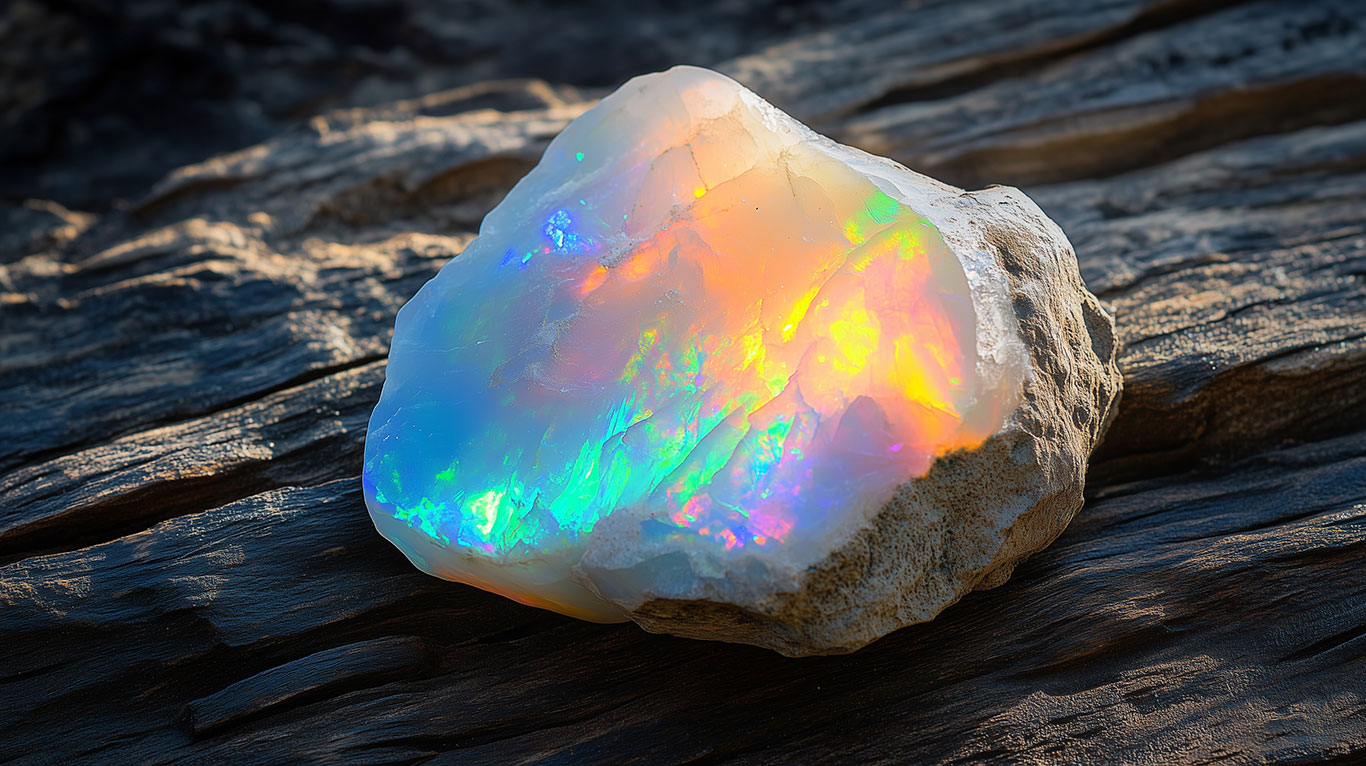
Opal, the birthstone for October, is one of the most visually striking gemstones in the world. Known for its mesmerizing play of color, opal displays a constantly shifting rainbow of hues that has fascinated people for thousands of years. The name derives from the Greek Opallos, meaning to see a change of color, perfectly describing this gem's most captivating quality. No two opals are alike, making each stone a one-of-a-kind masterpiece of nature.
History and Origin
Ancient Romans considered opal the most precious and powerful gemstone because it contained the colors of all other gems. They called it opalus, meaning precious stone. Roman senator Nonius reportedly chose exile rather than sell his prized opal to Marc Antony. In the Middle Ages, opal was called the eye stone and was believed to be beneficial for eyesight. The gemstone unfortunately suffered a period of superstition after Sir Walter Scott's 1829 novel, Anne of Geierstein, in which an opal brought misfortune to its owner. This unfounded superstition faded when Queen Victoria, a great lover of opals, gave opal jewelry as wedding gifts to her daughters.
Australia's involvement with opal began in the 1840s, and the discovery of major deposits at Lightning Ridge, Coober Pedy, and Andamooka in the late 19th and early 20th centuries established Australia as the world's premier opal source. Today, Australia produces approximately 95 percent of the world's precious opal. In recent decades, Ethiopia has emerged as an exciting new source, producing hydrophane opals with vivid play of color.
Symbolism and Meaning
Opal symbolizes creativity, inspiration, and imagination. Many cultures consider opal a stone of hope and purity. In ancient Arabic legends, opals were believed to fall from the sky in flashes of lightning, which gave the stones their fiery play of color. Australian Aboriginal legends tell that the creator came down to earth on a rainbow, and where his foot touched the ground, the stones came alive with color, creating opals. As an October birthstone, opal represents faithfulness and confidence.
Opal is the traditional gemstone for the 14th wedding anniversary. Its ever-changing play of color has made it a symbol of spontaneity, creativity, and artistic expression. In modern metaphysical traditions, opal is believed to stimulate originality and dynamic thinking. Its kaleidoscopic beauty makes it one of the most visually dramatic gemstones available.
Colors and Varieties
Opals display an extraordinary range of varieties and colors. White opals, with their light body color and play of color, are the most common. Black opals, found almost exclusively in Lightning Ridge, Australia, are the most rare and valuable, with their dark body color providing dramatic contrast for the play of color. Fire opals from Mexico display vivid orange, yellow, and red body colors. Boulder opals from Queensland, Australia, form naturally on their ironstone host rock. Crystal opals are transparent to semi-transparent, allowing light to pass through and enhance the play of color.
Ethiopian opals, also known as Welo opals, have gained prominence for their bright play of color and affordability. These hydrophane opals can temporarily absorb water, making their play of color appear more vivid when wet. When evaluating opal quality, the most important factor is the intensity, distribution, and pattern of the play of color, followed by body color, transparency, and overall size.
Durability and Care
Opal ranks 5.5 to 6.5 on the Mohs hardness scale and requires more careful handling than harder gemstones. Because opals contain 5 to 10 percent water, they can crack or craze if exposed to very dry conditions, extreme heat, or sudden temperature changes. Store opals in a cool place and consider placing a damp cloth nearby in very dry climates. Clean opals only with mild soap and room-temperature water. Avoid ultrasonic cleaners, steam cleaners, and all chemicals. For complete care advice, visit our jewelry care guide.
Australia produces approximately 95 percent of the world's precious opal supply, with additional sources in Ethiopia, Mexico, and Brazil. An opal's ever-changing display of color makes it a truly unique and captivating October birthday gift.
Shopping Tips
When shopping for opal, play of color is the most important quality factor. Look for stones that display vivid, broad flashes of color across the full spectrum, especially red, which is the rarest and most valuable play-of-color hue. The pattern of the play of color also matters: harlequin (large, angular patches) and pinfire (small, evenly distributed dots) are among the most prized patterns.
Black opal commands the highest prices due to its dramatic contrast, but white opal and crystal opal offer beautiful play of color at more accessible price points. Ethiopian opal provides excellent value but requires slightly more care due to its hydrophane nature. Opal is best suited for earrings, pendants, and brooches. For opal rings, choose a bezel setting that protects the edges, and remove the ring during activities that might subject it to impacts. Always purchase opal from a knowledgeable jeweler who can accurately describe the opal type, origin, and any treatments.
Frequently Asked Questions
Are opals bad luck?
No. The superstition that opals are unlucky originated from a fictional novel published in 1829 by Sir Walter Scott. Before that book, opals were considered among the luckiest of all gemstones. Queen Victoria actively worked to dispel the myth by wearing opals and giving them as gifts. Opals have been symbols of hope, creativity, and good fortune in most cultures throughout history.
What is play of color in opal?
Play of color is the phenomenon that makes opals unique. It is caused by the diffraction of light through the microscopic silica spheres that make up the opal's internal structure. When these spheres are uniform in size and arrangement, they split white light into spectral colors that shift and dance as the stone is moved. The most valuable opals display vivid play of color across the full spectrum.
How do I care for opal jewelry?
Opals require gentle care because they contain water and are relatively soft (5.5 to 6.5 Mohs). Clean with mild soap and room-temperature water only. Avoid ultrasonic cleaners, steam, chemicals, and extreme temperature changes. Store opals away from heat and very dry conditions. Remove opal rings before manual work. With proper care, opals will maintain their beauty for a lifetime.
What is black opal?
Black opal is the rarest and most valuable variety of opal, characterized by a dark body color (black, dark gray, or dark blue) that provides dramatic contrast for the play of color. The finest black opals come from Lightning Ridge in New South Wales, Australia. A top-quality black opal with vivid red play of color can be worth more per carat than a diamond.
Can opals crack or dry out?
Opals contain 5 to 10 percent water, and they can crack or craze if they lose moisture due to extreme heat, very dry environments, or sudden temperature changes. To prevent this, store opals in a stable environment, avoid prolonged exposure to direct sunlight, and do not leave them near heat sources. Some collectors store opals with a damp cotton ball nearby in very dry climates.
Explore Other Birthstones