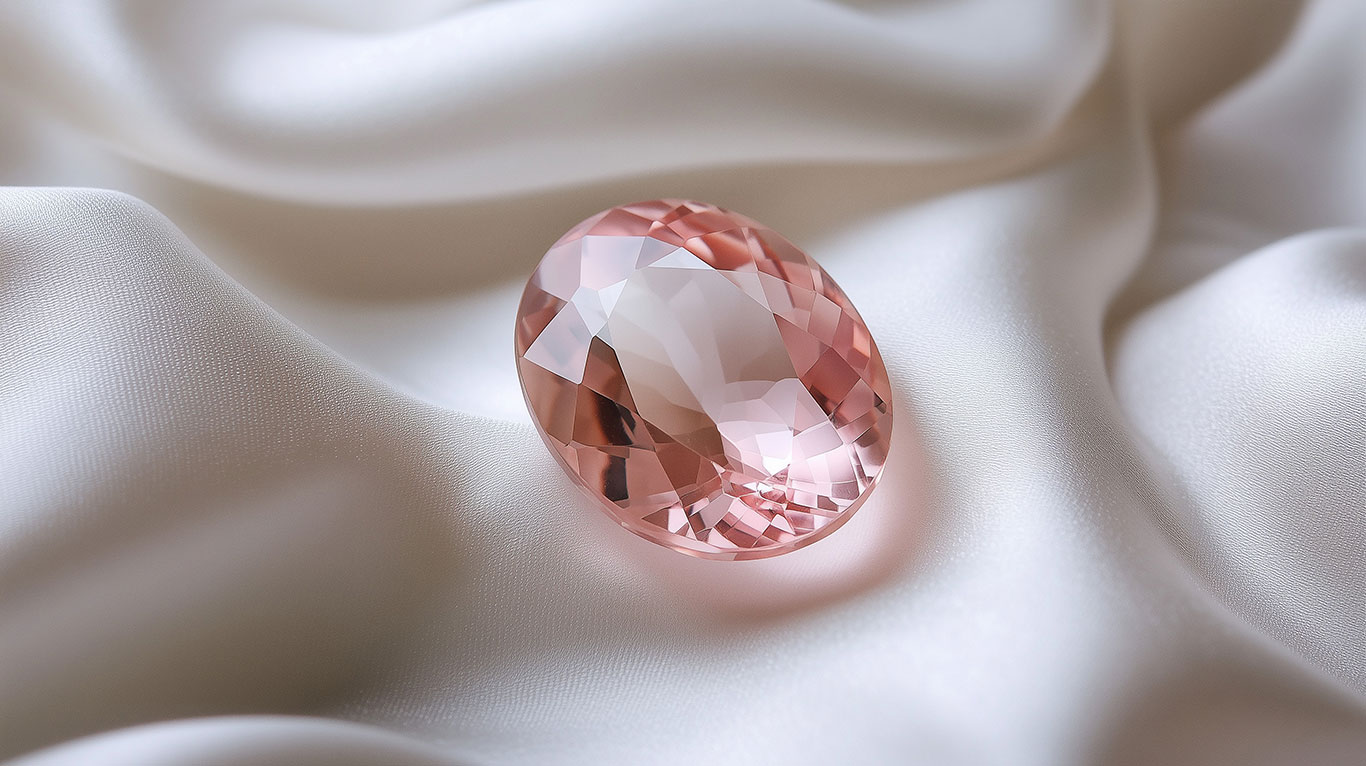
Morganite has become one of the most popular colored gemstone engagement ring options in recent years, thanks to its soft, romantic pink color and exceptional affordability. If you are choosing between a morganite and a diamond for an engagement ring or other fine jewelry, the decision often comes down to budget, aesthetics, and expectations for long-term durability.
This guide provides an honest comparison of morganite and diamond so you can understand the real trade-offs and make a decision you will be happy with for years to come.
What Is Morganite?
Morganite is the pink to peach-pink variety of the mineral beryl — the same mineral family that produces emerald (green beryl) and aquamarine (blue beryl). It was discovered in Madagascar in 1910 and named after financier and gem collector J.P. Morgan by the gemologist George Frederick Kunz of Tiffany & Co.
Morganite gets its delicate pink color from traces of manganese within the crystal structure. The most desirable shade is a pure, medium-saturation pink without brown or orange overtones, though peach and salmon-pink stones are also popular. Most morganite on the market has been heat-treated to reduce any yellowish or orange tones and enhance the pure pink color.
Major sources include Brazil, Madagascar, Afghanistan, Mozambique, and the United States (California and Maine). Morganite is relatively abundant compared to other precious and semi-precious gemstones, which keeps prices accessible. It is available in large sizes at reasonable cost, making it popular for bold, statement-sized engagement rings where a comparable diamond would be cost-prohibitive.
Side-by-Side Comparison
| Property |
Diamond |
Morganite |
| Composition | Pure carbon (C) | Beryllium aluminum silicate (Be₃Al₂Si₆O₁₈) / Beryl |
| Hardness (Mohs) | 10 | 7.5 – 8 |
| Refractive Index | 2.42 | 1.585 – 1.594 |
| Fire (Dispersion) | 0.044 | 0.014 |
| Color Range | Colorless to light yellow/brown | Pink to peach-pink |
| Price (1ct) | $5,000 – $8,000 (natural) | $100 – $500 |
| Birthstone | April | None officially |
| Resale Value | Moderate to good (natural); Limited (lab) | Limited |
| Common Treatments | Laser drilling, fracture filling (uncommon) | Heat treatment (common) |
| Best For | Engagement rings, all jewelry, heirloom | Engagement rings, romantic jewelry |
Color Comparison
Morganite's soft, romantic pink is its primary selling point and the reason most people choose it over diamond. The color ranges from very light pastel pink through medium pink to peach and salmon tones. The most valued shade is a pure, saturated pink without brownish or orangeish overtones, though personal preference varies widely.
Traditional diamonds are valued for being colorless, which creates a completely different aesthetic. Diamond's brilliance is white and icy, while morganite's beauty is warm and romantic. Fancy pink diamonds do exist and can be extraordinarily beautiful, but they are among the rarest and most expensive diamonds — a 1-carat fancy vivid pink diamond can cost $100,000 to $500,000 or more.
Morganite offers pink color at a tiny fraction of fancy pink diamond prices. However, morganite's color saturation is typically lighter and softer than what a fine fancy pink diamond displays. If you want a deeply saturated pink, morganite may appear washed out compared to pink sapphire or pink tourmaline. Morganite's charm is in its gentle, pastel quality rather than bold color intensity.
Hardness and Durability
Morganite shares the same hardness range as its beryl family member emerald: 7.5 to 8 on the Mohs scale. This is lower than diamond (10) and sapphire (9), but still hard enough for jewelry wear including engagement rings with proper care. Common household materials like quartz dust (7 Mohs) can potentially scratch morganite over time, so some caution is warranted.
Unlike emerald, morganite typically has excellent clarity with very few inclusions. This means it does not share emerald's vulnerability to chipping from internal stress points. Morganite has good toughness and no significant cleavage concerns, making it more durable in practice than its Mohs rating alone might suggest.
For daily-wear engagement rings, diamond is the more durable choice. Morganite engagement rings can last beautifully for years, but the stone may develop minor surface scratches over time that dull its polish. These can be repolished by a jeweler, but it is additional maintenance that diamond does not require. If longevity without maintenance is your priority, diamond is the safer choice. If you love the pink color and accept occasional care, morganite works well.
Price Comparison
| Size |
Morganite |
Natural Diamond |
Lab Diamond |
| 0.5 ct | $50 – $150 | $1,500 – $3,000 | $400 – $700 |
| 1.0 ct | $100 – $500 | $5,000 – $8,000 | $800 – $1,500 |
| 1.5 ct | $200 – $800 | $8,000 – $15,000 | $1,200 – $2,500 |
| 2.0 ct | $300 – $1,200 | $15,000 – $30,000 | $2,000 – $4,000 |
Prices are approximate for good to fine quality stones. Diamond prices assume VS2 clarity, G color, Excellent cut.
Price is where morganite shines most dramatically in this comparison. Morganite is one of the most affordable gemstones available in fine jewelry quality. A beautiful 1-carat morganite costs $100 to $500, while a comparable 1-carat natural diamond runs $5,000 to $8,000. That is a 10x to 80x price difference.
This affordability means you can get a much larger stone for your budget with morganite. A 3-carat morganite center stone that makes a dramatic visual statement might cost $300 to $800, while a 3-carat diamond would be $25,000 to $50,000 or more. For couples who want a large, impressive engagement ring on a modest budget, morganite offers exceptional value.
Even lab-grown diamonds at $800–$1,500 per carat are significantly more expensive than morganite. If your primary goal is maximizing visual size for your budget and you love pink, morganite is hard to beat. However, it is worth noting that morganite has essentially no resale value, while diamonds retain some portion of their purchase price.
Brilliance and Sparkle
Diamond and morganite produce distinctly different optical effects. Diamond's high refractive index (2.42) and strong dispersion (0.044) create the classic white brilliance with rainbow fire that diamonds are famous for. This icy, sparkling effect is what most people think of when they picture a gemstone catching the light.
Morganite has a lower refractive index (1.585–1.594) and much less dispersion (0.014), resulting in a softer, more subdued sparkle. Morganite does not produce the intense fire or scintillation of a diamond. Instead, it has a gentle, warm luminosity that complements its pink color — think of it as a warm glow rather than an icy flash.
In smaller sizes (under 1 carat), morganite's lack of fire may make it appear somewhat flat compared to a diamond of the same size. In larger sizes (2+ carats), morganite's body color and warm glow become more prominent and appealing. If you want maximum sparkle, diamond wins. If you want warm, romantic color with a gentle shimmer, morganite delivers a different but appealing beauty.
When to Choose Morganite Over Diamond
Morganite may be the better choice if any of the following resonate with you:
- You love the soft, romantic pink color and want it as the centerpiece of your jewelry
- Budget is a primary consideration and you want the most visual impact for your money
- You want a large center stone (2+ carats) that would be cost-prohibitive in diamond
- You prefer a warm, rosy aesthetic over icy, colorless brilliance
- You view jewelry as something to enjoy rather than as a financial investment
- You are comfortable with a gemstone that may need occasional repolishing over years of daily wear
When to Choose Diamond Over Morganite
Diamond may be the better choice if any of the following are important to you:
- Maximum durability and a maintenance-free stone are top priorities
- You want intense brilliance, fire, and scintillation
- Long-term resale value and heirloom potential matter to you
- You prefer the traditional, universally recognized engagement ring stone
- Standardized grading (cut, color, clarity, carat) are important for confidence in your purchase
- You want the option to design your own ring with a certified stone
Can You Use Morganite in an Engagement Ring?
Yes, and morganite has become one of the most popular non-diamond engagement ring choices. Its romantic pink color, excellent clarity, and affordable price make it appealing for couples who want something beautiful and different. Morganite engagement rings photograph beautifully and make a soft, feminine statement.
The practical considerations are real, however. At 7.5–8 on the Mohs scale, morganite is softer than sapphire or diamond. Over years of daily wear, the surface may develop minor scratches that reduce its polish. This is not catastrophic — a jeweler can repolish the stone — but it is maintenance that diamond and sapphire do not require. Choose a protective setting style and remove the ring during activities that might cause scratches or impacts.
If you want pink but with better durability, consider a pink sapphire engagement ring (9 Mohs hardness) as an alternative. If morganite's specific soft, peachy pink tone is what you love, then embrace it — many couples wear morganite engagement rings happily for years. Browse our gemstone ring collection for options.
Our Recommendation
Morganite and diamond serve very different needs. If you want affordable, romantic pink color in a generous size, morganite is hard to beat. If you want maximum durability, brilliance, and long-term value, diamond is the clear winner. Neither choice is wrong — it depends entirely on what you value most.
For engagement rings, we recommend honestly assessing how important maintenance-free durability is to you. If you are active, hands-on, and want to forget about your ring after putting it on, diamond is the safer choice. If you love morganite's pink glow and are willing to treat it with care, it will reward you with unique beauty at an exceptional price. At USA Jewels, we carry both morganite jewelry and diamond engagement rings to suit every preference.
Frequently Asked Questions
Is morganite a good diamond alternative?
Morganite is an excellent choice if you want a pink gemstone at an affordable price. It offers beautiful color, good clarity, and reasonable durability (7.5–8 Mohs) at a fraction of diamond prices. However, it is softer than diamond and has no resale value, so it is best suited for people who prioritize color and affordability over long-term durability and investment potential.
How does morganite compare to diamond in durability?
Morganite scores 7.5–8 on the Mohs hardness scale, compared to diamond's 10. This means morganite can be scratched by harder materials including quartz dust, sapphire, and diamond. Over years of daily wear, morganite may develop surface scratches that dull its polish. Diamond is significantly more durable and will maintain its polish indefinitely without maintenance.
Can I use morganite for an engagement ring?
Yes. Morganite has become a popular engagement ring choice for its romantic pink color and affordability. At 7.5–8 Mohs hardness, it is durable enough for daily wear with proper care. Choose a protective setting, remove the ring during physical activities, and expect occasional repolishing over the years. Many couples happily wear morganite engagement rings, but if maintenance-free durability is essential, consider diamond or pink sapphire instead.
Does morganite hold its value?
Morganite has very limited resale value. Its relatively low price and abundant supply mean that pre-owned morganite commands very little on the secondary market. If long-term value retention or investment potential is important to you, diamond (particularly natural diamond) is a much better choice. Morganite should be purchased for its beauty and enjoyment, not as a store of value.
How can I tell morganite from diamond?
Morganite and diamond look quite different. Morganite displays a visible pink to peach-pink body color, while diamonds are typically colorless with white brilliance and rainbow fire. Morganite has much less sparkle and fire than diamond. Under gemological testing, their different refractive indices (morganite 1.59 vs diamond 2.42), densities, and thermal conductivities make identification straightforward with standard equipment.
Will morganite get cloudy or change color over time?
Morganite is stable and will not change color, cloud, or fade from light exposure or normal wear. It is a durable member of the beryl family with good chemical stability. The only change you might notice over years of daily ring wear is surface scratching that can dull the polish, but this is a surface issue that can be corrected by repolishing — the stone itself does not degrade.
Gemstone vs Diamond Comparisons