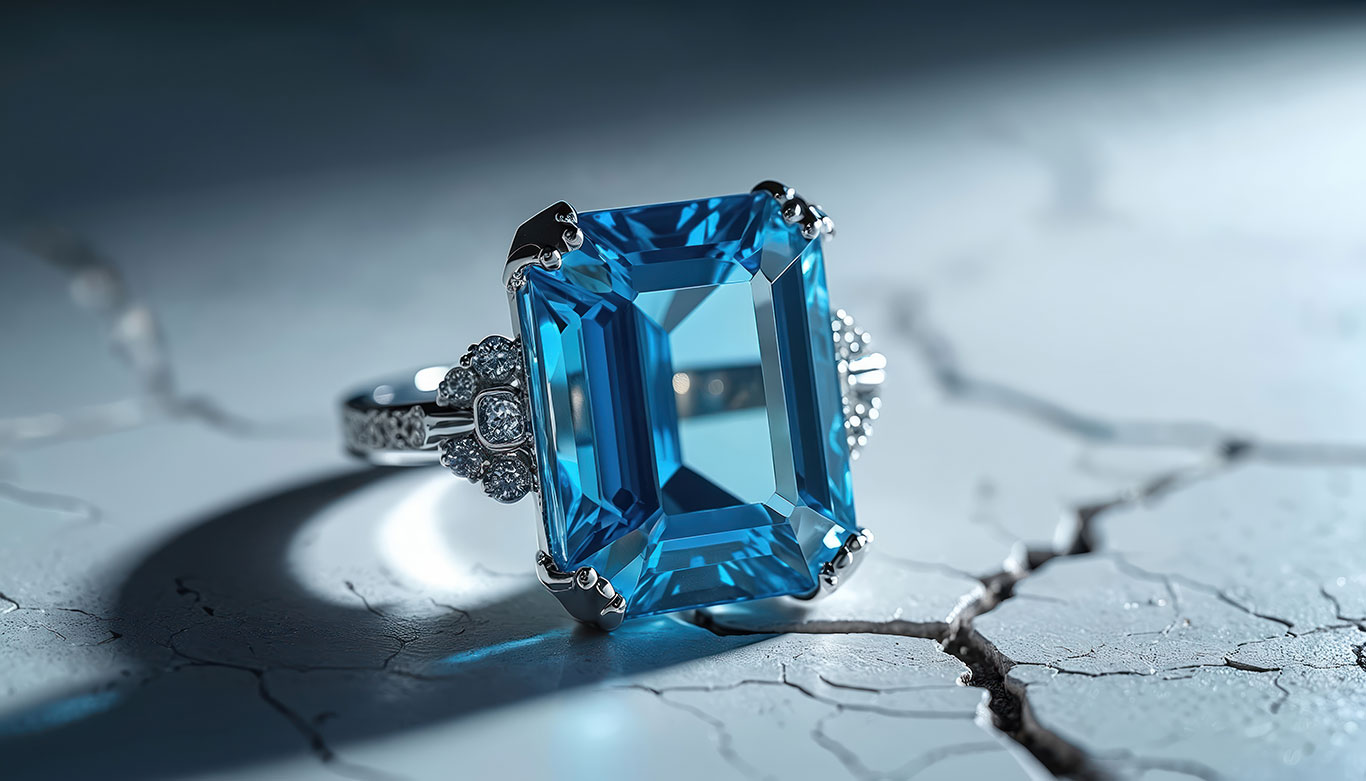
Topaz, the birthstone for December, is a versatile gemstone available in a stunning rainbow of colors. Prized for several thousand years in antiquity, topaz has been surrounded by legends of power, healing, and beauty. The name may derive from the Sanskrit word tapas, meaning fire, or from the Greek island Topazios in the Red Sea where a yellow stone was once mined. From the rich warmth of Imperial topaz to the cool elegance of London Blue, this gemstone offers remarkable versatility for fine jewelry.
History and Origin
Throughout much of history, all yellow and golden gemstones were referred to as topaz, leading to centuries of confusion with other stones like citrine. It was not until modern mineralogy developed that topaz was recognized as a distinct mineral species. The ancient Greeks believed topaz could increase strength, while the Egyptians associated it with Ra, the sun god, and believed its golden glow was a divine blessing. During the Renaissance, Europeans believed topaz could break magic spells and dispel anger. The discovery of large deposits in Brazil in the 19th century made topaz more widely available and helped establish it as one of the most popular gemstones in the world.
The famed Braganza Diamond, once thought to be the largest diamond ever found and set in the Portuguese crown jewels, is now widely believed to be a large colorless topaz. This historical mix-up illustrates both the beauty of fine topaz and the confusion that surrounded gemstone identification before modern science. Today, Brazil remains the world's primary source of topaz, with additional production in Nigeria, Sri Lanka, Pakistan, and the United States.
Symbolism and Meaning
Topaz symbolizes love, affection, and good fortune. It is traditionally associated with strength and intellect, and is believed to bring clarity to the mind and peace to the spirit. In many cultures, topaz is thought to promote creativity, generosity, and joyfulness. As the December birthstone, topaz represents friendship and is said to bring warmth during the coldest month of the year. December birthdays can also claim tanzanite and turquoise as alternative birthstones.
Topaz is the traditional gemstone for the 4th and 23rd wedding anniversaries. Its association with warmth, strength, and friendship makes it a meaningful gift for any winter celebration. In many traditions, topaz is believed to protect its wearer from harm and to enhance intellectual ability, making it a popular stone for students and scholars.
Colors and Varieties
Topaz comes in a wide range of colors including yellow, orange, pink, red, purple, blue, and colorless. The most prized variety is Imperial topaz, named after the Russian Czars of the 1800s, which features a magnificent reddish-orange to orange-pink body color. Blue topaz is the most popular variety in the jewelry market today, available in three recognized shades: Sky Blue, a light pastel blue; Swiss Blue, a vivid medium blue; and London Blue, a deep, saturated grayish-blue. Most blue topaz achieves its color through a combination of irradiation and heat treatment, which produces a permanent and stable color.
Pink topaz occurs naturally in Pakistan and is highly valued by collectors. Mystic topaz, a modern variety, features a thin coating that produces a rainbow effect on the surface, though this coating can wear over time. The rarest natural topaz color is red, with fine red topaz from Brazil commanding prices comparable to sapphire. Understanding the wide spectrum of topaz colors and treatments is essential for making an informed purchase.
Durability and Care
Topaz ranks 8 on the Mohs hardness scale, making it a good choice for jewelry. However, topaz has perfect basal cleavage, meaning it can split along a flat plane if struck with enough force at the right angle. For this reason, topaz should be set in protective mountings for rings and handled with reasonable care. Clean topaz with warm soapy water and a soft brush. Ultrasonic cleaners are generally safe, but steam cleaning should be avoided. For complete care guidance, visit our jewelry care guide.
The finest topaz comes from Brazil, with other sources including Nigeria, Sri Lanka, Pakistan, and the United States. Whether you prefer a rare Imperial topaz or a striking London Blue, topaz is a beautiful and meaningful December birthday gift.
Shopping Tips
When shopping for topaz, consider which color variety best suits your style and budget. Blue topaz in Sky Blue, Swiss Blue, and London Blue shades is widely available and very affordable, making it an excellent choice for large, dramatic jewelry pieces. Imperial topaz is considerably rarer and more expensive, with the finest reddish-orange specimens commanding premium prices. Natural pink topaz is also rare and valuable.
For blue topaz, the most popular shade is London Blue, which offers a rich, saturated color that works beautifully in both casual and formal jewelry. Swiss Blue is a versatile medium blue, while Sky Blue offers a delicate, icy appearance. All blue topaz colors are achieved through permanent treatment and are stable for a lifetime. Browse our collection of gemstone rings, earrings, and pendants to find the perfect topaz piece. Because topaz has perfect cleavage, choose protective settings for rings and avoid wearing topaz jewelry during activities with a risk of sharp impacts.
Frequently Asked Questions
What is the difference between blue topaz shades?
Blue topaz is available in three recognized shades. Sky Blue is a light, pastel blue similar to a clear sky. Swiss Blue is a brighter, vivid medium blue. London Blue is the deepest shade, a rich, saturated grayish-blue. All three colors are produced through permanent irradiation and heat treatment of colorless topaz. London Blue is typically the most popular and widely available.
What is Imperial topaz?
Imperial topaz is the most prized variety of topaz, featuring a magnificent reddish-orange to orange-pink body color. The name originated in 19th-century Russia, where only the Czar was permitted to own this color. Imperial topaz is found primarily in Ouro Preto, Brazil, and is significantly rarer and more valuable than blue topaz. Fine Imperial topaz rivals sapphire in per-carat price.
Is topaz durable for everyday wear?
With a hardness of 8 on the Mohs scale, topaz is quite hard and scratch-resistant. However, it has perfect basal cleavage, meaning it can split along a flat plane if struck with sufficient force at the right angle. Choose protective settings for rings, avoid sharp impacts, and handle topaz jewelry with reasonable care. Earrings and pendants are the safest everyday choices.
Are there alternative December birthstones?
Yes. December has three recognized birthstones: topaz (the traditional choice), tanzanite, and turquoise. Tanzanite is a vivid blue-violet gemstone found only in Tanzania. Turquoise is an opaque blue-green stone with ancient significance across many cultures. All three are officially recognized as December birthstones, giving December babies an unusually wide range of beautiful options.
How is blue topaz color created?
Most blue topaz starts as colorless or very lightly tinted natural topaz. The blue color is produced through a combination of irradiation (exposure to controlled radiation) followed by heat treatment. This process permanently alters the crystal structure to produce the blue color. The resulting color is completely stable and will not fade. All treated blue topaz is safe to wear and handle.
Explore Other Birthstones