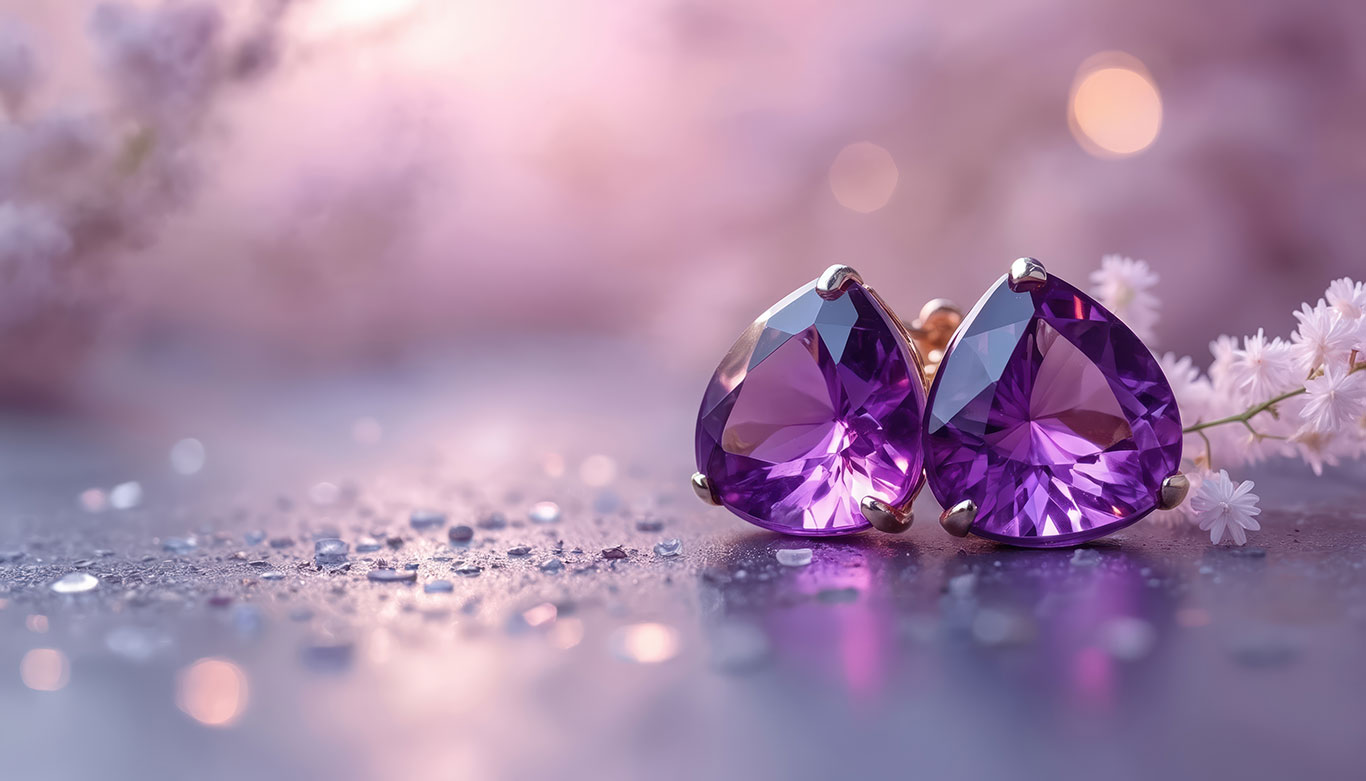
Amethyst, the birthstone for February, is a stunning purple variety of quartz that has captivated people for thousands of years. Believed by ancient Greeks and Romans to ward off the intoxicating powers of Bacchus, amethyst takes its name from the Greek word amethystos, meaning not intoxicated. This beautiful gemstone is said to keep the wearer clear-headed and quick-witted, making it a favorite among scholars, leaders, and creatives alike.
History and Origin
Throughout history, amethyst has been associated with royalty, myths, and spiritual power. English regalia were decorated with amethysts during the Middle Ages to symbolize royalty, and the gemstone was once considered as precious as diamonds, sapphires, and rubies. Catherine the Great of Russia had a passion for amethyst and sent thousands of miners to the Ural Mountains in search of fine specimens. Until large deposits were found in Brazil in the 19th century, amethyst was extremely rare and valued accordingly.
The gemstone has been found in the tombs of Egyptian pharaohs and was a favorite of early Christian bishops, who wore amethyst rings as a symbol of their ecclesiastical rank. In ancient China, amethyst was used in Feng Shui practices to harness the energy of the space. The discovery of vast amethyst geodes in South America transformed the market, making this once-royal gem accessible to a much wider audience while preserving its mystique and beauty.
Symbolism and Meaning
Amethyst has long been linked to clarity of mind and sobriety. Ancient Romans drank from amethyst-studded goblets in the belief that the stone would prevent intoxication. In the Christian tradition, bishops often wore amethyst rings, and the stone was considered a symbol of piety and celibacy. Today, amethyst is associated with peace, balance, and inner strength, making it a thoughtful gift for anyone born in February.
Beyond its spiritual associations, amethyst is the traditional gemstone for the sixth wedding anniversary. It is also associated with the zodiac sign of Pisces. The gem is thought to promote calmness, emotional stability, and focus, making it a meaningful stone for meditation and mindfulness. Its rich purple color has remained a symbol of luxury and sophistication across every era of jewelry design.
Colors and Varieties
Amethyst is purple quartz, a beautiful blend of violet and red that can be found in every corner of the earth. Colors range from a light, pinkish lavender to a deep, saturated purple. The most prized shade is a rich, medium-dark purple with flashes of red, sometimes called Siberian amethyst after the now-depleted Russian mines that once produced the finest specimens. Ametrine, a naturally occurring combination of amethyst and citrine, displays zones of both purple and golden yellow in a single stone.
Rose de France amethyst is a lighter, lilac-pink shade that has gained popularity in contemporary jewelry design. Green amethyst, also known as prasiolite, is produced by heat-treating certain amethyst deposits. The wide range of purple tones means amethyst can complement both cool and warm skin tones, pairing beautifully with white gold, yellow gold, and rose gold settings alike.
Durability and Care
With a hardness of 7 on the Mohs scale, amethyst is durable enough for everyday jewelry including rings, bracelets, and pendants. It can be cleaned with warm soapy water or an ultrasonic cleaner. However, prolonged exposure to strong sunlight can cause the color to fade over time, so amethyst jewelry should be stored away from direct light when not being worn. For comprehensive care advice, visit our jewelry care guide.
Today, while Brazil is the primary source of amethyst, fine material can also be found in Zambia, Uruguay, and South Korea. Whether set in a simple pendant or an elaborate cocktail ring, amethyst remains one of the most popular and affordable colored gemstones available.
Shopping Tips
When purchasing amethyst jewelry, focus on color quality above all else. The most valuable amethysts display a rich, saturated purple with red and blue secondary flashes, often described as deep Siberian purple. Avoid stones that appear too dark or too gray, as these can look lifeless in certain lighting conditions. Amethyst should ideally be eye-clean, meaning no inclusions are visible to the naked eye.
Because amethyst is one of the most abundant gemstones, it offers exceptional value for its beauty. Large amethyst stones are readily available at accessible prices, making it possible to own a dramatic cocktail ring or statement pendant without a significant investment. Browse our collection of gemstone rings, earrings, and pendants to find the perfect amethyst piece. Pair amethyst with white gold or sterling silver for a cool, modern look, or set it in yellow gold for a regal, vintage aesthetic.
Frequently Asked Questions
Is amethyst expensive?
Amethyst is one of the most affordable gemstones available. Large, high-quality stones can be purchased at reasonable prices, making it an excellent choice for statement jewelry. The most valuable amethysts display a deep, saturated purple with red flashes, but even lighter shades offer beautiful color at very accessible price points.
Can amethyst fade?
Yes, prolonged exposure to strong sunlight or intense heat can cause amethyst to gradually lose some of its color saturation. To protect your amethyst jewelry, store it in a jewelry box away from direct light and avoid leaving it on a sunny windowsill. Normal indoor and occasional outdoor wear will not cause fading.
What color amethyst is most valuable?
The most valuable amethyst displays a deep, saturated purple with strong red and blue secondary flashes, often referred to as Siberian quality. Medium-dark tones with excellent transparency command the highest prices. Very pale or very dark amethysts are generally less desirable.
Is amethyst good for engagement rings?
Amethyst can make a beautiful and unique engagement ring choice. With a hardness of 7 on the Mohs scale, it is durable enough for regular wear, though it requires a bit more care than sapphire or diamond. A protective setting like a bezel or halo can help safeguard the stone from daily wear.
What is ametrine?
Ametrine is a naturally occurring gemstone that combines amethyst and citrine in a single crystal, displaying zones of both purple and golden yellow. It is found primarily in the Anahi mine in Bolivia. Ametrine is prized for its unique bicolor appearance and makes a distinctive choice for one-of-a-kind jewelry.
Explore Other Birthstones