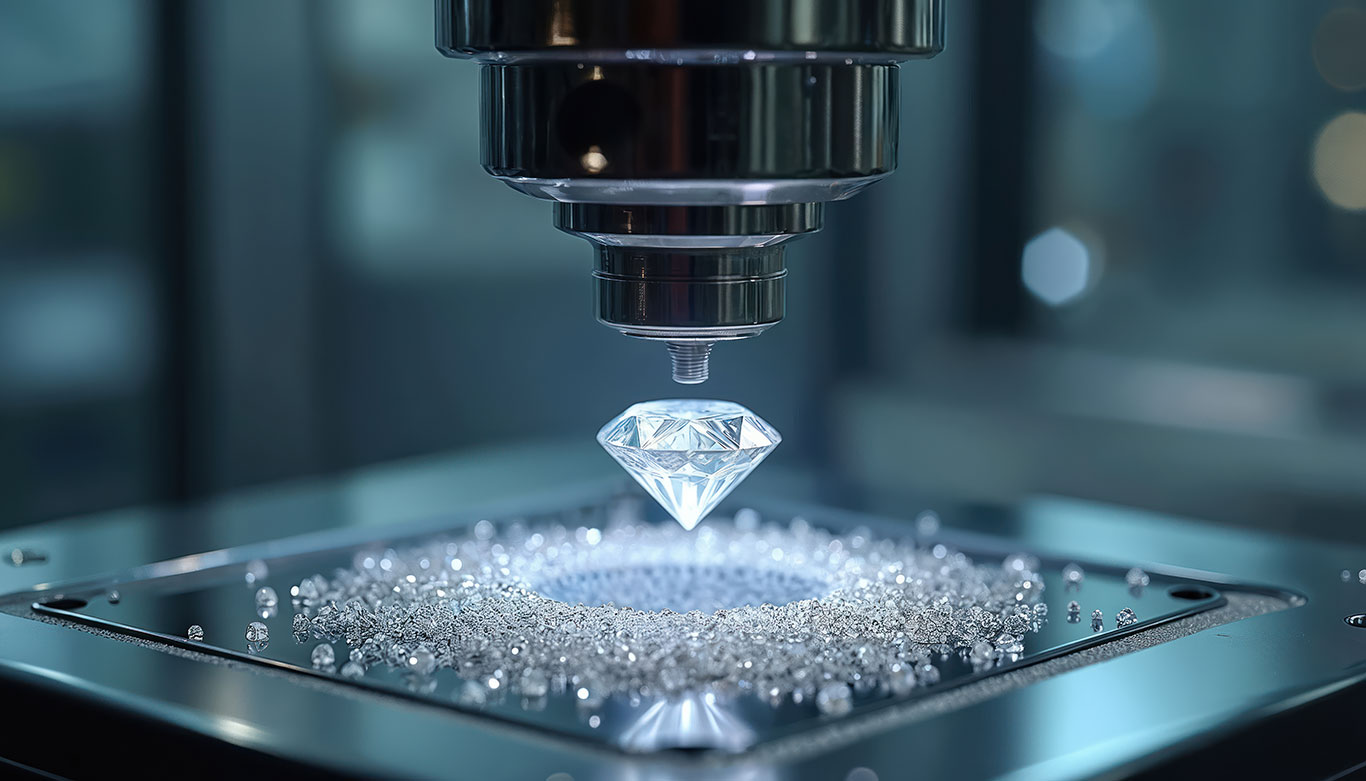
Should you choose a lab-grown diamond or a natural diamond? It is one of the most common questions in diamond buying today, and it is a perfectly valid one. Both options are real diamonds — they share the same chemical composition, crystal structure, optical properties, and hardness. But they differ in origin, price, resale value, and what they represent.
This guide gives you an honest, balanced comparison so you can make the decision that is right for you. There is no wrong answer here — only what matters most to you personally.
What Are Natural Diamonds?
Natural diamonds formed deep within the Earth's mantle between one and three billion years ago. Under extreme conditions — temperatures exceeding 2,000 degrees Fahrenheit and pressures over 725,000 pounds per square inch — carbon atoms crystallized into the hardest natural substance known. Volcanic eruptions then carried these diamonds closer to the surface through vertical channels called kimberlite pipes, where they are mined today.
Each natural diamond is unique. The tiny inclusions, trace elements, and growth patterns formed over billions of years make every stone one of a kind. Major diamond mining operations exist in Botswana, Russia, Canada, Australia, South Africa, and several other countries, and the industry supports millions of livelihoods worldwide.
Natural diamonds are a finite resource. While new deposits are occasionally discovered, no new diamonds are being formed on any human timescale. This inherent scarcity is a significant part of their value and appeal.
What Are Lab-Grown Diamonds?
Lab-grown diamonds are created in laboratories using one of two methods that replicate the natural diamond formation process:
HPHT (High Pressure High Temperature): A small diamond seed is placed in a chamber with carbon and subjected to extreme heat (about 2,700°F) and pressure (about 870,000 PSI) — conditions similar to those found 100 miles below Earth's surface. Over several days to weeks, carbon atoms crystallize around the seed, growing a rough diamond.
CVD (Chemical Vapor Deposition): A diamond seed is placed in a sealed chamber filled with carbon-rich gas (typically methane). The gas is heated to around 1,500°F, breaking down the molecules and allowing carbon atoms to deposit layer by layer onto the seed. This process typically takes two to four weeks for a one-carat diamond.
The result in both cases is a crystal that is chemically, physically, and optically identical to a natural diamond. Lab-grown diamonds are not simulants like cubic zirconia or moissanite — they are genuine diamonds with the same carbon crystal structure, the same 10 on the Mohs hardness scale, and the same brilliant sparkle.
Side-by-Side Comparison
| Property |
Natural Diamond |
Lab-Grown Diamond |
| Composition | Pure carbon crystal | Pure carbon crystal |
| Hardness | 10 (Mohs scale) | 10 (Mohs scale) |
| Brilliance & Fire | Identical | Identical |
| Origin | Earth's mantle, 1-3 billion years | Laboratory, 2-6 weeks |
| Price (1ct, VS2, G, EX) | $5,000 – $8,000 | $800 – $1,500 |
| Price Trend | Relatively stable | Declining as production scales |
| Resale Value | Retains 30 – 50% | Minimal, declining |
| Rarity | Finite supply | Unlimited production potential |
| Certification | GIA, AGS, IGI | GIA, IGI (most common) |
| Detectable? | — | Only with specialized equipment |
| Environmental Impact | Mining footprint | Energy-intensive production |
Price Comparison in Detail
The price difference between lab-grown and natural diamonds is the most dramatic distinction, and it has been growing. As of 2025-2026, lab-grown diamonds typically cost 60 to 85 percent less than comparable natural diamonds. This means a budget that would get you a 1-carat natural diamond could get you a 2-carat or even 3-carat lab-grown diamond of similar quality.
To put real numbers on it: a 1.00-carat round brilliant with VS2 clarity, G color, and Excellent cut might cost $5,000 to $8,000 as a natural diamond, but only $800 to $1,500 as a lab-grown stone. That is a significant difference that allows buyers to either save substantially or upgrade to a much larger stone.
It is worth noting that lab-grown diamond prices have been consistently declining over the past several years as production capacity increases and technology improves. Some industry analysts predict prices will continue to fall. Natural diamond prices, by contrast, have remained relatively stable over the long term, with typical fluctuations tied to economic cycles. For a more detailed look at pricing, see our diamond pricing guide.
Quality and Grading
Both natural and lab-grown diamonds are graded using the same 4Cs framework: Cut, Color, Clarity, and Carat Weight. The grading standards are identical because the stones themselves are identical in their physical and optical properties.
GIA (the Gemological Institute of America) now provides full grading reports for lab-grown diamonds using the same color and clarity scales as natural diamonds. IGI (International Gemological Institute) has become the most prolific certifier of lab-grown diamonds and offers comprehensive reports. For more on grading labs, see our diamond certification guide.
Lab-grown diamonds can achieve top grades across all 4Cs, including D color and IF (Internally Flawless) clarity. Some argue that lab diamonds may even have more consistent quality on average, since the controlled laboratory environment eliminates some of the unpredictable variations found in natural stone formation. However, lab diamonds can also have inclusions and color variations, just like natural diamonds.
Resale Value and Long-Term Worth
This is where the two options diverge most significantly beyond price.
Natural diamonds have a established secondary market. While no diamond is a great financial "investment" compared to stocks or real estate, natural diamonds typically retain 30 to 50 percent of their retail value on resale through dealers, consignment shops, or private sales. Rare and high-quality natural diamonds (such as large stones with exceptional color or clarity) can sometimes appreciate in value over decades.
Lab-grown diamonds currently have very limited resale value. Because production is essentially unlimited and prices continue to decline, the resale market for lab-grown diamonds has not developed in the same way. A lab-grown diamond purchased today may be worth a fraction of its purchase price if you tried to sell it in five years, simply because an identical new stone will likely cost even less by then.
If you view your diamond primarily as a symbol of love and commitment that you will wear and enjoy for a lifetime, resale value may not matter much to you. If the idea of your diamond holding tangible monetary value as a family heirloom is important, a natural diamond is the stronger choice.
Environmental and Ethical Considerations
Environmental and ethical concerns are often cited as reasons to choose lab-grown diamonds, but the reality is more nuanced than marketing slogans suggest.
Natural diamond mining does have an environmental footprint. Open-pit and underground mining disrupt land, consume water, and require significant energy. However, the modern diamond mining industry has made substantial improvements in environmental practices. Leading producers like De Beers and Rio Tinto have invested heavily in land rehabilitation, carbon offset programs, and responsible mining certifications. Natural diamond mining also supports the economies and communities of producing countries — the industry provides livelihoods for millions of people, particularly in African nations like Botswana, where diamonds account for a significant portion of GDP.
The "blood diamond" or "conflict diamond" issue, while once a serious problem, has been largely addressed through the Kimberley Process Certification Scheme established in 2003. While the system is not perfect and some criticism remains, the vast majority of natural diamonds on the market today are ethically sourced.
Lab-grown diamond production avoids mining but is energy-intensive. Growing diamonds requires enormous amounts of electricity, and depending on the energy source, the carbon footprint can be significant. Some producers use renewable energy and market their diamonds as "carbon neutral," while others rely on conventional power grids. A study by the Diamond Producers Association found that the carbon emissions per carat of some lab-grown operations were comparable to or even higher than some mining operations.
The honest conclusion: neither option is perfectly "green." Both have trade-offs. If environmental impact is a primary concern, research the specific producer of any lab-grown diamond you are considering and look for those powered by renewable energy.
Can Anyone Tell the Difference?
No — not with the naked eye, and not even trained gemologists using standard tools. Lab-grown diamonds and natural diamonds are visually identical because they are the same material. They have the same sparkle, fire, brilliance, and hardness.
The only way to distinguish a lab-grown diamond from a natural one is with specialized spectroscopic equipment that detects subtle differences in growth patterns at the atomic level. All reputable lab-grown diamonds are laser-inscribed on the girdle with an identification number and the words "lab grown" (or similar), and they come with certificates that clearly state their origin.
A lab-grown diamond will pass a standard diamond tester with flying colors because it is a diamond. This is fundamentally different from diamond simulants like cubic zirconia or moissanite, which have different chemical compositions and optical properties.
Which Should You Choose?
A natural diamond may be right for you if:
- Tradition and the romance of a billion-year-old stone appeal to you
- Long-term value retention and heirloom potential are important
- You value rarity — knowing your diamond is one of a finite number
- Resale value is a consideration, even if a secondary one
- You appreciate the natural origin story of your stone
A lab-grown diamond may be right for you if:
- Budget is a primary consideration and you want to maximize size and quality
- You want a larger, more impressive stone for the same investment
- You prefer the idea of a diamond created without mining
- You have a modern outlook and care more about beauty than origin
- You plan to enjoy the diamond for a lifetime and do not anticipate reselling it
There is genuinely no wrong answer. Both are real diamonds. Both are beautiful. Both will last forever. The choice comes down to what you value most — and that is a deeply personal decision.
Frequently Asked Questions
Are lab diamonds real diamonds?
Yes. Lab-grown diamonds are real diamonds in every scientific sense. They have the same chemical composition (pure carbon), crystal structure, hardness (10 on Mohs scale), refractive index, and optical properties as natural diamonds. The Federal Trade Commission (FTC) recognizes lab-grown diamonds as real diamonds.
Will a lab diamond pass a diamond tester?
Yes. Standard diamond testers measure thermal or electrical conductivity, and lab-grown diamonds have the same properties as natural diamonds. A lab diamond will test as "diamond" every time.
Do lab diamonds get cloudy over time?
No. Lab-grown diamonds do not cloud, fade, or change appearance over time. They are just as durable and stable as natural diamonds. A lab diamond will look exactly the same in 50 years as it does the day you buy it.
Are lab diamonds worth anything on resale?
Currently, the resale market for lab-grown diamonds is very limited. While they do have some resale value, it is significantly lower than natural diamonds — and the gap is widening as lab diamond production costs continue to decrease.
Can a jeweler tell if my diamond is lab-grown?
Not by looking at it, even under magnification. Gemologists cannot distinguish between lab-grown and natural diamonds using standard gemological tools. Only specialized laboratory equipment that analyzes growth patterns at the atomic level can make the distinction.
Shop Both Options at USA Jewels
At USA Jewels, we offer both natural and lab-grown diamonds because we believe the choice should be yours, not ours. Whether you prefer the timeless allure of a natural diamond or the exceptional value of a lab-grown stone, we have beautiful options in every style, shape, and size.
Browse our engagement ring collection or use our Design Your Own Ring tool to build your perfect ring with either a natural or lab-grown center stone. Every diamond we sell comes with independent certification, free shipping, and a 30-day return policy.
Shop Certified Diamonds
Browse thousands of GIA, IGI, and HRD certified diamonds with 360° video.