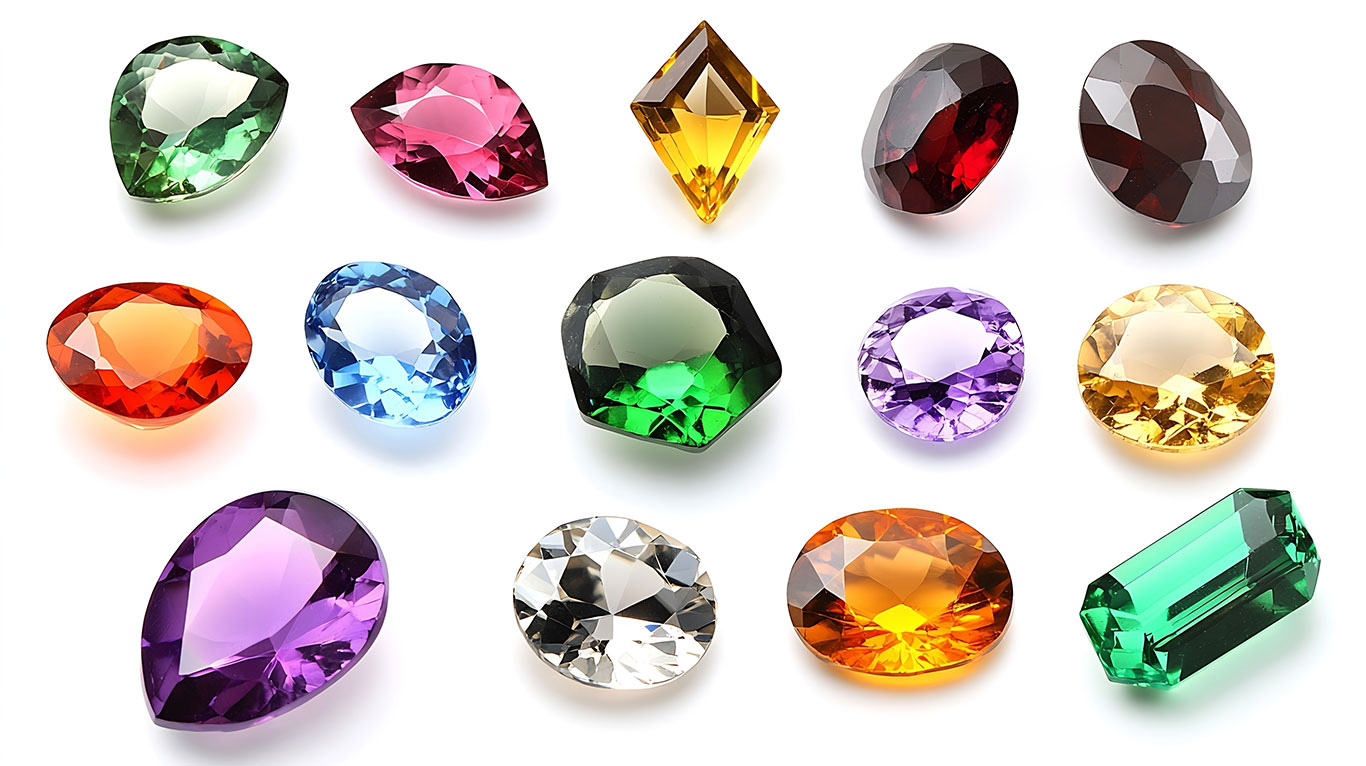
Jade
| Property | Details |
|---|
| Mineral | Jadeite (pyroxene) or Nephrite (amphibole) |
| Mohs Hardness | 6 – 7 (nephrite), 6.5 – 7 (jadeite) |
| Refractive Index | 1.600 – 1.688 |
| Birthstone | Not a traditional birthstone |
| Major Sources | Myanmar (jadeite), Canada, China, New Zealand (nephrite) |
| Treatments | Polymer impregnation (Type B), dyeing (Type C) |
Overview
Jade is one of the most culturally significant gemstones in human history, treasured for over 7,000 years across civilizations from China and Mesoamerica to New Zealand. The word “jade” actually encompasses two distinct minerals—jadeite and nephrite—that share a similar appearance but differ in composition, rarity, and value. Both are exceptionally tough gemstones, making them ideal for carving and jewelry that withstands generations of wear.
Jadeite vs Nephrite
Jadeite is the rarer and more valuable of the two. It occurs in a wider range of colors, takes a higher polish, and achieves the coveted translucent “imperial” quality. Nearly all fine jadeite comes from Myanmar (Burma). Nephrite is more abundant and slightly softer, ranging from creamy white (“mutton fat” jade) through dark spinach green. Major nephrite sources include British Columbia in Canada, China’s Xinjiang province, and New Zealand, where it is known as pounamu and sacred to the Māori people.
Colors & Varieties
Imperial jade: The most prized variety—vivid, slightly bluish green jadeite with fine translucency. Top-quality imperial jade rivals emerald in per-carat price. Lavender jade: Delicate purple jadeite, increasingly popular in modern designs. White jade: Prized nephrite, especially the “mutton fat” variety treasured in Chinese culture. Black jade: Deep green-to-black nephrite used in Maori carving and contemporary jewelry. Yellow and red jade: Less common varieties colored by iron impurities.
Type Classification
Jade is classified by treatment level. Type A jade is completely natural with no chemical treatment—only wax polishing, which is standard and accepted. Type B jade has been bleached with acid and impregnated with polymer resin to improve transparency and color. Type C jade has been dyed to enhance or change color. Type A jade commands the highest prices, while B and C types are significantly less valuable. Always ask for certification when purchasing fine jade.
Quality & Value Factors
For jadeite, the most important factors are color (vivid, evenly distributed green), transparency (the more translucent, the better), texture (fine-grained and smooth), and treatment status (Type A only for investment-grade). For nephrite, an even color, smooth texture, and freedom from dark spots or veining determine value. The toughness of both types—jade is actually tougher than diamond due to its interlocking crystal structure—makes it ideal for bangles, carvings, and cabochon jewelry.
Care & Cleaning
Despite its toughness, jade is sensitive to chemicals and sudden temperature changes. Clean with warm soapy water and a soft cloth. Avoid ultrasonic cleaners, steam cleaners, and all harsh chemicals. Type B jade requires extra caution, as solvents can damage the polymer filler. Store jade separately to prevent scratches from harder gemstones like diamond and sapphire.
Frequently Asked Questions
What is the difference between jadeite and nephrite?
Jadeite and nephrite are two different minerals that are both called jade. Jadeite is a pyroxene mineral that is rarer, harder (6.5-7 Mohs), available in a wider range of colors, and can achieve a fine translucency that nephrite cannot. Nephrite is an amphibole mineral that is more abundant, slightly softer (6-6.5 Mohs), and typically found in creamy white to dark green colors. Jadeite is significantly more valuable, with top-quality imperial jadeite reaching tens of thousands of dollars per carat. Nephrite is more affordable but highly prized in Chinese and Maori cultures.
What is imperial jade?
Imperial jade is the most prized variety of jadeite, characterized by a vivid, slightly bluish-green color with fine translucency and an even, smooth texture. The finest imperial jade comes from Myanmar and can rival or exceed emerald in per-carat price. The term imperial originated because this quality was historically reserved for Chinese emperors. A fine imperial jade bangle or cabochon of top quality can sell for millions of dollars at auction in Asian markets.
What are Type A, B, and C jade?
Type A jade is completely natural and untreated except for traditional wax polishing. It is the most valuable. Type B jade has been bleached with acid to remove impurities and then impregnated with polymer resin to fill the resulting voids and improve transparency. Type C jade has been dyed to enhance or change its color. Some jade is both B and C (bleached, filled, and dyed). Only Type A jade is considered investment-grade. Always request a certificate from a reputable gem lab when purchasing fine jade.
Why is jade so important in Chinese culture?
Jade has held deep spiritual and cultural significance in Chinese civilization for over 7,000 years. Confucius compared jade's qualities to human virtues: its hardness represents wisdom, its luster represents benevolence, and its translucency represents honesty. Jade was believed to preserve the body after death, leading to the creation of elaborate jade burial suits. Today, jade bangles are considered protective talismans, and fine jade remains one of the most sought-after gemstones in Asian markets, often exceeding the value of diamonds.
Is jade tougher than diamond?
Yes, jade (particularly nephrite) is actually tougher than diamond, though diamond is much harder. Toughness refers to resistance to breaking or chipping, while hardness refers to resistance to scratching. Jade's interlocking fibrous crystal structure gives it exceptional toughness, making it nearly impossible to break with a single blow. This is why jade has been used for tools, weapons, and carvings for thousands of years. However, jade can still be scratched by harder minerals like diamond, sapphire, and quartz.
Specialty & Collector Gemstones