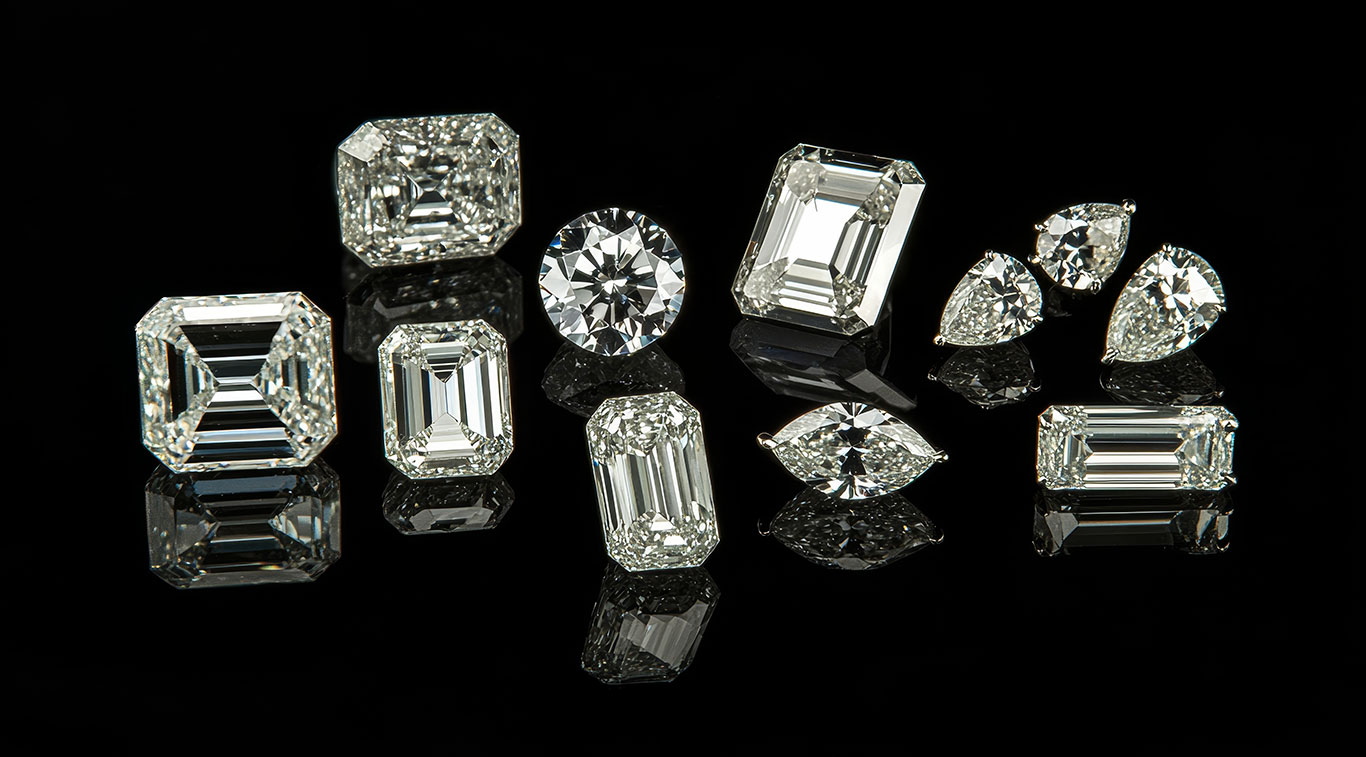
The shape of a diamond is one of the most personal choices in jewelry buying. While the 4Cs (cut, color, clarity, carat) determine quality, shape determines character and style. Each diamond shape has its own personality — from the timeless brilliance of a round to the vintage elegance of an Asscher.
This guide covers every major diamond shape with detailed comparisons of brilliance, value, appearance, and ideal settings to help you find the shape that is perfect for you.
Diamond Shape Overview
| Shape |
Brilliance |
Face-Up Size |
Price (per ct) |
Best For |
| Round | Highest | Average | $$$$$ | Classic engagement rings |
| Princess | Very High | Slightly smaller | $$$ | Modern solitaires |
| Oval | High | Larger | $$$ | Elongating the finger |
| Emerald | Moderate (flashes) | Large | $$$ | Art Deco, sophistication |
| Cushion | High | Slightly smaller | $$$ | Vintage-inspired halo |
| Pear | High | Larger | $$ | Unique, elegant style |
| Marquise | High | Largest | $$ | Maximizing size |
| Asscher | Moderate (flashes) | Smaller | $$$ | Vintage Art Deco |
| Radiant | Very High | Average | $$$ | Sparkle in a square |
| Heart | High | Average | $$ | Romantic symbolism |
Brilliance vs Fire: How Shape Affects Sparkle
Not all diamond shapes sparkle the same way. The faceting pattern determines how a diamond handles light:
Brilliant cuts (round, oval, cushion, pear, marquise, heart, radiant) are designed to maximize light return. They feature triangular and kite-shaped facets arranged to bounce light back to your eye. Round brilliants have the most optimized geometry, which is why they are considered the most brilliant shape.
Step cuts (emerald, Asscher) have long, parallel facets that create a "hall of mirrors" effect with broad flashes of light rather than the rapid-fire sparkle of brilliant cuts. Step cuts prioritize clarity and architectural elegance over maximum brilliance.
Mixed cuts (radiant, princess) combine elements of both brilliant and step cuts. They offer impressive sparkle while maintaining geometric outlines.
Shape and Value: Getting More for Your Money
Round brilliant diamonds command the highest prices per carat — typically 20 to 40 percent more than fancy shapes. This premium exists because round diamonds require the most rough diamond material to cut (the most waste), and demand is highest.
If budget is a priority, fancy shapes like oval, pear, and marquise offer excellent value. These elongated shapes also tend to face up larger than their carat weight suggests, giving you more visual presence for the same investment. For detailed pricing information, see our diamond pricing guide.
Shape and Ring Settings
Certain shapes pair naturally with certain settings:
- Prong settings work beautifully with round, oval, cushion, pear, and heart shapes — the prongs hold the curved edges securely while maximizing light exposure
- Bezel settings are excellent for emerald, Asscher, and radiant cuts — the clean metal border complements geometric shapes
- Halo settings add extra sparkle around any center stone and are particularly popular with cushion, oval, and round diamonds
- V-tip prongs are essential for shapes with pointed ends (princess, pear, marquise, heart) to protect the vulnerable tips from chipping
Choosing the Right Shape for Your Hand
While personal preference should always come first, certain shapes can complement different hand types:
- Long, slender fingers look beautiful with almost any shape, and can carry wider shapes like cushion and Asscher particularly well
- Shorter fingers benefit from elongating shapes like oval, marquise, and pear, which create the illusion of length
- Wide fingers are complemented by larger face-up shapes and elongated silhouettes rather than small round stones
Explore each shape in detail using the links above, or browse our engagement ring collection to see these shapes in beautiful settings.