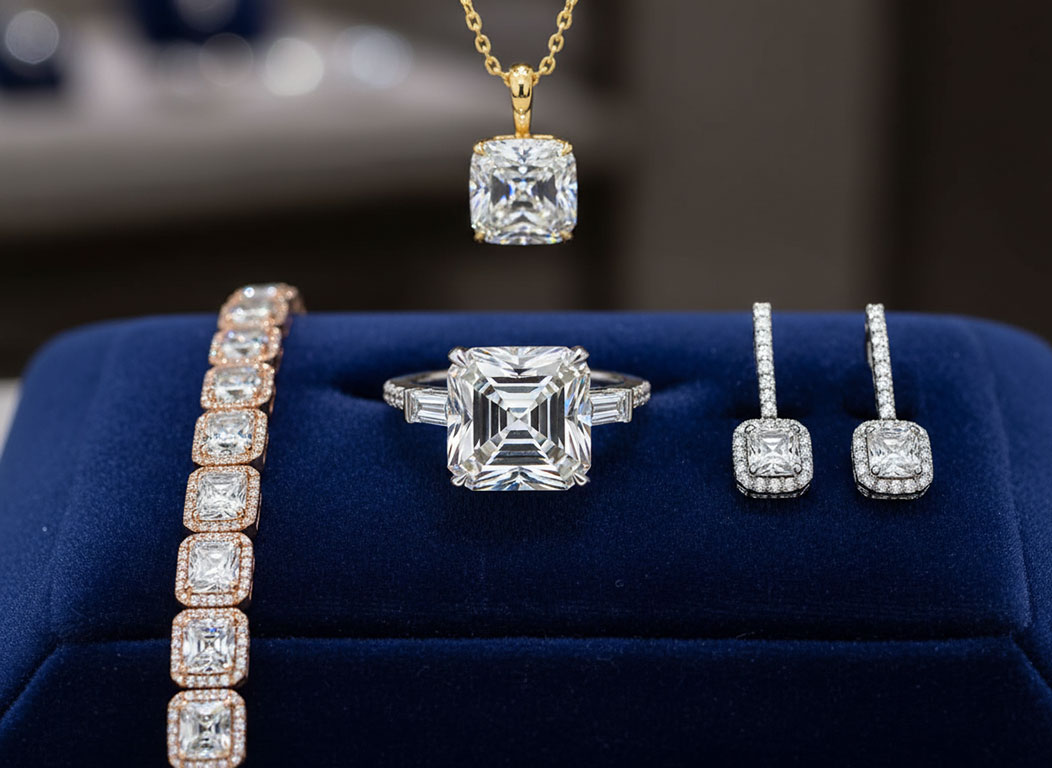
The Asscher cut was created in 1902 by Joseph Asscher of the Royal Asscher Diamond Company in Amsterdam. It is essentially a square emerald cut with a distinctive windmill-like facet pattern visible when viewed from above. The Asscher cut experienced a resurgence in the early 2000s and remains a favorite among Art Deco and vintage jewelry enthusiasts.
The Windmill Pattern
Looking down into an Asscher cut diamond, you can see a mesmerizing pattern of concentric squares that creates a "windmill" or "X" pattern. This unique optical effect, combined with the step-cut's broad flashes of light, gives the Asscher a hypnotic depth and sophistication that no brilliant cut can replicate.
Ideal Proportions
| Parameter | Ideal Range |
|---|
| Length-to-Width Ratio | 1.00 – 1.05 (square) |
| Table % | 60% – 68% |
| Depth % | 61% – 68% |
Clarity and Color Recommendations
Like the emerald cut, the Asscher's step-cut faceting makes inclusions and body color more visible. We recommend VS2 or higher clarity and H or higher color for the best appearance. The deep pavilion and cropped corners of an Asscher can also concentrate color in the corners, so staying in the near-colorless range is particularly important.
Art Deco Perfection
The Asscher cut is the quintessential Art Deco diamond shape. It pairs perfectly with geometric settings, milgrain detailing, and stepped metalwork that echoes the diamond's own facet architecture. If you love the glamour of the 1920s and 1930s, the Asscher is your shape.