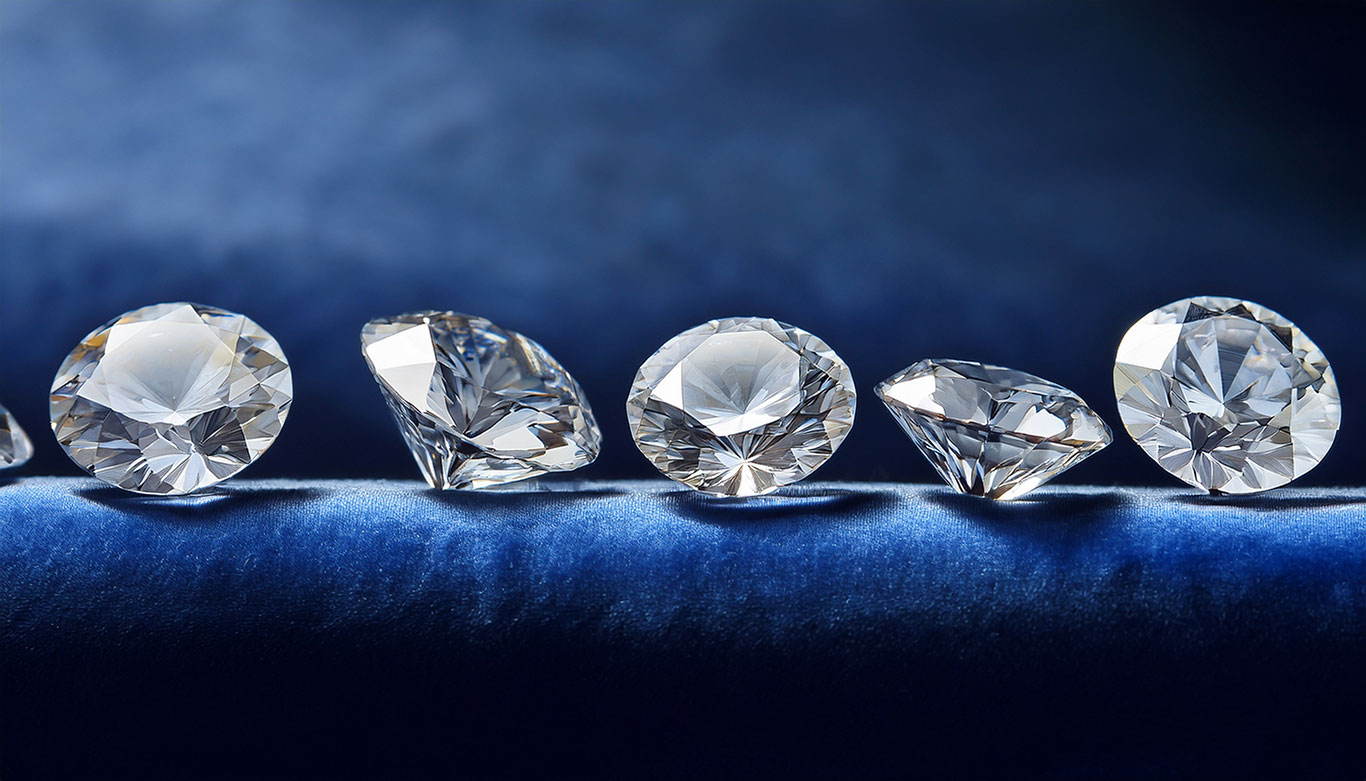
The round brilliant is the undisputed king of diamond shapes, accounting for approximately 70 percent of all diamonds sold worldwide. Developed over centuries of optical research and perfected by Marcel Tolkowsky in 1919, the modern round brilliant features 57 or 58 facets precisely angled to maximize light return.
Why Round Brilliants Are the Most Popular
The round brilliant diamond is scientifically engineered for maximum brilliance. Its symmetrical shape allows light to enter, reflect internally between facets, and exit back through the top of the stone with minimal light leakage. No other shape achieves this level of light performance.
This is also the only shape where GIA assigns a formal cut grade (Excellent, Very Good, Good, Fair, Poor). For fancy shapes, cut quality is evaluated but not given a single-word grade on the certificate.
Ideal Proportions
| Parameter | Ideal Range |
|---|
| Table % | 54% – 57% |
| Depth % | 61% – 62.5% |
| Crown Angle | 34° – 35° |
| Pavilion Angle | 40.6° – 41° |
| Girdle | Thin to Medium |
| Culet | None to Very Small |
Pricing
Round diamonds command the highest price-per-carat of any shape — typically 20 to 40 percent more than fancy shapes. This premium reflects both the higher demand and greater rough diamond waste during cutting (a round brilliant retains only about 40 percent of the original rough).
For the best value, consider round diamonds just under popular carat weight thresholds: a 0.90ct will look nearly identical to a 1.00ct but cost significantly less. See our diamond pricing guide for more strategies.
Best Settings for Round Diamonds
The round brilliant works beautifully in virtually every setting style: solitaire, halo, three-stone, bezel, channel, and pave. Its versatility is unmatched.