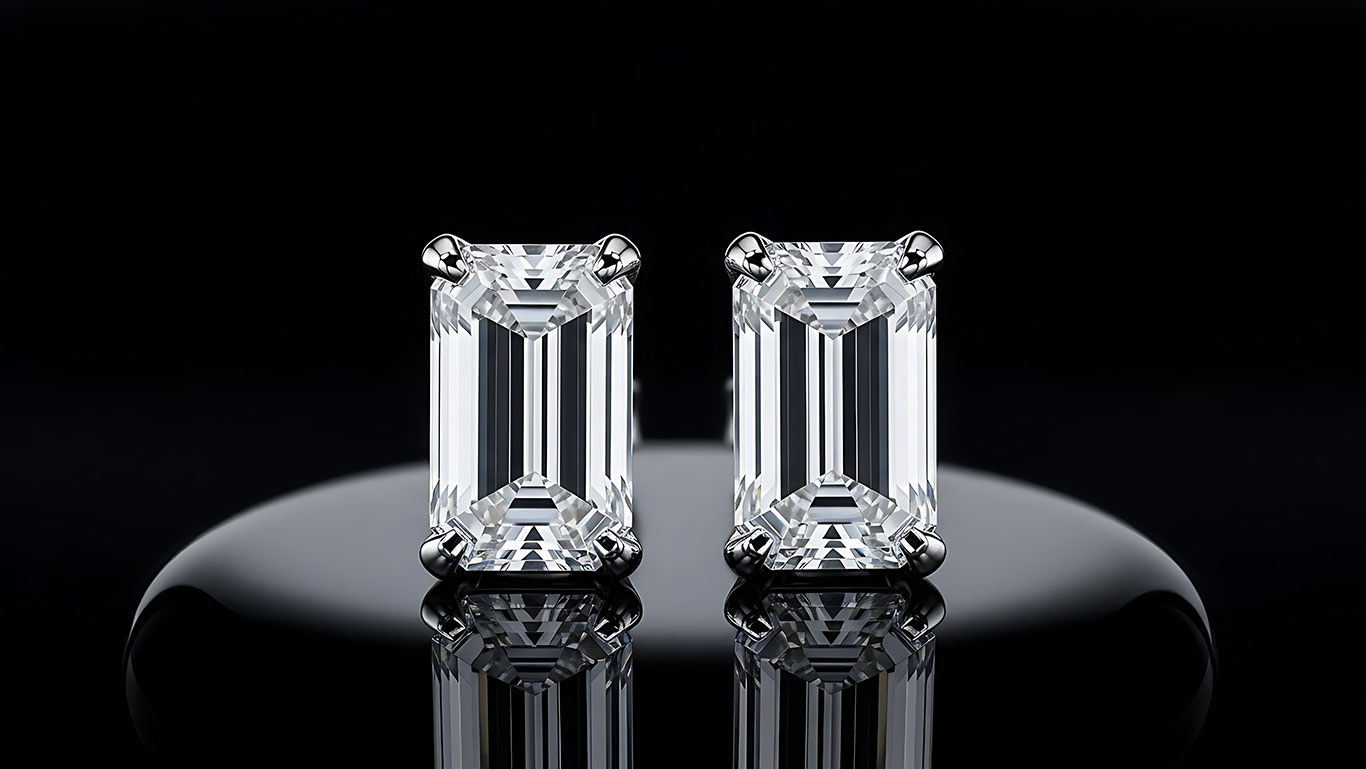
The emerald cut is one of the oldest and most elegant diamond shapes, dating back to the 1500s when it was originally developed for cutting emerald gemstones. Its rectangular outline and step-cut faceting create a sophisticated "hall of mirrors" effect that emphasizes clarity and clean lines over the fiery sparkle of brilliant cuts.
The Hall of Mirrors Effect
Unlike brilliant-cut diamonds that produce rapid-fire sparkle, emerald cuts feature long, parallel facets arranged in steps. This creates broad, dramatic flashes of light — sometimes described as a "hall of mirrors" or "ice" effect. The look is refined, architectural, and unmistakably elegant.
Ideal Proportions
| Parameter | Ideal Range |
|---|
| Length-to-Width Ratio | 1.30 – 1.50 |
| Table % | 61% – 69% |
| Depth % | 61% – 67% |
Clarity Matters More
The open, transparent faceting of emerald cuts makes inclusions more visible than in brilliant cuts. The large table acts like a window into the stone, so imperfections that would be invisible in a round brilliant may be noticeable in an emerald cut. For this reason, we recommend VS2 clarity or higher — and VS1 or better is ideal if your budget allows.
Color Considerations
Similarly, emerald cuts tend to show body color more readily than brilliant cuts. We recommend H color or higher for the best face-up appearance. In yellow or rose gold settings, you can often go one grade lower since the warm metal tone complements slight warmth in the stone.
Best Settings
Emerald cuts look magnificent in solitaire settings that showcase their clean geometry, in three-stone settings flanked by baguettes or trapezoids, and in sleek bezel settings. The Art Deco aesthetic is a natural match for this shape.