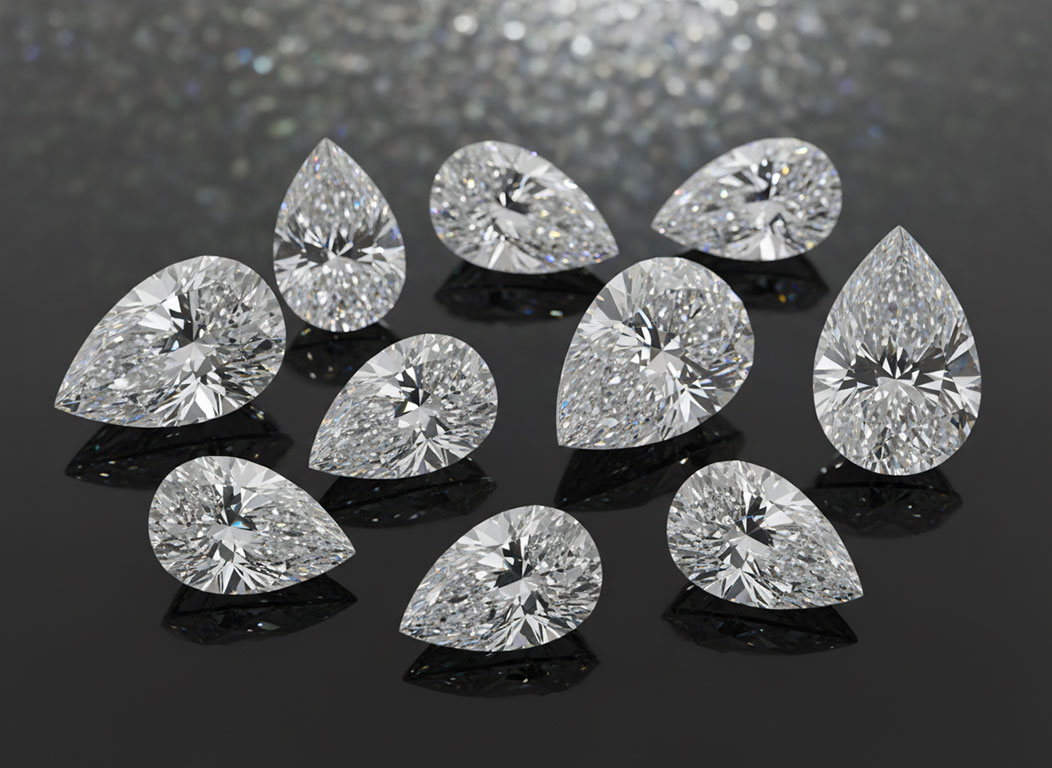
The pear shaped diamond — also called a teardrop diamond — combines the rounded end of an oval with the pointed end of a marquise. This unique hybrid shape creates an elegant, distinctive silhouette that has been prized since Flemish polisher Lodewyk van Bercken created the first pear cut in 1458.
The Teardrop Appeal
Pear shaped diamonds offer a rare combination of uniqueness and elegance. The asymmetric silhouette creates visual interest while the brilliant faceting delivers impressive sparkle. When worn on a ring with the point toward the fingertip, the pear shape elongates the finger beautifully.
Ideal Proportions
| Parameter | Ideal Range |
|---|
| Length-to-Width Ratio | 1.45 – 1.75 |
| Table % | 53% – 63% |
| Depth % | 58% – 62% |
Symmetry Is Critical
More than any other shape, symmetry is paramount in pear diamonds. The point should align perfectly with the apex of the rounded end. The two curved "wings" on either side should be mirror images. Even slight asymmetry is noticeable in a pear shape and significantly impacts its beauty. Always examine a pear diamond carefully (or review detailed images) for symmetry before purchasing.
Watch for Bow-Tie
Like oval diamonds, pear shapes can exhibit a bow-tie effect — a dark shadow across the widest part of the stone. Some bow-tie is normal, but a heavy bow-tie reduces the stone's beauty. This is not noted on grading reports, so visual inspection is essential.
Protect the Point
The pointed end of a pear diamond is vulnerable to chipping. Always choose a setting with a V-tip prong or protective bezel at the point. This is non-negotiable for everyday wear like engagement rings.