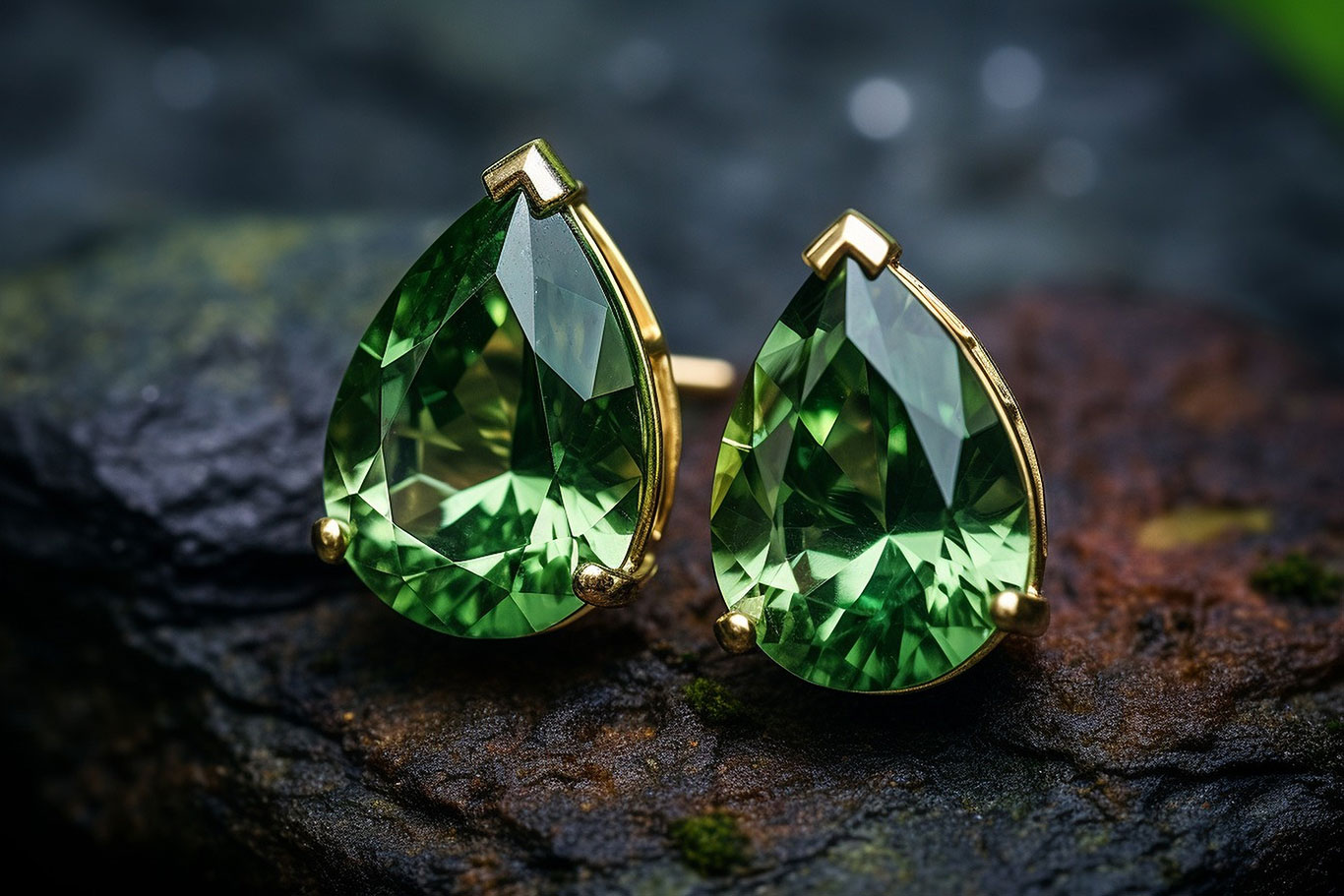
Emerald and diamond are both classified as precious gemstones, and each brings something entirely different to fine jewelry. Diamond dazzles with colorless brilliance and fire, while emerald captivates with a rich, verdant green that no other gemstone can replicate. Both have been treasured by royalty and collectors for thousands of years.
If you are deciding between an emerald and a diamond for an engagement ring, statement piece, or special occasion jewelry, this guide will walk you through the real differences in durability, color, price, brilliance, and practical wearability so you can make the right choice for your lifestyle and preferences.
What Is Emerald?
Emerald is the green variety of the mineral beryl (beryllium aluminum silicate), colored by traces of chromium and sometimes vanadium. It is one of the four precious gemstones alongside diamond, ruby, and sapphire. The finest emeralds display a vivid, slightly bluish green with strong saturation and good transparency.
Colombia has been the world's premier source of fine emeralds for over 500 years, producing stones with a warm, vivid green and characteristic three-phase inclusions that gemologists use to confirm Colombian origin. Zambia produces emeralds with a slightly bluish green and typically better clarity than Colombian stones. Brazil, Afghanistan, and Ethiopia are also important sources.
One defining characteristic of emeralds is their inclusions, affectionately called the jardin (French for "garden"). Virtually all natural emeralds contain visible inclusions, and a completely clean emerald is so rare as to be suspicious. This is very different from diamond clarity grading, where eye-clean stones are the standard. In the emerald world, inclusions are expected and even appreciated as evidence of natural origin.
Side-by-Side Comparison
| Property |
Diamond |
Emerald |
| Composition | Pure carbon (C) | Beryllium aluminum silicate (Be₃Al₂Si₆O₁₈) / Beryl |
| Hardness (Mohs) | 10 | 7.5 – 8 |
| Refractive Index | 2.42 | 1.577 – 1.583 |
| Fire (Dispersion) | 0.044 | 0.014 |
| Color Range | Colorless to light yellow/brown | Green to bluish-green |
| Price (1ct) | $5,000 – $8,000 (natural) | $500 – $10,000 |
| Birthstone | April | May |
| Resale Value | Moderate to good (natural); Limited (lab) | Moderate to good (precious) |
| Common Treatments | Laser drilling, fracture filling (uncommon) | Oiling/resin filling (standard) |
| Best For | Engagement rings, all jewelry, heirloom | Statement pieces, special occasion jewelry |
Color Comparison
Emerald's lush green is its defining feature and the primary reason people choose it over diamond. The finest emerald green — a vivid, medium-dark green with a slight bluish secondary hue — is one of the most sought-after colors in the entire gemstone world. No other green gemstone, including green sapphire, tsavorite, or peridot, displays quite the same depth and richness.
Diamonds, by contrast, are traditionally valued for the absence of color. In the standard diamond color grading scale (D–Z), the less body color a diamond shows, the higher its grade and value. Fancy green diamonds do exist, but they are extremely rare and expensive — a fine fancy vivid green diamond can cost hundreds of thousands per carat.
For anyone who wants green in their jewelry, emerald offers dramatically better value than a fancy green diamond. A fine 1-carat Colombian emerald costs $2,000 to $10,000, while a comparable fancy green diamond would be virtually unobtainable at any reasonable price. Emerald's green is also typically more vivid and saturated than what fancy green diamonds can offer.
Hardness and Durability
This is where emerald and diamond differ most significantly. Diamond is a 10 on the Mohs hardness scale; emerald ranges from 7.5 to 8. While an 8 might sound close to 10, the Mohs scale is not linear — diamond is roughly 4 to 5 times harder than emerald in absolute terms. Emerald can be scratched by harder materials encountered in daily life, though it is still harder than most common surfaces.
More importantly, emerald's characteristic inclusions (the jardin) can create internal stress points that make the stone more vulnerable to chipping or fracturing from impacts. This is why emerald-cut diamonds were originally designed — the step-cut faceting pattern was created for emeralds to reduce the risk of chipping during cutting. Most emeralds are treated with oil or resin that fills surface-reaching fractures and improves both appearance and stability.
For engagement rings that will be worn daily, diamond offers significantly better durability. Emerald engagement rings are certainly possible and can be stunning, but they require more care: avoid impacts, remove the ring during physical activities, and have the oiling refreshed periodically. For earrings, pendants, and brooches, emerald's durability is less of a concern since these pieces experience less wear.
Price Comparison
| Size |
Emerald |
Natural Diamond |
Lab Diamond |
| 0.5 ct | $200 – $2,500 | $1,500 – $3,000 | $400 – $700 |
| 1.0 ct | $500 – $10,000 | $5,000 – $8,000 | $800 – $1,500 |
| 1.5 ct | $1,500 – $20,000 | $8,000 – $15,000 | $1,200 – $2,500 |
| 2.0 ct | $3,000 – $40,000 | $15,000 – $30,000 | $2,000 – $4,000 |
Prices are approximate for good to fine quality stones. Diamond prices assume VS2 clarity, G color, Excellent cut.
Emerald pricing varies enormously based on color, clarity, origin, and treatment. A fine 1-carat Colombian emerald with vivid color and minor oiling can cost $5,000 to $10,000, while a comparable Zambian stone might be $2,000 to $5,000. At 2 carats and above, fine emeralds can reach $20,000 to $40,000 or more, especially from Colombian sources.
Diamonds follow a more standardized pricing structure. A 1-carat natural diamond (VS2 clarity, G color, Excellent cut) typically costs $5,000 to $8,000. At the mid-range, emeralds and diamonds are comparably priced, but emerald pricing has a much wider range due to the enormous variation in quality and the subjective nature of color grading.
Lab-grown diamonds at $800–$1,500 per carat are significantly less expensive than fine emeralds. If budget is your primary concern and you do not specifically want green color, a lab diamond offers more brilliance per dollar. But if you love emerald green, there is no substitute — lab-created emeralds exist but lack the character and value retention of natural stones.
Brilliance and Sparkle
Diamond and emerald produce fundamentally different visual experiences. Diamond's high refractive index (2.42) and strong dispersion (0.044) create the signature white brilliance with rainbow fire flashes. A well-cut diamond is designed to maximize this light return, producing the scintillation that makes diamonds so captivating in motion.
Emerald has a much lower refractive index (1.577–1.583) and minimal dispersion (0.014). It does not sparkle in the same way diamond does. Instead, emerald's beauty comes from its rich body color and a characteristic broad, watery reflection pattern called the "hall of mirrors" effect in step-cut stones. This is a slower, more stately optical effect compared to diamond's rapid-fire brilliance.
The emerald cut (rectangular step cut) was designed specifically to showcase emerald's color rather than maximize brilliance. When you choose an emerald, you are choosing color over sparkle — and that is perfectly valid. The deep, glowing green of a fine emerald has an allure that is completely different from diamond's icy fire but equally beautiful in its own right.
When to Choose Emerald Over Diamond
Emerald may be the better choice if any of the following resonate with you:
- You want rich, vivid green as the centerpiece of your jewelry
- You value the prestige of one of the four precious gemstones with thousands of years of royal history
- You are creating a statement piece, cocktail ring, or special occasion jewelry rather than an everyday ring
- You want a meaningful gift for a May birthday or 20th/35th anniversary
- You appreciate the character of natural inclusions (the jardin) as part of the stone's beauty
- You want a gemstone with strong cultural and historical significance across many civilizations
When to Choose Diamond Over Emerald
Diamond may be the better choice if any of the following are important to you:
- You need maximum durability for a ring that will be worn every single day
- Brilliance, fire, and sparkle are your top visual priorities
- You want a low-maintenance stone that does not require special care or re-treatment
- Standardized grading (GIA clarity, cut, carat) gives you confidence in your purchase
- Long-term resale value and heirloom potential are important
- You want to design your own ring with a certified stone
Can You Use Emerald in an Engagement Ring?
You can, but with important caveats. Emerald scores 7.5 to 8 on the Mohs hardness scale, which is lower than sapphire (9) or diamond (10). More importantly, emerald's natural inclusions can make it more vulnerable to chipping from impacts. An emerald engagement ring requires more care than a diamond or sapphire ring: remove it during activities that might cause impacts, avoid ultrasonic cleaners, and have the oiling inspected periodically.
That said, emerald engagement rings can be absolutely stunning and have a long royal history. If you choose an emerald engagement ring, opt for a protective setting style (bezel or halo) that shields the stone's edges, and select a stone with good transparency and moderate (not heavy) inclusions. A skilled jeweler can help you find a stone that balances beauty with wearability.
If you love emerald green but want maximum durability, consider a design with a diamond center stone and emerald side stones or accents. This gives you the best of both worlds. Browse our gemstone ring collection and diamond engagement rings to explore your options.
Our Recommendation
Emerald and diamond are both exceptional gemstones, but they serve different purposes best. Diamond is the superior choice for everyday engagement rings due to its unmatched hardness and low maintenance. Emerald is the superior choice when vivid green color, historical prestige, and distinctive character are your priorities.
For pendants, earrings, and special occasion rings, emerald is an outstanding choice with more than adequate durability. For daily-wear engagement rings, we recommend either diamond or, if you love green, exploring protective settings for emerald. At USA Jewels, we carry both emerald jewelry and diamond engagement rings to help you find the perfect piece.
Frequently Asked Questions
Is emerald a good diamond alternative?
Emerald is a precious gemstone in its own right, not merely a diamond alternative. It offers vivid green color that no diamond can match at comparable prices. However, emerald is softer (7.5–8 Mohs vs 10) and requires more care than diamond, especially in rings. For earrings, pendants, and special occasion jewelry, emerald is an excellent choice. For daily-wear engagement rings, diamond offers superior durability.
How does emerald compare to diamond in durability?
Emerald is significantly less durable than diamond for daily wear. It scores 7.5–8 on the Mohs scale (diamond is 10) and its characteristic inclusions can create vulnerability to chipping. Most emeralds are oiled to improve stability, and this treatment may need refreshing over time. Diamond requires no such maintenance. For engagement rings worn daily, diamond is the more practical choice, though emerald engagement rings are possible with careful setting design and proper care.
Can I use emerald for an engagement ring?
Yes, but with more care than a diamond ring requires. Emerald scores 7.5–8 on Mohs hardness and its natural inclusions can make it vulnerable to chipping from impacts. Choose a protective setting (bezel or halo), avoid wearing it during physical activities, and skip ultrasonic cleaning. Many people successfully wear emerald engagement rings for decades by treating the stone with appropriate care. Consider emerald if you love the color and accept the maintenance trade-off.
Is emerald worth the investment?
Fine natural emeralds, particularly untreated Colombian stones with vivid color, can hold significant value and have appreciated over time. Emerald is one of the four precious gemstones and has been highly valued for thousands of years. However, the resale market for emeralds is less liquid than for diamonds, and treatment status significantly affects value. Most emeralds should be purchased for enjoyment, with value retention as a secondary consideration.
Why are emeralds so included compared to diamonds?
Emeralds form under geological conditions that naturally produce inclusions. The beryl crystal structure readily incorporates foreign minerals, liquids, and gases during growth. These inclusions, called the jardin (French for garden), are so characteristic that a perfectly clean emerald is considered suspicious and may indicate synthetic origin. The gemstone trade accepts inclusions in emeralds far more readily than in diamonds, and inclusions are even considered part of emerald's natural character and charm.
How can I tell emerald from diamond?
Emerald and diamond look completely different: emerald displays rich green body color while diamond is typically colorless with white brilliance. Emeralds almost always contain visible inclusions, while quality diamonds are eye-clean. Under gemological testing, they have different refractive indices (emerald 1.58 vs diamond 2.42), different hardness, and different crystal structures. A standard diamond tester or basic gemological tools will immediately distinguish the two.
Gemstone vs Diamond Comparisons