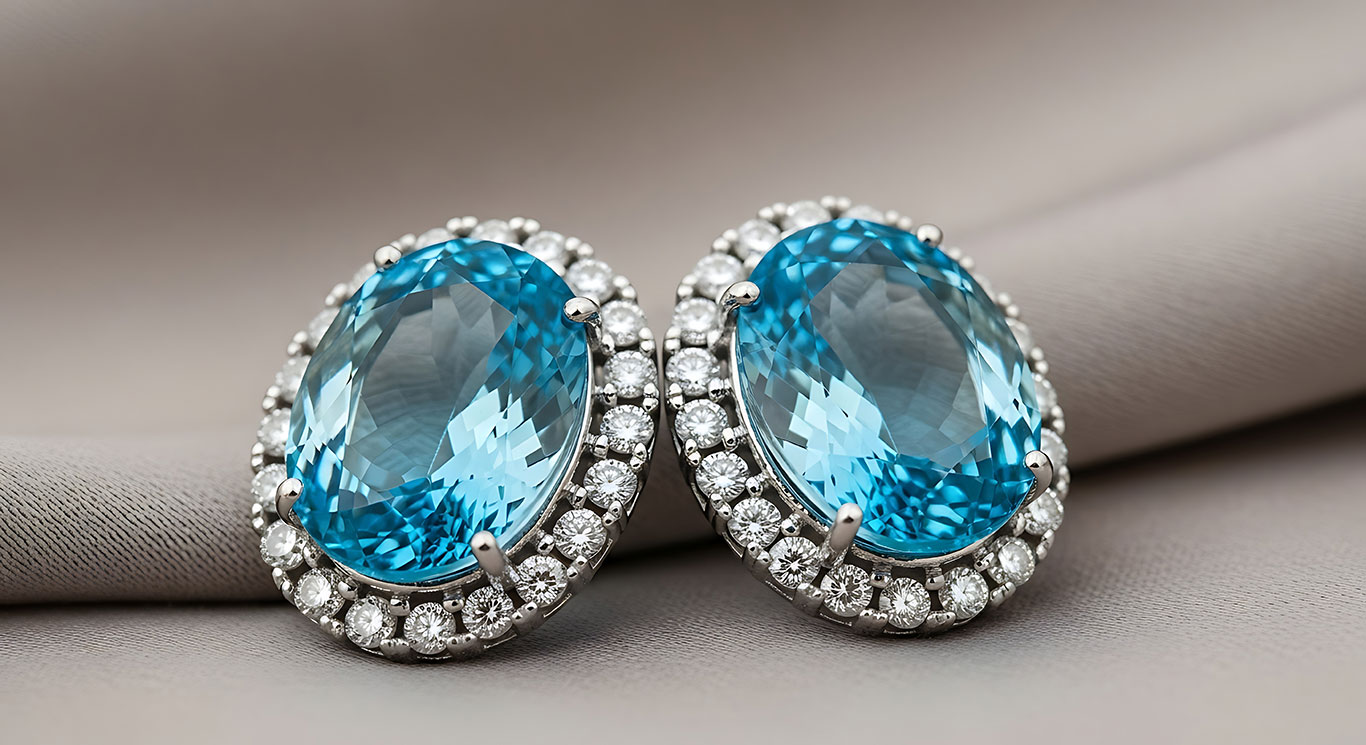
Aquamarine
| Property | Details |
|---|
| Mineral | Beryl |
| Mohs Hardness | 7.5 – 8 |
| Refractive Index | 1.577 – 1.583 |
| Birthstone | March |
| Anniversary | 19th |
| Major Sources | Brazil, Pakistan, Nigeria, Madagascar, Mozambique |
| Treatments | Heat treatment to remove green tints (standard) |
Overview
Aquamarine is the blue to blue-green variety of the mineral beryl (a cousin of emerald). Its name comes from the Latin for water of the sea, perfectly describing its cool, tranquil color. The most valued shade is a medium-dark blue without green undertones, sometimes called Santa Maria aquamarine after the famous Brazilian mines. Unlike emerald, aquamarine is typically very clean and free of visible inclusions.
History & Lore
Ancient mariners treasured aquamarine as a talisman of good luck and protection at sea. Roman fishermen called it the treasure of mermaids. The largest gem-quality aquamarine ever found was discovered in Marambaia, Brazil, in 1910, weighing 243 pounds. In medieval times, aquamarine was thought to reawaken the love of married couples.
Quality & Value Factors
Color is the primary value driver. Deep, saturated blue without green tints is most prized. Clarity is expected to be excellent—aquamarine should be eye-clean. Because color is more intense in larger stones, aquamarine is an excellent choice for statement jewelry pieces where the larger size truly showcases the gem's beauty. Heat treatment to remove greenish tints is common and permanent.
Care & Cleaning
Ranking 7.5 to 8 on the Mohs scale, aquamarine is an excellent gemstone for everyday wear. It is tough and resistant to scratching. It can be safely cleaned with warm soapy water or in an ultrasonic cleaner.
Shop Aquamarine Jewelry
Browse our collection of aquamarine jewelry including rings, earrings, and pendants set in white gold and platinum.
Frequently Asked Questions
What is Santa Maria aquamarine?
Santa Maria aquamarine is the trade name for the finest, most saturated blue aquamarine, named after the Santa Maria de Itabira mine in Minas Gerais, Brazil. These stones display a deep, vivid blue without any greenish tint. The term is now used as a color grade rather than a strict origin designation, and similarly saturated stones from other locations (particularly Africa) are sometimes called Santa Maria Africana.
Is aquamarine related to emerald?
Yes, aquamarine and emerald are both varieties of the mineral beryl. They share the same crystal structure and similar physical properties, but their colors come from different trace elements. Emerald's green is caused by chromium and/or vanadium, while aquamarine's blue is caused by iron. Other beryl varieties include morganite (pink), heliodor (yellow), and goshenite (colorless).
Does aquamarine need to be treated?
Most aquamarine on the market has been heat-treated to remove greenish or yellowish tints and produce a purer blue color. This treatment is permanent, stable, and widely accepted in the gem trade. Untreated aquamarine with fine blue color does exist but is relatively uncommon. Heat treatment does not diminish the stone's value in the way it might for rarer gemstones like sapphire.
How durable is aquamarine for daily wear?
Aquamarine is very durable for daily wear. At 7.5 to 8 on the Mohs hardness scale, it is harder than most common gemstones and resistant to scratching. It has good toughness with no problematic cleavage. Aquamarine is an excellent choice for engagement rings and everyday jewelry that needs to withstand regular use.
Why does aquamarine look more blue in larger sizes?
Aquamarine's color saturation increases with the depth of the stone. Larger stones allow light to travel through more material, which intensifies the blue color. This is why small aquamarines often appear pale or nearly colorless, while larger stones display a much richer, more saturated blue. For this reason, aquamarine is particularly well-suited for statement pieces with larger center stones.
Specialty & Collector Gemstones