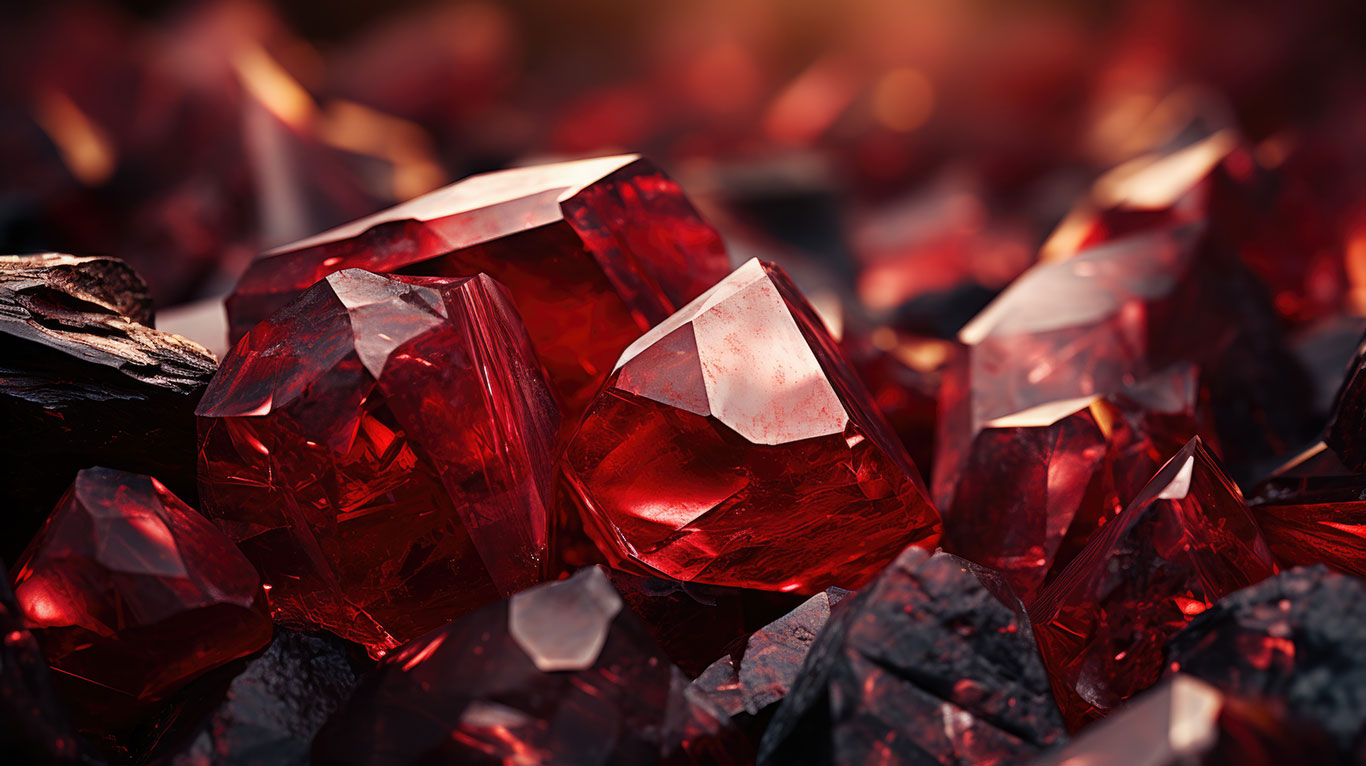
Garnet, the birthstone for January, signifies eternal friendship and trust and is the perfect gift for a friend. Derived from the Latin word granatum, meaning seed, garnet is named for its resemblance to the vibrant red seeds of a pomegranate. References to this gemstone date back to 3100 B.C., when the Egyptians used garnets as inlays in their jewelry and carvings. With its deep, warm glow and remarkable range of colors, garnet has remained a beloved gemstone across cultures and centuries.
History and Origin
Garnet has a rich history spanning thousands of years. Ancient Egyptian pharaohs wore garnet necklaces as symbols of power, and the stones were entombed with mummified remains as prized possessions for the afterlife. Roman scholars and warriors favored garnet, using the stone in signet rings to stamp wax seals on important documents. During the Middle Ages, garnets were highly sought after by clergy and nobility. Bohemian garnet from central Europe became particularly famous during the Victorian era, when elaborate jewelry designs featuring clusters of small, deep-red garnets became fashionable.
The gemstone also played an important role in the trade routes of the ancient world. Garnets have been discovered in the jewelry of Anglo-Saxon kings and in Viking burial sites across Scandinavia, suggesting the stone was traded extensively across Europe and beyond. In the 18th and 19th centuries, Bohemian garnets from what is now the Czech Republic became the height of fashion, with pyrope garnet clusters adorning brooches, necklaces, and hair combs. Today, garnet continues to be mined on nearly every continent, with significant deposits in East Africa, India, Sri Lanka, and Brazil.
Symbolism and Meaning
Throughout history, garnet has been associated with protection, strength, and safe travel. Medieval travelers carried garnet to guard against accidents far from home. The gemstone is also believed to inspire love and devotion, balance energy, and encourage self-confidence. In crystal healing traditions, garnet is thought to revitalize feelings and enhance creativity while protecting against negative energies.
Garnet is the traditional gift for a second wedding anniversary, further cementing its association with enduring bonds. The stone has also been linked to the heart and blood, and ancient healers believed it could cure inflammatory diseases and soothe an angry heart. Whether given to celebrate friendship, mark a milestone, or simply bring warmth to a winter birthday, garnet carries deep sentimental weight.
Colors and Varieties
While most people picture a deep red stone when they think of garnet, this gemstone actually belongs to a group of minerals that comes in virtually every color. The most common variety, pyrope, displays the classic dark red hue. Almandine garnets tend toward reddish-brown tones. Tsavorite garnet offers a vivid emerald-like green, while demantoid garnet is prized for its exceptional brilliance and is one of the rarest and most valuable garnet varieties. Spessartine garnet ranges from orange to reddish-brown, and rhodolite garnet presents a beautiful raspberry-pink color.
Color-change garnets are among the most fascinating varieties, shifting from blue-green in daylight to purple-red under incandescent light. Malaia garnet, found in East Africa, offers warm pinkish-orange tones. With such extraordinary diversity, there is truly a garnet for every taste and style. Understanding the different gemstone varieties can help you choose the perfect stone.
Durability and Care
Garnet ranks 6.5 to 7.5 on the Mohs hardness scale, making it durable enough for all types of jewelry. It can be cleaned safely with warm soapy water and a soft brush. While garnet is generally tough, it should be protected from hard blows and sudden temperature changes. Ultrasonic cleaners are usually safe for garnets that have not been fracture-filled. For detailed guidance on keeping your gemstone jewelry in top condition, see our jewelry care guide.
Whether you choose a classic deep red pyrope or a rare green tsavorite, garnet makes a meaningful January birthday gift that symbolizes lasting friendship and trust. Today, the most important sources for garnet include Africa, Sri Lanka, India, and Brazil.
Shopping Tips
When shopping for garnet jewelry, color is the most important factor. Look for stones with a rich, saturated hue and good transparency. Deep red pyrope and almandine garnets are widely available and offer excellent value, while specialty varieties like tsavorite, demantoid, and color-change garnet command higher prices due to their rarity and beauty. Always examine the stone under different lighting conditions, as garnet can appear quite different under natural daylight versus artificial light.
Garnet is an ideal choice for gemstone rings, earrings, and pendants. Its durability makes it suitable for everyday wear in any setting style. For the most impressive visual impact, consider a garnet set in yellow or rose gold, which beautifully complements the stone's warm red tones. When purchasing online, look for clear photographs showing the stone's actual color and any visible inclusions, and always buy from a reputable jeweler who provides accurate gemstone descriptions.
Frequently Asked Questions
What color is garnet?
Garnet is most commonly a deep red color, but it actually comes in virtually every color of the rainbow. Popular varieties include green tsavorite, orange spessartine, raspberry rhodolite, and even rare color-change garnets that shift between blue-green and purple-red depending on the light source.
Is garnet durable enough for everyday wear?
Yes. Garnet ranks 6.5 to 7.5 on the Mohs hardness scale, making it durable enough for rings, earrings, pendants, and bracelets. While it is tough enough for daily wear, it should still be protected from hard impacts and sudden temperature changes.
How do I clean garnet jewelry?
The safest method is warm soapy water and a soft brush. Gently scrub around the setting to remove dirt and oils, then rinse thoroughly and pat dry with a lint-free cloth. Ultrasonic cleaners are generally safe for garnets that have not been fracture-filled.
What does garnet symbolize?
Garnet has long been a symbol of eternal friendship, trust, protection, and safe travel. Medieval travelers carried garnet to guard against accidents, and the stone is also associated with love, devotion, and self-confidence. It is the traditional gemstone gift for a second wedding anniversary.
Where are garnets found?
Garnets are mined on nearly every continent. The most important sources today include East Africa (Kenya, Tanzania, Madagascar), Sri Lanka, India, and Brazil. Historically, Bohemian garnets from the Czech Republic were among the most famous and sought-after varieties.
Explore Other Birthstones