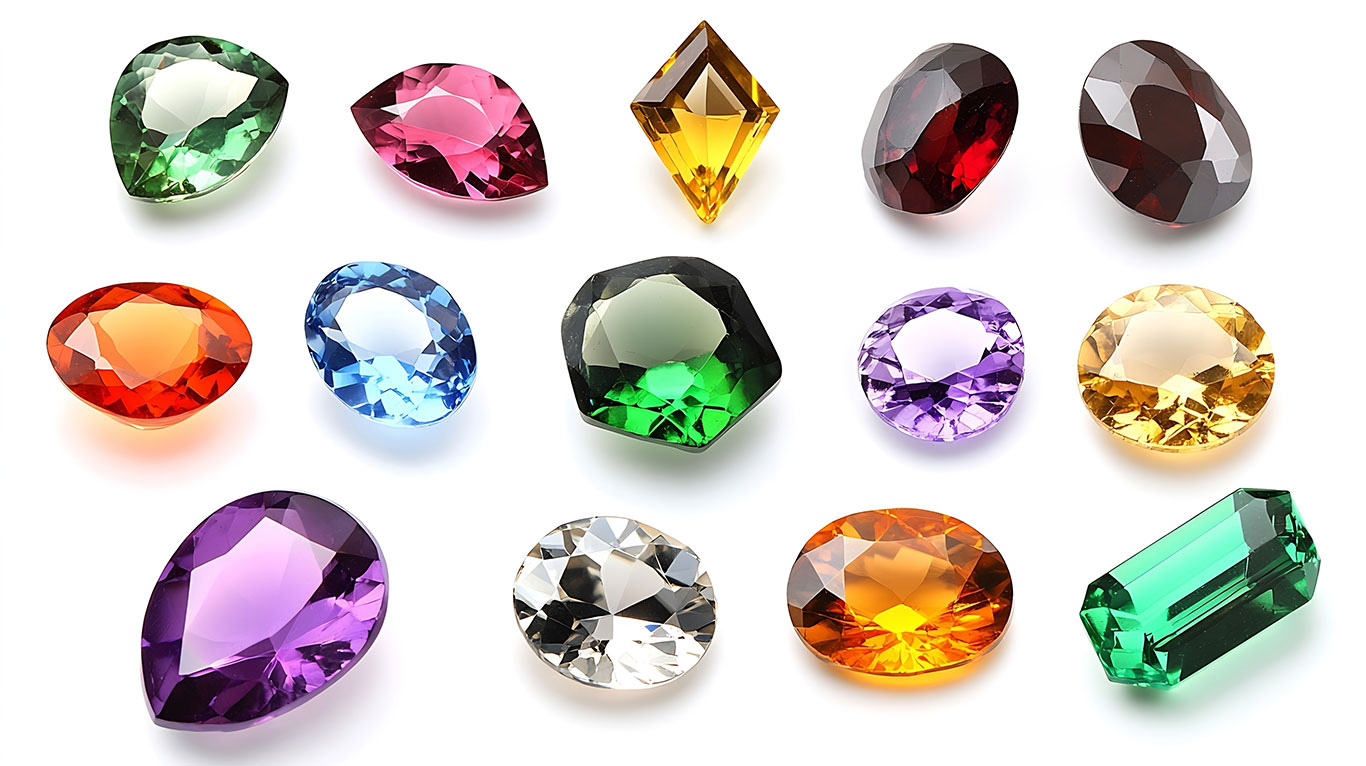
Zircon
| Property | Details |
|---|
| Mineral | Zircon (zirconium silicate) |
| Mohs Hardness | 6 – 7.5 |
| Refractive Index | 1.810 – 2.024 (very high) |
| Birthstone | December (alternative) |
| Major Sources | Cambodia, Myanmar, Sri Lanka, Tanzania |
| Treatments | Heat treatment for blue and colorless (standard) |
Overview
Zircon (not to be confused with synthetic cubic zirconia) is a natural gemstone that has been used in jewelry for centuries. It possesses an exceptionally high refractive index that gives it outstanding brilliance and fire—in some colors, it can rival diamond for sparkle.
Why Zircon Is Special
Zircon has a uniquely high refractive index and a distinctive optical property called birefringence—you can see a doubling of the back facets when looking through the stone, giving it a characteristic soft, slightly fuzzy brilliance that experienced gem lovers find charming. Blue zircon was hugely fashionable in the Victorian and Art Deco eras. Colorless zircon has brilliance and fire that approaches diamond.
Colors & Varieties
Blue zircon: The most popular color, ranging from sky blue to vivid blue. Colorless zircon: Outstanding brilliance, historically used as a diamond simulant. Yellow-orange zircon: Warm, autumnal tones. Red and brown zircon: Natural colors before heat treatment. Green zircon: Rare and collectible. Blue and colorless zircon are produced by heat-treating reddish-brown crystals from Cambodia and Myanmar.
Care & Cleaning
Zircon ranges from 6 to 7.5 on the Mohs scale and can be brittle, with facet edges prone to chipping. Set zircon in protective mountings and avoid hard impacts. Clean with warm soapy water only. Avoid ultrasonic cleaners.
Frequently Asked Questions
Is zircon the same as cubic zirconia?
No, zircon and cubic zirconia are completely different materials. Zircon is a natural gemstone (zirconium silicate) that has been mined from the earth for thousands of years. Cubic zirconia (CZ) is a synthetic, lab-created material (zirconium oxide) designed as a diamond simulant. The similar names cause constant confusion, which has unfortunately harmed zircon's reputation. Natural zircon is a beautiful, rare gemstone with unique optical properties that no synthetic can replicate.
What is birefringence in zircon?
Birefringence is an optical property where light splits into two rays as it passes through a crystal, causing a visible doubling of the back facets when viewed through the stone. Zircon has the strongest birefringence of any common gemstone, giving it a characteristic soft, slightly fuzzy brilliance that experienced gem enthusiasts find beautiful and distinctive. This doubling effect is a reliable way to identify zircon and distinguishes it from diamond, which is singly refractive.
How does zircon compare to diamond?
Colorless zircon has brilliance and fire that approach diamond, and it was historically used as a diamond substitute before cubic zirconia was invented. However, zircon is significantly softer (6-7.5 vs 10 Mohs), has visible birefringence (doubling of back facets), and can be brittle with facet edges prone to chipping. Diamond remains superior in hardness, toughness, and single-refraction optical properties. Zircon is best appreciated as a beautiful gemstone in its own right rather than a diamond substitute.
Is blue zircon natural?
Most blue zircon is produced by heat-treating reddish-brown zircon crystals, primarily from Cambodia and Myanmar. The heat treatment permanently changes the color to vivid blue and is a standard, widely accepted practice. Natural blue zircon does exist but is extremely rare. The treatment is permanent and does not affect the stone's durability. Blue zircon was immensely popular in Victorian and Art Deco jewelry and remains the most sought-after zircon color today.
Why are zircon facet edges prone to chipping?
Zircon can be brittle because some specimens have experienced natural radiation damage to their crystal structure over geological time. This metamictization, as it is called, weakens the crystal lattice and makes the stone more fragile. High-quality zircon with minimal radiation damage is more durable. Regardless, it is wise to set zircon in protective mountings, avoid hard impacts, and store zircon jewelry separately from harder gemstones that could scratch or chip the facet edges.
Specialty & Collector Gemstones