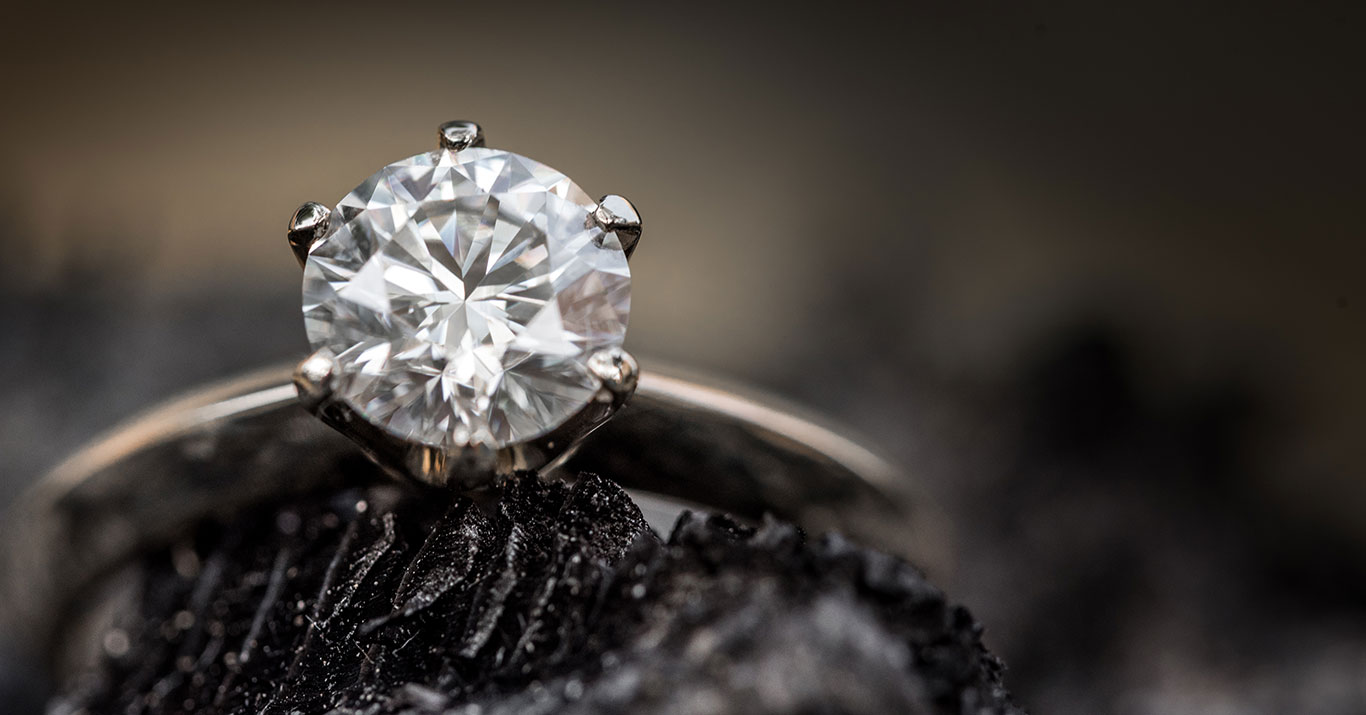
Diamond, the birthstone for April, is the ultimate symbol of enduring love and strength. As the hardest natural substance on earth, diamond has captivated humanity for centuries with its unmatched brilliance and fire. The word diamond comes from the Greek adamas, meaning unconquerable and indestructible, a fitting name for a gem that has come to represent eternal commitment. Whether set in an engagement ring or a dazzling pendant, diamond remains the world's most desired gemstone.
History and Origin
Diamonds were first discovered in India as early as the 4th century B.C. and were valued for their ability to refract light. For centuries, India was the only source of diamonds in the world. In the 1700s, diamond deposits were found in Brazil, and the historic discovery of diamonds in South Africa in 1866 sparked a modern diamond rush. The tradition of diamond engagement rings dates back to 1477, when Archduke Maximilian of Austria gave a diamond ring to Mary of Burgundy. Today, major diamond sources include Botswana, Russia, Canada, and Australia.
The development of modern cutting techniques in the 20th century, particularly Marcel Tolkowsky's ideal proportions for the round brilliant cut in 1919, transformed the diamond from a rare curiosity into the sparkling centerpiece of fine jewelry. Today, advanced technology enables diamond cutters to optimize every facet for maximum light performance, and certification from laboratories like GIA and IGI provides buyers with objective quality assessments.
Symbolism and Meaning
Diamonds symbolize eternal love, courage, and invincibility. Ancient Romans believed that diamonds were splinters of falling stars, while Greeks thought they were the tears of the gods. In Hindu mythology, diamonds were created when bolts of lightning struck rocks. Throughout the ages, diamonds have been worn by kings and queens as symbols of strength and invincibility. Today, diamonds remain the most popular choice for engagement rings and milestone celebrations.
Beyond romance, diamonds represent the 60th and 75th wedding anniversaries. The stone is also associated with clarity, purity, and unbreakable bonds, making it a meaningful gift for any significant life event. Diamonds are the ultimate symbol of permanence, a quality that has made them the cornerstone of fine jewelry traditions worldwide.
Colors and Varieties
While colorless diamonds are the most well-known, diamonds actually come in virtually every color of the rainbow. Fancy-color diamonds in hues of yellow, pink, blue, green, and even red are among the rarest and most valuable gemstones in the world. The famous Hope Diamond, a 45.52-carat deep blue stone, is one of the most recognized gems in history. Learn more about fancy colored diamonds in our dedicated guide.
When purchasing a diamond, the Four Cs of quality are essential: Cut, which determines how well the diamond reflects light; Color, graded from D (colorless) to Z (light yellow); Clarity, which measures internal and surface imperfections; and Carat weight, the standard unit of measurement for gemstone mass. Understanding these factors is the key to choosing a diamond that delivers the best brilliance and value for your budget.
Durability and Care
Diamond is a 10 on the Mohs hardness scale, making it the hardest known natural material. This exceptional hardness means diamonds are highly resistant to scratching and ideal for daily wear. Despite their hardness, diamonds can be chipped by a sharp blow to certain angles. Regular cleaning with warm soapy water and a soft brush keeps a diamond sparkling at its best. Professional cleaning and prong inspection are recommended at least once a year. For full care instructions, see our jewelry care guide.
Whether you choose a classic colorless solitaire or a rare fancy-color stone, a diamond is the ultimate April birthday gift representing lasting beauty and strength.
Shopping Tips
When shopping for a diamond, prioritize cut quality above all else. A well-cut diamond will deliver superior brilliance and fire, often outperforming a larger stone with a lesser cut. Use our detailed guides on color, clarity, and carat weight to understand how these factors interact and affect price. For the best value, consider G-H color and VS2-SI1 clarity, which appear identical to higher grades once set in jewelry.
Always purchase diamonds with a certificate from a reputable laboratory such as GIA or IGI. Browse our full inventory of certified loose diamonds to compare options side by side. Whether you are looking for a diamond engagement ring, diamond earrings, or a diamond pendant, choosing a certified stone ensures you receive exactly the quality you are paying for. Our team is available to help you select the ideal diamond for your budget and style.
Frequently Asked Questions
Why is diamond the April birthstone?
The tradition of birthstones dates back to ancient times, and diamond has been associated with April since at least the 15th century. Its brilliance and durability made it a natural symbol for spring renewal and strength. The modern standardized birthstone list, established by the American National Retail Jewelers Association in 1912, confirmed diamond as the April birthstone.
Are lab-grown diamonds real?
Yes, lab-grown diamonds are chemically, physically, and optically identical to mined diamonds. They are real diamonds created in a controlled laboratory environment rather than formed deep within the earth over billions of years. Lab-grown diamonds are certified by the same gemological laboratories and typically cost 30-50% less than comparable natural diamonds.
What are the 4Cs?
The 4Cs stand for Cut, Color, Clarity, and Carat weight. Cut refers to how well a diamond's facets interact with light. Color grades the absence of color from D (colorless) to Z (light yellow). Clarity measures the presence of inclusions and blemishes. Carat weight measures the diamond's mass. Together, these four factors determine a diamond's quality and value.
What is a fancy colored diamond?
Fancy colored diamonds are diamonds with natural body color beyond the D-to-Z color range. They come in virtually every color, including yellow, pink, blue, green, orange, and extremely rare red. Intense, vivid colors are the most valuable. Fancy colored diamonds are graded on a separate scale that emphasizes the depth and saturation of their color.
How should I clean my diamond?
The easiest way to clean a diamond is with warm soapy water and a soft-bristled brush. Gently scrub the diamond, paying attention to the underside where oils and dirt accumulate. Rinse thoroughly and dry with a lint-free cloth. Professional cleaning and prong inspection at a jeweler is recommended at least once a year to ensure the setting remains secure.
Explore Other Birthstones