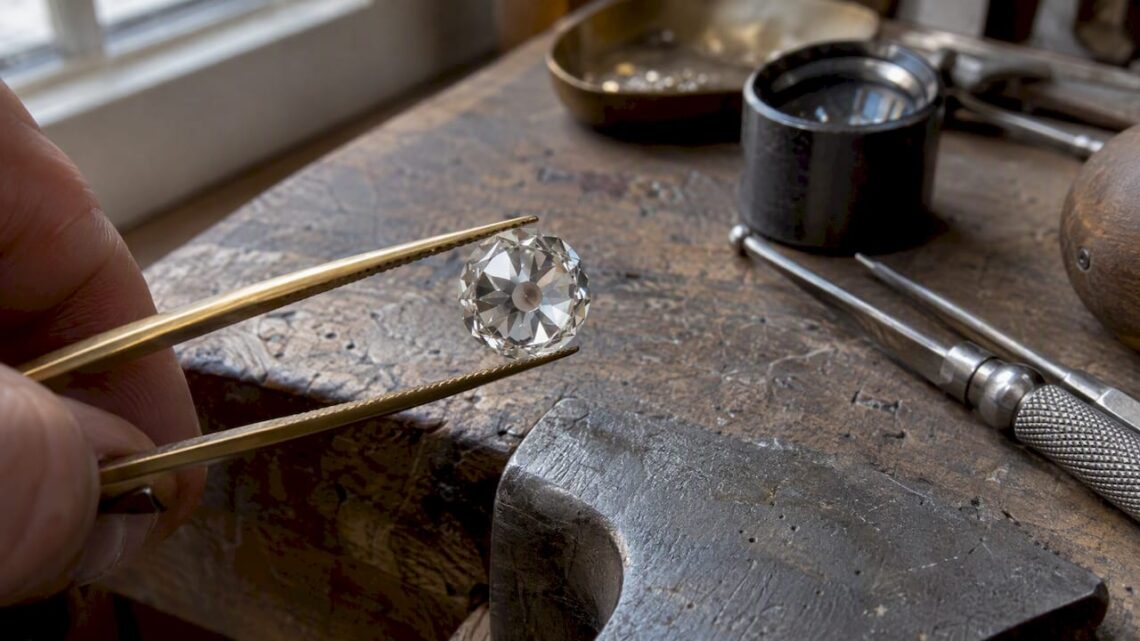
Diamond Culets: When a Visible Dot Is a Style Choice
A culet is the tiny facet at the very bottom of a diamond’s pavilion, and on a round brilliant it can be the 58th facet, there to protect the pointed tip from chipping. At the sizes most buyers see, None to Small, you will not notice it in everyday wear. GIA records culet size on its grading reports, so you can check it before you buy.
TL;DR:
- GIA grades culets from None through Extremely Large; sizes above Medium can leak light, and Very Large culets may show as a dark center.
- Compare the plot diagram with close images, because the same culet grade can look different depending on its size and centering.
- For Old Mine and Old European cuts, a visible culet is often intentional and suits an antique look; modern brilliants usually favor None to Small.
- A protective prong or bezel can shield the pavilion tip, while a culet away from center may disrupt appearance more than a tiny centered one.
Table of Contents
- What a culet is and where it sits on a diamond
- How GIA grades culet size, from None to Extremely Large
- How culet size changes appearance and cut grade
- Why antique diamonds show open culets
- How to read the culet on a diamond report
- Our view: pick the culet that fits the life of the stone
- See your diamond’s culet before you buy
- FAQ
- Sources
What a culet is and where it sits on a diamond
Picture a diamond in two halves. The crown is the top, with the flat table facing up. The pavilion is the lower half that tapers to a point beneath the stone. The girdle is the thin band where the two halves meet, and the culet sits at the very bottom, parallel to the table.
Here is how the pieces relate:
- Table: the large flat facet on top, which you look through.
- Girdle: the outer edge, where the stone is gripped by a setting.
- Pavilion: the lower facets that bounce light back up toward your eye.
- Culet: the small facet that replaces the sharp point at the bottom.
A standard round brilliant has 57 or 58 facets, and the 58th exists only when the cutter adds a flat culet. Without it, the pavilion ends in a point. Historically, the culet was added to protect the pavilion tip, because a needle-sharp point is the easiest part of a diamond to chip.
Today a prong or bezel setting often shields that tip, so many modern cutters skip the culet or keep it microscopic. A culet is also tied to the cut style, not just the stone’s outline: shape and cut are separate things, and the facet arrangement decides whether a culet appears at all. Round brilliants and cushion cuts can both have culets.
How GIA grades culet size, from None to Extremely Large
GIA describes culet size in words, not numbers. The full scale is None, Very Small, Small, Medium, Slightly Large, Large, Very Large, and Extremely Large. Sizes from None to Small are preferred because they are generally invisible to the naked eye.
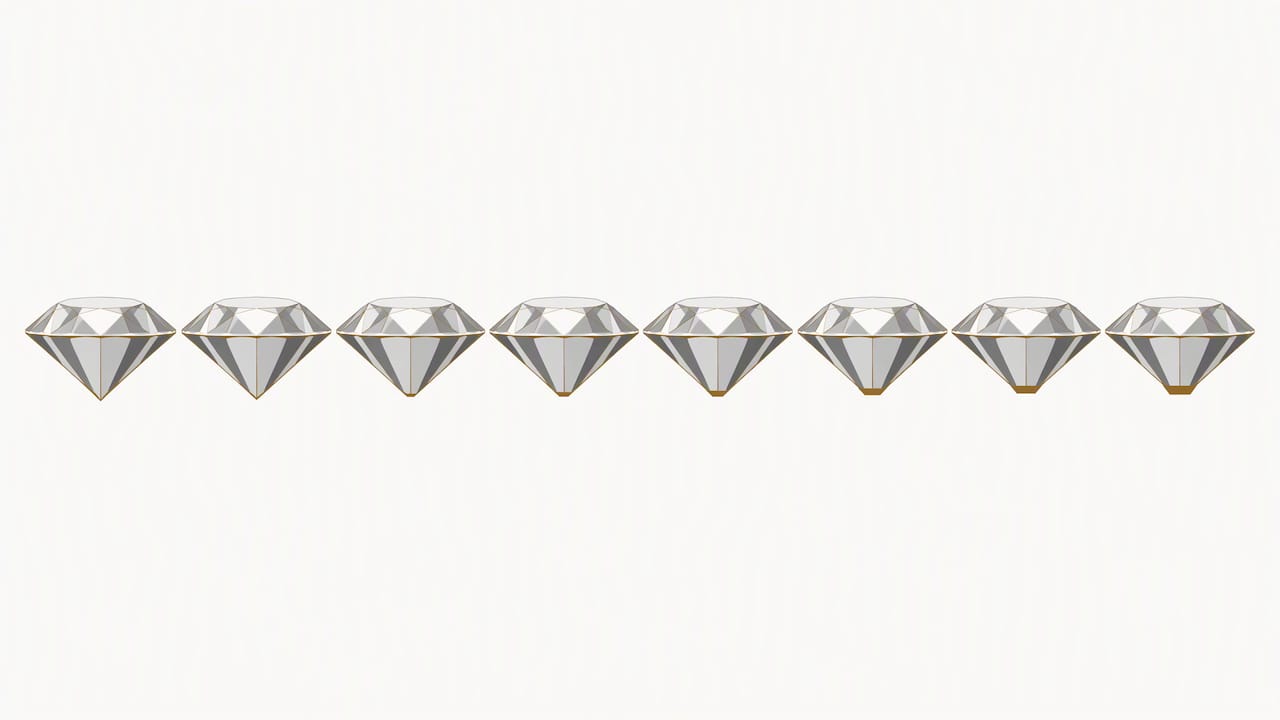
Graders look at the culet face-up under 10X magnification. If the culet is angled well away from parallel to the table, it may be recorded as “None” or treated as an extra facet instead of a true culet. That distinction matters, because extra facets can hurt symmetry and the cut grade.
Here is what each range means for what you will actually see:
- None: the pavilion ends in a point or a tiny polished edge, so nothing shows through the table.
- Very Small and Small: invisible to the naked eye, and the standard choice for modern brilliants.
- Medium: it may be visible, and the International Gem Society says this size typically corresponds with very good cut grades.
- Slightly Large and Large: larger culets may be visible as a dot, depending on the stone.
- Very Large and Extremely Large: a visible dot or even a dark circle in the center of the table.
For most buyers, None to Small are the preferred sizes. Larger culets may affect brilliance, so look closely at the stone before deciding.
How culet size changes appearance and cut grade
Light enters through the table, travels down into the pavilion, and bounces back up toward you. A small culet barely interrupts that path. A large one gives light a hole to escape through. Any culet larger than Medium can reduce brilliance by letting light leak out through the center, and it often shows up as a dot or, at Extremely Large, a dark circle in the middle of the table.
According to the International Gem Society, culet sizes of None to Small are preferred and earn higher cut grades, while Medium typically corresponds with very good grades.
Culet size is not a direct measure of brilliance. As GIA gemologists explain, it is one factor in overall cut grading, because an off-center or poorly sized culet can disrupt the face-up appearance.
A few practical points to keep in mind:
- Centering matters more than you might expect. An off-center culet or an added facet can hurt appearance more than a tiny, well-centered culet ever would.
- Proportions interact. Culet size is part of the proportion and symmetry review, and off-center culets can produce unusual face-up patterns where culet reflections become visible.
- Cut quality is a team effort. The GIA study of round brilliant diamonds discusses how proportions and finish shape cut quality, with culet size recorded as one descriptor among several.
Pro Tip: Once a diamond is set, prongs often cover the tip anyway, so a very small culet or none at all is perfectly reasonable for a modern ring.
If you want to see how culet size fits into the bigger picture, our diamond cut comparison guide for engagement rings walks through how proportions and facet counts shape what you see.
Why antique diamonds show open culets
If you have ever noticed a visible circle in the middle of a vintage diamond, you were looking at an open culet. In Old European and Old Mine cuts, this is a deliberate feature. These stones commonly carry a flat culet that shows as a circle in the table, a feature associated with their vintage look rather than a modern-cut flaw.
Earlier cushion-style cuts followed the same pattern. Old Mine cuts often included open culets, while modern cutters generally favor a smaller culet or none at all to improve brilliance.
Here is how to think about the two styles:
- Vintage character: an open culet can give the stone a distinctive vintage appearance.
- Modern brilliance: a None to Small culet keeps the table clean and the light return crisp.
- A style choice, not a defect: if you are shopping for an antique-style stone, a visible culet belongs to its charm.
- Weight retention: open culets were historically used to retain weight.
So the question to ask is not “does it have a culet?” but “does this culet match the look I want?” If you want maximum sparkle in a contemporary ring, choose None to Small. If you want an heirloom feel, a Medium or visible culet may be exactly right.
How to read the culet on a diamond report
On a GIA report, culet size appears alongside the finish details, and culet size is listed using standardized language as part of the 4Cs reporting. Here is a simple routine to follow:
- Read the report wording. Find the culet entry and match it to the scale: None, Very Small, Small, Medium, and so on.
- Look at the plot diagram. The diagram can hint at facets and features that the single word does not.
- Ask for 10X images or face-up photos. You want to see whether the culet appears in the table.
- Ask whether the culet is centered. A centered culet at a small size is rarely a concern.
- Match it to your setting. Think about how prongs or a bezel will treat the pavilion tip.
For a modern round brilliant, prefer None to Small. For an antique-style cut, or when keeping weight matters, a Medium or visible culet can make sense.
Pro Tip: Ask for magnified images and the plot diagram instead of relying only on the verbal grade, because two stones with the same word can look different.
The culet is also just one of several finish details. If you want a related checklist, our guide to diamond girdle thickness covers another piece of the same report section.
Once you have the culet sorted, remember that shopping for a ring is about the whole picture. If you are also thinking about styling for the big day, a guide to rhinestones versus crystals for bridal wear can help you choose finishing touches for your outfit.
Our view: pick the culet that fits the life of the stone
We think culet size gets more attention than it deserves, and also less. Many buyers worry that a culet is a flaw and rule out good stones. Others never look at the entry and miss a visible dot in an otherwise handsome diamond. A fair reading sits between those two.
A None to Small culet is the sensible default for a modern brilliant, and the report plus a magnified image will confirm what you are getting. Beyond that, we would rather you choose by eye and by setting than chase a perfect word on paper. A diamond without a culet is not defective, and a visible culet in an antique cut is part of its story. Our team shares the same view when it comes to the 4Cs: cut, color, clarity, and carat work together, and our 4Cs breakdown shows how to weigh them.
We sell certified loose diamonds so you can judge the culet for yourself. If you are unsure how a particular culet will look in a chosen setting, reach out and we will walk through it with you.
— Joseph
See your diamond’s culet before you buy
When you shop with us, you can look over our certified loose diamonds before you commit. Prices for certified loose diamonds start at 142 USD, and we can help you review the available stones. Our family is happy to help you read the culet entry.

Here is how we make the next step easy:
- Browse certified diamonds.
- Check the culet and the table.
- Pair your stone with a protective prong or bezel from our in-house workshop.
- Build your own ring with our Design Your Own guide.
Start with the certified loose diamonds page and tell us which cut you are leaning toward. We will help you find a stone that looks the way you picture it.
FAQ
What is the point of a diamond called?
The pointed bottom of a diamond is the culet when it has been polished into a tiny flat facet. If the cutter leaves it unpolished, the pavilion simply ends in a point. A culet protects that tip from chipping.
Where is the girdle on a diamond?
The girdle is the thin band around the widest edge of the stone, where the crown meets the pavilion. It is the part a setting grips. The culet sits at the opposite end, at the very bottom of the pavilion.
What are some examples of old diamond cuts?
Old Mine and Old European cuts are examples that often feature an open, visible culet. Early cushion-style cuts also tended to include one. Modern cutters generally favor a smaller culet or none.
What does it mean if a necklace is diamond cut?
Diamond cut on a necklace usually describes a surface finish, where a tool shaves tiny facets into the metal so it catches light. It is not a grading term and has nothing to do with a gemstone’s culet.
Sources
- Diamond Cut | Understanding The Cut Scale | GIA 4Cs
- Finish, Culet Size, and Girdle Thickness:
- Old European Cut Diamonds: The Complete Guide – Gem Society
- Diamond Cut Quality: Ultimate Guide – International Gem Society
Recommended
- Marquise Diamond Guide: Maximum Carat Presence
- Diamond Color & Clarity Explained: What to Buy
- Emerald Cut Diamond Guide: Sophisticated Step-Cut Beauty
- Pear Shaped Diamond Guide: Teardrop Elegance

Deep Mehta is the Co-Owner of USA Jewels, a family-owned jewelry business she has led since 2013 in Deerfield Beach, Florida. With over 13 years of hands-on experience in fine jewelry retail, manufacturing, and diamond importing, Deep specializes in engagement rings, wedding bands, and custom jewelry design. She also co-manages Kaash Group Talent Acquisition. Deep is a University of Florida graduate and oversees every aspect of USA Jewels’ operations, from product development to marketing.
Fine Jewelry Collection

You May Also Like
G vs H Diamonds: Save $2,500–$3,000 at 2 Carats

How to Build a Meaningful Charm Bracelet Step by Step