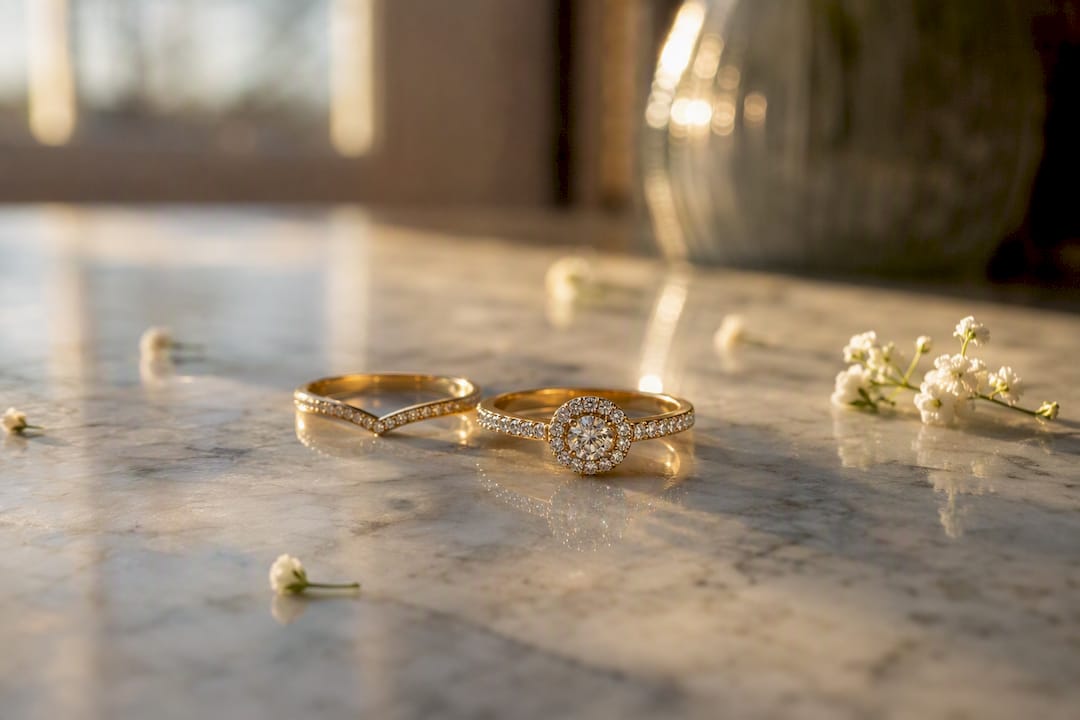
Promise Ring vs Engagement Ring: What’s the Real Difference?
No, a promise ring and an engagement ring are not the same thing. A promise ring signals commitment right now, with no formal proposal attached. An engagement ring announces a proposal and a shared decision to marry. If you’re not ready to propose but want to mark something real between you and your partner, choose a promise ring. If you’re planning to ask the question, an engagement ring is the one that carries that meaning.
Everything else is detail, but the detail matters. Here’s what we’ll walk through to help you pick the right piece for where your relationship actually stands:
- Meaning: what each ring is actually saying
- Timing: when couples typically give each one
- Design: how the two are styled differently
- Budget: what to expect to spend
- Next steps: how a promise ring can later become an engagement ring
Key Takeaways
The right ring depends entirely on whether you’re marking present commitment or announcing a decision to marry, not on price or design alone.
| Point | Details |
|---|---|
| Core distinction | A promise ring signals commitment now; an engagement ring signals a proposal and marriage intent. |
| Typical timing | Promise rings often arrive some months into dating, though there’s no fixed rule. |
| Design priorities differ | Promise rings favor simple, symbolic styles; engagement rings prioritize durable settings for a center stone. |
| Communication prevents mismatches | Talk about what the ring means before you give it to avoid mismatched expectations. |
| Usajewels supports both stages | Family-owned since 1999 with in-house manufacturing, custom design, and lifetime diamond upgrades for promise-to-engagement transitions. |
Table of Contents
- What Is a Promise Ring? Meaning and Origins
- What Is an Engagement Ring? Symbolism and Convention
- What’s the Core Difference Between the Two Rings?
- When Should You Give Each Ring, and How Do You Talk About It?
- Design, Materials, and Cost: What to Expect
- Wearing Etiquette: Which Finger, and What Happens When You Upgrade
- How to Turn a Promise Ring Into an Engagement Ring
- How Usa Jewels Supports Buyers at Every Stage
- A Personal Note on Choosing Clarity Over Convention
- Primary Sources and Further Reading
- Find the Ring That Matches Your Moment
- Sources
- FAQ
What Is a Promise Ring? Meaning and Origins
A promise ring is a piece of jewelry that represents a commitment between two people without formally declaring marriage. You’ll also hear it called a pre-engagement ring or commitment ring, and all three terms describe the same idea: a token that says “I’m serious about you” without saying “let’s get married.”
Pre-engagement rings rose in visibility starting in the 1970s and picked up fresh cultural momentum in the late 2000s, when celebrity couples brought the tradition back into public conversation. That history matters because it shows the promise ring was never meant to compete with the engagement ring. It filled a gap: a way to mark devotion during a relationship stage that doesn’t yet call for a proposal.
What a promise ring can represent varies from couple to couple:
- Exclusivity, especially early in a serious relationship
- An intention to get engaged once circumstances allow (finishing school, saving for a home, closing distance)
- A token for long-distance couples who want a physical reminder of commitment
- A personal vow unrelated to marriage at all, like a promise of loyalty or partnership
Couples often exchange promise rings after six months to a year of dating, though the timing has no formal rule. We’ve seen couples give one after three months and others after three years. The ring reflects the relationship’s pace, not a calendar.
What Is an Engagement Ring? Symbolism and Convention
An engagement ring marks a specific, mutual decision: two people have agreed to get married. Unlike a promise ring, its meaning isn’t flexible or open to interpretation. When someone gets down on one knee and presents this ring, both people generally understand exactly what’s being asked.
That clarity is what makes the engagement ring function as a public signal. Once it’s on, family and friends know your relationship status has changed. It’s part of a ritual, usually a proposal moment, that both partners will likely retell for years.
A few conventions have held steady for generations:
- The ring typically features a center stone, most often a diamond, set as the visual focal point
- Settings favor durability and security, since the ring is worn daily for the rest of a person’s life
- It’s worn on the left hand’s ring finger in most Western countries, a placement tied to the old belief that a vein ran directly from that finger to the heart
None of these conventions are legal requirements. Some couples skip the diamond entirely or wear the ring on a different finger for cultural reasons. But if you’re shopping for a ring meant to accompany a proposal, these expectations shape what most people recognize as an engagement ring the moment they see it. Our engagement ring buying guide walks through how to choose a center stone and setting that fit your partner’s style.
What’s the Core Difference Between the Two Rings?
The clearest way to separate these two pieces of jewelry: a promise ring marks a commitment now, without specifying marriage. An engagement ring marks a decision to marry and is tied directly to a proposal. Multiple jewelry guides frame this as a difference in declaration and context, not a difference in the physical ring itself. You could technically propose with a simple band, and it would function as an engagement ring the moment the question is asked.
Here’s how the two compare side by side:
| Factor | Promise Ring | Engagement Ring |
|---|---|---|
| Core meaning | Commitment without a marriage proposal | Agreement to marry |
| Typical timing | Six months to a year into dating, though flexible | After both partners agree marriage is the goal |
| Attached ritual | Often none, or a quiet personal moment | A planned or spontaneous proposal |
| Public signal | Read as “we’re serious,” interpretation varies | Read universally as “we’re getting married” |
| Finger worn | Right hand, opposite ring finger, or as a pendant | Left hand ring finger (Western convention) |
A few practical takeaways follow from this:
- If you haven’t discussed marriage yet, a promise ring keeps your options open while still marking something meaningful.
- If you’ve already agreed marriage is the plan, an engagement ring formalizes it and gives you a proposal moment to build the story around.
- When in doubt, talk before you shop. The single biggest source of confusion isn’t how a ring looks. It’s a mismatch between what the giver intends and what the recipient assumes, and a direct conversation prevents most of that friction.
Family and neighbors read these signals differently, too. A promise ring on the right hand rarely triggers “when’s the wedding?” questions. An engagement ring on the left hand almost always does. If you’re not ready for that conversation with extended family, that’s worth factoring into your choice.
When Should You Give Each Ring, and How Do You Talk About It?
Certain relationship signs point clearly toward one ring or the other. Here’s a practical way to think through it:
- You want to signal commitment but aren’t ready to marry (finishing a degree, building savings, navigating long distance): a promise ring fits.
- You’ve had the marriage conversation and you’re both on the same page: an engagement ring is the next logical step.
- You’re unsure which one your partner expects: ask directly before buying anything. A simple “what would a ring like this mean to you right now?” opens the door without giving away a surprise.
Promise rings tend to arrive earlier in a relationship, often after some months of dating. Engagement rings arrive whenever both partners have already agreed marriage is the destination, which can be years into a relationship or, for some couples, just a few months.
Pro Tip: If you’re giving a promise ring but privately planning to propose within the next year, say so in general terms. You don’t need to reveal the timeline, but hinting that “this ring is a step toward something bigger” prevents your partner from assuming it’s the final word.
The biggest red flag to watch for: one partner treats the ring as a placeholder for engagement, while the other treats it as the whole commitment. That gap causes real hurt if it’s never addressed. A five-minute conversation up front saves months of confusion later.
Design, Materials, and Cost: What to Expect
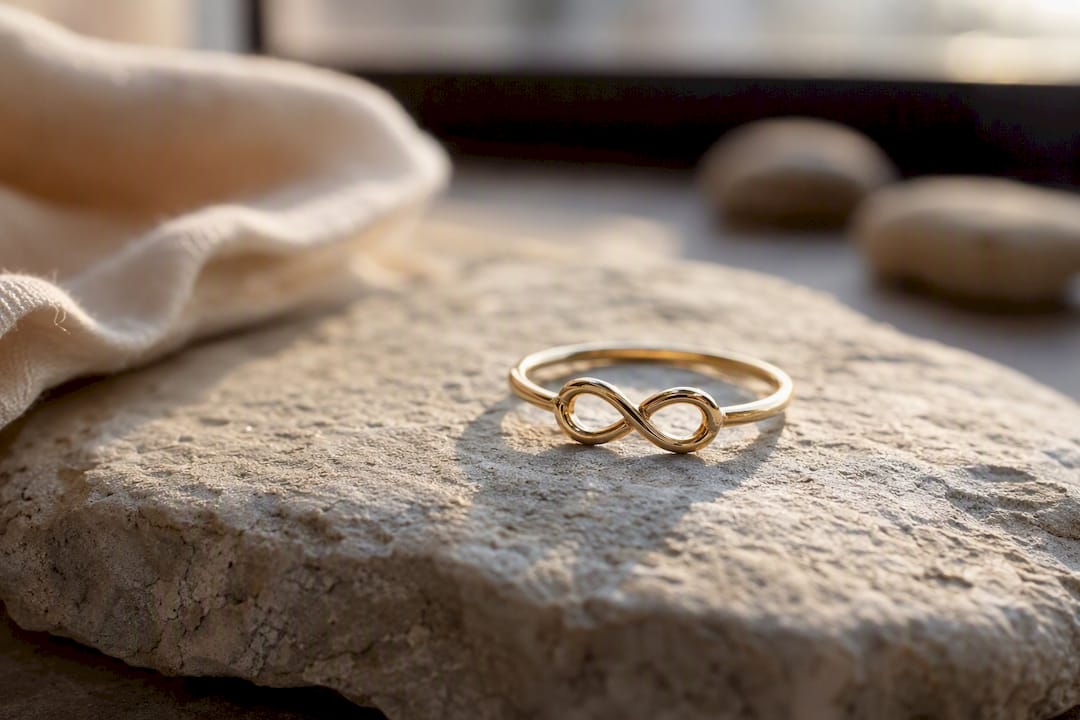
Promise rings and engagement rings are built for different jobs, and their designs reflect that. Promise rings tend to favor simplicity: thin bands, small accent stones, or symbolic motifs like infinity loops, hearts, or knotwork. The design says “meaningful,” not “formal.”
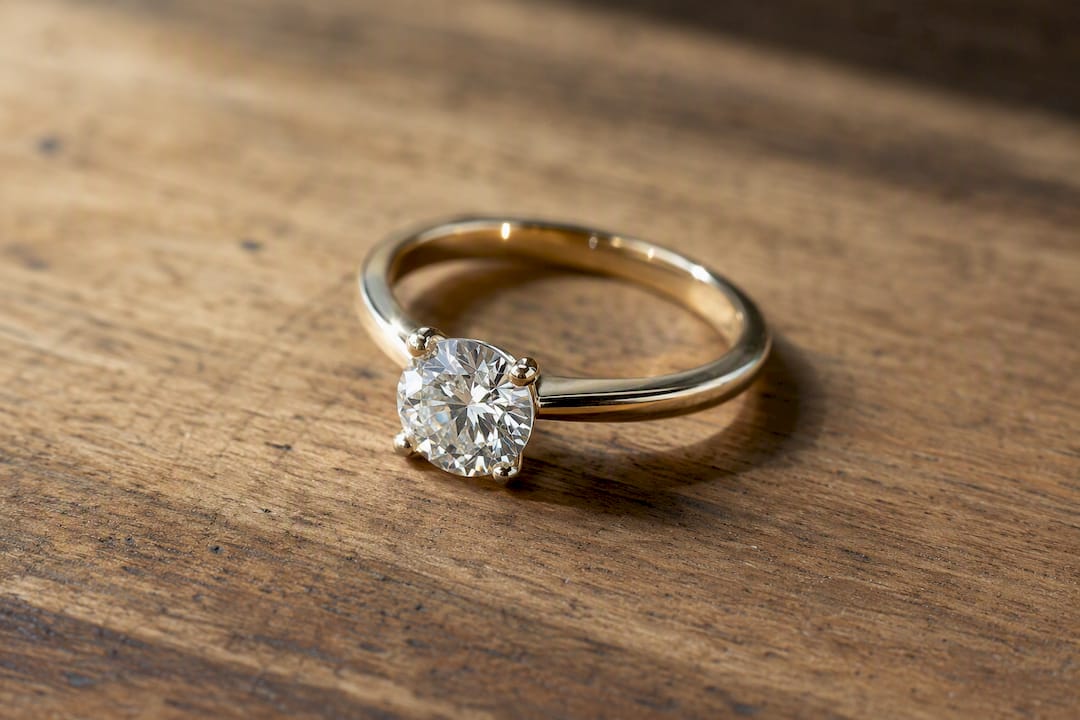
Engagement rings prioritize a different set of goals. The center stone is the focal point, and the setting has to protect that stone through decades of daily wear. That’s why prong settings, bezel settings, and reinforced bands dominate the category. Precious metals like 14k or 18k gold and platinum are standard because they hold up structurally over time.
Cost expectations diverge just as much as design does. There’s no formal pricing rule for promise rings, but they’re typically far less expensive than engagement rings. Some retailers price promise rings starting under $200, while engagement rings commonly involve significantly larger budgets given the center stone and metal quality involved. Treat any price figure you see online as illustrative rather than a hard rule. Every couple’s budget and priorities look different.
A few practical considerations when choosing either:
- Promise rings work well in simpler metals like sterling silver or 10k gold, since the sentiment matters more than the investment.
- Engagement rings benefit from higher-durability settings and metals if the ring will be worn every single day for life.
- Customization lets you match either ring to a specific meaning, whether that’s an engraved date, a birthstone, or a design that can be resized or upgraded later.
Wearing Etiquette: Which Finger, and What Happens When You Upgrade
Most guides recommend wearing a promise ring on the right hand to avoid the visual confusion of a left-hand ring that mimics an engagement ring. Some people wear it as a pendant instead, or on a different finger entirely, especially if they want to keep the meaning private.
If you’re already wearing a promise ring and your partner proposes, you have a few real options:
- Move it to the left hand and let it double as your engagement ring
- Stack it alongside a new engagement ring on the same finger, a popular styling choice
- Redesign it, resetting the stone into a new mounting built for daily wear
- Keep it as a keepsake, worn on a chain or a different finger, while a new ring takes over engagement duties
Whichever path you choose, say the meaning out loud. Something like “this ring used to mean we were building toward this, now it means we’re getting married” turns a quiet transition into part of your story.
How to Turn a Promise Ring Into an Engagement Ring
Couples repurpose a promise ring into an engagement ring all the time, either by re-declaring its meaning during a proposal or by physically redesigning the piece. Here’s how to think through the options:
- Repurpose the same ring. Propose with the ring already on their hand, and simply state the new meaning out loud. Zero cost, zero logistics, maximum sentimentality.
- Reset the stone. Take the existing diamond or gemstone to a jeweler and have it reset into a new, more durable mounting built for daily wear. Ask about turnaround time upfront. Custom resets typically take a few weeks.
- Buy a new ring, keep the old one. Give a fresh engagement ring and let the promise ring become a keepsake worn elsewhere.
Pro Tip: Before choosing a reset, ask your jeweler whether the original stone’s cut and clarity suit a solitaire-style setting. Some stones that look great in a delicate promise-ring band need a different setting style to shine as a center stone.
Budget accordingly: reusing the ring costs nothing extra, resetting costs jeweler labor plus any new metal, and buying new means covering a second ring entirely. Our engagement ring timeline guide breaks down realistic planning windows for whichever route you pick.
How Usa Jewels Supports Buyers at Every Stage
We built Usajewels around a simple idea: you shouldn’t have to choose between quality and honest pricing, whether you’re buying a modest promise ring or a full engagement ring. As a family-owned business manufacturing in-house since 1999, we cut out the markups that come from middlemen, and we back every purchase with ethically sourced diamonds and a lifetime diamond upgrade program.
That upgrade program matters directly for the promise-to-engagement transition we just covered. You’re never stuck with a stone that no longer fits the moment.
Here’s what we offer readers working through this exact decision:
- Custom design tools to build a promise ring or engagement ring from scratch, choosing your own diamond shape, quality, and metal
- Engraving options for adding names, dates, or a private message
- A redesign and upgrade path when a promise ring is ready to become something more
- Over 222 Google reviews from customers who’ve gone through this exact process
Start with our promise ring guide if you’re still deciding what to give right now.
A Personal Note on Choosing Clarity Over Convention
The biggest mistake couples make isn’t picking the “wrong” ring. It’s assuming their partner reads the same meaning into it they do. Skip the guesswork: say what the ring means to you, ask what it means to them, then choose jewelry that actually matches that conversation.
Primary Sources and Further Reading
- Pre-engagement ring — Wikipedia
- What Is a Promise Ring? — The Knot
- What Promise Rings Mean — Prism News
- Usa Jewels engagement ring guide
Find the Ring That Matches Your Moment
If you’ve read this far, you already know the ring you need depends on the conversation you’re ready to have, not a industry script. That’s exactly where Usajewels fits: instead of pushing you toward a preset “engagement collection” or a generic promise-ring rack, we let you design your own piece from the ground up, choosing the diamond shape, quality, and metal that actually match what you’re trying to say.
Because we manufacture in-house and sell direct, you get pricing without the traditional retail markup, plus a lifetime diamond upgrade program that makes the promise-to-engagement transition simple down the line. Whether you’re ready for a modest first symbol or a full proposal-ready piece, you can start designing now. Browse our fine jewelry collection to see center-stone options and setting styles, or explore diamond jewelry if you want to compare stones before committing to a design.
Sources
- Pre-engagement ring — Wikipedia
- What Is a Promise Ring? What It Means & How to Give One — The Knot
- What Promise Rings Mean, and Why They Still Matter — Prism News
FAQ
Can You Propose With a Promise Ring?
Yes. Many couples repurpose an existing promise ring for a proposal simply by re-declaring its meaning in the moment, with no new ring required.
Is a Promise Ring a Serious Commitment?
It can be. A promise ring’s meaning is flexible and defined by the couple, so its seriousness depends entirely on what both partners agree it represents.
What Finger Does a Promise Ring Go On?
Most guides recommend the right hand to avoid confusion with an engagement ring, though some people wear it as a pendant or on a different finger.
What Stage Do You Get a Promise Ring?
There’s no fixed rule, but promise rings are commonly exchanged after six months to a year of dating, once a couple wants to mark commitment without a formal proposal.
Recommended
- Promise Ring Guide: Meaning & Choosing | USA Jewels
- Pick Ring Setting Style Guide for Every Buyer
- Platinum vs Gold Engagement Rings: Pick by Priority
- Design Your Own Engagement Ring: Step-by-Step Guide | USA Jewels

Deep Mehta is the Co-Owner of USA Jewels, a family-owned jewelry business she has led since 2013 in Deerfield Beach, Florida. With over 13 years of hands-on experience in fine jewelry retail, manufacturing, and diamond importing, Deep specializes in engagement rings, wedding bands, and custom jewelry design. She also co-manages Kaash Group Talent Acquisition. Deep is a University of Florida graduate and oversees every aspect of USA Jewels’ operations, from product development to marketing.
Fine Jewelry Collection


You May Also Like
What Is Coordinates Jewelry Design? A Buyer’s Guide
Bow Tie Effect Oval Diamonds: What Causes It and How to Avoid It