Cathedral Ring Setting: What It Is and How to Choose One
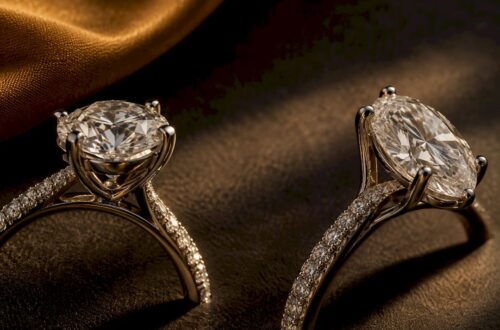
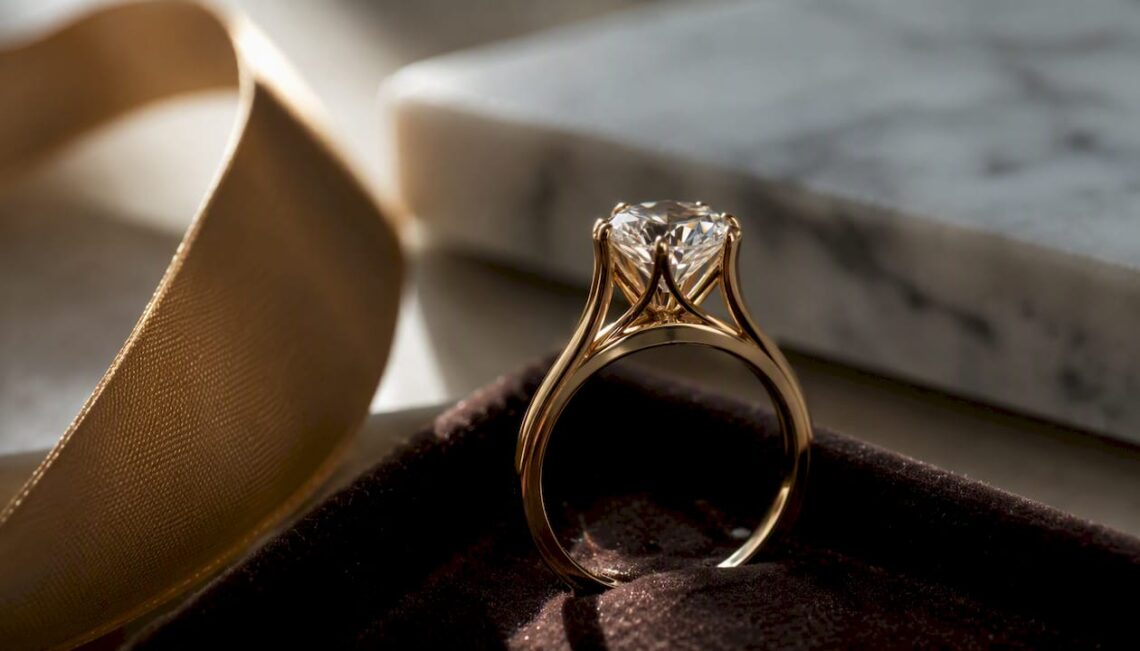
A cathedral ring setting features curved metal arches that rise from the band on each side of the center stone, lifting it visibly above the finger. That elevation is the setting’s signature strength: it lets more light reach the diamond from the sides and bottom, which tends to improve brilliance and make the stone look larger than it measures. The trade-off is real and worth knowing upfront. A higher profile catches on fabric and hair more easily, and the exposed gallery underneath the stone needs regular cleaning to stay sparkling, as Brides explains in their complete cathedral setting guide.
Key Takeaways
A cathedral ring setting is defined by its metal arches, and choosing one well means understanding how those arches affect fit, light, maintenance, and long-term durability.
| Point | Details |
|---|---|
| Core definition | Metal arches rise from the shank to elevate the center stone, increasing light access and perceived size. |
| Main trade-off | Higher profiles snag more easily and require professional inspection and cleaning regularly. |
| Best stone shapes | Round brilliant, oval, pear, and cushion cuts pair most naturally with cathedral arches. |
| Fit matters most | Size slightly snug to prevent rotation; top-heavy settings shift on loose-fitting rings. |
| Usajewels advantage | In-house manufacturing, CAD previews, lifetime diamond upgrades, and in-house resizing support every custom cathedral build. |
Table of Contents
- What is a cathedral ring setting, exactly?
- Common cathedral-setting styles and how they compare
- Pros and cons of cathedral settings worth knowing
- Which diamond shapes and finger types suit cathedral settings
- What to check for in cathedral-setting construction
- Why cathedral settings often cost more than simple solitaires
- How to clean and care for a cathedral engagement ring
- Questions to ask your jeweler before choosing a cathedral setting
- Where to see cathedral-setting examples and what to look for
- How Usajewels approaches customizing cathedral settings
- The one thing most buyers overlook about cathedral settings
- Usajewels builds cathedral settings the way they should be built
- Sources
- FAQ
What is a cathedral ring setting, exactly?
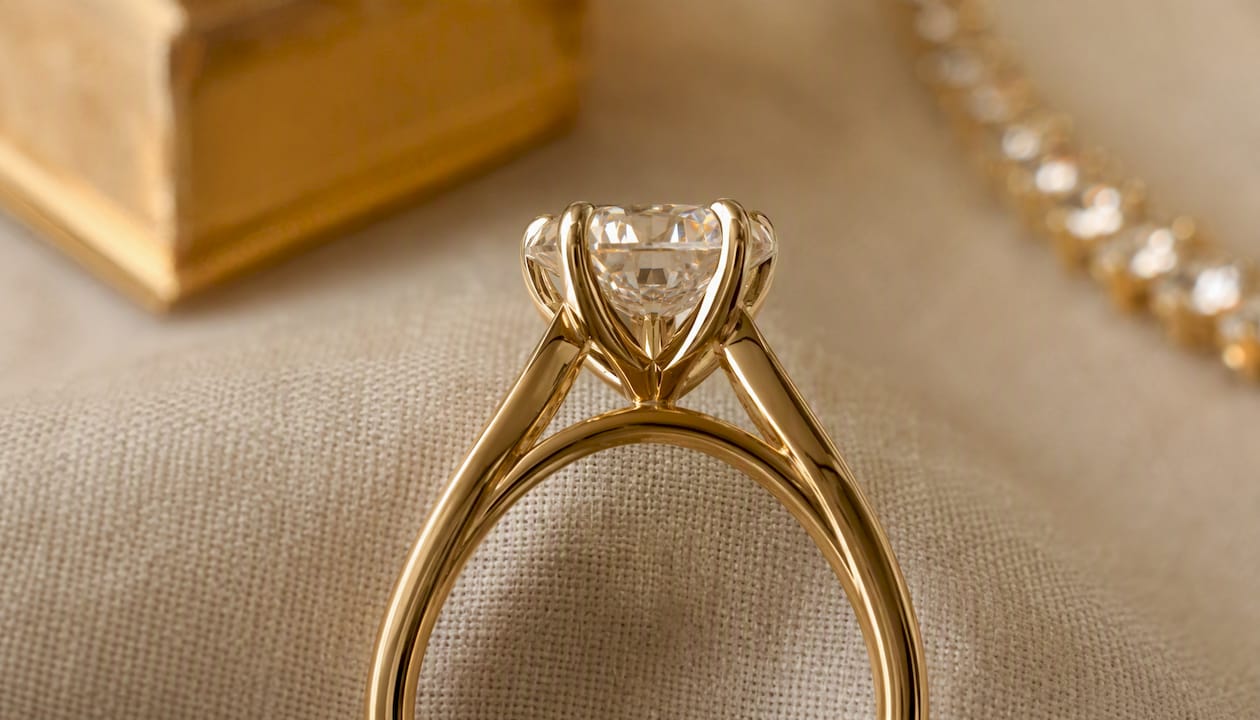
The defining feature is the arch. Two curved metal supports sweep upward from the shank (the band you wear on your finger) and meet the prongs or bezel that hold the center stone. That arch is what gives the setting its name: viewed from the side, the silhouette echoes the soaring lines of a cathedral window.
Here are the five structural elements you will see in every cathedral-style ring:
- Arches: The raised metal curves on each side of the stone. Their height determines the ring’s overall profile.
- Shank: The band itself, which connects to the arches at the base. Width and shape here affect how the ring sits and stacks with a wedding band.
- Gallery: The open metalwork directly beneath the center stone. In a cathedral setting, this area is more exposed than in a bezel or low-set solitaire, which is why cleaning it matters.
- Prongs or bezel: The metal points or rim that actually grip the stone. Most cathedral settings use four or six prongs; some use a partial bezel for extra security.
- Profile/height: How far the stone sits above the finger. A classic cathedral sits noticeably high; a low-profile cathedral keeps the stone closer to the hand.
When you look at a cathedral engagement ring online, check three angles: the front view (shows arch symmetry), the side profile (shows how high the stone sits), and the underside or gallery view (shows metalwork quality and cleaning access).
Common cathedral-setting styles and how they compare
Cathedral-style rings are not one-size-fits-all. Industry jewelers note that the setting endures precisely because it adapts well to different aesthetics and stone shapes. The five main variations each change the look, the profile, and how the ring pairs with a wedding band.
| Style | Profile height | Visual character | Wedding band pairing | Best for |
|---|---|---|---|---|
| Classic cathedral | High | Timeless, elegant arch | Straight band; slight gap possible | Round brilliant, cushion |
| Split-shank cathedral | High to medium | Dramatic, open band | Curved or contoured band recommended | Oval, pear, larger stones |
| Cathedral + halo | High | Bold, maximum visual size | Contoured band required | Round, cushion, oval |
| Hidden halo cathedral | Medium | Subtle sparkle, clean top view | Straight or slightly curved band | Round, oval |
| Low-profile cathedral | Low to medium | Understated, snag-resistant | Most straight bands sit flush | Active wearers, all shapes |
A split-shank cathedral suits buyers who want drama without adding a halo. The band divides below the stone and sweeps up in two arches, which creates an open, airy look that flatters larger center stones. A hidden halo adds a ring of small diamonds just below the center stone, invisible from the top but visible from the side. It adds sparkle without the bulk of a full halo. Low-profile cathedral is the practical choice for anyone who works with their hands or simply prefers a ring that sits closer to the finger.
Pros and cons of cathedral settings worth knowing
The elevated design is genuinely beautiful, but it comes with real trade-offs that affect daily life.
Pros:
- The raised stone catches light from more angles, which tends to increase brilliance and fire in round brilliant and oval cuts.
- A smaller diamond can look larger in a cathedral mount because the elevation adds perceived presence.
- The arches provide structural support that distributes stress away from the prongs, which can extend the life of the setting.
- Cathedral-style rings are compatible with many wedding band styles, especially when you choose a low or medium profile.
Cons:
- The higher the arch, the more likely the ring is to snag on sweaters, hair, and gloves. Active wearers feel this quickly.
- The exposed gallery collects lotion, soap, and debris faster than a low-set ring. Jewelers recommend professional cleaning and inspection every six months for cathedral settings specifically.
- A top-heavy ring can rotate on the finger if the fit is even slightly loose, which is more noticeable with cathedral settings than with flatter styles.
- Resizing can be more involved when the arches intersect the shank geometry.
If you garden, exercise regularly, or work in healthcare where gloves are common, a low-profile cathedral or a different setting style may serve you better day-to-day.
Which diamond shapes and finger types suit cathedral settings
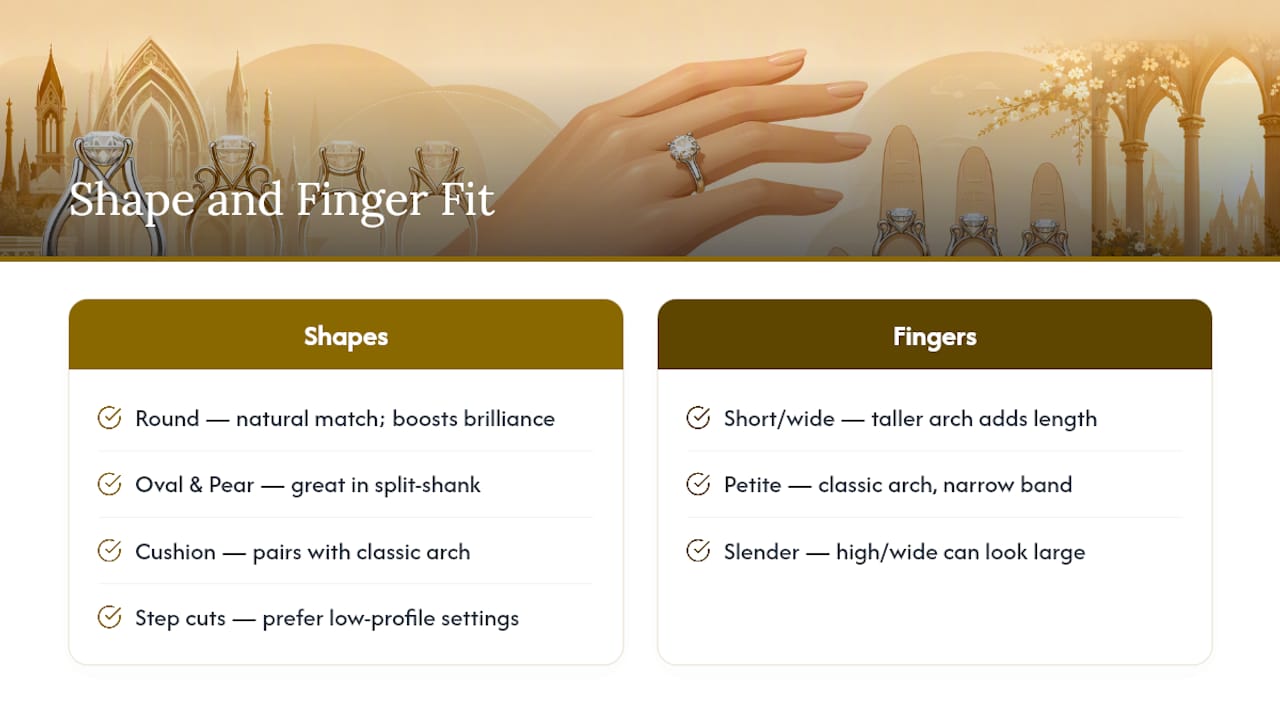
Round brilliant diamonds are the most natural match for a classic cathedral setting. The arch height complements the stone’s depth, and the elevated position lets light enter from below, which is where much of a round diamond’s brilliance originates. GIA’s guidance on diamond cut and light performance reinforces that cut quality and setting height together determine how much a stone sparkles in real-world light.
Oval and pear shapes also work beautifully in cathedral mounts, particularly in split-shank versions where the open band echoes the elongated outline of the stone. Cushion cuts pair well with classic cathedral arches because the soft corners align naturally with the arch curve.
Step cuts (emerald and asscher) are a different story. These shapes rely on a hall-of-mirrors effect rather than sparkle, and a very high cathedral profile can make them look top-heavy or unbalanced. A low-profile cathedral or a bezel-adjacent setting tends to suit step cuts better.
For finger types: a taller cathedral arch adds visual length to shorter or wider fingers, which many wearers find flattering. On very slender fingers, a high cathedral with a wide split shank can look proportionally large. A classic cathedral with a narrower band tends to balance better on petite hands. You can explore how different diamond shapes interact with settings to get a clearer sense of proportion before you commit.
What to check for in cathedral-setting construction
The beauty of a cathedral setting depends on the quality of the metalwork holding it together. Here is what to look for and ask about:
- Metal type: Platinum is the most durable choice for prongs and arches because it does not thin with polishing the way gold does. 14k gold offers a good balance of durability and affordability; 18k gold is slightly softer but richer in color. Review the trade-offs between gold and platinum before deciding.
- Prong count and reinforcement: Four prongs give a cleaner look; six prongs offer more security. Ask specifically whether the saddle points (where the arch meets the prong) are reinforced. Thin, unsupported connections at those joints are the most common failure point.
- Arch smoothness: Run a fingertip along the underside of the arches. Rough edges or visible seams mean the metalwork was not finished properly and will catch on fabric.
- Resizing policy: Ask directly whether resizing will affect the arch geometry. Resizing a cathedral ring can require re-profiling the arches if the shank and arch intersect at a critical point. A jeweler who cannot answer this clearly is a red flag.
- Ethical sourcing: If metal provenance matters to you, ask for documentation. Retailer sustainability pages, like Signet Jewelers’ sustainability information, show what responsible sourcing looks like at the industry level and give you a benchmark for the questions to ask your own jeweler.
Pro Tip: Ask to see the gallery and underside of any cathedral setting before you buy. Smooth, well-finished arches with no rough seams mean fewer snag points and a longer-lasting setting.
Why cathedral settings often cost more than simple solitaires
A plain solitaire uses the least metal and the simplest construction. A cathedral setting adds arches, which require more metal, more labor to shape and finish, and more precision to align symmetrically. Online pricing reflects both visible and underlying cost factors, including metal weight, hand-finishing labor, and retailer margins, all of which stack differently depending on whether you buy off-the-shelf or commission a custom build.
The main cost drivers in a cathedral setting are:
- Metal volume: Arches add measurable metal weight, especially in platinum.
- Labor: Shaping and finishing arches by hand takes more time than a simple solitaire shank.
- Customization: A split-shank, hidden halo, or filigree detail adds design complexity and therefore cost.
- Stone size and quality: A higher-profile setting often prompts buyers to choose a larger or higher-grade stone to match the visual scale of the mount.
Where you can economize without sacrificing integrity: choose a durable metal (14k gold or platinum) over decorative filigree that adds cost but not structural strength. A clean, well-finished classic cathedral in 14k white gold will outlast an ornate setting with thin decorative elements.
How to clean and care for a cathedral engagement ring
The exposed gallery is the cathedral setting’s maintenance challenge. Lotion, soap, and daily grime collect under the stone faster than in a bezel or flush setting. A consistent routine keeps the ring looking its best and catches problems before they become expensive.
At-home cleaning (weekly or as needed):
- Mix a few drops of mild dish soap in warm water.
- Soak the ring for 20–30 minutes.
- Use a soft-bristle toothbrush to gently scrub the gallery, under the stone, and along the arches.
- Rinse under warm running water and pat dry with a lint-free cloth.
Professional inspection (every six months):
- A jeweler will check prong tips for wear, test stone security, and inspect the arch attachment points.
- Ask for a prong re-tipping if any tip looks flattened or thin.
Daily wearing tips:
- Remove the ring before gardening, heavy lifting, or exercising. The arches can catch and bend under impact.
- Store the ring in a fabric-lined box or pouch, not loose in a drawer where it can scratch against other jewelry.
- Avoid applying lotion or hairspray while wearing the ring; residue builds up in the gallery quickly.
Questions to ask your jeweler before choosing a cathedral setting
A few direct questions separate a well-built cathedral setting from one that will cause problems within a year.
Technical questions:
- What metal is used for the arches, and what is the karat or purity?
- How many prongs, and are the saddle points where the arches meet the prongs reinforced?
- Can this ring be resized, and will resizing affect the arch geometry?
- What is your warranty, and does it cover prong re-tipping and arch repair?
- Do you offer lifetime diamond upgrades or inspection services?
Red flags to watch for:
- Arches that look thin or unsupported at the base of the prongs.
- Rough or unfinished metalwork on the gallery or underside.
- Vague answers about resizing or prong security.
- No written warranty or inspection policy.
Trust signals to request:
- Clear photos of the gallery and underside before purchase.
- Documentation of metal origin and ethical sourcing.
- A CAD or rendered preview if you are ordering a custom build. A rendered preview lets you confirm arch proportion and whether a wedding band will sit flush before any metal is cut.
Our engagement ring buying guide walks through additional selection criteria if you want a broader framework before you start asking these questions.
Where to see cathedral-setting examples and what to look for
Product photos tell you a lot if you know which angles to request. Most online retailers show only the front view, which is the least informative for a cathedral setting.
- Front view: Confirms symmetry of the arches and prong placement.
- Side profile: Shows the true height of the setting and how far the stone sits above the finger. This is the most important angle for understanding daily wearability.
- Underside or gallery view: Reveals the quality of the metalwork, the openness of the gallery, and whether the arches are smooth and finished.
When browsing online galleries, look for clean arch attachment, smooth prong tips with no visible seams, and an open gallery that allows a brush to reach under the stone during cleaning. Brands like Tacori, VRAI, Blue Nile, and James Allen publish detailed product photography that includes side-profile and gallery views. Comparing those images trains your eye quickly.
In-store try-ons add something photos cannot: you feel the height against your finger and see how the ring moves. Usajewels offers in-house galleries and custom previews so you can see the setting from every angle before committing. Browse the ring collections to get a sense of available styles and profiles.
How Usajewels approaches customizing cathedral settings
Custom cathedral settings follow a clear process, and knowing each step helps you ask better questions and get a better result.
The custom workflow:
- Select your center stone (shape, carat, cut grade, and certification from a source like GIA).
- Choose your cathedral variant: classic, split-shank, hidden halo, low-profile, or double-arch.
- Specify metal type and prong style (four or six prongs, claw or flat-top).
- Review a CAD or rendered preview showing arch proportion, band width, and how the wedding band will sit.
- Approve the design and move to hand-finishing and final inspection.
Custom options available:
- Hidden halo beneath the center stone
- Low-profile cathedral for active wearers
- Split-shank arches with milgrain or filigree detail
- Choice of 14k gold, 18k gold, or platinum
- Four or six prong configurations with reinforced saddle points
Usajewels builds every ring in-house, which means the jeweler who designs your cathedral setting is the same team that finishes and inspects it. The lifetime diamond upgrade program and in-house resizing and repair services mean your ring has support long after the purchase. Our ring setting style guide covers how cathedral settings compare to other popular styles if you are still weighing your options.
The one thing most buyers overlook about cathedral settings
Most buyers focus on the stone and the arch height. What they miss is fit. Because a cathedral setting is top-heavy by design, a ring that is even a quarter-size too large will rotate on the finger, turning the stone sideways throughout the day. That rotation puts uneven stress on the prongs and arches over time.
The fix is simple but specific: size slightly snug rather than slightly loose. A ring that feels just a touch firm when you put it on will settle to a comfortable fit as the day goes on, and it will stay centered. This is especially true for oval and pear shapes in cathedral mounts, where rotation is most visible because the stone has a directional orientation.
Ask your jeweler to size you at the end of the day, when fingers are at their largest. And if you are ordering a custom cathedral setting, request that the jeweler note the sizing rationale in writing so any future resizing starts from the right baseline.
Usajewels builds cathedral settings the way they should be built
Usajewels has crafted fine jewelry in-house since 1999, and cathedral engagement rings are among the most requested custom builds. The direct-to-consumer model means you pay for the ring, not for a middleman’s margin. Every cathedral setting is manufactured on-site, inspected before shipping, and backed by a lifetime diamond upgrade program.

You can start with a ready-to-ship cathedral-style ring or use the design-your-own workflow to specify your stone, arch style, metal, and prong configuration from scratch. Either way, the team walks you through a CAD preview before anything is finalized. For buyers who want colored center stones, the fine diamond jewelry collection includes options in a range of shapes and settings. Ready to design yours? Visit the engagement rings collection or start with the design-your-own guide to begin building a cathedral setting that fits your life.
Sources
- What Is a Cathedral Setting? Your Complete Guide to This Timeless Engagement Ring Style
- GIA
- Signet Jewelers – Sustainability
- Shopify
FAQ
What are the cons of a cathedral setting?
The higher profile catches on fabric and hair more easily than a low-set ring, and the exposed gallery collects debris faster, requiring professional cleaning and prong inspection every six months.
Is a cathedral setting more expensive than a solitaire?
Generally yes. The arches require additional metal and hand-finishing labor, and customization options like split-shank or hidden halo add further cost. Choosing a durable metal over decorative filigree is the most effective way to manage price without compromising structural integrity.
Are cathedral settings high or low profile?
Most classic cathedral settings are high-profile by design, though low-profile cathedral variants exist for buyers who want the arch aesthetic with less height above the finger.
What is the difference between a cathedral setting and a halo setting?
A cathedral setting is defined by its arches, which lift the center stone. A halo setting surrounds the center stone with a ring of smaller diamonds at the same level. The two can be combined: a cathedral halo uses arches to elevate a stone that also has a halo frame around it.
Recommended
- Pick Ring Setting Style Guide for Every Buyer
- Design a Custom Wedding Ring Set That’s Truly Yours
- Ring Guide: Engagement Settings & Styles | USA Jewels
- Design Your Own Engagement Ring: Step-by-Step Guide | USA Jewels

Deep Mehta is the Co-Owner of USA Jewels, a family-owned jewelry business she has led since 2013 in Deerfield Beach, Florida. With over 13 years of hands-on experience in fine jewelry retail, manufacturing, and diamond importing, Deep specializes in engagement rings, wedding bands, and custom jewelry design. She also co-manages Kaash Group Talent Acquisition. Deep is a University of Florida graduate and oversees every aspect of USA Jewels’ operations, from product development to marketing.
Fine Jewelry Collection


You May Also Like

Custom Engagement Ring Design Process: A Couples’ Guide

Last Minute Custom Jewelry Ordering: Your 2026 Guide