Resetting Heirloom Diamonds: What You Need to Know
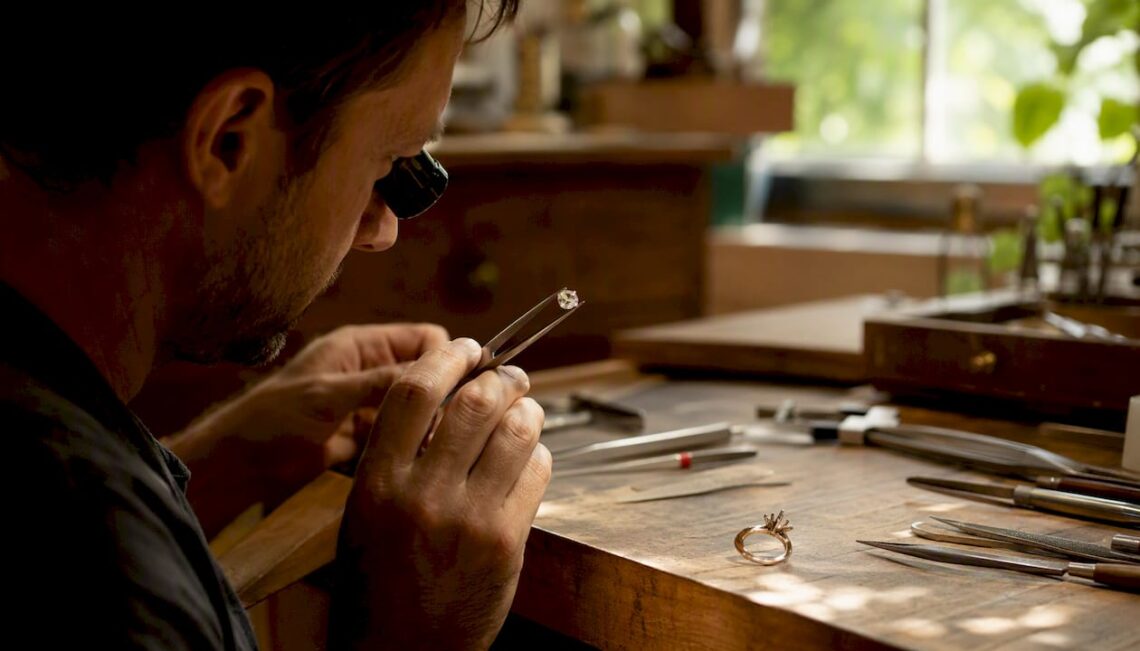
Most heirloom diamonds can be safely reset when a qualified jeweler inspects the stone first, you choose a setting change over recutting, and you allow enough time and budget for the work. The three things that determine whether your reset goes smoothly are the stone’s current condition, how much you want to change (new setting versus altering the diamond itself), and whether you’ve planned for a realistic timeline and cost.
Before you call a jeweler, run through these three immediate steps:
- Get a professional stone inspection. A gemologist examines the girdle, inclusions, and any previous repair points before any work begins.
- Request a written estimate. A line-item quote covering inspection, CAD, fabrication, setting labor, and appraisal protects you from scope creep.
- Plan for 6–12 weeks. Most reputable jewelers advise 8–10 weeks as a safe baseline for a custom heirloom reset.
Key Takeaways
Resetting an heirloom diamond is safe and achievable when you prioritize inspection first, choose a setting change over recutting, and plan for a realistic 6–12 week timeline and a written estimate before any work begins.
| Point | Details |
|---|---|
| Inspection is non-negotiable | Get a written stone condition report before any work begins — no exceptions. |
| Budget realistically | Simple re-mounts can cost a few hundred dollars, while custom settings with side stones may reach several thousand dollars or more. |
| Plan for 6–12 weeks | Experts recommend allowing ample time as a safe baseline; build in buffer for CAD revisions and final appraisal. |
| Avoid recutting unless necessary | Changing the setting preserves carat weight and provenance; recutting is a last resort for structural damage only. |
| Usajewels offers in-house custom resets | Family-owned since 1999, with CAD previews, transparent pricing, and a lifetime diamond upgrade program. |
Table of Contents
- What does resetting an heirloom diamond actually involve?
- What design options do you have when resetting an heirloom diamond?
- Do’s and don’ts when resetting an heirloom diamond
- When should you restore, redesign, or recut?
- How much does it typically cost to reset an heirloom diamond?
- How long does a reset take?
- How do you choose the right jeweler for an heirloom reset?
- How to prepare your heirloom before bringing it in
- Why an in-house custom jeweler is often the right choice for heirloom resets
- What a bench jeweler wants you to know
- Usajewels makes heirloom resets personal and transparent
- Sources
- FAQ
What does resetting an heirloom diamond actually involve?
Resetting an heirloom diamond means removing the stone from its original mounting and placing it into a new setting or converting it into a different piece entirely, such as a pendant or a pair of earrings. The diamond itself stays untouched in most resets. What changes is the metal, the prong configuration, and the overall silhouette.
The process typically moves through these stages:
- Assessment and inspection: A gemologist examines the stone under magnification for chips, inclusions, and structural vulnerabilities before anything else happens.
- Design and CAD: You and your jeweler agree on a new setting style. Computer-aided design (CAD) software produces a 3D rendering so you can preview the finished look.
- Fabrication: The new mounting is cast or hand-fabricated in your chosen metal.
- Stone removal and cleaning: The original stone is carefully removed from its old setting, cleaned, and inspected again.
- Setting and finishing: The diamond is set into the new mounting, then polished and finished.
- Appraisal and insurance update: A third-party appraisal documents the new piece for insurance purposes.
Two related terms sometimes get folded into “resetting” but mean different things. Restoration repairs the existing piece without changing its form: re-tipping prongs, re-polishing the metal, or replacing a missing accent stone. Recutting alters the diamond’s shape or facet structure, which is a far more consequential step. A standard reset does neither.
What design options do you have when resetting an heirloom diamond?
The design path you choose shapes both the final look and the risk level. Here are the most common options, with honest tradeoffs for each.
- Classic solitaire: The stone sits alone in a four- or six-prong setting. Low fabrication cost, timeless look, and the diamond gets maximum visual prominence. The tradeoff is that any chip or inclusion on the girdle becomes more visible.
- Halo setting: A ring of smaller accent diamonds surrounds the center stone, making it appear larger and adding sparkle. Cost increases with the number of accent stones, and sourcing matching side stones can extend the timeline.
- Bezel setting: A continuous metal rim wraps around the diamond’s edge. Excellent protection for active wearers and a clean, modern silhouette. The bezel does obscure a portion of the stone’s profile, which some people find reduces its visual impact.
- Low-profile or flush settings: The stone sits close to the finger, reducing the risk of snagging. Ideal for people who work with their hands. Less dramatic than a raised solitaire.
- Pendant or earring conversion: If the stone is small or the ring no longer fits the wearer’s lifestyle, converting it into a diamond pendant or stud earring is a meaningful alternative. This preserves the diamond while giving it a new purpose.
- Pairing with a new wedding band: Pairing an heirloom engagement ring with a freshly designed wedding band modernizes the overall set without touching the original ring at all. This is the lowest-risk path and worth considering before committing to a full reset.
- Mixed-metal or colored accent designs: Adding a contrasting metal or colored diamond accents can update the aesthetic while keeping the original stone central.
Pro Tip: Ask your jeweler for a CAD rendering and, for engagement rings, a wax try-on model before fabrication begins. CAD and wax models cost a bit more up front but prevent scale and silhouette surprises — especially important for a stone you’ll wear every day.
Do’s and don’ts when resetting an heirloom diamond
Getting this right protects both the stone’s monetary value and its sentimental weight. A few rules matter more than the rest.
Do these things:
- Get a professional stone inspection and written condition report before any work begins. No reputable jeweler should skip this step.
- Discuss prong style, stone height, and metal choice in detail during the design phase. Clear communication about these specifics significantly reduces rework and disappointment.
- Consider a setting change before anything more drastic. Changing the mounting modernizes the piece without touching the diamond.
- Ask for CAD renderings and, for rings, a wax try-on before fabrication starts.
- Keep all documentation: original appraisals, provenance notes, and before/after photos.
Avoid these things:
- Don’t request recutting unless a gemologist has confirmed the stone’s condition makes it necessary and safe. Recutting reduces carat weight and can diminish value.
- Don’t assume the original metal is suitable for reuse. Antique or previously repaired gold can carry micro-weaknesses from prior wear and repairs. Many bench jewelers recommend new metal for a new setting rather than recycling the old alloy.
- Don’t rush the timeline. Pressure to finish quickly leads to shortcuts in inspection and fabrication.
- Don’t skip the post-work appraisal. Your insurance policy needs to reflect the new piece’s value.
Pro Tip: When evaluating setting types, ask your jeweler specifically how each option affects the stone’s exposure. A bezel protects the girdle; a high prong solitaire leaves it more vulnerable. For an older stone with any girdle wear, that distinction matters.
When should you restore, redesign, or recut?
These three paths carry very different risk profiles, and choosing the wrong one can cost you carat weight, historical value, or both.
Restoration is the lowest-risk option. It means repairing the existing piece without changing its form: re-tipping worn prongs, re-polishing the metal, reinforcing the band, or replacing a missing accent stone. Restoration methods include re-polishing, prong and setting repair, band reinforcement, metal restoration such as cleaning and re-plating, and replacement of missing accent stones. One important note: avoid ultrasonic cleaners for antique settings, as the vibration can loosen stones that were set with older techniques.
Redesign means fabricating a new mounting while leaving the diamond untouched. The stone moves from its original setting into a new one. Risk is low to moderate, depending on the stone’s condition and how complex the new design is. This is the path most people mean when they say “resetting.”
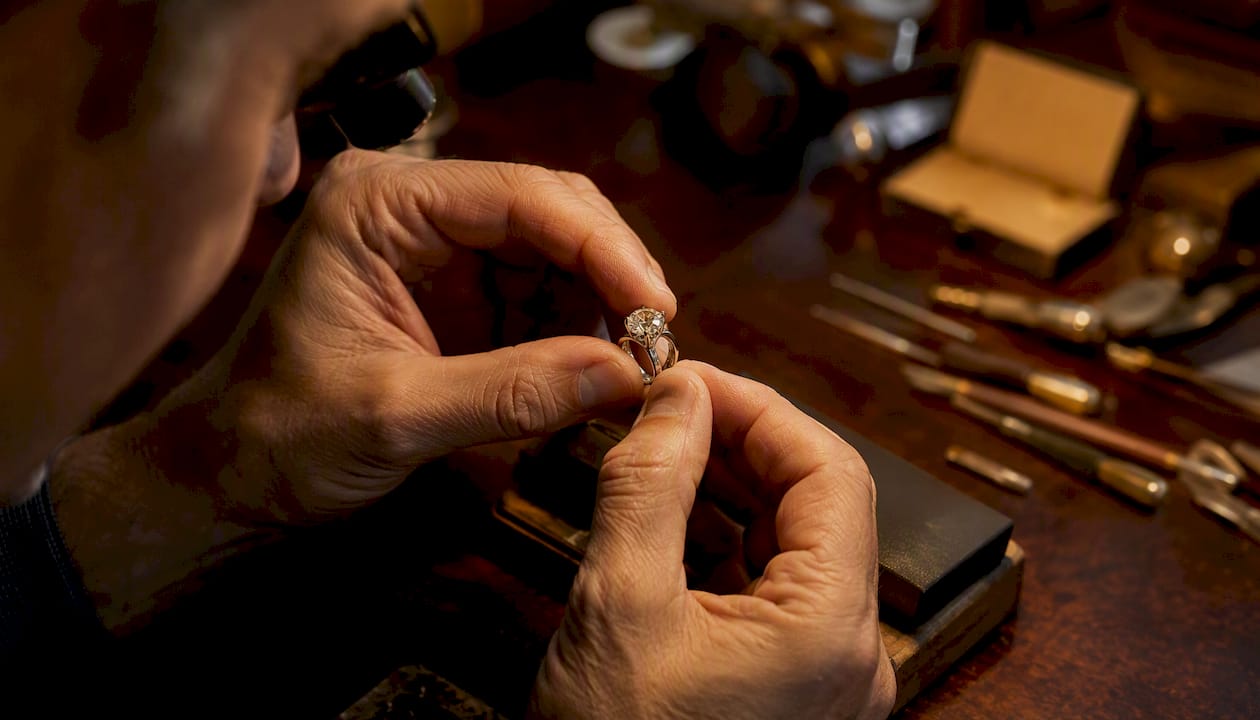
Recutting is a different matter entirely. It alters the diamond’s facet structure or shape, which permanently reduces carat weight and can change the stone’s grading characteristics. Jewelry experts commonly advise against recutting an heirloom diamond except in limited, well-justified situations. The cases where recutting makes sense are narrow: a severely chipped girdle that compromises structural integrity, deep scratches across the table, or a shape that genuinely cannot be set safely in any modern mounting.
For the repair and restoration workflow in more detail, including when prong repair crosses into full redesign territory, that’s a useful reference before your consultation.
How much does it typically cost to reset an heirloom diamond?
Cost ranges vary widely based on what you’re asking the jeweler to do. Here’s a realistic breakdown.
A simple re-mount, where the stone moves into a plain solitaire setting with minimal customization, can run from the low hundreds to around $1,000. Custom settings with side stones, complex metalwork, or significant design work commonly push into the $1,000–$4,000 range. Major redesigns involving recutting, sourcing matched accent stones, or platinum fabrication can exceed that.
The main cost drivers:
- Jeweler skill and labor: Bench jewelers with heirloom experience charge more, and that premium is worth it.
- CAD and wax models: Design proofing adds cost up front but reduces expensive rework.
- Metal type: Platinum costs more to fabricate than 14k or 18k gold. Mixed-metal designs add complexity.
- Additional stones: Sourcing matched accent diamonds for a halo or channel setting adds both material cost and time.
- Repairs to the original piece: If the old setting needs work before the stone can be removed safely, that’s a separate line item.
- Third-party appraisal: Budget $50–$150 for a post-work appraisal from an independent gemologist.
A jeweler should provide a detailed, written estimate before any work begins. If they won’t, that’s a red flag.
| Line Item | What It Covers |
|---|---|
| Inspection and condition report | Gemologist examination, written findings, structural assessment |
| CAD rendering and wax model | 3D design preview, scale and silhouette proofing |
| Fabrication | Casting or hand-fabrication of the new mounting |
| Stone removal and setting labor | Safe extraction, cleaning, and setting into new mount |
| Polishing and finishing | Final surface work, rhodium plating if applicable |
| Third-party appraisal | Independent valuation for insurance documentation |
How long does a reset take?
Plan for at least 6–12 weeks from the initial inspection to the finished piece. Experts commonly recommend allowing eight to ten weeks for a custom heirloom reset as a safe baseline. Simpler re-mounts can move faster, but building in the full range reduces the risk of a scheduling crunch before a proposal or wedding date.
Steps that add time:
- Multiple rounds of CAD revisions
- Sourcing matched accent stones for halo or channel designs
- Repairs needed on the original piece before stone removal
- Recutting (adds weeks and requires a separate gemologist consultation)
- Shipping and return transit for remote services
- Final third-party appraisal scheduling
Planning callout: If you have a specific date in mind, such as an anniversary, proposal, or wedding, count backward from that date and add two weeks of buffer. Jewelers working on custom heirloom pieces often have full schedules, and the inspection-to-estimate phase alone can take one to two weeks.
Ask your jeweler for a written timeline at the start, with milestone dates for CAD approval, fabrication completion, and final delivery. A jeweler who can’t give you a timeline in writing is a jeweler who hasn’t committed to one.
How do you choose the right jeweler for an heirloom reset?
The jeweler you choose matters more for a family stone than for almost any other purchase. Here’s what to look for and what to ask.
Decision checklist:
- Experience with vintage and heirloom work specifically, not just general custom jewelry
- In-house manufacturing, which means the stone never leaves the building unnecessarily
- CAD capability and a portfolio of before/after photos from similar projects
- Transparent, written pricing with line-item estimates
- Clear warranty and repair policy in writing
- Willingness to coordinate with your insurance provider after the work is complete
Questions to ask at your consultation:
- Do you inspect the stone and provide a written condition report before any work begins?
- Can you show me CAD renderings and a wax model before fabrication starts?
- What is your warranty on the new setting, and what does it cover?
- Do you provide or recommend a third-party appraisal after the work is done?
- Can you help me update my insurance documentation once the piece is finished?
- What happens if the stone is damaged during removal or setting?
Red flags to watch for:
- Unwillingness to inspect the stone before quoting
- No portfolio of heirloom or vintage reset work
- Vague timeline with no written commitment
- Pressure to recut the stone without a clear structural justification
- No written estimate or contract before work begins
The emerald cut diamond guide is a useful reference if you’re evaluating whether your inherited stone’s shape suits the new setting you have in mind, particularly for step-cut stones that behave differently under various prong configurations.
How to prepare your heirloom before bringing it in
A little preparation before the consultation protects you legally, financially, and emotionally. This is the step most people skip, and it’s the one that causes the most problems later.
Preparation checklist:
- Photograph the piece thoroughly. Capture every angle, including close-ups of the stone, prongs, and any existing damage. These photos are your baseline record.
- Gather provenance documents. Previous appraisals, purchase receipts, family letters, or any written history of the piece strengthen both its sentimental and insurance value.
- Clean gently before the appointment. A soft brush with mild soap and warm water is safe for most diamonds. Skip ultrasonic cleaners for antique settings.
- Request a written condition note from the jeweler at drop-off. This documents the piece’s state before any work begins and protects both parties.
- Insure the stone for transit and while in the jeweler’s care. Check whether your homeowner’s or renter’s policy covers jewelry in a third party’s possession. Many don’t.
Pro Tip: If you’re shipping the piece to a remote jeweler, use insured, trackable shipping with professional packaging. Request bonded or registered mail, keep the tracking number, and photograph the packaged item before sealing the box. Before-and-after photos and written records are also your best protection for insurance claims and future provenance documentation.
For restoration work specifically, the same documentation discipline applies. Think of the paperwork as part of the piece’s story, not just administrative overhead.
Why an in-house custom jeweler is often the right choice for heirloom resets
The case for choosing an in-house manufacturer over a retail chain or a pass-through service comes down to accountability and control. When the jeweler who inspects your stone is the same team that fabricates the new setting, there’s no handoff where information gets lost and no third-party workshop where your family piece sits untracked.
Here’s what a well-structured in-house heirloom reset process looks like in practice:
- Inspection and written condition report before any commitment is made
- CAD and wax model previews so you approve the design before metal is cast
- Assessment of the original metal to determine whether it can be reused or whether new metal is the safer choice
- Documented warranty covering the new setting and any repair work
- Lifetime upgrade options that let you evolve the piece over time without starting from scratch
For readers considering vintage engagement ring styles as inspiration for a new setting, that resource shows how era-specific design elements can be incorporated into a modern mounting without erasing the original piece’s character.
Resetting an heirloom diamond is also a sustainability-forward choice. Repurposing a natural diamond often carries a smaller environmental footprint than purchasing a newly mined stone, which adds another layer of meaning to the decision.
What a bench jeweler wants you to know
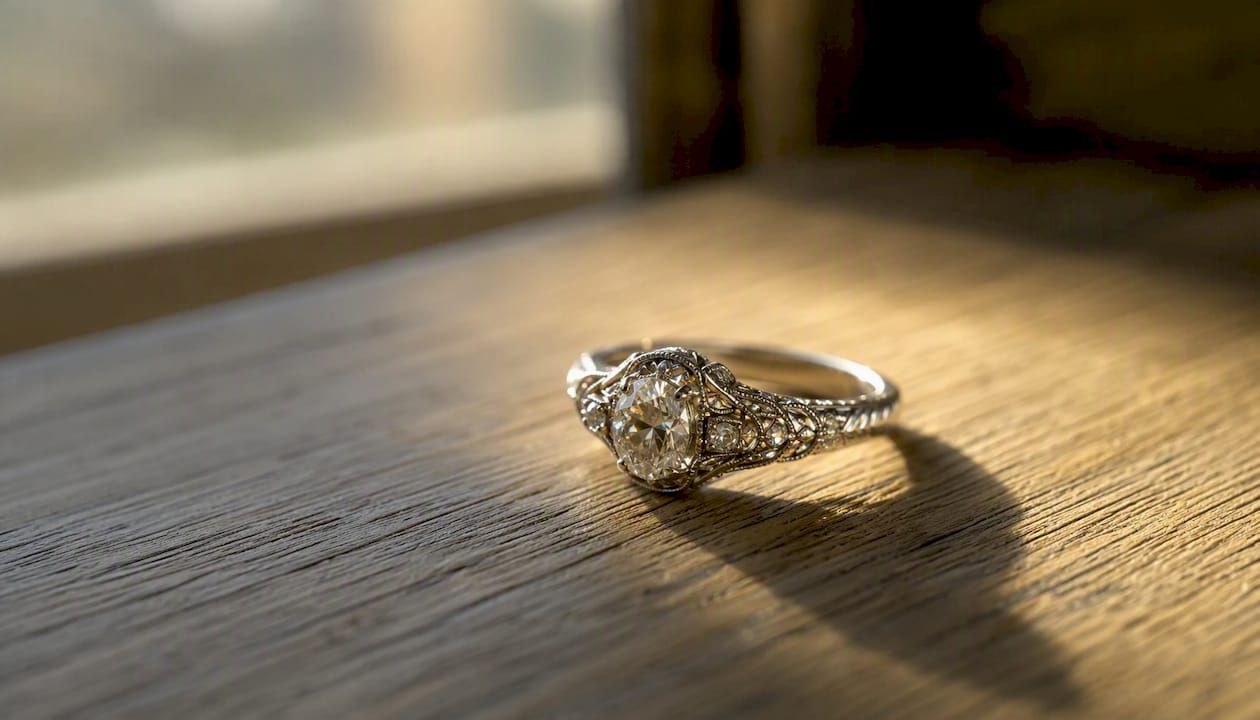
The first thing I look at when a family stone comes across the bench is the girdle. That thin edge where the crown meets the pavilion is where chips hide, and it’s where the most stress concentrates during removal and setting. A chip you can’t see with the naked eye can become a crack under the pressure of a prong tool. So the inspection isn’t a formality. It’s the whole foundation of the job.
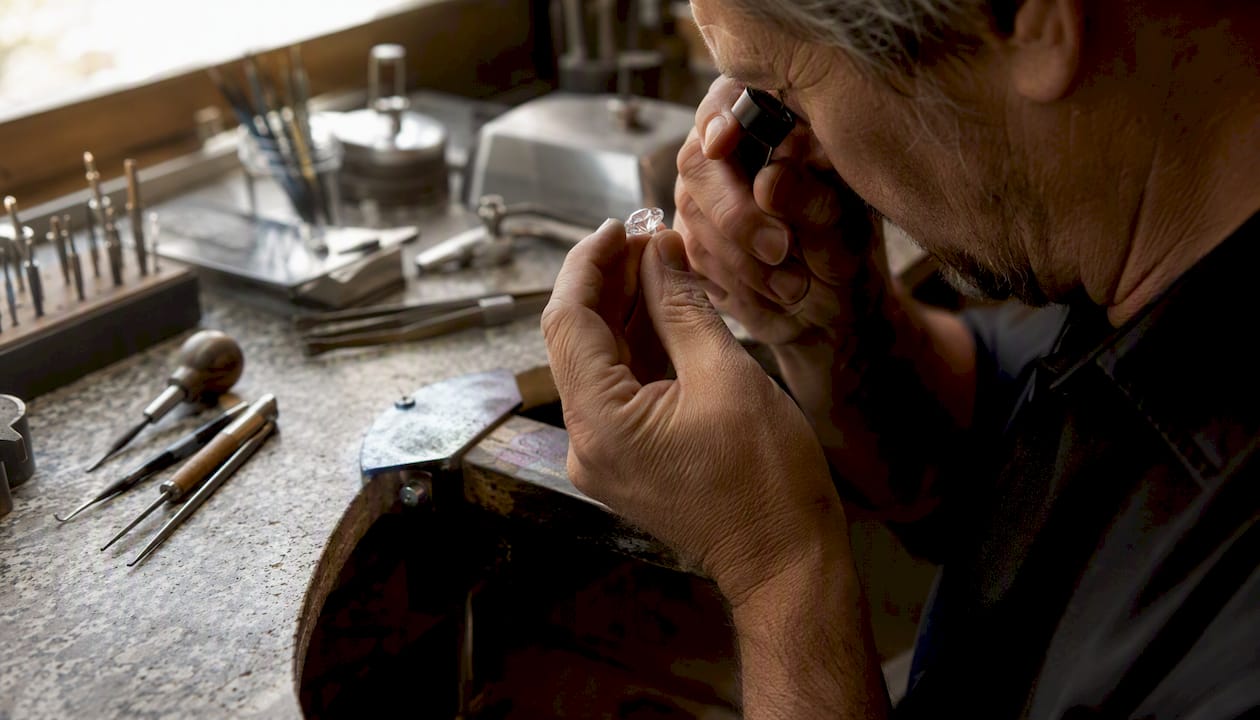
The second thing I check is any previous repair point. Older rings were often repaired with solder or filled with materials that behave differently under heat and pressure than the surrounding metal. If I don’t know where those points are before I start, I’m working blind.
There are times when I’ll advise a client not to redesign at all. A piece with significant historical or provenance value, a documented estate piece or a ring with a known maker’s mark, sometimes belongs in a museum-quality restoration rather than a modern reset. In those cases, the right answer is careful prong repair and re-polishing, not a new mounting. Preserving what’s there is sometimes the most skilled thing a jeweler can do.
Usajewels makes heirloom resets personal and transparent
When you’re ready to reset a family diamond, the difference between a good experience and a stressful one usually comes down to who’s doing the work and how clearly they communicate. Usajewels has been a family-owned, in-house manufacturer since 1999, which means the team that inspects your stone is the same team that builds the new setting. No middlemen, no mystery markups, and no outsourced fabrication.

The process starts with a consultation where you share photos of your piece and any provenance documents you have. From there, Usajewels provides a written estimate with line-item pricing, CAD renderings for your approval, and a clear timeline. The design-your-own guide walks you through every decision point, from diamond shape to metal type to setting style. For readers who want to see the full range of custom diamond jewelry and setting options before booking, the collections are a good starting point. The lifetime diamond upgrade program means the piece can grow with you over time. To get started, send photos of your heirloom and a note about what you’re hoping to create. The team will respond with an honest assessment and a written quote.
Sources
Before you book a consultation, these resources will help you go deeper on specific aspects of the process:
- How to Reset an Heirloom Diamond: An Expert’s Guide
- Expert Guide to Resetting an Heirloom Engagement Ring
- How to Turn an Heirloom Diamond Into Your Dream Engagement Ring
FAQ
How much does it typically cost to reset a diamond?
A simple re-mount runs from the low hundreds to around $1,000, while custom settings with side stones or complex metalwork commonly reach $1,000–$4,000 or more. Always request a written, line-item estimate before work begins.
How long does a diamond reset usually take?
Most reputable jewelers recommend allowing 8–10 weeks for a custom heirloom reset, with the full safe planning range being 6–12 weeks. CAD revisions, sourcing accent stones, and final appraisal scheduling are the most common causes of delay.
Should you recut an heirloom diamond to modernize it?
Jewelry experts generally advise against recutting unless the stone has structural damage such as a chipped girdle or deep surface wear. Changing the setting or pairing the ring with a new band modernizes the look without reducing carat weight or altering provenance.
What is the first step before resetting an heirloom diamond?
A professional stone inspection with a written condition report is the essential first step. This documents the diamond’s structural integrity and any existing damage before any work begins, protecting both you and the jeweler.
How do you protect an heirloom diamond before and after resetting?
Photograph the piece thoroughly, gather any existing appraisals or provenance documents, and confirm your insurance covers the stone while it’s in the jeweler’s care. After the reset, get a third-party appraisal and update your insurance policy to reflect the new piece’s value.
Recommended
- Emerald Cut Diamond Guide: Sophisticated Step-Cut Beauty | USA Jewels
- Diamond Shapes Guide: Every Shape Compared | USA Jewels
- Diamond Tennis Bracelets, Radiant Brilliance | USA Jewels
- Colored Diamond Jewelry, Fine Jewelry Artistry | USA Jewels

Deep Mehta is the Co-Owner of USA Jewels, a family-owned jewelry business she has led since 2013 in Deerfield Beach, Florida. With over 13 years of hands-on experience in fine jewelry retail, manufacturing, and diamond importing, Deep specializes in engagement rings, wedding bands, and custom jewelry design. She also co-manages Kaash Group Talent Acquisition. Deep is a University of Florida graduate and oversees every aspect of USA Jewels’ operations, from product development to marketing.
Fine Jewelry Collection


You May Also Like
How Diamond Simulants Compare to Real Diamonds
Buy With Confidence: When Laser-Drilled Diamonds Make Sense