Lab Diamond Resale Value: What to Expect Before You Buy
A lab-grown diamond is best bought for the sparkle you wear and the size you can afford, not as something you plan to cash in later. Lab-grown prices have been falling for years, so a stone usually resells for well under its retail price. The same drop is why you can choose a bigger, better-cut diamond today. We are a family jewelry maker, and we want you to know both sides of that trade before you pick a stone.
TL;DR
- Lab-grown diamond prices have fallen steadily, so expect a resale offer to be a fraction of what you paid.
- The same price drop means more carat weight, color and clarity for your budget at checkout.
- No public record of lab-grown resale prices exists yet, so any percentage you read online is an estimate, not a guarantee.
- A GIA, AGS or IGI certificate, a clean stone and a solid setting make a stone easier to sell later.
- If you want to change stones down the road, our lifetime diamond upgrade program is built for that.
Table of Contents
- What resale looks like for lab-grown diamonds
- Why lab diamond prices keep falling
- A worked example
- What affects what a stone can fetch
- Lab-grown and natural: two different reasons to buy
- Our perspective
- If you ever want to sell
- Our offer for you
- How to buy a lab-grown diamond you will be glad to own
- FAQ
- Sources
What resale looks like for lab-grown diamonds
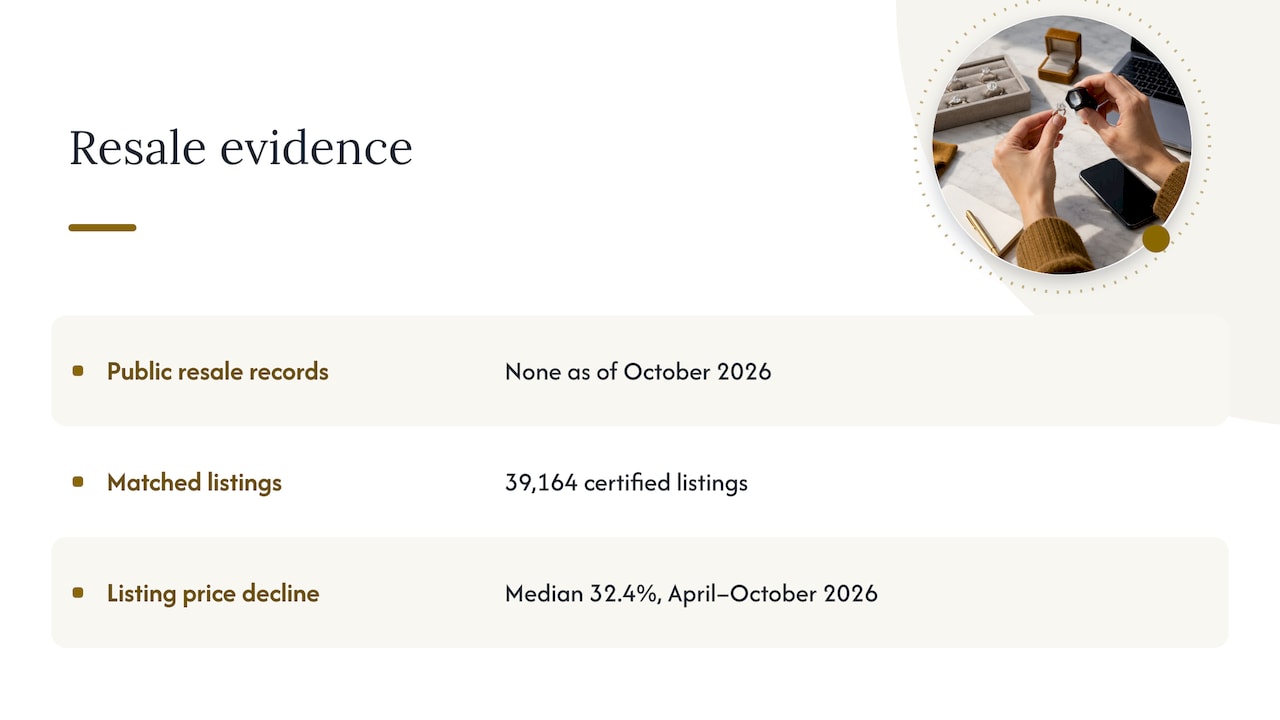
People who ask about lab diamond resale value usually want one number. There isn’t a reliable one. As of October 2026, there is no public transaction record of lab-grown diamond resales. What exists are listing prices, which show what sellers ask for stones, not what buyers finally pay.
Those listing prices point in one direction. A study of 39,164 matched certified lab-grown diamond listings found a median price reduction of 32.4% between April and October 2026. Jewelers’ informal estimates of resale vary widely, and any single percentage you see quoted should be treated as a rough guide.
The practical reading is simple. If you buy a lab-grown diamond, plan to keep it, wear it and pass it on. Treat any resale as a bonus rather than part of the budget.
Why lab diamond prices keep falling
Lab-grown diamonds are made in controlled settings, and producers have become far more efficient at it. Our guide on why lab-grown diamonds cost less walks through the process. How synthetic diamond creation works explains the two growing methods in plain terms.
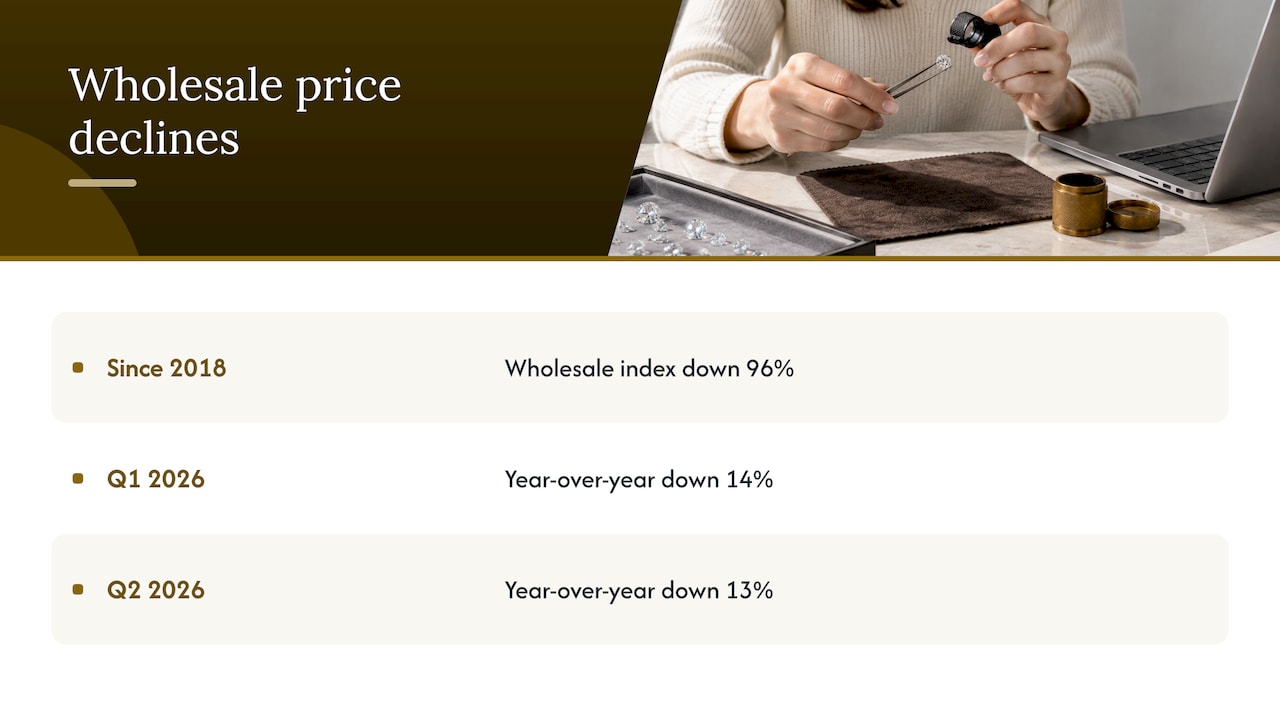
The trade press has tracked the result. The wholesale price index followed by analyst Edahn Golan has fallen 96% since 2018, with year-over-year declines of 14% in the first quarter of 2026 and 13% in the second. Wholesale prices are what jewelers pay, and they move with supply, so they are reported on a quarterly or monthly schedule.
There are early signs the pace may ease. Some rough-stone producers in China and the U.S. have recently raised prices, though analysts read that as producers consolidating rather than a rise in shopper demand. Nobody can promise where prices go next, and we won’t either.
What this means for you: the market that lowers resale offers is the same one that lowers what you pay today. Our lab diamond price guide shows what to expect at each size and quality.
A worked example
Here is an illustration with round numbers, not a quote. Say a certified lab-grown stone is listed at $1,000 in April. If it follows the median 32.4% listing decline from the study above, similar stones would list around $676 by October. A private buyer choosing between your used stone and a new certified one at that lower price will want a discount to your asking price.
That is why resale estimates are best anchored to what comparable new stones cost today, not to the price you originally paid. It is also why the original purchase decision matters more than the resale one.
Now flip it. Because comparable stones cost less over time, a budget that once bought a one-carat stone can now stretch to a larger or better-quality one. Many of our customers choose to put the savings into the stone, the metal or the setting, the parts they will see and enjoy every day.
What affects what a stone can fetch
If you do sell one day, these factors matter most:
- Certification. A grading report from a recognized lab tells a buyer exactly what the stone is. Our diamond certification guide compares GIA, AGS and IGI reports.
- The four Cs. Cut, color, clarity and carat weight set the baseline. Well-cut stones in popular shapes are easier to place. See our diamond shapes guide for what each shape offers.
- Condition. Clean, unchipped stones with their paperwork sell more easily.
- Setting and metal. Solid gold or platinum settings carry their own metal value. Hollow or plated pieces do not, which is one reason we build ours solid.
- Timing and the market. Offers follow what new comparable stones cost on the day you sell.
One detail from the wholesale trade is worth knowing: in one recent quarter, there was no price-list data for SI clarities because there were so few transactions. Mid-range stones are common, and better-quality goods get more of the market’s attention. If you want a stone that stands out, choose well on cut and color rather than chasing the lowest price.
Lab-grown and natural: two different reasons to buy
People often compare resale because they are comparing the two kinds of diamond. Both are real diamonds with the same chemistry and sparkle, and both are bought to be worn and treasured. The difference you will feel most is price: a lab-grown stone gives you more size and quality for the money, and often a lighter footprint. Our lab-grown vs natural diamonds guide sets the two side by side, and our conflict-free diamond buyer’s guide covers sourcing for readers who care most about ethics.
If you are still deciding, are lab-grown diamonds worth it takes you through the choice step by step.
Our perspective
We have been making jewelry since 1999, and the question we hear most is whether a diamond will be “worth it” later. Our honest answer is that the best return on a diamond is the day-to-day pleasure of wearing it, and the story it carries for your family.
Because we manufacture in-house and sell direct, we remove the middlemen who add cost to a ring. That is where we think shoppers get real value: a certified, conflict-free stone, solid metal and a price that respects your budget from the first day, not a guess about what a buyer might offer years from now.
We also know tastes and lives change. That is why we offer lifetime diamond upgrades, so a stone you choose today does not have to be the only stone you ever have.
Joseph
If you ever want to sell
Selling is not hard, but it rewards preparation. A sensible routine:
- Gather your paperwork. Find the grading report, receipt and any appraisal. A certificate lets buyers check the stone quickly.
- Check comparable new listings. Look at what similar certified stones, same shape, size, color and clarity, are listed at now. That is the ceiling for your price.
- Collect several offers. The Better Business Bureau advises getting four or five estimates, researching any business you deal with and checking an individual buyer’s credentials or reviews.
- Compare net amounts. A trade-in credit, a consignment sale and a private sale pay out differently and on different timelines. Compare what you actually receive, after any fees.
- Meet safely. For private sales, use a public place and secure payment, and never hand over the stone before funds clear.
Before you sell a ring bought from us, ask about our lifetime diamond upgrade program: if what you want is a different stone, upgrading may meet that need without a sale at all.
Our offer for you
If you are building a ring or a gift, you can start with the diamond itself. Our certified loose diamonds start at $142, in both natural and lab-grown, and every stone is conflict-free. You can also design your own diamond ring, starting at $399, choosing the shape, diamond quality and metal. Or browse our engagement rings, which start at $346.
Every order ships free and insured, and comes with a 30-day money-back guarantee.
If you want a hand picking between stones, our design your own engagement ring guide takes you through each choice in order.
How to buy a lab-grown diamond you will be glad to own
Since resale is not the aim, spend where you will notice it:
- Put cut first. Cut drives brilliance more than any other factor, and a beautifully cut stone looks larger and livelier.
- Choose a certified stone. A report from a recognized lab documents exactly what you are buying and helps if you ever sell or insure it.
- Pick a solid setting. Solid gold or platinum is made to last for decades.
- Spend savings on what you see. A lab-grown stone leaves room for a larger center diamond, a fancier shape or a finer band.
- Insure it. Keep the receipt and the report together, and insure the ring for its replacement cost.
For gifts to children or first-time purchases, smaller pieces such as sterling silver jewelry, starting at $46, or earrings and pendants from our fine jewelry collections give you quality without a large outlay.
FAQ
Do lab diamonds hold their value?
Lab-grown diamonds are priced by a market that has been moving down for years, so a stone usually resells for less than its retail price. Their value for you is in wearing them and in the larger, better stone your budget buys. If your tastes change, our lifetime diamond upgrade program is there for that.
Do lab diamonds have resale value at all?
Yes, a certified stone can be sold, and buyers do pay for it. There is no public record of what lab-grown stones actually sell for, so offers vary by buyer, stone and the day’s market. Gathering several offers gives you the clearest picture.
How much is a one-carat lab diamond worth?
It depends on cut, color and clarity, and the price moves as the market does. Our diamond pricing guide explains how each quality factor affects cost, and our certified loose diamonds start at $142 so you can compare real stones side by side.
Is it hard to sell a lab-grown diamond?
It takes some preparation but is manageable. Keep the grading report, check what similar new stones are listed for, and collect multiple offers before you accept one.
Does a lab-grown diamond still make sense for an engagement ring?
For many couples, yes. You get a real diamond, often a larger one, and you can direct the savings into the setting or the wedding itself. Our engagement ring buying guide helps you decide what matters most to you both.
Sources
- Lab-Grown Diamond Wholesale Prices Are in Freefall, JCK
- Lab-Grown Diamond Prices Show Signs of Stabilizing, JCK
- Lab-Grown Diamond Market Moves Toward Better-Quality Goods, JCK
- Lab Grown Diamond Resale Value: What Price History Shows, Rings.com
- BBB Tip: Buying and selling jewelry
Recommended
- Lab Diamond Prices in 2026: What You Should Expect to Pay
- Are Lab-Grown Diamonds Worth It? A Practical 2026 Guide
- Lab-Grown vs Natural Diamonds Guide
- Lab-Created Diamonds: Process & Value
Deep Mehta is the Co-Owner of USA Jewels, a family-owned jewelry business she has led since 2013 in Deerfield Beach, Florida. With over 13 years of hands-on experience in fine jewelry retail, manufacturing, and diamond importing, Deep specializes in engagement rings, wedding bands, and custom jewelry design. She also co-manages Kaash Group Talent Acquisition. Deep is a University of Florida graduate and oversees every aspect of USA Jewels’ operations, from product development to marketing.
Fine Jewelry Collection

You May Also Like
Avoid Deferred Interest on a $5,000 Ring: U.S. Ring Financing
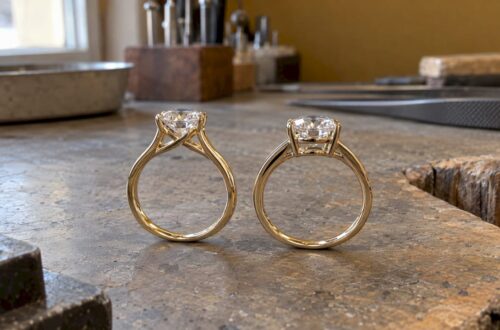
Trellis vs Basket Setting: How to Choose Your Ring