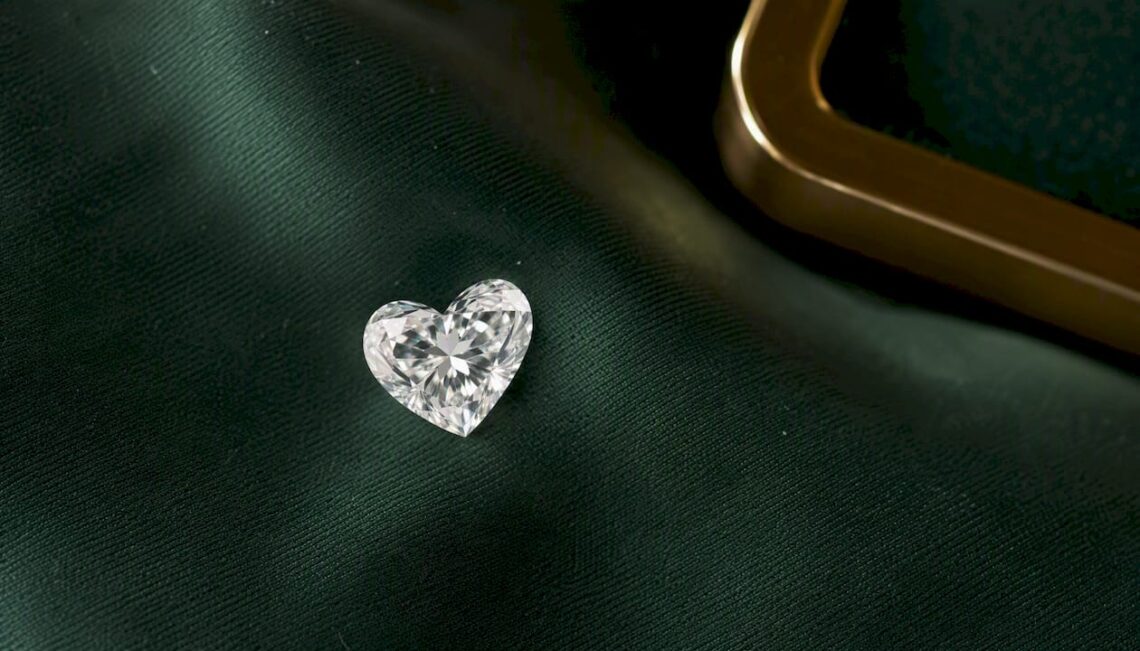
Heart Shaped Diamonds: What Every Buyer Needs to Know
A heart shaped diamond is a fancy brilliant cut with a distinctive cleft at the top, two rounded lobes, and a pointed apex at the base. It’s one of the most expressive cuts in fine jewelry, and choosing one well comes down to three things: strong symmetry, a protected tip, and a certified stone.
Your buying verdict at a glance:
- Size: Go no smaller than 0.50 carats — below that threshold, the heart silhouette disappears once the stone is set.
- Symmetry: Inspect the cleft, lobes, and point carefully. Two GIA-graded hearts with identical grades can still look very different because cutter discretion shapes the final proportions.
- Setting: Protect the apex with a V-shaped prong or bezel. The point is the most vulnerable spot in daily wear.
- Certification: Insist on a GIA or IGI report. No exceptions.
Usajewels is a trusted purchase option here. Family-owned since 1999, they offer in-house manufacturing, a lifetime diamond upgrade program, and a design-your-own experience with certified natural and lab-grown stones.
Key Takeaways
A heart shaped diamond rewards buyers who prioritize symmetry and tip protection over chasing the lowest per-carat price — those two factors determine whether the stone actually looks like a heart.
| Point | Details |
|---|---|
| Minimum size threshold | For a visible heart silhouette, choose at least 0.50 ct — smaller stones make it difficult to distinguish the heart shape once set. |
| Symmetry is the top priority | Inspect cleft, lobes, and point alignment personally or via top-down high-res imagery before buying. |
| Protect the apex | A V-shaped prong or bezel at the tip prevents chipping during daily wear. |
| Insist on GIA or IGI | Verify the certificate number directly on the lab’s website before paying. |
| Usajewels | Offers certified stones, in-house manufacturing, and a lifetime diamond upgrade program since 1999. |
Table of Contents
- What is a heart shaped diamond?
- What are the anatomy and ideal proportions of a heart cut?
- Why does symmetry matter more for hearts than for most other cuts?
- How do you choose a heart shaped diamond? The 4Cs adapted for this cut
- What settings work best for a heart shaped diamond?
- How do you care for a heart shaped diamond?
- Are heart shaped diamonds more expensive?
- Where should you buy a heart shaped diamond in the U.S.?
- A note from Joseph
- Usajewels makes it easier to find the right heart shaped ring
- Sources
- FAQ
What is a heart shaped diamond?
A heart shaped diamond is a modified brilliant cut, meaning it shares the same facet architecture as a round brilliant but is shaped into a recognizable heart silhouette. The cut features two symmetrical lobes at the top, a centered cleft between them, curved wings or shoulders, and a sharp apex at the base.
The heart cut has roots in early Renaissance gem cutting. Historical records suggest heart-shaped stones appeared as early as the 16th century, often exchanged between royalty as tokens of devotion. Mary Queen of Scots reportedly sent a heart-shaped ring to Queen Elizabeth I. That romantic symbolism has never really left the cut.
From a technical standpoint, the heart is demanding. Natural Diamond Council notes that achieving a balanced heart requires precision cutting, often from larger rough material, and specialized cutter expertise. A poorly executed heart reads as a lumpy teardrop rather than a clean, recognizable shape. That difficulty is part of why well-cut examples carry a premium and why personal inspection matters so much.
What are the anatomy and ideal proportions of a heart cut?
Understanding the parts of a heart shaped diamond helps you evaluate what you’re looking at, whether in person or through a vendor’s high-resolution images.
**The key parts:
**
- Lobes: The two rounded upper halves. They should be equal in size and curve.
- Cleft: The V-shaped indentation between the lobes. It should be centered and clearly defined, not shallow or off to one side.
- Wings/shoulders: The outer curves that flow from the lobes down toward the point. Balanced wings create a full, even silhouette.
- Apex/point: The sharp tip at the base. It should be centered and well-defined.
- Table and pavilion: The flat top facet and the lower cone of facets beneath the girdle, which drive light return.
For proportions, Diamond Guild recommends a length-to-width ratio of approximately 1.0–1.2. A ratio below 1.0 produces a wide, squat heart. Above 1.2, the stone starts to look elongated and arrowhead-like rather than a balanced heart. Most buyers find the 1.0–1.05 range reads as the most classic and recognizable shape.
Common problems to watch for: flat or uneven lobes, a cleft that sits off-center, a blunt or misaligned point, and asymmetrical wings. Any one of these makes the stone look unfinished.
Pro Tip: View the stone from directly above — either in person or through a vendor’s top-down photo. Draw an imaginary vertical line through the center of the cleft and apex. Both halves should mirror each other precisely. If one lobe sits higher or the point drifts left or right, the cut is off.
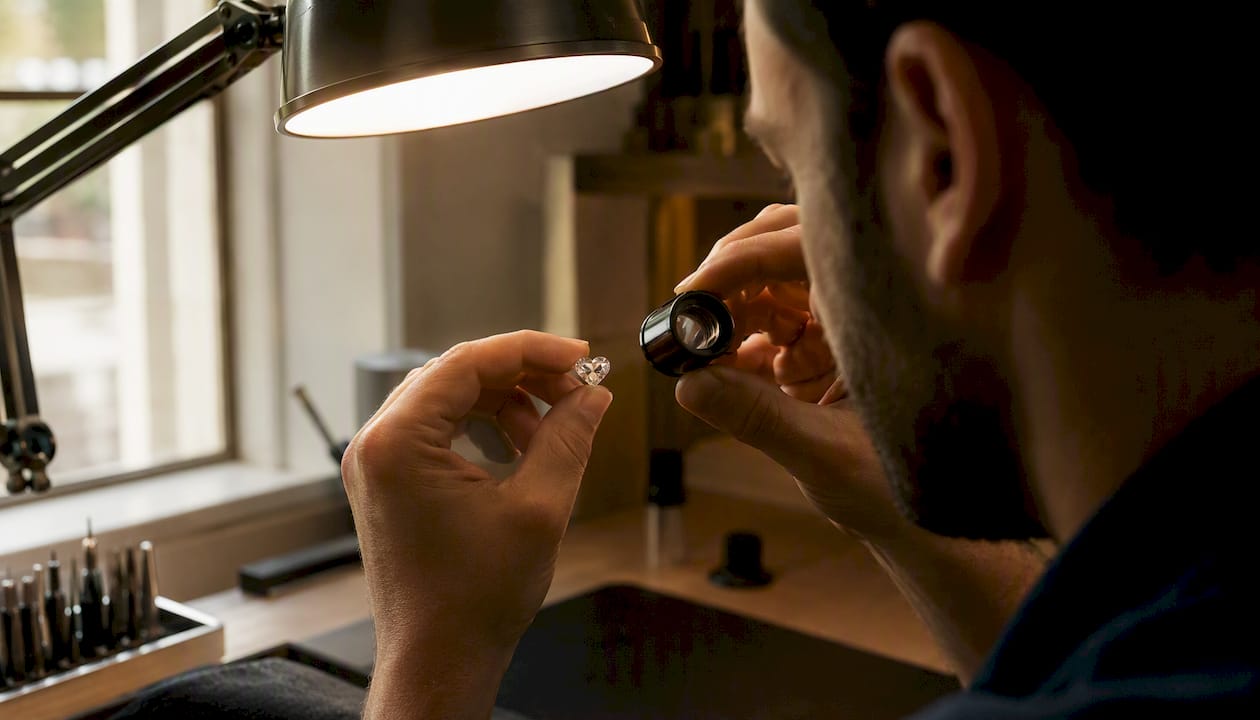
Heart shaped diamonds can also show a “bow-tie” effect, a dark shadow across the widest part of the stone. Some bow-tie is normal in fancy brilliants, but a dominant bow-tie that cuts across the center of the heart is a sign of poor proportioning. Always check video or 360° imagery for this.
Why does symmetry matter more for hearts than for most other cuts?
For a round brilliant, minor asymmetry is invisible to the naked eye. For a heart shaped diamond, even a small imbalance is immediately obvious because the silhouette itself is the selling point. A lobe that sits 10% larger than its pair, or a cleft that leans slightly right, turns a romantic symbol into something that looks like a mistake.
Light return suffers too. When the lobes are uneven, the pavilion facets on each side reflect light at slightly different angles, creating a patchy, uneven sparkle pattern. The stone looks duller than its grade suggests.
Symmetry checkpoints to run through before buying:
- Are both lobes equal in size and curve?
- Is the cleft centered and deep enough to read clearly?
- Does the point align with the center of the cleft?
- Are the wings symmetrical from left to right?
- Is there a bow-tie shadow, and how dominant is it?
GIA and IGI grading reports note symmetry as a quality factor, but GIA stresses that for fancy shapes like hearts, personal inspection of the cleft, lobes, and point is essential because cutter discretion affects final proportions in ways a grade alone doesn’t capture. Two stones with the same symmetry grade can look noticeably different in person.
Pro Tip: Ask the vendor for a proportions diagram and high-magnification photos from multiple angles, including a direct top-down view. A reputable seller will provide these without hesitation. If they can’t or won’t, that’s a signal worth taking seriously.
How do you choose a heart shaped diamond? The 4Cs adapted for this cut
Applying the 4Cs to a heart cut requires a slightly different priority order than you’d use for a round brilliant.
1. Cut and symmetry (highest priority)
There is no official cut grade for fancy shapes on a GIA report the way there is for rounds. That makes your own visual inspection the primary quality check. Use the symmetry checkpoints above. Request 360° video and a top-down image. The Usajewels heart shaped diamond guide walks through proportions and visual checks in detail.
2. Carat weight and size
For a visible heart silhouette, choose a diamond of at least 0.50 carats. Below this, GIA notes the heart shape tends to disappear once the stone is set in a ring. For pendants or earrings, slightly smaller sizes can sometimes work since the silhouette remains less obscured, but the 0.50 carat minimum is a good target for most applications. A halo setting can make a smaller stone appear larger if budget is a concern.
3. Color
For white metal settings (platinum, white gold), aim for G–H color. The heart cut’s brilliant faceting masks slight warmth reasonably well, but the lobes and tip can show color more than the center. In yellow or rose gold, you can go as warm as I–J without it looking off, since the metal tone absorbs the warmth.
4. Clarity
Natural Diamond Council recommends targeting VS2 or higher as a practical clarity floor for visible beauty. The brilliant faceting in a heart cut does scatter light in a way that hides inclusions better than a step cut like an emerald, so SI1 can sometimes work if the inclusion is positioned away from the center. That said, VS2 is the safer target, especially for stones above 1.0 carat where inclusions become easier to spot.
Practical buying checklist:
Online:
- Request high-resolution top-down and side-profile photos.
- Watch the 360° video for bow-tie and symmetry.
- Confirm the GIA or IGI certificate number and verify it on the issuing lab’s website.
- Read the return policy carefully — 30 days minimum is a reasonable standard.
- Check for a lifetime upgrade or warranty program.
In-store:
- View the stone under multiple lighting conditions (daylight, fluorescent, spot).
- Use a loupe or ask the jeweler to show you the stone under magnification.
- Run the vertical-line symmetry test.
- Ask to see the certificate alongside the stone.
Pro Tip: For hearts, prioritize clarity over color when the stone is above 1.0 carat. Larger stones show inclusions more readily, and a visible inclusion in a lobe is hard to ignore. Below 0.75 carats, the color-clarity trade-off tilts the other way — a slightly warmer stone with cleaner clarity often looks better in practice.
What settings work best for a heart shaped diamond?
The right setting does two jobs: it shows off the heart silhouette and protects the apex from chipping. Those two goals sometimes pull in opposite directions, so understanding the trade-offs helps you choose.
Recommended setting types:
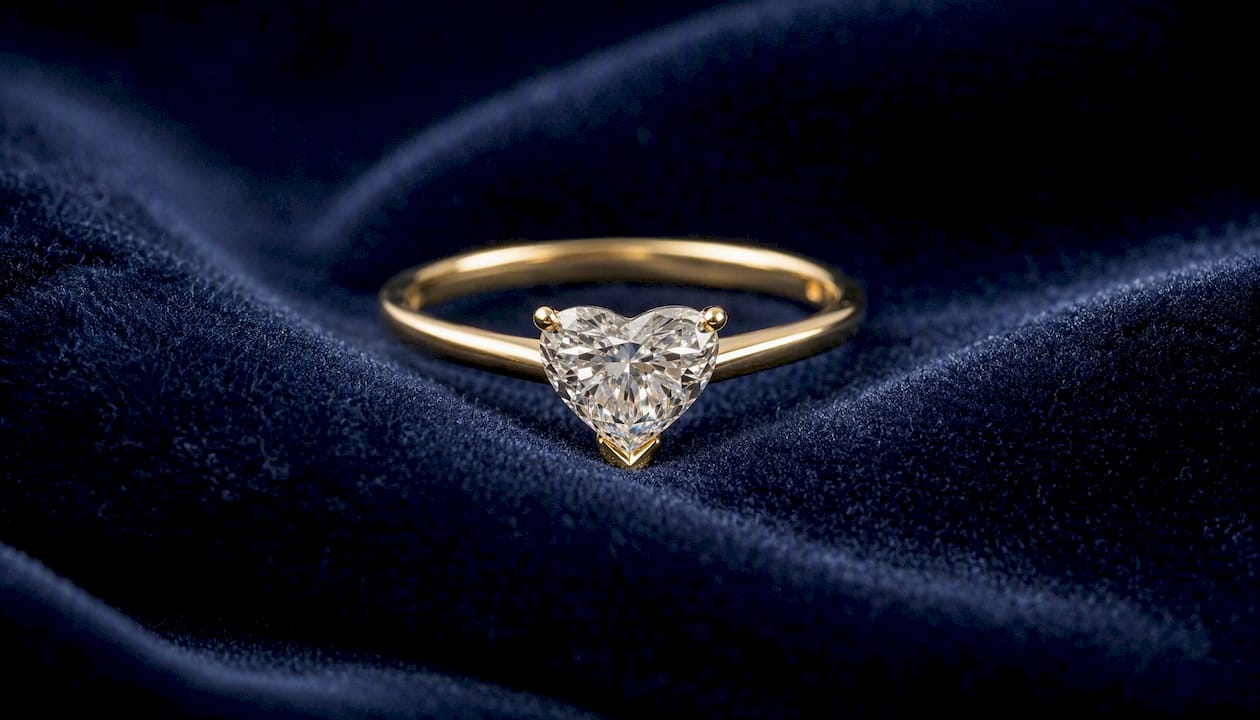
- V-prong solitaire: A single V-shaped prong cradles the apex directly. This is the most common and most practical choice. It protects the point while keeping the silhouette visible. The rest of the stone typically sits in two or three additional prongs at the lobes.
- Bezel or partial bezel: A metal lip wraps around part or all of the girdle. Full bezels offer the most protection but hide the outline slightly. A partial bezel at the tip only is a good middle ground for active wearers.
- Halo: A ring of smaller diamonds surrounds the heart, which amplifies sparkle and makes the stone appear larger. The halo also adds a layer of protection around the perimeter, including the tip. Trade-off: the halo can soften the sharpness of the heart outline.
- Three-stone: Side stones flank the heart center stone. This doesn’t directly protect the apex, so a V-prong is still needed at the tip. The design adds visual weight and symbolic meaning (past, present, future).
- Low-profile vs. raised: A lower setting sits closer to the finger and reduces the chance of snagging. A raised setting shows more of the stone but is more exposed.
| Setting type | Tip protection | Silhouette visibility | Best for |
|---|---|---|---|
| V-prong solitaire | Strong | High | Everyday engagement rings |
| Full bezel | Highest | Moderate | Active lifestyles |
| Partial bezel (tip only) | Good | High | Balance of protection and visibility |
| Halo | Good | Moderate (softened outline) | Maximum sparkle, smaller stones |
| Three-stone with V-prong | Good | High | Statement rings |
The apex is the most vulnerable point on any heart shaped diamond, and GIA advises choosing a setting that specifically protects it, whether through a V-shaped prong or a bezel lip. Don’t skip this step for the sake of a cleaner look.
How do you care for a heart shaped diamond?
The brilliant faceting of a heart cut holds up well over time, but the pointed apex needs consistent attention. A chip at the tip is the most common damage scenario, and it’s almost always preventable.
**Maintenance checklist:
**
- Clean the stone every two to three weeks with warm water, mild dish soap, and a soft toothbrush. Pay attention to the underside of the setting where oils and debris collect.
- Have a jeweler inspect the prongs, especially the V-prong at the apex, every six months. Prongs wear down with daily contact and can loosen without obvious signs.
- Store the ring separately from other jewelry. Diamonds scratch other stones and metals easily.
- Remove the ring before activities that involve impact: gardening, gym work, moving furniture.
Pro Tip: Once a month, hold the ring up to a light source and gently press the stone sideways with a fingernail. If it shifts or you hear a faint click, a prong is loose. Take it to a jeweler immediately — a loose prong on a heart cut puts the apex at serious risk.
Insure the ring at its replacement value, not its purchase price. Replacement costs typically run higher than original purchase prices, especially for custom work. Ask your jeweler for a written appraisal at the time of purchase, and update it every few years. If the vendor offers a lifetime warranty or diamond upgrade program, document those terms in writing and keep them with your insurance paperwork.
Are heart shaped diamonds more expensive?
Heart shaped diamonds are not automatically more expensive than round brilliants of the same carat weight, but well-cut examples carry a real premium over poorly proportioned ones. The pricing picture has a few layers worth understanding.
Primary pricing factors:
- Carat weight: The biggest driver, as with any diamond. But for hearts, the minimum viable size (0.50 ct for a visible silhouette) means you’re rarely shopping the very low end of the weight range.
- Cut quality and symmetry: A beautifully proportioned heart with matched lobes and a clean cleft commands more than a technically similar stone with flat or uneven lobes. Because there’s no official cut grade for fancy shapes, this premium is invisible on the certificate but very visible in person.
- Clarity and color: VS2 and above, G–H color for white settings, as outlined earlier.
- Rarity of well-cut examples: Natural Diamond Council notes that good heart cuts often require larger rough material and specialized cutters, which reduces supply of truly excellent examples.
Value-check tips:
- Compare per-carat prices across stones with similar proportions (length-to-width ratio within 1.0–1.2), similar certification, and similar color/clarity grades. Price variation for the same grade often reflects cut quality differences.
- A stone priced well below comparable certified hearts is a red flag, not a deal. It usually means poor symmetry, an off-ratio shape, or a certificate from a less rigorous lab.
- Factor in setting and labor costs separately from the stone price when comparing total ring costs.
Red flags to avoid:
- No certificate, or a certificate from an unrecognized lab
- No high-resolution imagery or refusal to provide 360° video
- Prices significantly below market without a clear explanation
- Vague or no return policy
- No stated warranty or upgrade program
Where should you buy a heart shaped diamond in the U.S.?
The vendor matters as much as the stone. A certified diamond from a seller with poor imaging, no return policy, and no warranty is a riskier purchase than a slightly lower-graded stone from a seller with strong policies and transparent practices.
Vendor checklist before you pay:
- GIA or IGI certificate, with the report number verifiable on the lab’s own website
- High-resolution photos from multiple angles, including a direct top-down view
- 360° video showing the stone in motion
- Clear, written return policy (30 days minimum is a reasonable standard)
- Lifetime warranty or diamond upgrade program in writing
- Written appraisal at purchase for insurance purposes
- Shipping insurance on the outbound and return shipment
Verifying vendor reputation beyond the certificate:
Check Google reviews and look for patterns, not just the star rating. A seller with 200+ reviews mentioning specific staff names and repeat purchases signals genuine customer relationships. Check the Better Business Bureau for unresolved complaints. Look for a physical showroom address and a clear phone number. Ask how long the business has been operating — longevity in the jewelry trade is a meaningful signal.
For custom rings, expect a timeline of three to six weeks from design approval to delivery in the U.S., depending on the complexity of the setting and stone availability. In-stock purchases typically ship within a few business days.
Usajewels offers a detailed heart shaped diamond education page, a design-your-own tool, in-house manufacturing, and a lifetime diamond upgrade program. They’ve been family-owned since 1999 and carry over 222 Google reviews. Their certified natural and lab-grown stones come with the documentation and imaging you should be asking for from any vendor.
A note from Joseph
Every heart shaped diamond I’ve inspected over the years tells me the same thing: the certificate is the starting point, not the finish line. I’ve seen two stones with identical GIA grades sit side by side where one reads as a perfect heart and the other looks like a rounded triangle. The difference is always in the cleft depth, the lobe balance, and the point alignment — details that show up in a careful visual inspection, not on a grading report.
My commitment to every customer is simple: we won’t let a stone leave our hands without checking those proportions ourselves. If you’re considering a heart shaped engagement ring and want a second set of eyes on a stone, or if you’d like to design something from scratch with a certified diamond you can trust, reach out. That’s what we’re here for.
Usajewels makes it easier to find the right heart shaped ring
Usajewels is the direct-to-consumer alternative to traditional retail markup for heart diamond jewelry in the U.S. Because everything is manufactured in-house, you get custom-quality work at prices that don’t include a middleman’s cut.
Here’s what sets the experience apart: you choose the diamond shape, quality, and metal type yourself through the design-your-own tool, every stone is ethically sourced and certified, and the lifetime diamond upgrade program means your purchase grows with you. The family has been doing this since 1999, and the 222+ Google reviews reflect a level of personal care you won’t find at a chain retailer.
Ready to find your heart shaped ring? Browse the fine diamond jewelry collection at Usajewels, or start with the heart jewelry category to see current designs and custom options.
Sources
- Heart-Shaped Engagement Rings: Symbolism and Style | GIA 4Cs
- 20+ Stunning Heart-Shaped Diamond Jewelry Gift Ideas
- What is a heart shaped diamond? – Diamond Guild Australia
FAQ
Is a heart shaped diamond more expensive than other cuts?
Not automatically, but well-proportioned examples carry a premium because they require specialized cutting and often larger rough material. Poorly cut hearts can be cheaper, but the silhouette suffers noticeably.
What is a heart shaped diamond called in gemology?
It’s classified as a fancy brilliant cut. The term “fancy” refers to any diamond cut that isn’t a standard round brilliant, and the heart shape falls within that category.
What is the rarest diamond shape?
True rarity depends on cut quality rather than shape alone. Among fancy cuts, well-proportioned hearts are among the harder shapes to find because achieving balanced lobes and a clean cleft requires significant cutter skill and suitable rough material.
What is a divorce ring?
A divorce ring is a piece of jewelry some people buy for themselves after a marriage ends, often as a symbol of independence or a new chapter. It has no standard design and is unrelated to engagement or wedding ring traditions.
How do I verify a GIA or IGI certificate is real?
Enter the report number directly into GIA’s Report Check tool or IGI’s online verification portal. A legitimate certificate will pull up the stone’s exact grades and an image. Never rely solely on a paper copy provided by the seller.
Recommended
- Diamond Shapes Guide: Every Shape Compared | USA Jewels
- Pear Shaped Diamond Guide: Teardrop Elegance | USA Jewels
- Round vs Oval Diamond: Which Shape Is Right for You?

Deep Mehta is the Co-Owner of USA Jewels, a family-owned jewelry business she has led since 2013 in Deerfield Beach, Florida. With over 13 years of hands-on experience in fine jewelry retail, manufacturing, and diamond importing, Deep specializes in engagement rings, wedding bands, and custom jewelry design. She also co-manages Kaash Group Talent Acquisition. Deep is a University of Florida graduate and oversees every aspect of USA Jewels’ operations, from product development to marketing.
Fine Jewelry Collection


You May Also Like
VVS vs VS: Which Diamond Clarity Should You Buy?
Buy With Confidence: When Laser-Drilled Diamonds Make Sense