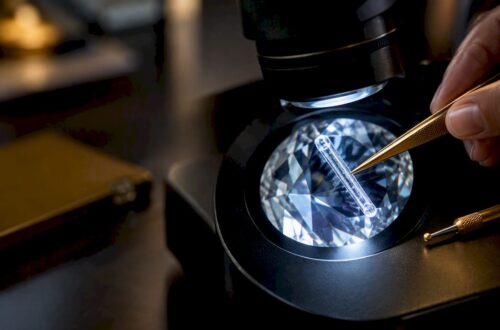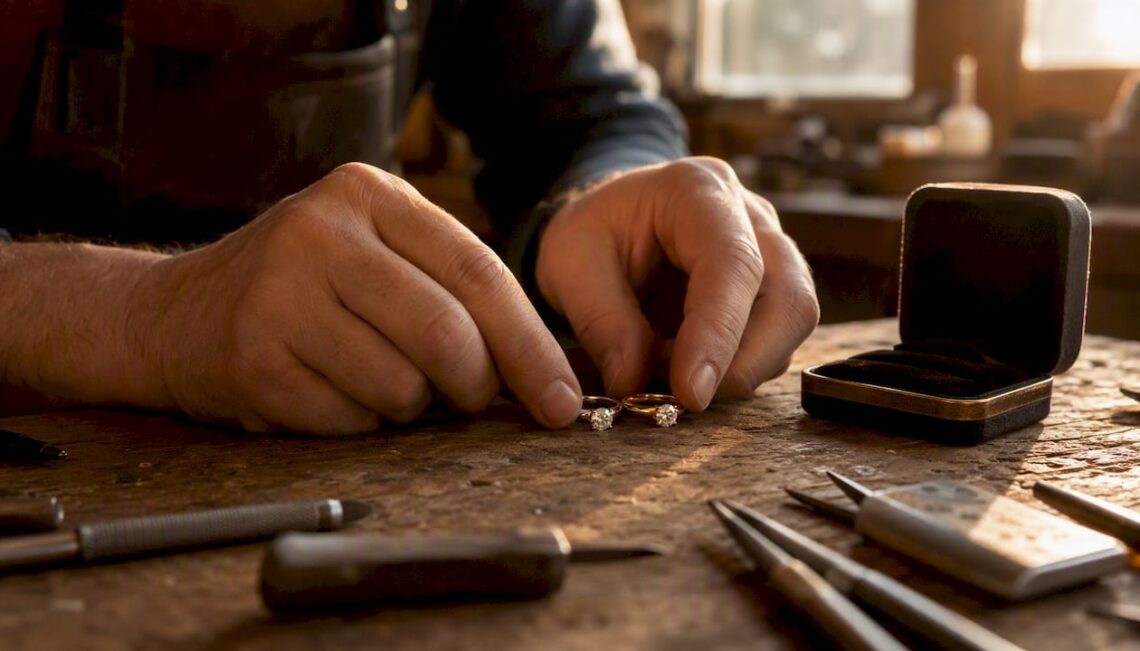
Platinum vs Gold Engagement Rings: Pick by Priority
Choose platinum if durability, hypoallergenic properties, and a naturally white color are your top priorities. Choose gold if you want color variety, more flexibility on price, or a warmer aesthetic. Both metals are trusted, beautiful, and available in certified quality — the right choice comes down to your lifestyle, skin sensitivity, and design vision.
Quick match guide:
- Budget-minded buyer: 14k or 18k gold offers excellent quality at a lower price point than platinum.
- Allergy-sensitive skin: Platinum (Pt950 or Pt900) is naturally hypoallergenic; nickel-free gold alloys are the next best option.
- Daily-wear professional: Platinum’s density means it holds up to constant wear without thinning over time.
- Warm or colored-stone design: Yellow or rose gold creates beautiful contrast with champagne, cognac, or fancy-colored diamonds.
The sections below cover appearance and aging, durability, purity and hallmarks (14k, 18k, Pt950, Pt900), white gold vs. platinum maintenance, cost, care, settings, comfort, and how to verify what you’re buying. Usajewels’s platinum jewelry guide is one of the trusted educational resources referenced throughout.
Table of Contents
- 1. How platinum and gold actually look — and how they age
- 2. Durability and scratch behavior you should know before buying
- 3. What gold karats and platinum grades actually mean
- 4. White gold vs. platinum: the look-alike comparison
- 5. What drives the price difference between platinum and gold
- 6. How to care for your ring over the years
- 7. Why jewelers often prefer platinum for prong settings
- 8. A practical checklist for choosing your ring metal
- 9. How to read hallmarks and verify your metal in the U.S.
- Key Takeaways
- Usajewels makes the metal choice personal
- FAQ
1. How platinum and gold actually look — and how they age
Platinum is naturally white-silver. It requires no coating to achieve that cool, bright tone, and it keeps that color for life. Yellow gold has a warm, rich hue that comes from the metal itself; rose gold gets its blush from a copper alloy. White gold starts out looking nearly identical to platinum, but only because it’s coated with rhodium, a bright platinum-group metal applied as a thin plating.
How each metal ages is where the real differences show up:
- Platinum develops a soft, matte surface texture called a patina over time. The metal doesn’t actually disappear — it displaces rather than wears away. Many buyers love the antique look; others prefer to have it polished back to a high shine periodically.
- Yellow and rose gold retain their warmth and color throughout the ring’s life. Surface scratches are visible but polishable, and the underlying color never changes.
- White gold will gradually reveal a slightly yellowish or grayish tint as the rhodium plating wears down, typically within one to three years of daily wear. Replating restores the bright white finish.
Metal color also affects how your center stone looks. According to gemological color theory, a warm yellow or rose gold setting can mask slight warmth in a lower-color diamond, making it appear whiter than it grades. A cool platinum or white gold setting maximizes brightness and contrast for colorless or near-colorless stones. If you’re pairing your ring with a colored gemstone, a warm metal can deepen the stone’s saturation while a white metal creates a cleaner, more modern contrast.
Buyer examples:
- Choosing a D–F colorless diamond? Platinum or white gold lets that brightness shine through.
- Pairing with a champagne or cognac diamond? Yellow gold is a natural complement.
- Matching a future wedding band? Decide on your metal family early — mixing metals in a bridal set requires intentional design.
2. Durability and scratch behavior you should know before buying
Platinum and gold are both durable metals, but they behave differently under daily wear — and understanding that difference will shape your long-term satisfaction.
Density vs. hardness. Platinum is significantly denser than gold. An identical ring design in platinum will feel noticeably heavier. That density means platinum is also more resistant to deformation: the metal bends and flows rather than wearing away, so a platinum ring loses very little material over decades. Gold, particularly 14k, is harder on the Mohs scale than platinum, which means it resists surface scratching slightly better in the short term.
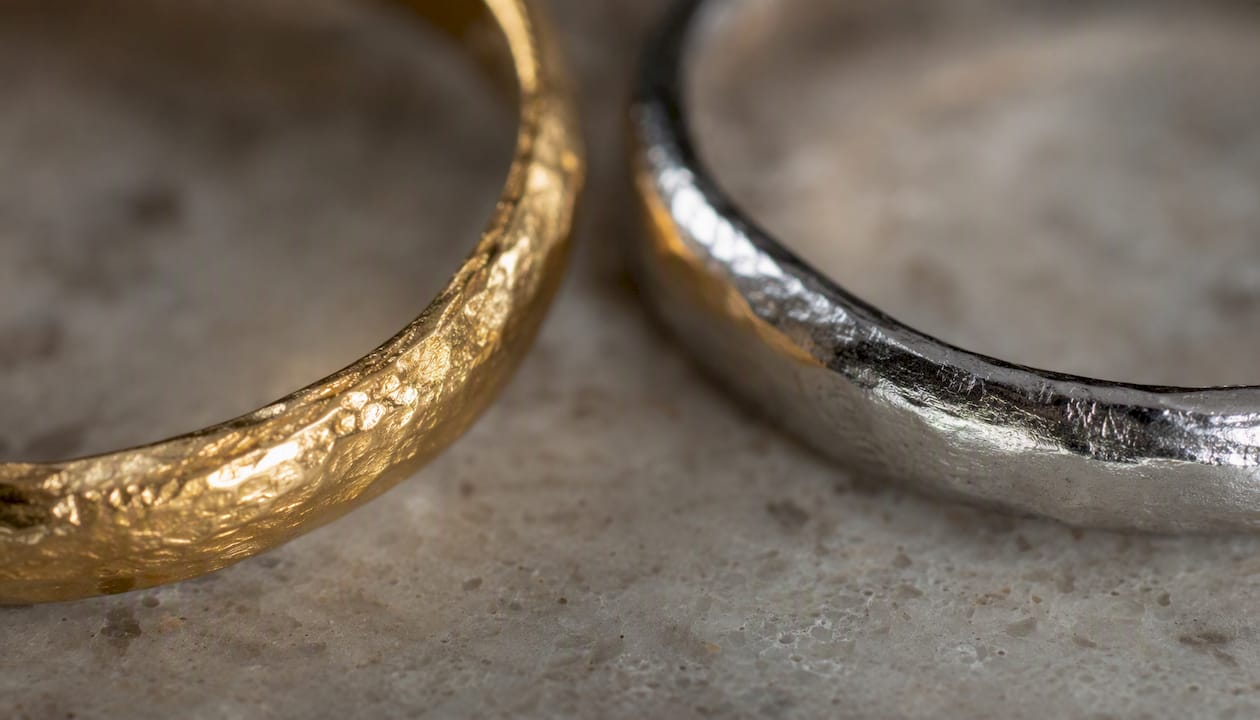
Scratching vs. displacement. When platinum scratches, the metal moves to the side rather than being removed. The scratch is visible, but the material is still there. When gold scratches, a tiny amount of metal is actually lost. Over many years, a gold ring can thin at the shank; a platinum ring typically won’t. Both metals can be polished to remove surface marks.
| Metal | Density | Typical Purity | Maintenance Rhythm |
|---|---|---|---|
| Pt950 | — | 95% platinum | Polish every 1–2 years; no replating |
| Pt900 | — | 90% platinum | Polish every 1–2 years; no replating |
| 18k gold | — | 75% gold | Polish as needed; white gold requires periodic replating every few years |
| 14k gold | — | 58.3% gold | Polish as needed; white gold requires periodic replating every few years |
For prongs specifically, jewelers often recommend platinum because its tendency to flow rather than fracture means a prong is less likely to snap and release a stone. That’s a practical safety advantage for high-set solitaires and thin claw settings.
3. What gold karats and platinum grades actually mean
Every engagement ring sold in the U.S. should carry a hallmark stamp. Knowing what those stamps mean protects you from overpaying and helps you confirm you’re getting the metal you expect.
Gold karats explained:
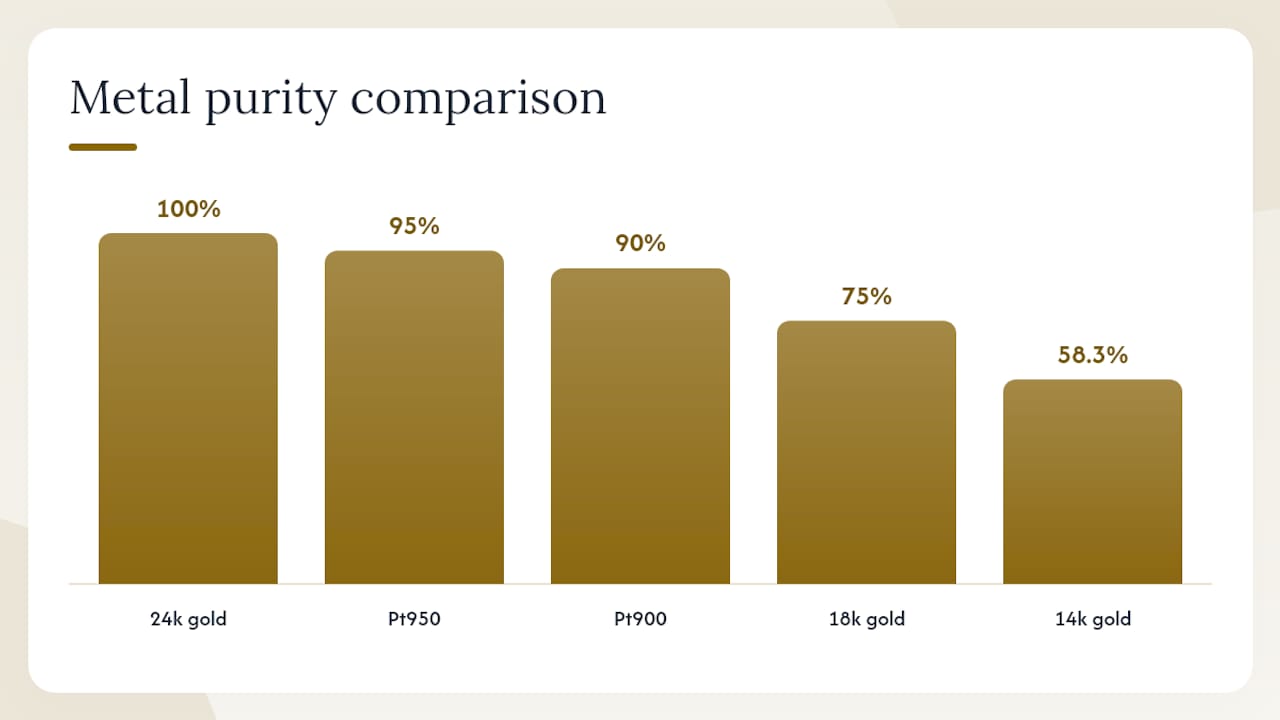
- 24k gold is pure gold — too soft for jewelry worn daily.
- 18k gold is 75% gold alloyed with 25% other metals (typically silver, copper, palladium, or nickel). It’s richer in color, slightly softer, and more expensive than 14k.
- 14k gold is 58.3% gold. The higher alloy content makes it harder, more scratch-resistant, and less expensive. It’s the most popular karat for engagement rings in the U.S.
Platinum grades explained:
- Pt950 is 95% pure platinum, alloyed with 5% ruthenium, cobalt, or iridium. This is the most common grade for fine engagement rings.
- Pt900 is 90% pure platinum. Slightly less common in the U.S. market but still considered high-quality.
Platinum’s purity is notably higher than even 18k gold, which matters for allergy-sensitive buyers. The alloys added to gold — particularly nickel — are a leading cause of contact dermatitis. Nickel is the most common cause of jewelry-related contact allergy), and U.S. federal consumer-product regulations address permissible materials in consumer goods, including jewelry. Platinum alloys don’t use nickel, making Pt950 and Pt900 the safest choices for reactive skin.
What to look for on a U.S. ring:
- Stamps to recognize:
14k,18k,Pt950,Pt900,950 Plat,900 Plat - White gold alloyed with palladium instead of nickel is a lower-allergy alternative to standard white gold
- Rose gold gets its color from copper, which is generally non-reactive for most people
4. White gold vs. platinum: the look-alike comparison
White gold and platinum look nearly identical in a jewelry case. Side by side, a freshly rhodium-plated white gold ring and a polished platinum ring are almost indistinguishable. The differences emerge over time and in specific use cases.
Rhodium plating on white gold is applied to give the metal a bright, reflective white surface. Without it, white gold has a slightly warm or grayish tone from its alloy mix. The plating is thin and wears away with daily contact — typically within one to three years, though active lifestyles or frequent hand-washing can accelerate that.
| Feature | White Gold | Platinum |
|---|---|---|
| Appearance (new) | Bright white (rhodium-plated) | Naturally white-silver |
| Appearance over time | Yellows/grays as plating wears | Develops a soft patina |
| Maintenance frequency | Replating every 1–3 years | Polish every 1–2 years |
| Hypoallergenic tendency | Depends on alloy (nickel vs. palladium) | High (no nickel) |
| Cost direction | Lower upfront | Higher upfront |
Jewelers tend to recommend platinum over white gold for prong settings, thin claw designs, and buyers who wear their ring through physically demanding work. The replating cost for white gold is modest — typically a professional service — but it’s a recurring commitment. Platinum’s patina, by contrast, is a one-time aesthetic evolution that many couples come to appreciate as part of the ring’s story.
For allergy-sensitive buyers, platinum is the clearer choice. If budget is the primary concern and you’re comfortable with periodic maintenance, white gold is a practical and beautiful alternative.
5. What drives the price difference between platinum and gold
Platinum rings cost more than gold rings of the same design. That’s not just about rarity — several factors stack together.
Primary cost drivers:
- Metal market price: Platinum and gold trade on commodity markets. Prices fluctuate, but platinum’s rarity relative to gold keeps it at a premium for fine jewelry.
- Weight and density: Because platinum is denser, the same ring design requires more metal by weight. More metal at a higher price per gram means a noticeably higher total cost.
- Purity: Pt950 is 95% pure; 18k gold is 75% pure. Higher purity means more of the precious metal in every gram.
- Craftsmanship: Platinum is harder to work with than gold, requiring specialized tools and more labor time, which adds to manufacturing costs.
Gold pricing by karat: An 18k gold ring costs more than a 14k ring of the same design because it contains more pure gold. The difference is meaningful but not dramatic for most ring sizes.
Resale and long-term value: Both metals retain intrinsic value tied to commodity markets. Platinum’s higher purity and rarity can support stronger resale value in some cases, but condition, brand, and craftsmanship matter more than metal alone when you’re reselling a ring. A well-maintained 18k gold ring from a trusted jeweler holds value reliably.
Budgeting guidance:
- If budget is your primary constraint, 14k gold gives you excellent durability and beauty at the lowest metal cost.
- If you want the best long-term wear and hypoallergenic properties and can invest more upfront, Pt950 is worth the premium.
- 18k gold sits in the middle: richer color than 14k, more affordable than platinum, and a strong choice for buyers who want a warm-toned ring with high gold content.
6. How to care for your ring over the years
Both metals are low-maintenance compared to many consumer goods, but a little consistent care keeps them looking their best for decades.
- Have prongs inspected every six to twelve months. Prong wear is the leading cause of stone loss. Ask your jeweler to check for bent, worn, or cracked prongs at each visit. Usajewels’s platinum care guide outlines what to expect from professional maintenance.
7. Why jewelers often prefer platinum for prong settings
The setting is the part of a ring that actually holds your stone in place. For that reason, the metal choice for prongs carries more practical weight than almost any other design decision.
Platinum’s tendency to flow rather than fracture under pressure makes it ideal for thin claw prongs, especially on solitaire settings where the stone is elevated and exposed. A platinum prong that gets bumped will bend; a more brittle alloy might snap. Bezel settings and tension settings also benefit from platinum’s malleability, since the metal needs to wrap or compress around the stone securely without cracking.
Pro Tip: If you love the look of yellow or rose gold but want maximum stone security, ask your jeweler about a platinum head on a gold shank. This hybrid design gives you the warm color of gold on the band while the prongs holding your diamond are in platinum. Usajewels offers platinum ring options that include this kind of custom configuration.
For engraving, gold is generally easier to work with because it’s softer and takes detail more crisply. Platinum engraving is possible but requires more specialized tools. Resizing is straightforward for both metals, though platinum resizing requires a jeweler experienced with the metal — it can’t be soldered with the same techniques used for gold.
8. A practical checklist for choosing your ring metal
Work through these priorities in order. Where you land first is usually your answer.
- Set your budget. If platinum is out of range, 14k or 18k gold is an excellent choice — not a compromise.
- Check for skin sensitivity. If you or your partner has a history of jewelry reactions, ask specifically about nickel content in any gold alloy. Platinum or nickel-free palladium-alloyed white gold are the safest options.
- Consider daily wear conditions. Office work, active outdoor jobs, and frequent hand-washing all affect how quickly a ring shows wear. Platinum holds up better under constant physical contact.
- Decide on your setting type. Thin prong solitaires benefit most from platinum. Bezel, channel, and pavé settings work beautifully in gold.
- Choose your color family. Warm tones (yellow, rose) or cool tones (white, silver)? This is often the most personal part of the decision.
Questions to ask your jeweler:
- What is the exact hallmark stamp on this ring, and where is it located?
- What is the metal weight of this specific piece?
- If this is white gold, how often will it need replating, and what does that service cost?
- Are the prongs the same metal as the shank, or is this a mixed-metal design?
- What is your repair and inspection policy after purchase?
Red flags to watch for: no visible hallmark stamp, vague answers about alloy composition, no stated replating or inspection policy, and pricing that seems too low for the stated metal. The Usajewels engagement ring buying guide covers these questions in detail and is a useful reference before you visit any jeweler.
9. How to read hallmarks and verify your metal in the U.S.
Every ring sold in the U.S. as a precious metal should carry a hallmark. These stamps are typically found on the inside of the band and are small enough to require a loupe or magnification to read clearly.
| Hallmark | Meaning | Typical Use |
|---|---|---|
| 14k | 58.3% gold | Most common for U.S. engagement rings |
| 18k | 75% gold | Premium gold choice; richer color |
| Pt950 / 950 Plat | 95% platinum | Standard for fine platinum engagement rings |
| Pt900 / 900 Plat | 90% platinum | Less common; still high quality |
Verification steps:
- Ask to see the hallmark under magnification before purchasing. A reputable jeweler will have a loupe available.
- Request a receipt or certificate that states the metal type and purity. For certified diamonds, the grading report (GIA or AGS) should accompany the stone.
- Ask whether XRF (X-ray fluorescence) testing is available. Some jewelers use this non-destructive tool to confirm metal composition on the spot.
- For online purchases, confirm the hallmark is photographed and described in the product listing, and check the return policy before buying.
Missing or illegible hallmarks are a genuine concern. If a seller can’t confirm the metal composition in writing, that’s a reason to shop elsewhere.
Key Takeaways
Platinum is the stronger long-term choice for hypoallergenic properties and prong durability, while gold offers more color options and a lower entry price — your priorities determine the right metal.
| Point | Details |
|---|---|
| Metal match by priority | Platinum for allergy sensitivity and daily durability; gold for color variety and budget flexibility. |
| Hallmarks to verify | Look for Pt950, Pt900, 14k, or 18k stamps on the inside of the band before purchasing. |
| White gold maintenance | Rhodium plating on white gold wears within one to three years and requires periodic professional replating. |
| Prong recommendation | Jewelers often recommend platinum for thin claw prongs because it flows rather than fractures under pressure. |
| Usajewels custom options | Usajewels offers platinum and gold engagement rings with in-house manufacturing and a lifetime diamond upgrade program. |
The metal choice that actually matters most
Most engagement ring guides spend a lot of time on this decision as if it’s the hardest one you’ll make. In our experience, it rarely is — once you know your priorities, the metal choice follows naturally. What we see buyers regret more often is not the metal they chose, but skipping the hallmark check or not asking about prong material before purchase.
The one thing worth saying plainly: white gold and platinum are not the same thing, and the difference matters more over five years than it does on day one. If you’re drawn to the white-silver look and you wear your ring hard every day, platinum is the honest recommendation. If you love the look and are comfortable with periodic maintenance, white gold is a beautiful and practical choice.
Gold, in all its forms, remains one of the most beloved ring metals for good reason. The warmth of 18k yellow gold on a round brilliant diamond is genuinely timeless. And 14k gold’s durability makes it a workhorse that outlasts expectations. There’s no wrong answer here — only the answer that fits your life.
Usajewels makes the metal choice personal
When you’re ready to move from research to a ring you’ll wear for life, Usajewels brings something most online jewelers can’t: in-house manufacturing that lets you choose your metal, your diamond, and your setting without paying for a middleman. Whether you want a full platinum solitaire, a yellow gold halo, or a platinum-head-on-gold-shank hybrid, the design is yours to build.
Usajewels has been a family-owned business since 1999, with over 222 Google reviews built on trust, quality, and personal service. The lifetime diamond upgrade program means your ring can grow with you. Explore the full collection of engagement rings or use the design-your-own guide to start building your ring today.
Useful sources
- gemsociety.org
- en.wikipedia.org
- ecfr.gov
- Platinum Jewelry Guide: Benefits & Care | USA Jewels
- Engagement Ring Buying Guide: How to Choose the Perfect Ring | USA Jewels
- Platinum Rings — Engagement & Wedding Bands | USA Jewels
FAQ
Should an engagement ring be gold or platinum?
Neither metal is universally better — the right choice depends on your budget, skin sensitivity, and aesthetic preference. Platinum suits buyers who want a naturally white metal, hypoallergenic properties, and maximum long-term durability; gold suits those who want color variety or a lower price point.
Why do jewelers sometimes prefer platinum for engagement rings?
Platinum’s density and tendency to flow rather than fracture make it the preferred metal for thin prong settings, where stone security is the top priority. It also requires no rhodium plating, which simplifies long-term maintenance.
Is white gold the same as platinum?
No. White gold is a yellow gold alloy coated with rhodium plating to achieve a white appearance; platinum is a naturally white metal with no coating needed. Over time, white gold’s plating wears and requires replating every one to three years, while platinum develops a natural patina.
How do I know if my ring is real platinum or gold?
Look for a hallmark stamp on the inside of the band: Pt950 or 950 Plat for platinum, and 14k or 18k for gold. Ask your jeweler to show you the stamp under magnification, and request written documentation of the metal type and purity at the time of purchase.
Recommended
- Platinum Rings — Engagement & Wedding Bands | USA Jewels
- Platinum Jewelry Guide: Benefits & Care | USA Jewels
- Sterling Silver vs Platinum | USA Jewels
- USA Jewels: Halo Gemstone Rings – Diamond Jewelers & Luxury Cra

Deep Mehta is the Co-Owner of USA Jewels, a family-owned jewelry business she has led since 2013 in Deerfield Beach, Florida. With over 13 years of hands-on experience in fine jewelry retail, manufacturing, and diamond importing, Deep specializes in engagement rings, wedding bands, and custom jewelry design. She also co-manages Kaash Group Talent Acquisition. Deep is a University of Florida graduate and oversees every aspect of USA Jewels’ operations, from product development to marketing.
Fine Jewelry Collection


You May Also Like
Best Gemstone Alternatives to Diamonds for Rings

Save 30–50% with Clarity Enhanced Diamonds: GIA Facts and What to Ask