How to Choose Jewelry for Occasions: A Style Guide
Choosing jewelry for occasions means selecting pieces that match your event’s formality, complement your outfit’s structure, and suit your skin’s undertones. The right piece does more than decorate. It communicates your awareness of the setting and expresses your personal style with confidence. Jewelry selection is a skill built on a few reliable frameworks: event tier, neckline type, metal tone, and the one focal piece rule. Usajewels has helped customers find the right piece for every milestone since 1999, from casual birthdays to black tie galas.
How to choose jewelry for occasions based on event formality
Jewelry communicates social awareness. Restraint signals professionalism. Boldness signals confidence. The formality of your event is the first filter you apply when selecting pieces.
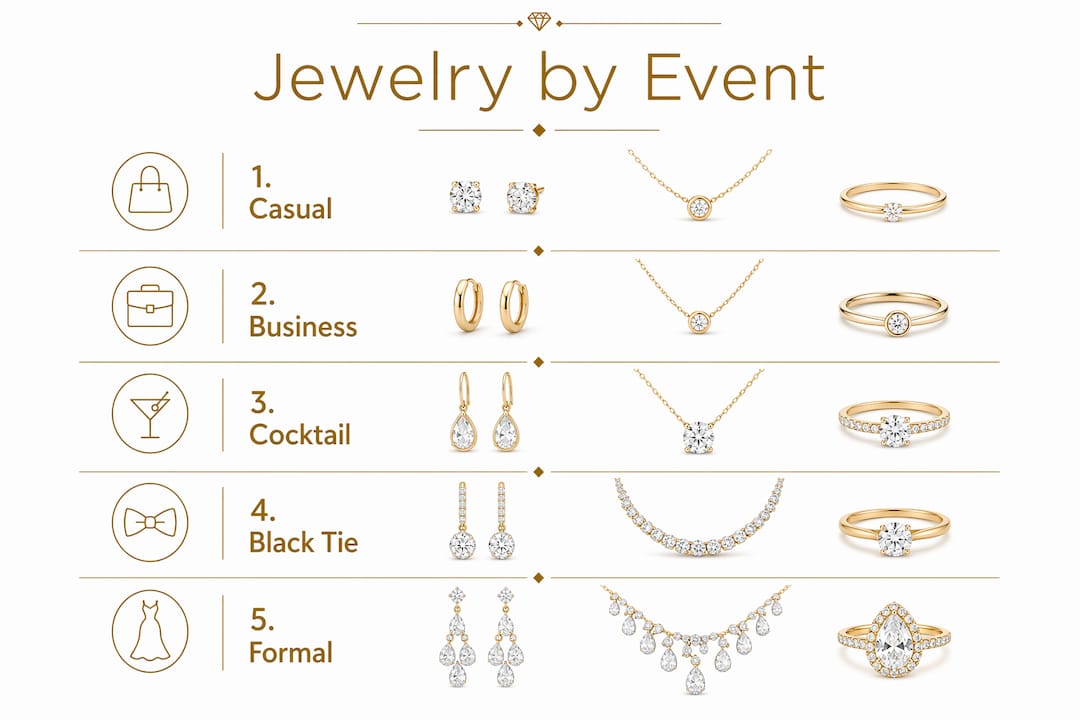
The formality spectrum runs from casual to black tie, and each tier calls for a different scale and material. A backyard birthday party welcomes layered chains, colorful beads, or playful hoops. A corporate luncheon calls for a single delicate pendant or small stud earrings in a neutral metal. A wedding reception opens the door to pearl strands, chandelier earrings, or a diamond tennis bracelet. A black tie gala demands timeless precious metal pieces with fewer but more impactful choices.
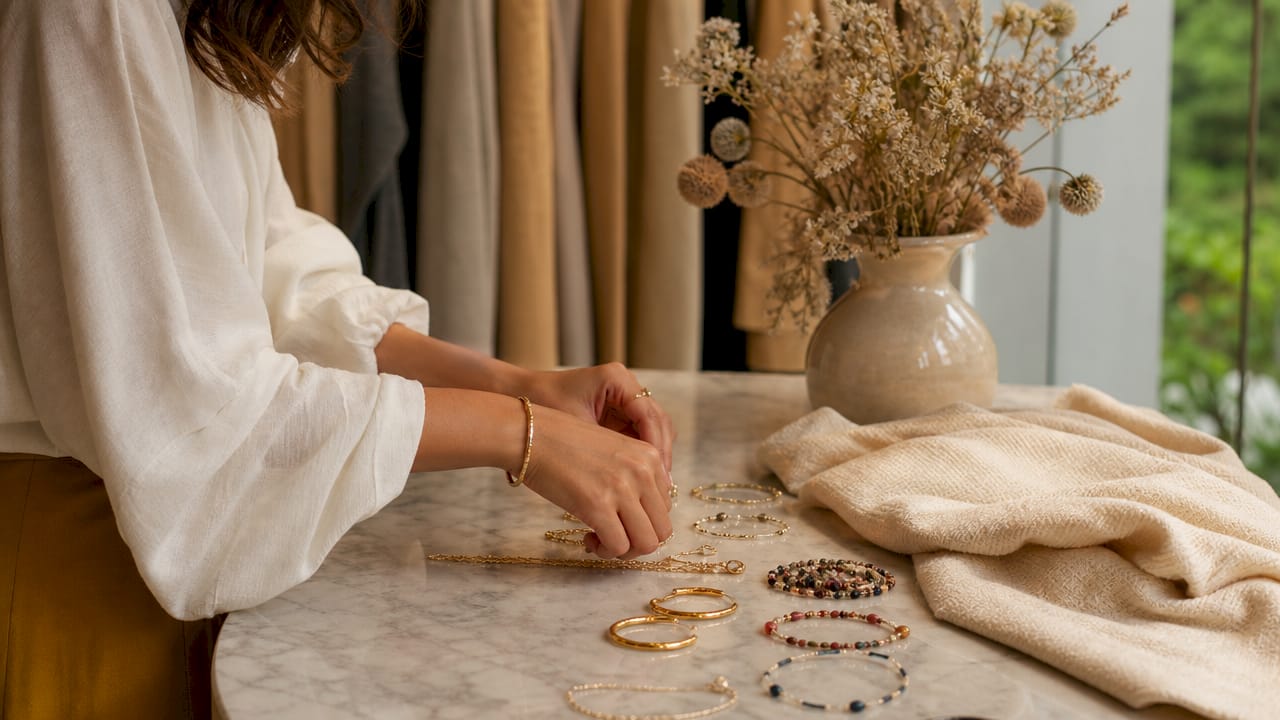
The table below maps jewelry attributes to event formality so you can make fast, confident decisions.
| Event type | Recommended pieces | Metal tone | Scale |
|---|---|---|---|
| Casual | Layered chains, hoops, beaded bracelets | Mixed metals acceptable | Light, playful |
| Professional | Single pendant, stud earrings, slim bangle | Silver, white gold, yellow gold | Minimal, refined |
| Formal/wedding | Pearl strand, chandelier earrings, tennis bracelet | Gold, platinum, rose gold | Moderate to bold |
| Black tie | Statement necklace or earrings, diamond pieces | Platinum, white gold, yellow gold | Bold, singular |
Pro Tip: Pick your event tier first, then build your jewelry selection from there. Skipping this step is the most common reason people feel overdressed or underdressed.
What role does outfit structure and neckline play?
Your neckline is the primary structural guide for necklace selection. Strapless and sweetheart necklines invite statement necklaces or collar styles that fill the open chest area. High necklines, like turtlenecks or mandarin collars, compete with necklaces and work far better with statement earrings instead.
Here is how common necklines pair with jewelry:
- Strapless: Collar necklace, bib necklace, or a bold pendant. Keep earrings simple.
- Sweetheart: A short pendant or choker that follows the neckline’s curve. Avoid long chains.
- V-neck: A Y-shaped pendant or a lariat that echoes the V shape. Medium length works best.
- Scoop neck: A medium pendant or layered delicate chains. Avoid chokers that sit above the neckline.
- High neck / turtleneck: Skip the necklace entirely. Let chandelier or drop earrings carry the look.
- Off-shoulder: Ear cuffs, long earrings, or a simple bracelet stack. The shoulders are the focal point.
Hairstyle also affects jewelry scale. An updo exposes the neck and ears fully, making it the right moment for statement earrings or a bold necklace. Loose, voluminous hair can hide delicate earrings, so you may want to size up. Face shape matters too. Long faces benefit from wide, circular earrings. Round faces look balanced with elongated drops. You can find detailed guidance on styling jewelry by outfit at Usajewels’s education center.
Pro Tip: Lay your outfit flat and physically place your jewelry on it before wearing. This gives you a clear preview of proportion and scale without the distraction of a mirror.
How do skin undertones and metal choices affect jewelry selection?
Warm undertones pair best with yellow gold and rose gold. Cool undertones look most flattering with white metals like silver or platinum. This is not a rule you need to memorize. The vein test makes it automatic.
Follow these three steps to identify your undertone:
- Check your wrist veins in natural daylight. Blue or purple veins indicate cool undertones. Green veins indicate warm undertones. A mix of both suggests a neutral undertone.
- Match your metal to your result. Cool undertones: platinum, white gold, or sterling silver. Warm undertones: yellow gold or rose gold. Neutral undertones: any metal works, giving you the most flexibility.
- Test the pairing before the event. Hold the metal piece against your bare wrist or collarbone. A flattering metal will make your skin look bright and even. A clashing metal can make skin look dull or washed out.
Mixing metals is possible when done with intention. The key is consistency in either undertone or design motif. Two yellow gold pieces and one rose gold piece work together because both are warm. A silver piece and a white gold piece work together because both are cool. Usajewels offers a detailed precious metals guide that covers gold, platinum, and their variations so you can choose with confidence.
What practical tips ensure comfort and confidence with occasion jewelry?
The mirror test is the single most effective pre-event habit. Put on your full outfit, add your jewelry, and stand under lighting that matches the event venue. Bright daylight, warm indoor light, and dim evening light all change how jewelry reads. A piece that looks subtle at home can look heavy under a chandelier.
Practical comfort checks matter just as much as aesthetics. Discomfort undermines a piece’s impact no matter how beautiful it looks. Run through this checklist before committing to a combination:
- Weight: Heavy earrings cause fatigue and can stretch earlobes over a long event. Choose lightweight versions of bold styles for events lasting more than three hours.
- Snag risk: Chunky rings, open-link bracelets, and textured cuffs can catch on lace, chiffon, or knit fabrics. Test movement with your outfit before the event.
- Scale: Jewelry that is too large for your frame reads as costume-like. Jewelry that is too small disappears. Hold pieces next to your face and body to check proportion.
- Noise: Stacked bangles and charm bracelets create sound with every movement. In quiet settings like ceremonies or professional meetings, this becomes a distraction.
The one focal piece rule is the clearest path to a polished look. Choose one statement piece, then let everything else support it quietly. A bold necklace means simple studs and a plain bracelet. Statement earrings mean no necklace and a minimal ring. This approach also improves how you photograph, which matters at weddings, anniversaries, and milestone events.
Pro Tip: Wear your chosen jewelry combination for 30 minutes at home before the event. You will notice any discomfort, noise, or proportion issues while you still have time to swap.
How to personalize jewelry for weddings and anniversaries
Personalized jewelry choices make memorable occasions feel even more significant. Sentimental pieces add layers of meaning that purely aesthetic choices cannot replicate. A grandmother’s pearl earrings at a wedding, a partner’s anniversary gift worn to a milestone dinner, or a birthstone pendant at a birthday celebration all tell a story beyond the outfit.
Here are practical ways to incorporate personal meaning without sacrificing style:
- Heirlooms: Pair a vintage brooch with a modern gown by using it as a hair accessory or bouquet pin instead of wearing it traditionally. This honors the piece without forcing a style mismatch.
- Custom pieces: A necklace engraved with a date or initials works in formal settings when the design is clean and the metal is appropriate for the event tier. Usajewels specializes in custom jewelry design with options for metal type, diamond quality, and personalized details.
- Birthstones: A single birthstone ring or pendant adds personal color without overwhelming an outfit. Choose a setting that matches the formality of the event.
- Anniversary gifts: Wearing a piece gifted by a partner to a shared celebration creates emotional resonance. If the piece is bold, build the rest of your jewelry selection around it using the one focal piece rule.
The goal is to let the piece carry meaning while still serving the outfit. Subtle personalization in formal settings works best when the design is clean and the material is appropriate. A diamond pendant with a hidden engraving, for example, reads as elegant to the room and meaningful to you.
Key takeaways
Choosing jewelry for occasions requires matching event formality, outfit structure, skin undertones, and comfort to create a balanced, confident look.
| Point | Details |
|---|---|
| Event formality comes first | Match jewelry scale and material to the event tier before considering any other factor. |
| Neckline guides necklace choice | High necklines call for statement earrings; strapless and sweetheart necklines invite collar or pendant styles. |
| Vein test identifies undertones | Blue or purple veins mean cool undertones; green veins mean warm. Match metals accordingly. |
| One focal piece rule | Choose one statement piece and keep all other jewelry minimal for clarity and photo readiness. |
| Mirror test before every event | Wear the full combination under event-matching lighting to confirm comfort and visual balance. |
Why I think most people overcomplicate occasion jewelry
Most people approach occasion jewelry by asking “what looks good?” That is the wrong starting question. The right question is “what does this event call for?” I have seen beautifully styled people walk into formal events wearing layered boho chains that belonged at a beach festival, and I have seen guests at casual celebrations wearing pieces so heavy and formal they looked uncomfortable all night.
The frameworks in this article, formality tier, neckline match, undertone test, and the one focal piece rule, are not restrictions. They are shortcuts. They cut the decision time from an hour of trying things on to about ten minutes. The mirror test alone has saved me from more than a few jewelry mistakes. Putting on the full outfit, standing under the right light, and moving around for a few minutes tells you everything you need to know.
The other thing I have learned is that comfort is not a compromise. A piece you fidget with, adjust constantly, or feel self-conscious about is not doing its job. The best jewelry for any occasion is the piece you forget you are wearing because it fits so naturally. Simplicity, when it is intentional, is always more powerful than excess.
— Joseph
Fine jewelry worth wearing to your next special occasion
When the occasion calls for something truly memorable, the quality of the piece matters as much as the style.
Usajewels has crafted fine and diamond jewelry for weddings, anniversaries, birthdays, and milestone celebrations since 1999. As a family-owned, in-house manufacturer, Usajewels offers direct pricing without middlemen, which means you get certified, conflict-free diamonds and hand-selected metals at honest prices. Every piece can be customized to your preferred metal type and diamond quality. Browse the full fine diamond jewelry collection to find pieces suited to your event, or explore curated gift ideas for the person you are celebrating.
FAQ
What jewelry is appropriate for a wedding guest?
Wedding guests suit pearl strands, diamond studs, or a single statement piece in gold or platinum. Match the jewelry scale to the wedding’s formality tier, from garden party to black tie.
How do I match jewelry to my outfit’s neckline?
High necklines pair with statement earrings and no necklace. Strapless and sweetheart necklines work best with collar or pendant necklaces and simple earrings.
What metal suits warm skin undertones?
Yellow gold and rose gold complement warm undertones most naturally. Use the vein test: green veins indicate warm undertones, confirming these metals as the best match.
What is the one focal piece rule?
The one focal piece rule means choosing one statement piece and keeping all other jewelry minimal. This creates visual clarity and improves how you look in photographs.
How do I know if my jewelry is too heavy for a long event?
Test the pieces at home for 30 minutes before the event. If earrings pull or a bracelet feels restrictive during normal movement, choose a lighter version of the same style.
Recommended
- Men’s Jewelry Guide: Chains, Rings, Bracelets & More | USA Jewels
- Earring Guide: Studs, Hoops & Drops | USA Jewels
- Precious Metals Guide: Gold & Platinum | USA Jewels
- Jewelry Styling Guide: Expert Tips for Every Occasion | USA Jewels

Deep Mehta is the Co-Owner of USA Jewels, a family-owned jewelry business she has led since 2013 in Deerfield Beach, Florida. With over 13 years of hands-on experience in fine jewelry retail, manufacturing, and diamond importing, Deep specializes in engagement rings, wedding bands, and custom jewelry design. She also co-manages Kaash Group Talent Acquisition. Deep is a University of Florida graduate and oversees every aspect of USA Jewels’ operations, from product development to marketing.
Frequently Asked Questions
Can I wear white gold to a black tie event if I prefer it over platinum or yellow gold?
What should I wear if my dress has both a strapless and off-shoulder design?
Is it okay to mix metal tones in one jewelry look for casual versus formal events?
How do I know if a single statement piece is enough for a formal wedding, or should I layer multiple items?
What metal tone works best for olive or warm undertones at a professional event?
Fine Jewelry Collection


You May Also Like

Fair Trade Gemstone Examples: What to Ask and Buy
Engagement Ring Prong Style Selection: 2026 Guide