What Is a Halo Ring Setting? Your Full Guide
Few engagement ring styles generate as much conversation as the halo setting. If you’ve been searching for what is a halo ring setting, you’re not alone. The design looks effortlessly glamorous, but its real power goes deeper than appearance. A halo setting can transform a modest center stone into something that looks significantly larger and more brilliant, all without changing the diamond itself. This guide covers everything from the basic anatomy of a halo ring to hidden halo nuances, style variations, and how to choose the right one for your life.
Table of Contents
- Key Takeaways
- What is a halo ring setting, explained simply
- Halo ring styles and variations worth knowing
- Halo vs. other ring settings
- How to choose the right halo ring
- My take on why halo rings keep winning
- Find your perfect halo ring at Usajewels
- FAQ
Key Takeaways
| Point | Details |
|---|---|
| Halo setting definition | Small stones encircle a center diamond to create the illusion of greater size and brilliance. |
| Hidden halo distinction | Hidden halos sit beneath the center stone, adding subtle sparkle without changing the top view. |
| Style variety | Halo rings work with round, oval, cushion, and emerald center stones, each creating a distinct look. |
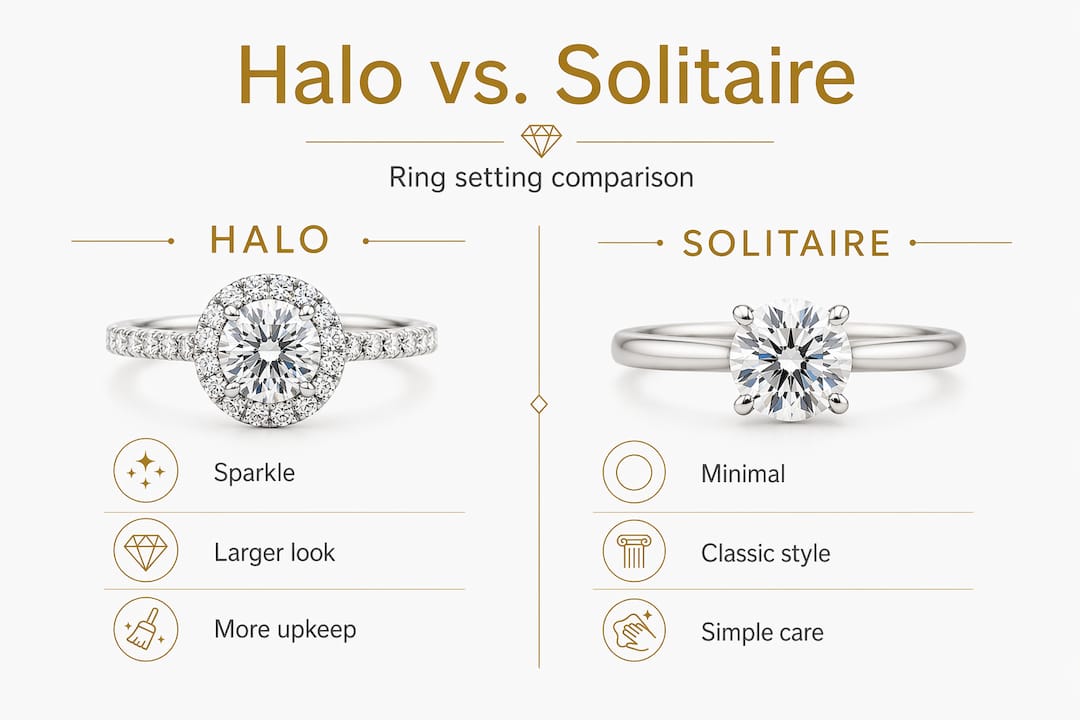
| Halo vs. solitaire | Halo settings offer more visual impact but require more maintenance than a classic solitaire. |
| Choosing wisely | Match your halo style to your center stone shape, lifestyle, and preferred metal for the best result. |
What is a halo ring setting, explained simply
A halo ring setting features a center stone surrounded by a border of smaller accent stones. The halo encircles the center stone with smaller diamonds or gemstones, creating the visual illusion that the center diamond is larger and more brilliant than it actually is. That’s the core idea, and it’s more powerful than most buyers realize before they see it in person.
The anatomy of a halo ring breaks down into a few key components:
- Center stone: The main diamond or gemstone, which can be any shape. Round brilliants are most common, but oval, cushion, and emerald cuts are equally stunning in a halo.
- Halo stones: A ring of smaller accent stones, typically diamonds, set tightly around the center stone. These can be prong-set or pavé-set depending on the style.
- Setting style: The method used to hold both the center and halo stones. Prong settings allow more light in; bezel settings wrap metal around the stone for a sleeker look.
- Band: The shank that connects everything. It can be plain, pavé-set with additional stones, or twisted for a vintage feel.
The halo does two things at once. It adds its own sparkle, and it visually blurs the boundary of the center stone, making it appear larger. A 0.75-carat diamond in a halo setting can look comparable to a 1-carat solitaire. That’s a meaningful difference when you’re working with a real budget.
Pro Tip: If you want maximum size illusion, choose a halo where the accent stones are set as close to the center stone as possible, with minimal metal visible between them.
Different diamond shapes interact with halos differently. A round brilliant halo looks classic and symmetrical. An oval or cushion cut in a halo creates an elongated, vintage-inspired silhouette. The shape you choose for the center stone should guide the shape of the halo around it.
Halo ring styles and variations worth knowing
Once you understand the basic concept, the real fun begins. Halo rings come in more varieties than most people expect, and each variation carries its own personality.
1. Traditional diamond halo
The most recognized style. A single row of round brilliant diamonds encircles the center stone in a continuous border. It reads as timeless and universally flattering.
2. Double halo
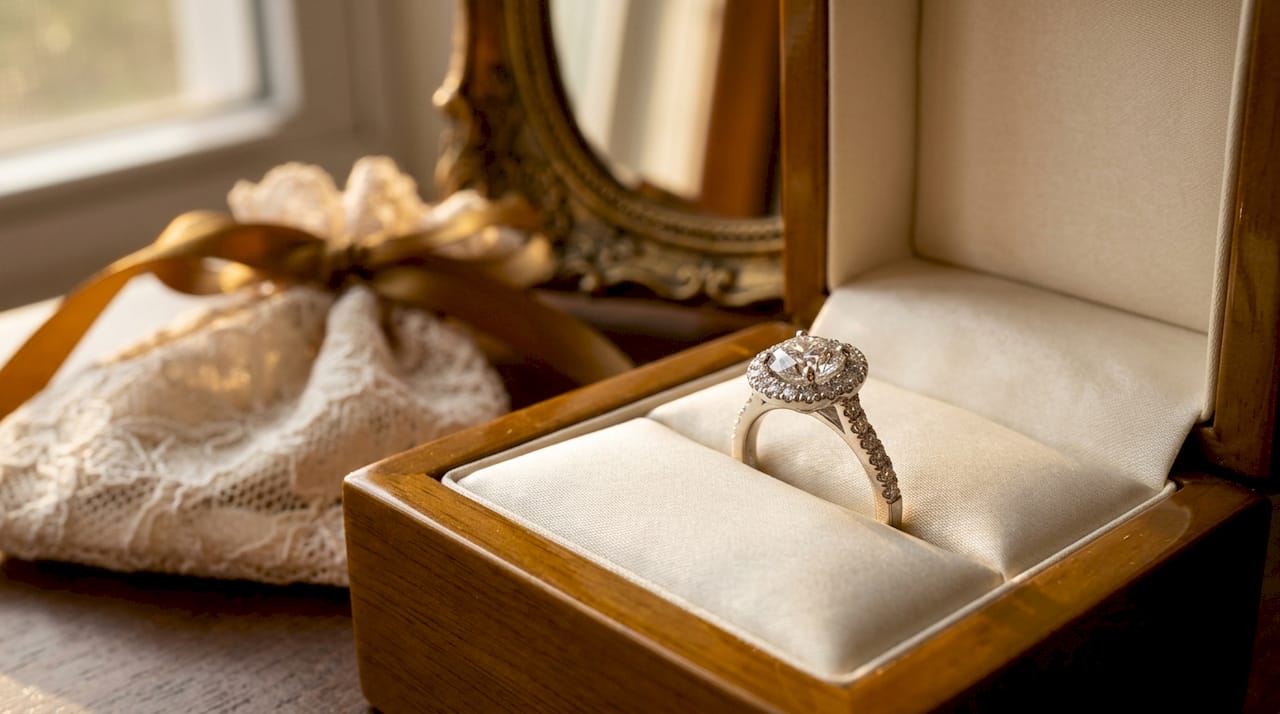
Two concentric rows of accent stones surround the center diamond. This style is bold and maximalist, best suited for someone who wants serious presence on the hand.
3. Colored gemstone halo
Colored gemstone halos swap the traditional diamond border for sapphires, rubies, or emeralds. The contrast between a white diamond center and a colored halo is striking and deeply personal. This is one of the fastest-growing custom requests we see.
4. Shape-specific halos
Oval halos, cushion halos, and emerald halos follow the outline of the center stone rather than defaulting to a round border. Common shapes include round, oval, cushion, and emerald, each affecting how the finished ring reads on the hand.
5. Hidden halo
This is where things get genuinely interesting. Hidden halo settings place 10 to 30 melee diamonds beneath the center stone, pavé-set on the under-gallery. From above, the ring looks like a classic solitaire. From the side, you catch a flash of unexpected sparkle. It’s a detail made for people who appreciate subtlety over showmanship.
Here’s a quick comparison of the most popular halo styles:
| Style | Visual effect | Best for |
|---|---|---|
| Traditional halo | Bold, maximizes size illusion | Classic, glamorous buyers |
| Double halo | Very dramatic, high sparkle | Statement-piece seekers |
| Colored gemstone halo | Unique, personal, colorful | Buyers wanting individuality |
| Hidden halo | Subtle, elegant, surprise sparkle | Minimalist buyers with an eye for detail |
| Shape-specific halo | Tailored, elongating or geometric | Buyers with strong shape preferences |
Pro Tip: If you love the clean look of a solitaire but want extra brilliance, the hidden halo is the best of both worlds. You get the sparkle without the visual weight of a traditional halo border.
Pavé and bezel settings are the two most common ways accent stones are held in a halo. Pavé creates a near-continuous shimmer with minimal metal showing. Bezel wraps metal around each stone for a more modern, protective look. Your lifestyle should influence which you choose.
Halo vs. other ring settings
Understanding what makes a halo setting unique means comparing it honestly to the alternatives.
| Setting type | Sparkle level | Size illusion | Maintenance | Cost |
|---|---|---|---|---|
| Halo | Very high | Strong | Higher | Moderate to high |
| Solitaire | High (center only) | None | Low | Lower |
| Three-stone | High | Moderate | Moderate | Moderate |
| Pavé band | Very high | Minimal | Higher | Moderate |
The halo setting wins on visual impact. Halo settings add an extra layer of sparkle and increase perceived size in a way no other single-stone setting can match. That’s its primary strength.
Here’s where the honest conversation begins, though:
- Maintenance: Halo rings have more small stones, which means more potential for loosening over time. Halo rings require regular cleaning and inspection for loose stones to maintain their brilliance. Plan on a professional check once a year.
- Cost: A halo setting typically costs more than a comparable solitaire because of the additional accent stones and the more complex setting work involved.
- Style fit: Halo rings read as romantic and feminine in most styles. If your partner prefers a cleaner, more architectural look, a solitaire or bezel setting may suit them better.
- Durability: The small accent stones in a halo sit close together and can catch on fabrics or be knocked loose with heavy hand use. This is worth considering for active lifestyles.
The solitaire remains the most popular engagement ring style because of its simplicity and durability. But for buyers who want maximum visual impact from a given budget, the halo setting is hard to beat.
How to choose the right halo ring
Choosing a halo ring comes down to four factors: center stone shape, your partner’s lifestyle, metal preference, and setting style. Get these right and you’ll land on something they’ll love for decades.
- Match the halo to the center stone shape. A round center stone looks best with a round halo. An oval or pear center stone benefits from a halo that follows its outline. Mixing shapes can work artistically, but it requires a confident eye. When in doubt, follow the shape of the stone.
- Consider lifestyle honestly. Someone who works with their hands, exercises frequently, or spends time outdoors needs a setting that can handle real life. A bezel-style halo or a lower-profile setting will hold up better than a high-set prong halo with delicate accent stones.
- Choose your metal thoughtfully. White gold and platinum make diamonds appear whiter and let the sparkle take center stage. Yellow gold adds warmth and creates a vintage feel that suits cushion and oval halos particularly well. Rose gold has become a popular choice for its romantic tone.
- Decide between a traditional and hidden halo. Traditional circular halos are most popular, but hidden halos are increasingly sought after by buyers who want something more understated. Think about whether your partner wears bold jewelry or tends toward minimalism.
Pro Tip: Before finalizing a halo ring, look at it from multiple angles, not just straight on. The side profile matters a great deal for everyday wearability and comfort.
You can also explore halo jewelry collections to see how different combinations of stone shapes, metals, and halo styles look side by side. Seeing real examples often clarifies preferences faster than reading descriptions alone.
My take on why halo rings keep winning
I’ve spent years helping people find the right engagement ring, and I’ll be direct: the halo setting’s staying power surprises even me sometimes. Trends come and go, but halo settings have evolved continuously rather than fading out. That tells you something real about the design.
What I find most interesting is the hidden halo trend. It reflects a shift in how buyers think about jewelry. People want pieces that reward a second look, that have a detail you only notice up close. That’s a more sophisticated way to think about a ring, and it’s changing what custom requests look like.
The misconception I hear most often is that a halo is just about making a small diamond look bigger. That framing undersells it. Yes, the size illusion is real and useful. But the halo also changes the entire character of the ring. It adds warmth, depth, and a sense of occasion that a plain solitaire simply doesn’t have.
What buyers often overlook is the importance of halo stone quality. If the accent diamonds are low quality, they can actually dull the overall appearance of the ring rather than enhance it. The center stone gets all the attention in the buying conversation, but the halo stones deserve real scrutiny too.
— Joseph
Find your perfect halo ring at Usajewels
At Usajewels, we’ve been helping families find rings that tell their story since 1999. Our family-owned, in-house manufacturing model means you get direct pricing without the markups that come with traditional retail. Every halo ring we create uses hand-selected, conflict-free diamonds, and we stand behind our work with lifetime diamond upgrades.

Whether you’re drawn to a classic diamond halo, a colored gemstone border, or the understated elegance of a hidden halo, our team will guide you through every decision. Explore our fine diamond jewelry collections to see what’s possible, or use our settings guide to understand every mounting option before you buy. Custom design is always available, and we’re here to make the process feel personal, not overwhelming.
FAQ
What is a halo ring setting?
A halo ring setting features a center stone surrounded by a border of smaller accent diamonds or gemstones. The surrounding stones create the illusion of a larger center diamond and add overall brilliance to the ring.
What is a hidden halo ring setting?
A hidden halo places small diamonds beneath the center stone on the under-gallery, so the ring looks like a solitaire from above but reveals sparkle from the side. Hidden halos typically use 10 to 30 melee diamonds set in a pavé style.
How does a halo setting compare to a solitaire?
A halo setting offers more visual impact and makes the center stone appear larger, while a solitaire provides a cleaner look with lower maintenance. The right choice depends on your partner’s personal style and how much sparkle they prefer.
Do halo rings require more maintenance?
Yes. Because halo rings have many small accent stones, they need more frequent cleaning and professional inspection to check for loose stones. A yearly visit to a trusted jeweler keeps the ring looking its best.
What center stone shapes work best with a halo setting?
Round, oval, cushion, and emerald cuts all pair beautifully with halo settings. The halo shape should generally follow the outline of the center stone for the most cohesive and polished look.
Recommended
- Halo Diamond Jewelry | Rings, Earrings & Pendants | USA Jewels
- USA Jewels: Halo Gemstone Rings – Diamond Jewelers & Luxury Cra
- Eternity Ring Guide: Full & Half Eternity Bands Explained | USA Jewels
- Ring Guide: Engagement Settings & Styles | USA Jewels
Article generated by BabyLoveGrowth

Frequently Asked Questions
How much larger does a halo setting actually make a diamond appear?
What's the difference between a regular halo and a hidden halo?
Do halo rings require more maintenance than solitaire settings?
Which diamond shapes look best in a halo setting?
How does metal choice affect a halo ring's appearance?
Fine Jewelry Collection

You May Also Like
Buyers: Verify a GIA Laser Inscription in Two Minutes with a 10x Loupe
Resetting Heirloom Diamonds: What You Need to Know