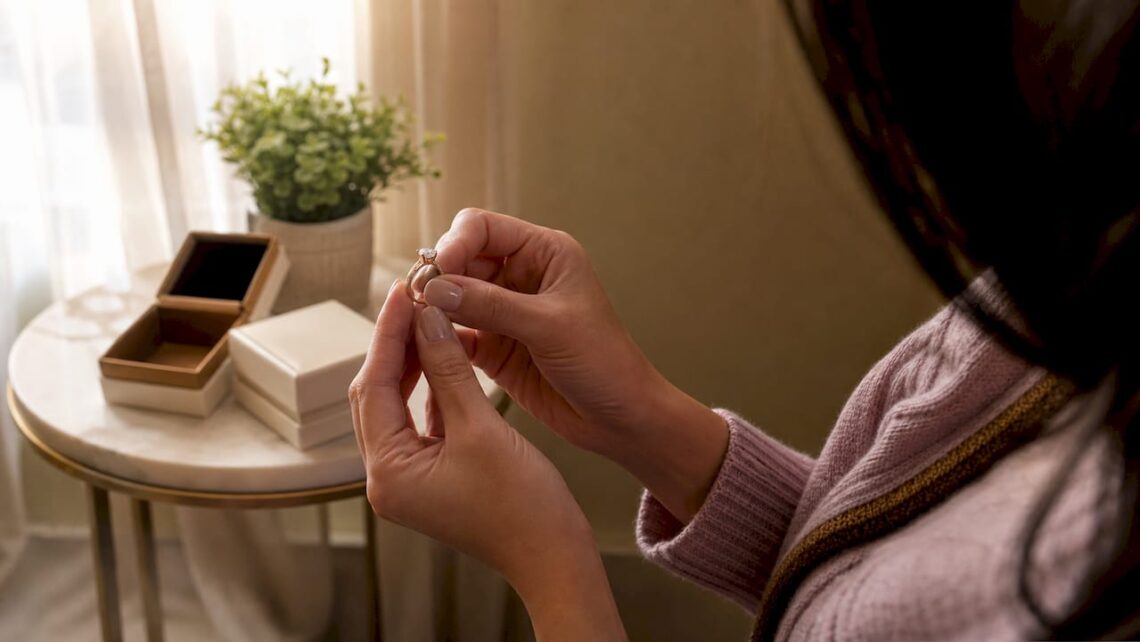
Why Two-Tone Engagement Rings Are So Popular
Two-tone engagement rings are defined as rings that combine two distinct metals, such as yellow gold and platinum, white gold and rose gold, or platinum and yellow gold, into a single unified design. They are popular because they deliver visual contrast, personal expression, and everyday versatility that single-metal rings simply cannot match. Designers like Gabriel & Co. and Ken Walker Jewelers have built entire collections around this concept, and the demand shows no sign of slowing in 2026. Understanding why two-tone engagement rings popular choices have become the norm for modern couples starts with how these rings are actually built and what they communicate.
Why are two-tone engagement rings so popular?
Two-tone rings create visual interest through metal contrast without needing extra detailing or ornamentation to stand out. That restraint is part of their appeal. A ring that achieves sophistication through structure rather than embellishment tends to age better and suit more personal styles over time.
The two-tone ring popularity surge in recent years connects directly to a broader shift in how buyers think about jewelry. Shoppers today want pieces that feel personal, not mass-produced. Combining metals is one of the clearest ways to signal that a ring was chosen with intention. It reflects a specific aesthetic decision rather than a default.
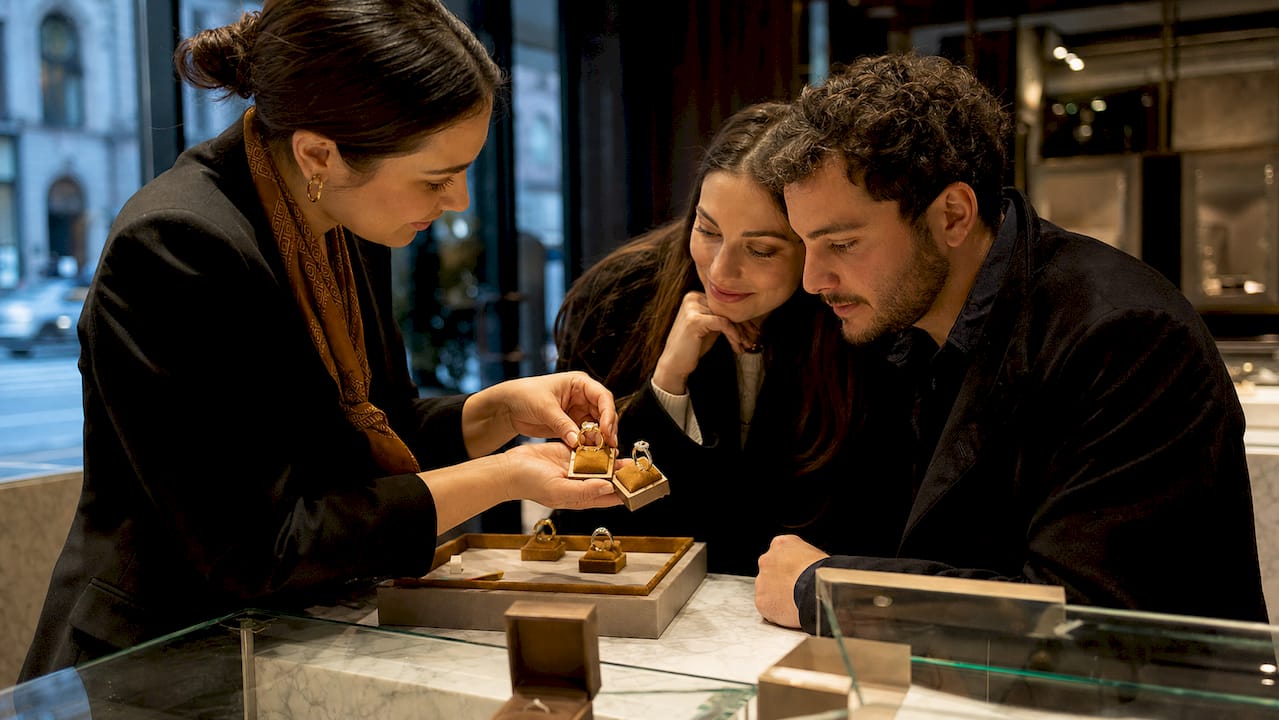
Brands like Gabriel & Co. have responded by expanding their two-tone lines to include yellow gold with white gold shanks, rose gold with platinum prong settings, and even three-metal combinations. The market has followed. Two-tone designs now appear across every price point, from accessible gold-filled styles to high-end platinum and 18-karat gold combinations.
How do two-tone designs enhance engagement ring aesthetics?
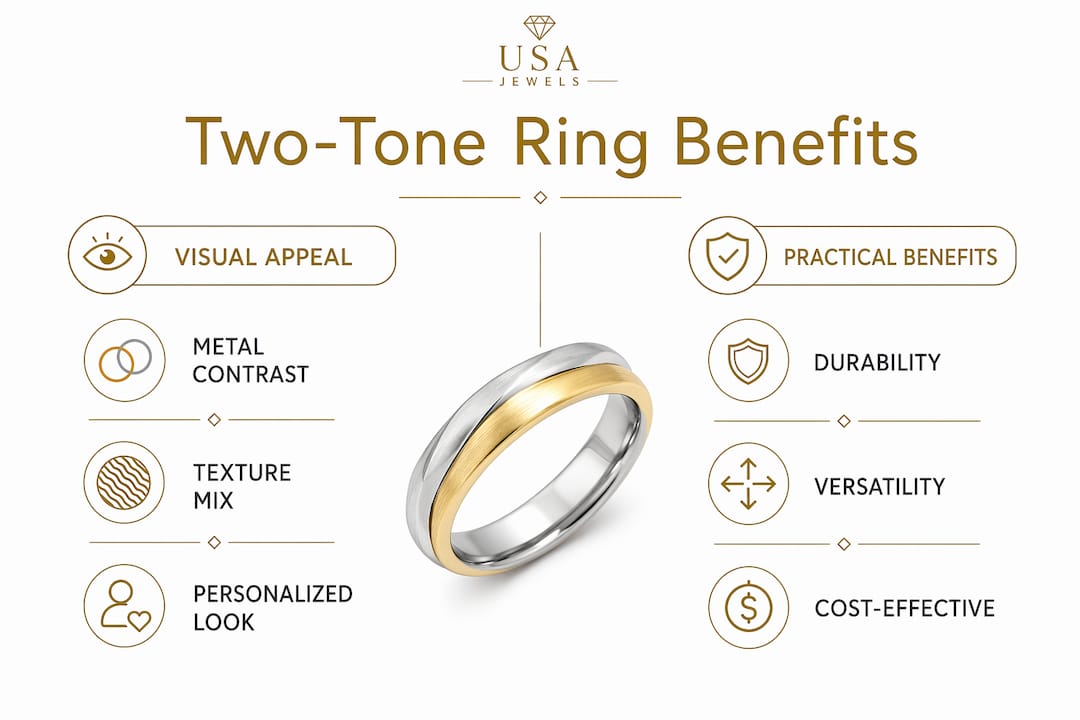
The design principle behind two-tone rings goes beyond simply using two colors of metal. The most compelling examples combine contrasting surface textures alongside contrasting metal tones. A matte yellow gold band paired with a high-polish white gold setting creates what jewelers call a dimensional jewelry effect. The ring reads differently in different lighting, which gives it a richness that flat, single-finish rings lack.
Here are the most common metal combinations and what each achieves visually:
- Yellow gold and white gold: The warmest and coolest tones in the gold family. This pairing creates a classic contrast that flatters most skin tones.
- Rose gold and platinum: Rose gold adds warmth and femininity while platinum provides a cool, weighty anchor. The result feels both romantic and refined.
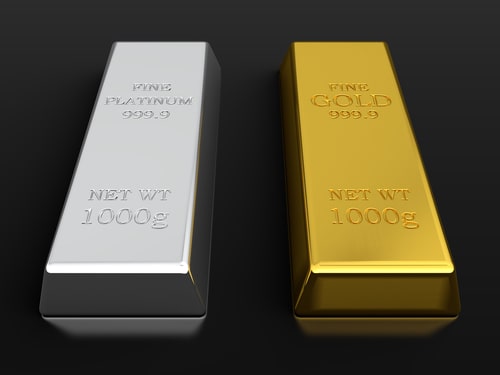
- Yellow gold and platinum: The most high-contrast option. Platinum’s bright silver tone against deep yellow gold creates a bold, architectural look.
- White gold and rose gold: A softer contrast than the options above. This combination works well for buyers who want visual interest without a sharp tonal shift.
Texture pairings amplify these contrasts further. A brushed or hammered finish on one metal against a mirror-polished finish on the other adds a tactile dimension that photographs beautifully and holds up in person. This is why two-tone engagement ring trends in 2026 lean heavily into mixed finishes, not just mixed metals.
Pro Tip: If you are choosing a two-tone ring, ask your jeweler to show you the same design in both a polished-only finish and a mixed-texture finish. The textured version almost always reads as more sophisticated in person.
What practical benefits do two-tone engagement rings offer?
The benefits of two-tone engagement rings extend well beyond aesthetics. These rings solve real, everyday styling problems that single-metal rings create.
- Accessory coordination becomes effortless. Mixed metal rings pair naturally with bracelets, watches, and earrings in different metals because the ring already contains both tones. You are never locked into wearing only gold or only silver accessories.
- Structural durability improves with smart metal selection. High-quality two-tone rings often use a stronger metal for prongs such as platinum to secure the diamond, while using gold for the visible band. Platinum is harder and more resistant to wear at the prong tips, which is exactly where most diamond loss occurs. Gold keeps the cost manageable while maintaining the look.
- Wedding band pairing is more flexible. A two-tone engagement ring works with yellow gold bands, white gold bands, and mixed-metal bands. You have genuine options when the time comes to choose a wedding set, rather than being forced to match a single metal exactly.
- The ring adapts to changing personal style. Two-tone designs remain stylish across different life stages because they do not commit fully to one aesthetic. A ring that felt modern at 28 still reads as classic at 48.
These practical advantages explain why couples who think carefully about long-term wearability consistently land on two-tone options. The ring works harder for you every day. You can explore ring settings and styles to see how these metal choices interact with different setting designs.
How do two-tone rings reflect personal and symbolic meaning?
Two-tone engagement rings carry a symbolic weight that single-metal rings cannot replicate. The combination of two distinct metals represents the coming together of two individuals, each bringing their own identity into a shared life. That symbolism is not forced. It is built directly into the physical structure of the ring.
This meaning resonates with couples who want their rings to tell a real story rather than simply signal status. Choosing a yellow gold and white gold ring, for example, might reflect one partner’s preference for warm tones and the other’s preference for cool ones. The ring becomes a physical record of compromise and connection.
- Individuality: Two-tone rings break from uniform styles, signaling that the wearer made a deliberate, personal choice rather than selecting the most common option.
- Timelessness: The balance in two-tone designs allows them to remain stylish across life stages, which means the symbolic value does not fade as fashion shifts.
- Tradition and modernity together: A yellow gold band with a platinum setting honors the warmth of traditional gold jewelry while embracing the clean, contemporary look of platinum. Both values coexist in one piece.
“Two-tone rings blend classic beauty with modern craftsmanship, catering to buyers wanting elegance and long-term value.”
Customization deepens this meaning further. When you work with a jeweler to specify which metal goes where, you are making choices that reflect your actual preferences, not a catalog default. That process itself becomes part of the ring’s story. Usajewels offers exactly this kind of personalized approach, letting you choose your metal types and diamond quality from the start.
Two-tone vs. single-tone vs. multi-metal rings: which is right for you?
Understanding the differences between ring styles helps you make a confident choice. Here is a direct comparison:
| Feature | Single-Tone Ring | Two-Tone Ring | Multi-Metal Ring |
|---|---|---|---|
| Visual complexity | Low | Medium | High |
| Accessory coordination | Requires matching | Works with multiple metals | Maximum flexibility |
| Design cost | Lower | Moderate | Higher |
| Symbolic depth | Traditional | Balanced | Complex |
| Long-term wearability | Classic, never changes | Adapts across trends | Can feel dated faster |
| Customization options | Limited | Strong | Extensive |
Single-tone rings are the most traditional choice. They suit buyers who want simplicity and a clear, unified aesthetic. Multi-metal rings, which combine three or more metals, offer maximum visual complexity but can feel busy and are harder to pair with other jewelry consistently.
Two-tone rings occupy the most practical middle ground. They combine contrasting metals to create refined aesthetics that balance timelessness with contemporary style, without crossing into visual overload. The design complexity is high enough to feel special and low enough to remain wearable every day.
Cost is worth addressing directly. Two-tone rings are not automatically more expensive than single-tone rings. The price depends on the metals chosen and the total metal weight. A yellow gold and white gold combination often costs the same as a comparable single-metal ring. Platinum combinations cost more because platinum is denser and more expensive per gram. Reviewing an engagement ring budget guide before you shop helps you set realistic expectations for any metal combination.
Pro Tip: If budget is a concern, choose yellow gold for the band and white gold for the setting. You get the two-tone look at a price point close to a single-metal ring.
Key takeaways
Two-tone engagement rings are popular because they combine visual contrast, practical versatility, and personal symbolism into a single piece that works across every style and life stage.
| Point | Details |
|---|---|
| Visual contrast drives appeal | Mixing metals and textures creates dimension that single-metal rings cannot achieve. |
| Practical durability matters | Using platinum for prongs and gold for the band improves longevity without raising cost significantly. |
| Accessory coordination is easier | Two-tone rings pair naturally with jewelry in multiple metals, removing daily styling friction. |
| Symbolic meaning is built in | Combining two metals represents the union of two individuals, adding personal depth to the design. |
| Long-term wearability is strong | Balanced two-tone designs adapt across fashion trends and life stages better than single-tone alternatives. |
Why i think two-tone rings are more than a trend
I have watched jewelry preferences shift over more than two decades, and two-tone engagement rings are one of the few design choices that have never actually gone out of style. They dipped in visibility during the all-white-gold era of the early 2000s, but they never disappeared. That staying power tells you something important.
What I find most compelling about two-tone rings is that they reward the buyer who thinks carefully. A person who chooses a yellow gold and platinum ring is not following a trend. They are making a considered decision about how a piece of jewelry will function in their life for the next 30 years. That kind of thinking produces better outcomes than chasing whatever is popular in a given season.
The couples I see make the most satisfying ring choices are the ones who ask practical questions first. Which metal is more durable for my lifestyle? Which combination will work with the jewelry I already own? Two-tone rings almost always surface as the answer because they solve multiple problems at once.
My honest advice: do not treat the two-tone decision as a style choice alone. Think about it as a design decision with real functional consequences. The ring that looks beautiful and works well every day is the one you will still love in 20 years. That is the ring worth buying.
— Joseph
Find your perfect two-tone ring at Usajewels
Usajewels has been crafting fine jewelry since 1999, and our family-owned, in-house manufacturing model means you get direct pricing without middlemen. We offer a full range of fine diamond jewelry including two-tone engagement rings in yellow gold and white gold, rose gold and platinum, and custom combinations built to your exact specifications.

Every ring we create starts with your preferences. You choose the metal types, the diamond quality, and the setting style. Our team guides you through each decision with the same care we have brought to every piece since our founding. With conflict-free diamonds, lifetime upgrade options, and over 222 five-star Google reviews, we are the trusted partner for couples who want beautiful, lasting jewelry at a fair price. Browse our jewelry collections to start designing the ring that tells your story.
FAQ
What metals are most commonly used in two-tone engagement rings?
Yellow gold, white gold, rose gold, and platinum are the most common metals in two-tone rings. The most popular pairings are yellow gold with white gold and rose gold with platinum.
Are two-tone engagement rings stylish in 2026?
Two-tone rings are among the strongest engagement ring trends in 2026, driven by demand for personalized, dimensional jewelry that coordinates with mixed-metal accessories.
Do two-tone rings cost more than single-metal rings?
Not necessarily. A yellow gold and white gold combination typically costs the same as a comparable single-metal ring. Platinum combinations cost more due to platinum’s higher density and price per gram.
Can you wear a two-tone engagement ring with any wedding band?
Yes. Because two-tone rings already contain multiple metal tones, they pair naturally with yellow gold, white gold, and mixed-metal wedding bands, giving you more flexibility than a single-metal ring.
How do i choose between two-tone and single-tone engagement rings?
Choose a two-tone ring if you want versatility, symbolic depth, and a design that adapts to changing style preferences. Choose a single-tone ring if you prefer simplicity and a fully unified aesthetic.
Recommended
- Two Stone Diamond Jewelry | Forever Us Styles | USA Jewels
- Design a Custom Wedding Ring Set That’s Truly Yours
- Engagement Ring Budget Guide | USA Jewels
- Engagement Ring Buying Guide: How to Choose the Perfect Ring | USA Jewels

Frequently Asked Questions
Will a two-tone engagement ring look dated in a few years?
How do I choose the right metal combination for my skin tone?
Does mixing two metals in one ring affect durability or require special maintenance?
What's the price difference between a two-tone ring and a single-metal ring?
Can I add gemstone details to a two-tone engagement ring without overwhelming the design?
Fine Jewelry Collection


You May Also Like
Should I choose Gold or Platinum?
Why Jeweler Reputation Matters When Buying Fine Jewelry