Best Gemstone Alternatives to Diamonds for Rings
Gemstone alternatives to diamonds are defined as natural or lab-grown stones chosen in place of mined diamonds for engagement rings and meaningful gifts. The best options, including moissanite, sapphire, ruby, and lab-grown diamonds, deliver real beauty and durability at a fraction of the cost. GIA confirms that colored gemstones and lab-grown stones offer budget-friendly, non-traditional choices for engagement rings. Choosing an alternative is not a compromise. It is a decision grounded in personal values, style, and smart spending.
1. What are the best gemstone alternatives to diamonds?
The strongest diamond alternatives share three traits: visual appeal, daily wear durability, and transparent sourcing. Each stone below earns its place on this list for a specific reason.
-
Moissanite. Moissanite is a lab-grown gemstone with a Mohs hardness of 9.25 and a fire rating of 0.104, compared to a diamond’s 0.044. That fire rating means moissanite disperses light more intensely than a diamond, producing a rainbow sparkle that many buyers love. It is not a cheap simulant. It has its own grading standards and stands apart from cubic zirconia entirely.
-
Sapphire. Sapphire scores 9 on the Mohs scale, making it one of the most durable colored stones available. Blue is the classic choice, but sapphires also come in pink, yellow, white, and the rare Padparadscha orange-pink. White sapphire offers a near-colorless look at a lower price than a diamond.
-
Ruby. Ruby is the red variety of corundum, the same mineral family as sapphire, and shares its 9 Mohs hardness. A deep red ruby in an engagement ring carries centuries of symbolic meaning. Certified rubies from reputable sources are widely available.
-
Morganite. Morganite is a peachy-pink beryl stone with a soft, romantic color that photographs beautifully. It scores 7.5–8 on the Mohs scale, which means it needs a protective setting for daily wear. Its affordability makes it a popular choice for statement rings.
-
Aquamarine. Aquamarine is a pale blue-green beryl that pairs well with white gold and platinum settings. It scores 7.5–8 on the Mohs scale and offers a calm, elegant look at a very accessible price.
-
Lab-grown diamonds. Lab-grown diamonds are chemically and physically identical to mined diamonds. FTC guidelines require sellers to clearly disclose lab-grown origin, so buyers know exactly what they are purchasing. Pricing for a lab-grown diamond runs roughly $1,200–$2,000 for a quality stone, compared to $4,500–$7,000 for a comparable natural diamond.
-
Cubic zirconia. Cubic zirconia is the most affordable option on this list, but it scores only 8–8.5 on the Mohs scale and scratches with regular wear. It suits fashion jewelry or temporary rings, not a piece meant to last decades.
Pro Tip: If you want diamond-level durability without the diamond price, moissanite and lab-grown diamonds are the two strongest choices. Sapphire is the best pick if you want a natural colored stone that holds up to daily wear.
2. How to evaluate durability and appearance in alternative gemstones
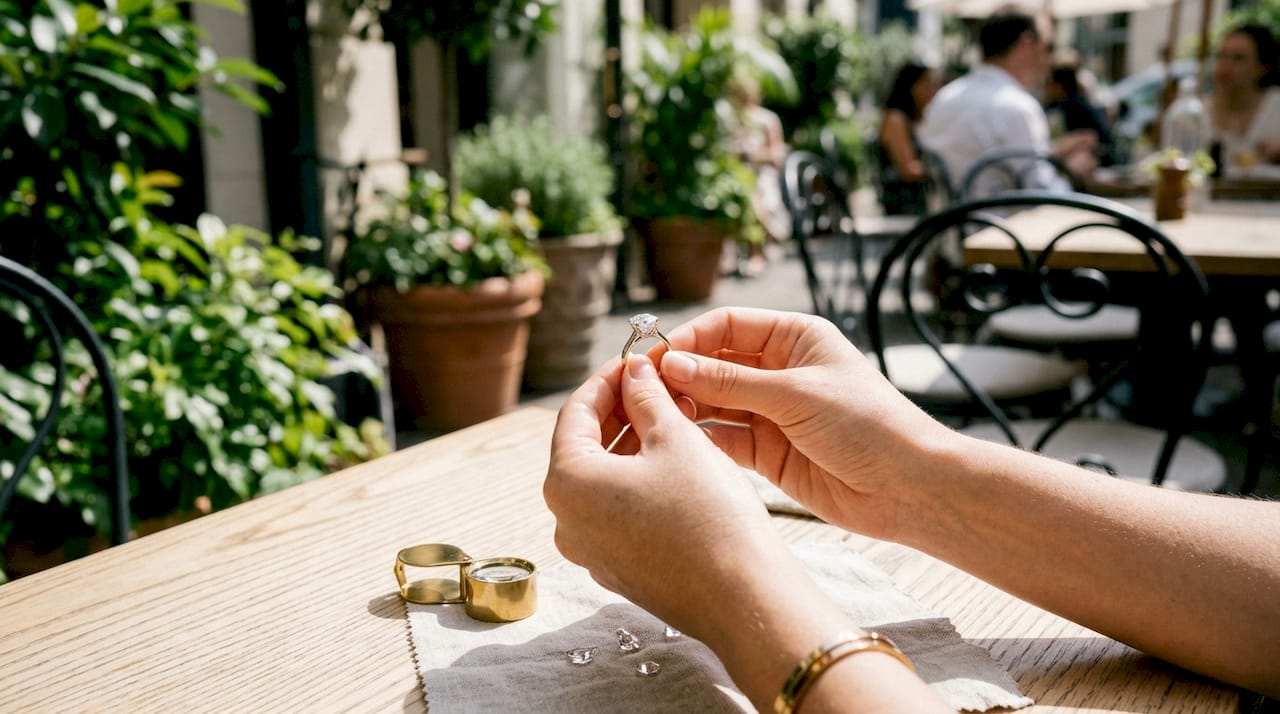
Durability and appearance are the two criteria that matter most for a ring worn every day. Understanding both helps you avoid a purchase you will regret.
Hardness and toughness are different things. The Mohs scale measures scratch resistance. A stone that scores 9 resists surface scratches from everyday contact. Toughness measures resistance to chipping and breaking. Sapphire and ruby score high on both. Morganite and aquamarine score well on hardness but need protective settings because they can chip.
Optical properties determine how a stone looks in light. Fire refers to the colored flashes a stone produces. Brilliance refers to the white light it reflects. Moissanite produces more fire than a diamond, which some buyers love and others find too flashy. Sapphire and ruby do not produce the same sparkle as moissanite or diamond, but their color saturation creates a different kind of visual impact.
Practical care varies by stone:
- Moissanite and lab-grown diamonds: clean with mild soap and warm water; ultrasonic cleaners are safe.
- Sapphire and ruby: safe for ultrasonic cleaning in most cases; avoid steam if the stone is fracture-filled.
- Morganite and aquamarine: clean gently with warm soapy water; avoid ultrasonic cleaners and harsh chemicals.
- Cubic zirconia: wipe clean with a soft cloth; avoid abrasive cleaners that accelerate surface dulling.
Pro Tip: Ask your jeweler for the specific treatment history of any colored stone before you buy. Fracture-filled or heat-treated stones require gentler care and may affect long-term value.
3. What ethical considerations matter when choosing a gemstone alternative?
Ethical sourcing is one of the main reasons buyers choose alternatives to mined diamonds. But not all “ethical” claims carry equal weight.
Clear labeling is a legal requirement, not a bonus. The FTC Jewelry Guides require that marketing materials clearly and conspicuously disclose whether a stone is lab-grown or natural. Vague eco-friendly claims without substantiation violate these guidelines. When you shop, look for product descriptions that state origin directly, not just marketing language like “sustainable” or “responsible.”
The Kimberley Process has real limits. The Kimberley Process Certification Scheme certifies that rough diamond shipments are conflict-free, but it does not guarantee ethical sourcing across the full retail supply chain. Labor conditions, environmental impact, and community effects fall outside its scope. Buyers who care about the full picture need to ask for more than a Kimberley Process certificate.
Stronger standards exist. The RJC 2024 Code of Practices requires traceability, human rights due diligence, and environmental responsibility from certified jewelers. Buying from an RJC-certified retailer gives you a higher level of assurance than a Kimberley Process certificate alone.
Here is a practical checklist for verifying ethical sourcing:
- Ask for the stone’s country of origin and mine or lab name.
- Request a grading certificate from GIA, IGI, or AGS that includes origin disclosure.
- Confirm whether the retailer holds RJC certification.
- Read product descriptions carefully. Vague language is a red flag.
- For lab-grown stones, confirm the specific growing method (CVD or HPHT) and the lab that certified it.
“Certification chains that prove traceability matter more than marketing claims in ethical sourcing.” — AIDI
Learning how lab-grown diamonds are ethically produced gives you a clear picture of what genuine transparency looks like in practice.
4. Side-by-side comparison: which alternative fits your needs?
Choosing the right stone comes down to your budget, lifestyle, and what the ring means to you. This table puts the top options side by side.
| Stone | Mohs hardness | Typical price (1 ct equiv.) | Key ethical consideration | Best for |
|---|---|---|---|---|
| Moissanite | 9.25 | $500–$900 | Lab-grown; low environmental impact | Maximum brilliance on a budget |
| Lab-grown diamond | 10 | $1,200–$2,000 | Requires clear FTC-compliant disclosure | Diamond look with ethical sourcing |
| Sapphire (natural) | 9 | $500–$3,000+ | Ask for origin and treatment disclosure | Color, durability, daily wear |
| Ruby (natural) | 9 | $500–$5,000+ | Verify RJC-certified retailer | Symbolic meaning, bold color |
| Morganite | 7.5–8 | $150–$600 | Generally low-risk sourcing | Romantic aesthetic, lower budget |
| Aquamarine | 7.5–8 | $100–$500 | Generally low-risk sourcing | Elegant, understated color |
| Cubic zirconia | 8–8.5 | Under $50 | Lab-created; minimal sourcing concern | Fashion jewelry, temporary use |
For daily wear, moissanite, lab-grown diamonds, sapphire, and ruby are the four strongest choices. All score 9 or above on the Mohs scale. For a color statement, sapphire and ruby offer natural beauty that no lab-grown stone replicates. For the tightest budget, moissanite delivers the most visual impact per dollar. A moissanite vs. diamond comparison shows exactly how these stones perform side by side in a jewelry setting.
Buyers who want the conflict-free diamond vs. lab-grown breakdown will find that lab-grown diamonds consistently offer the clearest sourcing documentation of any option on this list.
Key takeaways
The most durable and ethical gemstone alternatives to diamonds are moissanite, lab-grown diamonds, sapphire, and ruby, each offering distinct advantages in brilliance, sourcing transparency, and price.
| Point | Details |
|---|---|
| Moissanite leads on value | It scores 9.25 on the Mohs scale and outshines diamonds in fire at $500–$900 per carat equivalent. |
| Lab-grown diamonds require disclosure | FTC guidelines mandate clear origin labeling; always confirm certification before buying. |
| Kimberley Process is not enough | It covers conflict-free rough diamonds only; ask for RJC certification for full supply chain assurance. |
| Hardness determines daily wear suitability | Stones scoring 9 or above (moissanite, sapphire, ruby) hold up best in rings worn every day. |
| Price differences are significant | Natural diamonds cost $4,500–$7,000 versus $1,200–$2,000 for lab-grown and $500–$900 for moissanite. |
What I have learned after years of watching people choose the wrong stone
People walk in convinced they need a diamond. They leave with a moissanite or a sapphire, and they are happier for it. That pattern repeats itself constantly in this industry.
The biggest misconception I see is that alternative stones are somehow less real or less meaningful. Moissanite is a genuine gemstone with its own grading system. A sapphire is a natural stone that has been prized for centuries. Neither is a fake. The word “fake” belongs only to misrepresented stones, not to stones that are simply different from diamonds.
The second mistake I see is buyers ignoring durability for the sake of aesthetics. Morganite is genuinely beautiful. But I have watched people choose it for a daily-wear engagement ring without understanding that it needs a protective bezel or halo setting to survive years of use. Hardness matters. A stone you love on day one needs to still look good on your tenth anniversary.
My honest advice: prioritize stones that score 9 or above on the Mohs scale for any ring worn daily. Then choose your stone based on color preference, budget, and sourcing values. The gemstone collection at Usajewels shows how colored stones look in real settings, which helps more than any chart.
One more thing. Transparency from your jeweler is non-negotiable. If a seller cannot tell you where a stone came from, or hedges on whether it is lab-grown or natural, walk away. The responsible fashion movement has raised consumer expectations across every category, and jewelry is no exception. You deserve a straight answer.
— Joseph
Usajewels makes ethical gemstone choices straightforward
Finding a beautiful, ethically sourced stone should not require a gemology degree. Usajewels has been helping families do exactly that since 1999, with in-house manufacturing that removes middlemen and keeps prices honest.

Usajewels carries lab-grown diamonds, colored gemstones, and fine diamond jewelry with clear origin disclosures on every piece. Every stone comes with certification information so you know exactly what you are buying. The family-owned model means you work directly with people who care about getting it right, not a sales floor chasing commission. With over 222 verified Google reviews and a lifetime diamond upgrade policy, Usajewels gives you confidence at every step. Browse the full collection and find the stone that tells your story.
FAQ
What is the most durable gemstone alternative to a diamond?
Moissanite is the most durable alternative, scoring 9.25 on the Mohs hardness scale. Sapphire and ruby follow closely at 9, making all three excellent choices for daily-wear rings.
Are lab-grown diamonds real diamonds?
Lab-grown diamonds are chemically and physically identical to mined diamonds. The FTC requires sellers to clearly disclose lab-grown origin, so always check the product description and grading certificate.
Is moissanite the same as cubic zirconia?
Moissanite and cubic zirconia are completely different stones. Moissanite has its own grading standards, scores 9.25 on the Mohs scale, and produces more fire than a diamond. Cubic zirconia is softer and scratches more easily with regular wear.
How do I verify that a gemstone is ethically sourced?
Ask for the stone’s country of origin, a grading certificate from GIA, IGI, or AGS, and confirmation that the retailer holds RJC certification. Vague eco-friendly claims without documentation are a red flag.
What is the most affordable gemstone alternative for an engagement ring?
Moissanite offers the best combination of affordability and durability, typically priced at $500–$900 for a one-carat equivalent. Morganite and aquamarine cost less but require more protective settings for daily wear.
Recommended
- USA Jewels: Gemstones – Modern Elegance & Timeless Style
- USA Jewels: Halo Gemstone Rings – Diamond Jewelers & Luxury Cra
- Top 5 bayamjewelry.com Engagement Ring Alternatives 2026
- Gemstone Comparisons | Buying Guides | USA Jewels

Deep Mehta is the Co-Owner of USA Jewels, a family-owned jewelry business she has led since 2013 in Deerfield Beach, Florida. With over 13 years of hands-on experience in fine jewelry retail, manufacturing, and diamond importing, Deep specializes in engagement rings, wedding bands, and custom jewelry design. She also co-manages Kaash Group Talent Acquisition. Deep is a University of Florida graduate and oversees every aspect of USA Jewels’ operations, from product development to marketing.
Frequently Asked Questions
Why does moissanite sparkle differently than a diamond, and is that a bad thing?
Can I wear morganite or aquamarine engagement rings every day, or do they need special care?
What's the price difference between lab-grown diamonds and natural diamonds of the same quality?
Should I choose sapphire or ruby for a colored gemstone engagement ring, and what's the durability difference?
Is cubic zirconia a good choice for an engagement ring I plan to wear long-term?
Fine Jewelry Collection


You May Also Like
Why Diamond Stud Earrings Are the Best Starter Jewelry
How Jewelry Personalization Options Work for Gifts