How to Evaluate Jewelry Craftsmanship for Your First Buy
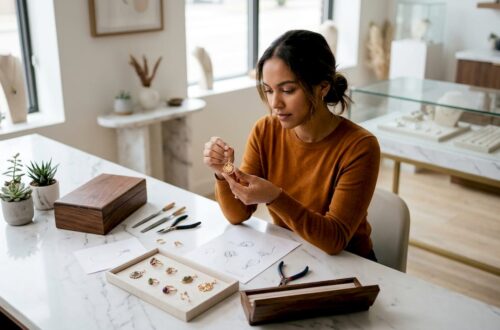
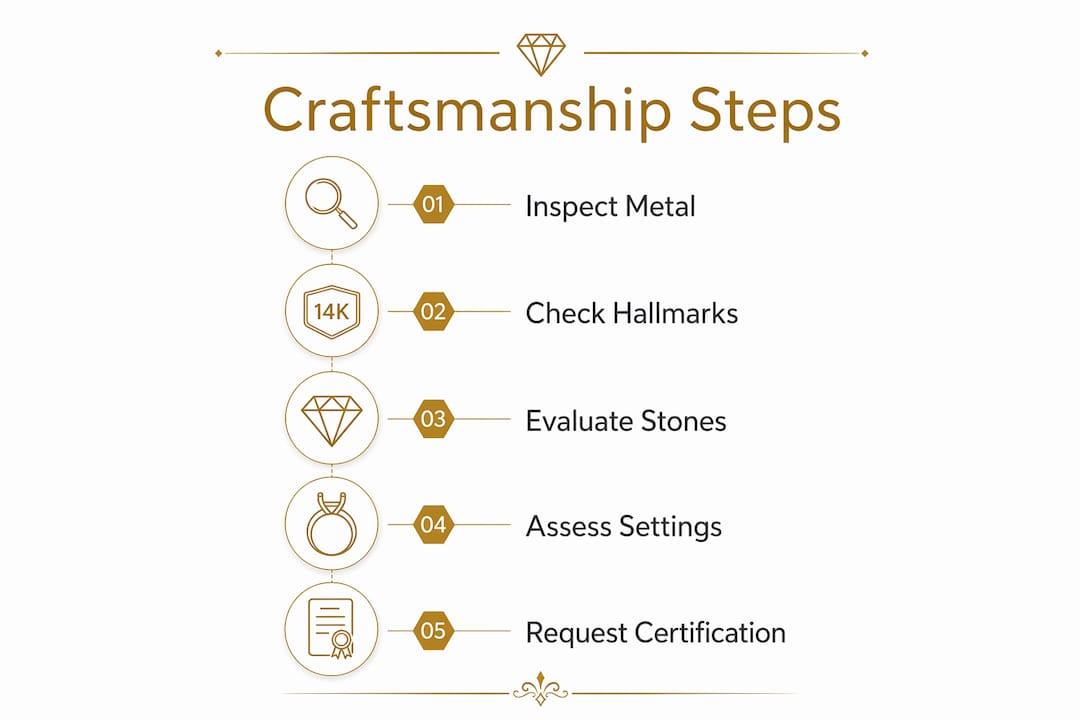
When you’re buying custom jewelry for the first time, knowing how to evaluate jewelry craftsmanship before you commit makes all the difference between a piece you’ll treasure for decades and one that disappoints within months. The core checklist is straightforward: check hallmark stamps for metal purity (14K, 18K, or 925 silver), request gemstone certifications from labs like GIA or AGS, inspect stone settings for symmetry and security, run your fingers over every surface including the back and underside, and ask your jeweler directly about sourcing, warranties, and repair policies. A reputable jeweler will welcome every one of those questions.
- Hallmarks: Look for karat stamps or silver marks as required by U.S. assay standards
- Gemstone certification: Request GIA, AGS, or AGL reports confirming authenticity and any disclosed treatments
- Setting security: Prongs should hug each stone firmly, with no gaps, no glue, and perfect symmetry
- Surface finishing: Polish quality on hidden areas, like the back of a pendant, reveals true artisan care
- Weight and balance: Authentic precious metals feel substantial without being clumsy
- Documentation: Written appraisals and detailed invoices protect you and validate every material claim
Table of Contents
- What are the key factors that reveal true craftsmanship?
- What should you ask your jeweler before placing a custom order?
- Why do gemstone certifications matter so much?
- How do you verify that a jeweler is truly trustworthy?
- What does the custom jewelry process actually look like?
- Usajewels brings craftsmanship and transparency together
- Key Takeaways
- FAQ
What are the key factors that reveal true craftsmanship?
The most telling details in custom jewelry are often the ones you have to look for deliberately. Start with the metal itself.
Hallmark stamps are your first confirmation of metal purity. Such stamps on gold or sterling silver tell you exactly what you’re paying for. Pieces without any stamp are a red flag, especially in the U.S. market where disclosure standards are well established.
Gemstone quality goes beyond sparkle. Natural inclusions viewed under magnification are normal and expected in genuine stones. What matters is whether the cut is precise, whether the stone sits level in its setting, and whether any treatments (heat, fracture filling, irradiation) have been disclosed in writing. Lab reports from GIA or AGS confirm all of this clearly.
Settings deserve close attention. Prongs should hug stones without excess metal bunching around them, and bezel settings should sit flush with no visible gaps. Glue is never acceptable in fine custom work.
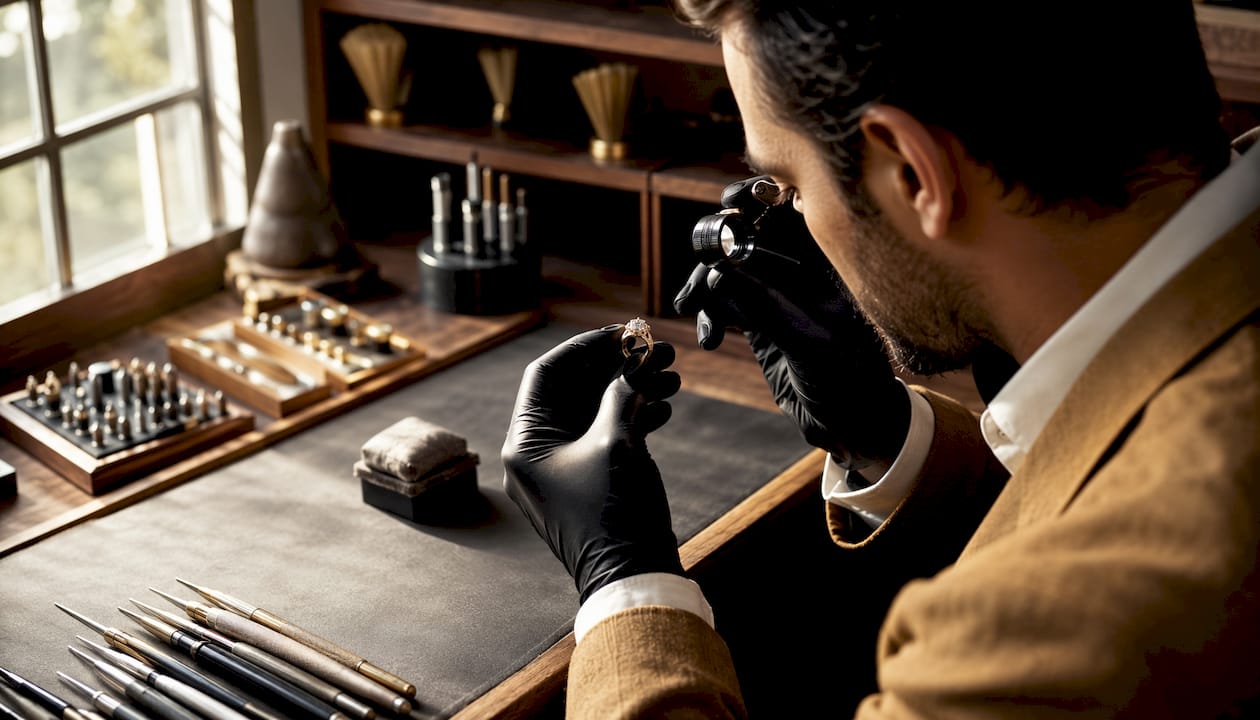
Finishing is where skilled artisans separate themselves. High-quality pieces are polished on every surface, including the back and underside, while mass-produced items often leave those areas rough. Run your finger across the back of any piece you’re considering. That single tactile check tells you more than a photograph ever could.
Weight matters too. A piece that feels feather-light may be plated or made from cheaper alloys. Genuine precious metal jewelry has a satisfying heft that feels proportional to its size.
- Clasps and chains: Test clasps for smooth, secure operation; chains should flex without kinking
- Solder joints: Invisible or minimal solder lines indicate skilled hand fabrication versus rough seams typical of lower-quality casting
- Moving parts: Hinges, links, and articulated elements should move smoothly with no catching or grinding
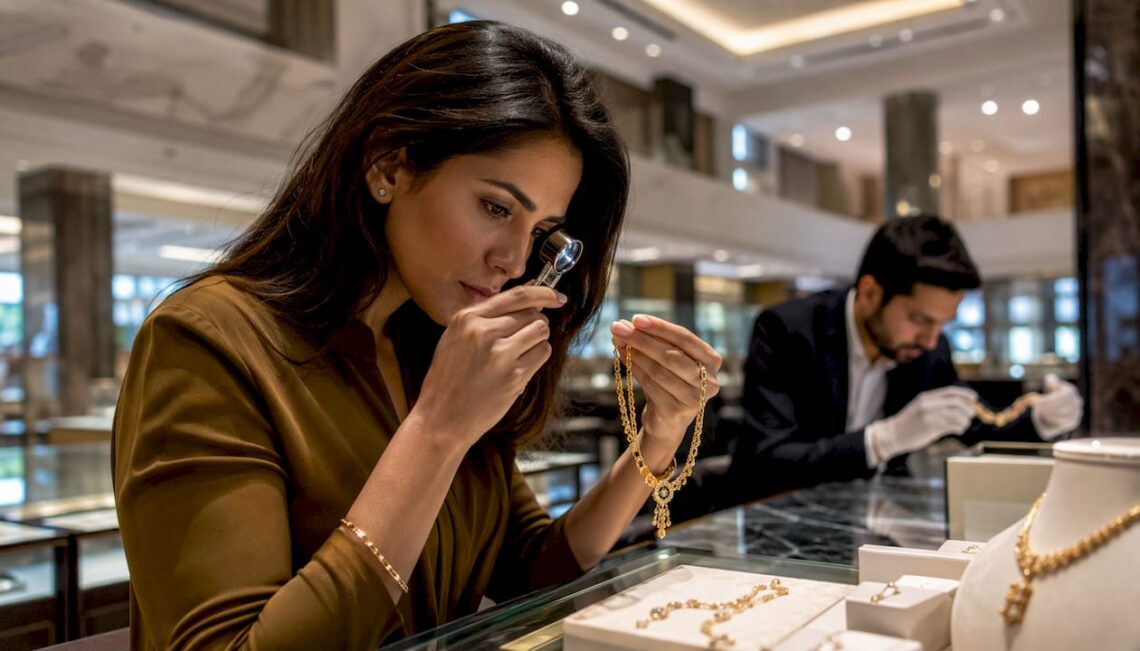
Pro Tip: Bring a jeweler’s loupe (10x magnification) or ask to use one in the store. Inspecting prong tips, solder joints, and stone girdles up close takes less than two minutes and reveals craftsmanship details invisible to the naked eye.
What should you ask your jeweler before placing a custom order?
Asking the right questions is one of the best practices for any jewelry purchase, and it costs you nothing. A jeweler who hesitates or gives vague answers is telling you something important.
- Fabrication method: Is this piece handmade, hand-fabricated, or cast? Each method affects durability and repairability differently.
- Certifications: Can you provide GIA or AGS reports for the center stone, and a written appraisal for the finished piece?
- Metal sourcing: What is the exact metal purity, and can you confirm ethical or conflict-free sourcing?
- Warranty and repairs: What does your warranty cover, and what are the terms for resizing or repair after purchase?
- Revision policy: How many design revisions are included, and what happens if the finished piece differs from the approved sketch?
- Timeline: What is the realistic production window for this specific piece, and what deposit is required to begin?
- Post-purchase care: What cleaning and maintenance routine do you recommend to preserve this piece long-term?
Reputable jewelers provide transparent answers to all of these without hesitation. Written documentation of the answers, especially on warranties and timelines, protects both you and the jeweler.
Why do gemstone certifications matter so much?
A gemstone certificate is not just paperwork. It is an independent, third-party record of exactly what you are buying, and it protects your investment from the moment you take the piece home.
The Gemological Institute of America (GIA) is the most widely recognized authority for diamond grading in the U.S. A GIA report covers cut, color, clarity, and carat weight, and it discloses any treatments the stone has undergone. The American Gem Society (AGS) offers similarly rigorous grading, with particular depth on cut quality. For colored stones, labs like AGL (American Gemological Laboratories) and SSEF provide treatment disclosure that directly affects a stone’s durability and resale value.
Verified lab reports eliminate guesswork about treatments like heat enhancement, fracture filling, or irradiation. Untreated, natural gemstones generally hold higher long-term value and are more predictable in durability. A jeweler who cannot or will not provide lab documentation for a significant stone is a jeweler worth walking away from.
A professional appraisal, separate from the lab report, assigns a replacement value to the finished piece. This matters for insurance purposes and gives you an independent confirmation that the craftsmanship and materials match what you paid for. Learn more about what these reports cover in Usajewels’ GIA certification guide and their detailed gemstone grading resource.
How do you verify that a jeweler is truly trustworthy?
Jeweler reputation directly affects the quality you receive, the warranty you can rely on, and the support you get after the sale. For a first-time buyer, this is not a secondary consideration.
Start with verified customer reviews on Google and the Better Business Bureau. Look for patterns across many reviews, not just the star rating. Consistent praise for communication, accurate timelines, and post-sale responsiveness tells you more than a handful of five-star ratings. Longevity in the market matters too. A jeweler who has been operating since the late 1990s has a track record you can actually evaluate.
Transparency on sourcing is another reliable signal. Ethical jewelers will tell you exactly where their metals and stones come from, whether they follow conflict-free sourcing standards, and how they handle treatments and disclosures. Vague answers here often mean vague practices throughout.
Industry insight: Consumer confidence in jewelers correlates strongly with verified reviews, certification transparency, and clear ethical sourcing policies, all of which reduce buyer risk and support long-term satisfaction.
Look for membership or endorsement by professional bodies like the Jewelers of America or the American Gem Society. These affiliations require adherence to ethical standards that protect you as a buyer. Handcrafted jewelry from artisans who prioritize self-expression and quality often comes with this same level of maker accountability.
What does the custom jewelry process actually look like?
For a first-time buyer, understanding the timeline removes a lot of anxiety. Custom jewelry is not an overnight process, and that is a feature, not a flaw.
The process typically begins with a consultation where you share your vision, select a metal type, choose a stone, and review initial sketches or CAD renderings. This stage can take one to two weeks as the jeweler refines the design to your specifications.
Once you approve the design, production begins. Fabrication, setting, and polishing for a moderately complex custom piece typically spans several weeks to a couple of months, depending on complexity and the jeweler’s current workload. A deposit, usually a percentage of the total price, is standard at this stage.
Before delivery, a quality inspection confirms that the finished piece matches the approved design, that all stones are secure, and that documentation is complete. Get everything in writing: the agreed design, the timeline, the deposit terms, and the warranty. That written record is your protection if anything falls short.
Budget for the full picture: the piece itself, a professional appraisal, and any post-purchase care supplies. Cleaning cloths, ultrasonic cleaner compatibility, and storage recommendations are worth discussing at pickup. Usajewels’ jewelry repair guide is a practical resource for understanding long-term maintenance from day one.
Usajewels brings craftsmanship and transparency together
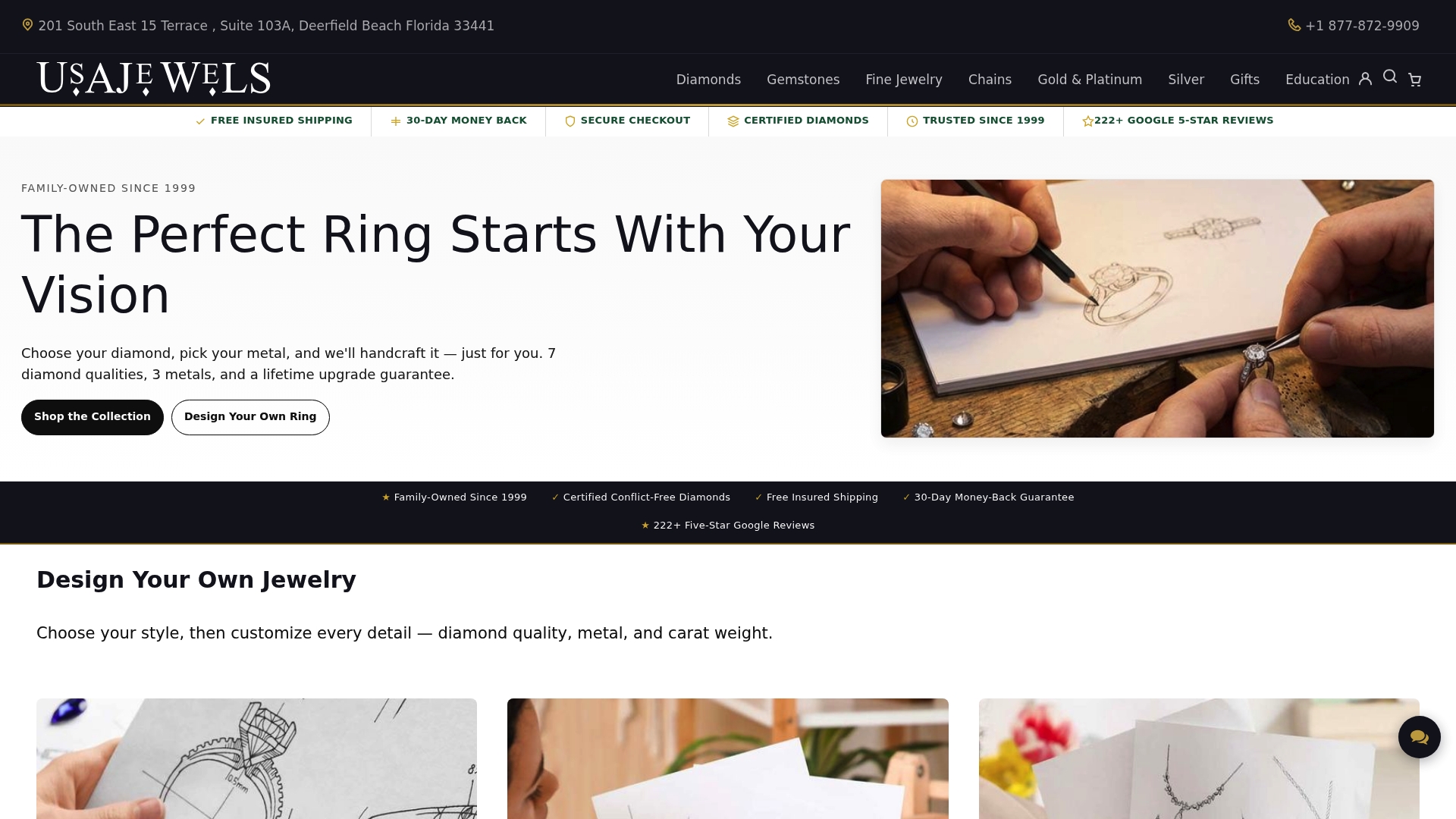
For first-time buyers who want custom jewelry without the uncertainty of traditional retail markups, Usajewels offers a genuinely different experience. As a family-owned business with in-house manufacturing since 1999, they cut out the middlemen entirely, which means you pay for the craftsmanship and the materials, not the layers in between.
Every piece is built around your choices: diamond quality, metal type, and design details tailored to what you actually want. Ethical, conflict-free sourcing is standard, and their lifetime diamond upgrade policy gives you flexibility as your preferences evolve. With over 222 verified Google reviews reflecting consistent satisfaction with both quality and service, their track record speaks clearly.
Browse their fine diamond jewelry collection or explore the full diamond jewelry catalog to see the range of custom options available. When you’re ready to start designing, their team walks you through every step with the transparency and care you deserve on a first purchase.
Key Takeaways
Evaluating custom jewelry craftsmanship requires checking hallmarks, requesting certified lab reports, inspecting settings and finishing on all surfaces, and verifying jeweler transparency before you commit.
| Point | Details |
|---|---|
| Hallmarks confirm metal purity | Look for 14K, 18K, or .925 stamps as your first authenticity check. |
| GIA and AGS reports protect you | Lab certifications disclose treatments and confirm stone quality independently. |
| Finishing reveals true quality | Polished undersides and invisible solder joints separate artisan work from mass production. |
| Ask before you commit | Questions about fabrication, warranty, and sourcing reveal whether a jeweler is genuinely trustworthy. |
| Usajewels for first-time buyers | Family-owned since 1999, with direct pricing, ethical sourcing, and lifetime diamond upgrades. |
FAQ
What hallmarks should I look for on custom jewelry?
Look for karat stamps like 14K or 18K on gold pieces, and “.925” on sterling silver. These marks confirm metal purity and are standard disclosure in the U.S. market.
How do I know if a gemstone is certified?
Ask your jeweler for a lab report from GIA, AGS, or AGL. A legitimate certificate includes the stone’s cut, color, clarity, carat weight, and any treatments disclosed.
What are common craftsmanship flaws to watch for?
Loose or uneven stone settings, visible glue, rough undersides, and rough solder seams are all signs of poor workmanship. A 10x loupe makes these details easy to spot before purchase.
How long does a custom jewelry order typically take?
Most custom pieces take several weeks to a couple of months from design approval to delivery, depending on complexity. Always get the agreed timeline in writing along with deposit terms.
Why does jeweler reputation matter for a first purchase?
A jeweler’s track record, verified reviews, and transparency on sourcing and warranties directly affect the quality you receive and the support available after the sale.
Recommended
- How to Spot Quality Jewelry Craftsmanship Like a Pro
- Jewelry Repair Guide: When to Fix, Resize & Restore | USA Jewels
- Handcrafted vs. Mass-Produced Children’s Jewelry Guide
- Men’s Jewelry Guide: Chains, Rings, Bracelets & More | USA Jewels

Deep Mehta is the Co-Owner of USA Jewels, a family-owned jewelry business she has led since 2013 in Deerfield Beach, Florida. With over 13 years of hands-on experience in fine jewelry retail, manufacturing, and diamond importing, Deep specializes in engagement rings, wedding bands, and custom jewelry design. She also co-manages Kaash Group Talent Acquisition. Deep is a University of Florida graduate and oversees every aspect of USA Jewels’ operations, from product development to marketing.
Fine Jewelry Collection


You May Also Like
Make It Yours: Three Stone Ring Meaning and How Buyers Personalize
What Graduation Jewelry Symbolizes: A Gift-Giver’s Guide