5 Checks Buyers Must Do for Diamond Girdle Thickness
Girdle thickness should factor into your decision, but only at the extremes: avoid a diamond graded “Extremely Thin” and look closely at anything graded “Extremely Thick” before you buy. The reasons come down to three things: durability, hidden weight, and light performance. Before you commit, pull up the lab report and ask the seller for a profile photo and any setter notes on the stone.
TL;DR:
- Girdle ranges from Very Thin to Very Thick, with the safest performance from Very Thin to Slightly Thick, and avoid extremes for durability.
- Thick girdles can add weight without influencing face-up size, while extremely thin girdles risk chipping or damage during setting.
- Verify girdle extremes with detailed photos and note their location relative to prongs before purchasing.
- A balanced girdle thickness is critical for maintaining cut quality, light performance, and long-term durability.
- Shape impacts girdle considerations, with corners in shapes like princess cuts needing extra protection at the thinnest points.
Table of Contents
- What the girdle is and how thickness is reported
- How girdle thickness affects cut grade, face-up size, and light performance
- Durability risks and setting recommendations
- Reading girdle info on a lab report and cross-checks
- Recommended ranges and a buyer checklist
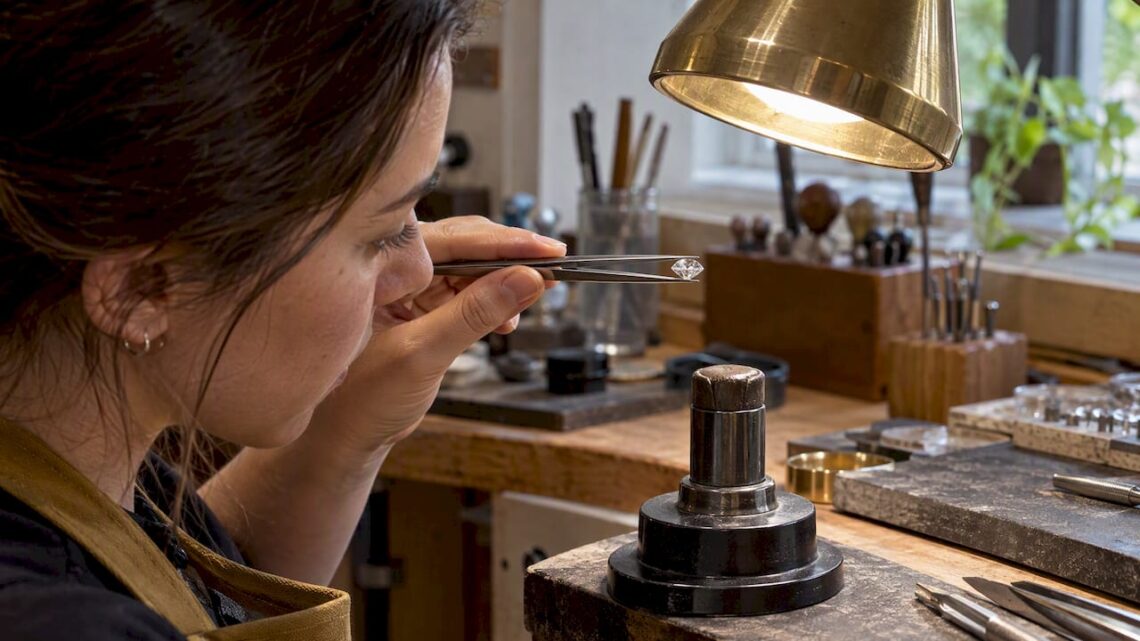
- How a jeweler inspects the girdle: a practical checklist
- Balancing durability, beauty, and value
- How USA Jewels can help with girdle concerns
- FAQ
- Sources
What the girdle is and how thickness is reported
A diamond has three main zones: the crown on top, the pavilion below, and the girdle, a thin band running around the widest part of the stone where crown and pavilion meet. Think of it as the diamond’s waistline, and also its structural edge, since it’s the part most exposed to knocks during daily wear and the part a jeweler grips when setting the stone.
Girdle thickness is reported as a percentage of the diamond’s average diameter, and it’s almost never a single number. Because the girdle varies around the stone at points gemologists call hill and valley positions, labs report a range from thinnest to thickest point rather than one fixed figure, as GIA explains in its girdle assessment guidance.
On a GIA-style report, that range appears as a verbal description running from Extremely Thin through Very Thin, Thin, Slightly Thin, Medium, Slightly Thick, Thick, Very Thick, and finally Extremely Thick. A few patterns worth knowing:
- A single verbal label (like “Medium”) means the girdle is fairly consistent all the way around.
- A range (like “Thin to Slightly Thick”) is common and simply reflects natural variation at different points on the stone.
- The extremes at either end of the scale are the ones that call for a closer look, not the range itself.
How girdle thickness affects cut grade, face-up size, and light performance
Girdle thickness isn’t graded in isolation. It feeds into the diamond’s total depth percentage alongside the crown and pavilion, and that combination shapes how light enters, bounces, and exits the stone. For round brilliants, GIA’s cut-grade estimating guidance treats girdle percentage as one of several inputs, and girdle values outside the roughly 2.5% to 7.0% operational band change how the estimator calculates a cut grade.
A few practical effects follow from this:
- A very thick girdle can add weight to the stone without adding visible size, meaning you may pay for carat weight that isn’t apparent from the top.
- Extremely thin or extremely thick girdles can reduce an otherwise strong cut grade, even when other proportions are excellent.
- Well-proportioned diamonds with balanced crown and pavilion angles generally tolerate typical girdle variation without much visible impact on brightness or fire.
- Diamonds cut too deep or too shallow are more sensitive to girdle thickness variations, as less margin remains to accommodate them.
The takeaway: if the rest of the cut parameters are strong, a moderate girdle variation rarely hurts the eye. If the cut is already borderline, girdle thickness becomes one more factor working against it.
Durability risks and setting recommendations
An “Extremely Thin” girdle, sometimes called a knife-edge girdle, is fragile. It chips most easily where a prong presses against it or where a corner takes a direct hit, which matters most for fancy shapes like princess or emerald cuts that already have vulnerable corners.
A few steps reduce that risk at the setting stage, including choosing the right ring styles and settings that protect the girdle edge:
- Choose a setting that spreads pressure rather than concentrating it, since bezel settings enclose the girdle’s edge and protect it from impact.
- Ask your jeweler about lower or hidden prongs that grip the stone below the girdle line instead of directly on a thin spot.
- For round brilliants, six prongs distribute pressure more evenly than four, which matters more when the girdle runs thin in places; four prongs are usually fine on a girdle in the normal range.
An “Extremely Thick” girdle is actually the sturdier option structurally, but you’re trading some face-up size and light return for that durability, so it’s worth deciding which one you care about more before you buy.
Pro Tip: Ask the seller for a 10x magnified profile photo and a written note on where the thinnest point sits, not just the verbal grade on the certificate.
Reading girdle info on a lab report and cross-checks
The Girdle line on a GIA, AGS, or IGI report typically shows a verbal range (minimum to maximum) and, on many reports, a measured percentage as well. GIA’s booklet on finish, culet, and girdle notes that the percentage comes from optical measurement at set points, while the verbal description reflects a grader’s visual assessment at 10x magnification, and the two can read slightly differently depending on where exactly the extremes fall.
Don’t read the girdle line alone. A few fields on the same report tell you more together than any one of them does on its own:
- Total depth percentage, since girdle thickness is baked into that overall number.
- Table percentage and pavilion angle, which show whether the stone’s proportions are already balanced or already stretched thin.
- Clarity characteristics like naturals or extra facets near the girdle, which can affect both the measurement and the stone’s resilience.
A notation like “Thin to Slightly Thick” is a normal, workable range. “Extremely Thin to Medium” deserves a follow-up question: where exactly is that extremely thin point, and is it tucked away from any prong contact or sitting right where a setter would want to grip the stone?
Recommended ranges and a buyer checklist
For round brilliants, a safe working band runs roughly from Very Thin to Slightly Thick, which the International Gem Society notes is a common and generally well-performing range. Stay cautious at either edge: Extremely Thin raises chipping risk, and Extremely Thick tends to hide weight and reduce face-up diameter without any visible payoff.
The trade-off comes down to what you’re optimizing for. A slightly thicker girdle can be worth accepting if it means better durability for daily wear or a lower price for the same carat weight. A girdle on the thick end rarely helps you though, since it usually means you’re paying for weight you can’t see rather than for size or sparkle.
Shape matters here too. Princess cuts and other shapes with sharp corners need more protection at those corner points than rounds do, since the girdle is thinnest and most exposed right where the corners meet, a factor worth weighing alongside the broader points in our diamond shapes guide.
A short checklist to use while shopping:
- Check the Girdle line’s verbal range and flag anything labeled Extremely Thin or Extremely Thick.
- Request a 10x profile photo if the report alone doesn’t show where the extremes sit.
- Cross-check total depth percentage and pavilion angle against the girdle reading.
- Ask whether a setter has inspected the stone and where any thin points land relative to prong placement.
- Favor protective settings (bezel, lower prongs, six-prong heads) when the girdle runs thin anywhere on the stone.
How a jeweler inspects the girdle: a practical checklist
That location detail matters more than the verbal grade by itself, since a thin area tucked away from contact points behaves very differently from one sitting right under a prong tip.
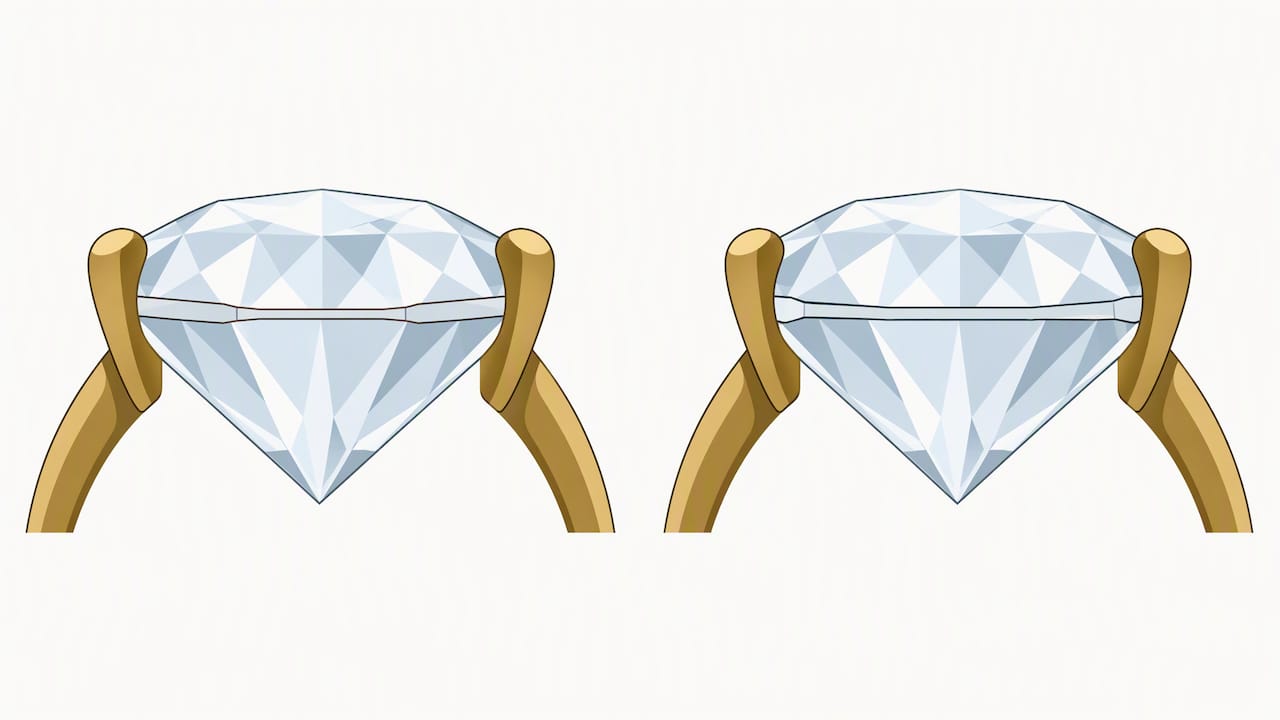
Before buying, it’s worth asking any seller for that same information: a profile photo, a magnified note on vulnerable spots, and mounting advice suited to the stone’s proportions rather than a generic setting choice.
Balancing durability, beauty, and value
If you have to choose, durability wins for an engagement ring, since a ring gets knocked around daily in a way a pendant or earring never does. A slightly thicker girdle that protects against chipping is a fair trade for a touch less brilliance. An extremely thin girdle almost never is, no matter how the rest of the stone performs.
Protect the edge, and the sparkle takes care of itself.
— Joseph
How USA Jewels can help with girdle concerns
We hand-select our certified loose diamonds with full lab documentation, so you can see the girdle grade, measured percentage, and proportions before you ever commit to a stone. A setting team can check a diamond’s girdle against the mounting you choose and recommend protective prong or bezel options where a thinner edge calls for extra care.

Every purchase comes with free insured shipping, a 30-day money-back guarantee, and a lifetime diamond upgrade program, so your choice today doesn’t have to be your last word on the stone. If you want a second opinion on a girdle reading or a setting recommendation, ask us before you buy: browse certified loose diamonds and request a setter’s notes on any stone you’re considering.
FAQ
What is the best girdle thickness for a diamond?
A range from Thin to Slightly Thick generally performs well and holds up to daily wear. The International Gem Society advises avoiding Extremely Thin girdles due to chipping risk and inspecting Extremely Thick stones carefully, since they can hide weight without adding visible size.
Is 4 or 6 prongs better for round diamonds?
Four prongs work fine on a round brilliant with a girdle in the normal range, and they show less metal, letting more light into the stone. Six prongs spread pressure more evenly and offer extra security, which is worth considering when the girdle runs thin anywhere around the stone.
Is 2.5 mm too thick for an engagement ring?
Girdle thickness is measured as a percentage of diameter rather than in millimeters, so a direct comparison depends on the stone’s size. A girdle at the thick end of the scale is structurally sound for everyday wear, but check the lab report’s girdle percentage and verbal grade, since very thick can mean hidden weight rather than visible size.
What is the least desirable diamond shape?
There’s no single “worst” shape; it depends on your priorities around durability, light performance, and personal style. Shapes with sharp corners, like princess cuts, need extra attention to girdle thickness and setting protection at those corner points, since that’s where chipping risk concentrates.
Sources
- Finish, Culet Size and Girdle Thickness; Categories of the GIA Diamond Cut Grading System
- Diamond Girdles: 11 Facts You Need to Know – International Gem Society
Recommended
- Diamond Cut Guide — How Cut Grades Affect Brilliance
- 59–62.6% Depth: Verify Diamond Table and Depth Before You Buy
- Diamond Quality 4Cs Breakdown: Your Buying Guide
- Diamond Buying Guide: The 4 C’s Explained

Deep Mehta is the Co-Owner of USA Jewels, a family-owned jewelry business she has led since 2013 in Deerfield Beach, Florida. With over 13 years of hands-on experience in fine jewelry retail, manufacturing, and diamond importing, Deep specializes in engagement rings, wedding bands, and custom jewelry design. She also co-manages Kaash Group Talent Acquisition. Deep is a University of Florida graduate and oversees every aspect of USA Jewels’ operations, from product development to marketing.
Fine Jewelry Collection

You May Also Like

Custom Engagement Ring Design Process: A Couples’ Guide

Best 7879.co Alternatives for Investment-Grade Jewelry in 2026