VS1 vs VS2 Diamonds: Save the Upgrade for Cut, Carat, or Color
For most shoppers, VS2 looks the same as VS1 to the naked eye and offers better value. Both grades sit in GIA’s “Very Slightly Included” category and are almost always eye-clean. Choose VS1 for step cuts, very large stones, or technical peace of mind. Below, we walk through GIA definitions, plotting diagrams, shape guidance, price tradeoffs, and the checks to run before you buy.
TL;DR:
- A GIA plotting diagram identifies grade setting inclusions; prioritize their type and position, since central or open facet inclusions show more than edge inclusions.
- VS2 suits brilliant cuts, while emerald and Asscher cuts reveal inclusions more readily; for stones over 2 carats, choose VS1 or better.
- A VS1 premium often buys little visible improvement; consider putting the savings toward cut, which affects brilliance more directly, or carat weight.
- Before buying, match the GIA report number to the stone, inspect its 360° video at normal distance, and confirm return and insured shipping terms.
Table of Contents
- What do VS1 and VS2 mean on the GIA clarity scale?
- Which inclusions and locations matter most when comparing VS1 and VS2?
- How does diamond shape change whether VS1 or VS2 is the better choice?
- How much more does VS1 cost than VS2, and where should your budget go?
- What checklist should you use on a real diamond?
- What should you ask a seller for before you buy?
- Our perspective on helping you choose a clarity grade
- See certified diamonds and start your design with us
- FAQ
What do VS1 and VS2 mean on the GIA clarity scale?
GIA’s clarity system has eleven grades, running from Flawless (FL) at the top down to Included 3 (I3). VS1 and VS2 sit in the middle of that ladder, below the VVS grades and above the SI grades. If you want a visual map of the full scale, our diamond clarity chart lays out every grade from FL to I3.
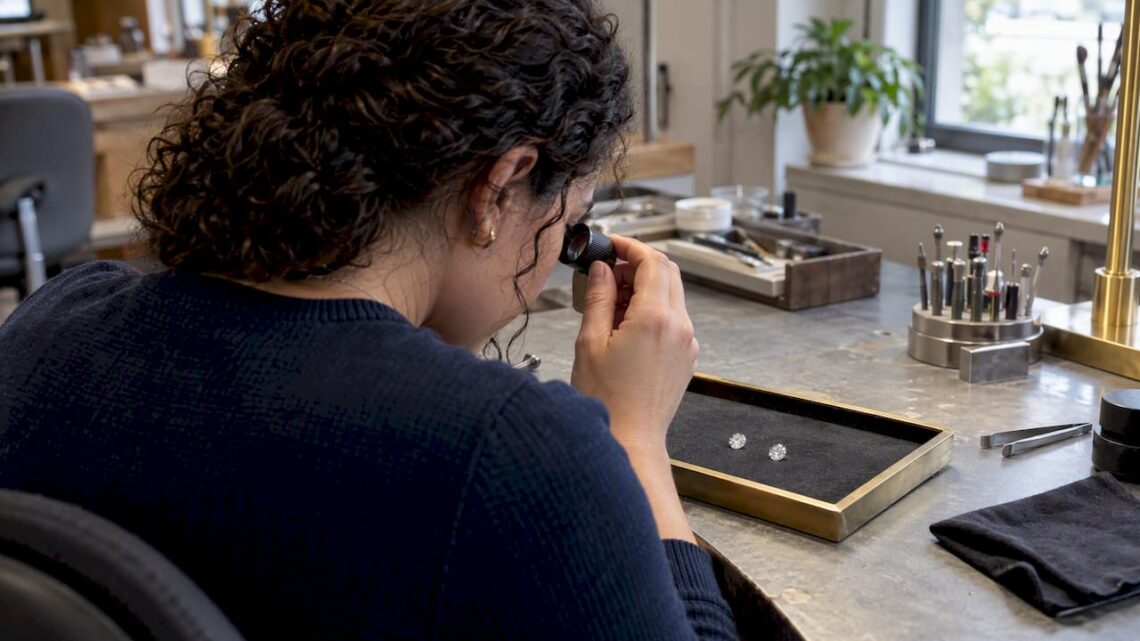
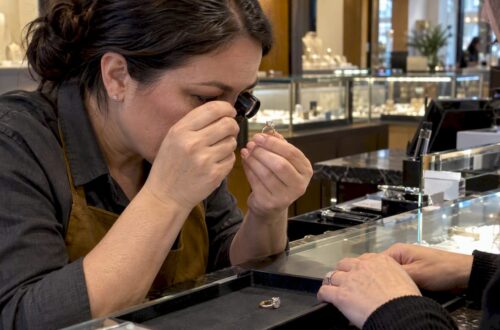
Here is the part most shoppers miss: the difference between VS1 and VS2 is about the grader’s effort, not about what you see on your hand. GIA grades clarity under 10× magnification. A skilled grader looks at the stone, notes every inclusion, and judges how hard each one is to find.
- VS1: inclusions range from difficult to somewhat easy for a grader to see at 10×. GIA’s wording for VS1 is “difficult.”
- VS2: inclusions are “somewhat easy” for a grader to see at 10×.
- Both grades: GIA says that in almost all cases, the inclusions are not visible to the naked eye.
In almost all cases, inclusions in both VS1 and VS2 diamonds are invisible to the naked eye. The grade tells you how a grader sees the stone under a microscope, not how it looks across a dinner table.
“Eye-clean” is a term shoppers use, not one GIA assigns. As GIA’s own site explains, grades come from 10× magnification, so a VS2 is technically no more included than a VS1. It simply took the grader a little less effort to find its inclusions. In a finished ring, that visual difference is negligible for most people.
That is why we tell customers not to treat the grade as a verdict on beauty. Treat it as a starting point, then confirm what you will actually see. Our guide to eye clean diamonds covers how to do that in more detail.
Which inclusions and locations matter most when comparing VS1 and VS2?
Two diamonds with the same grade can look very different, because the type, size, and position of an inclusion decide whether you will ever notice it. Learning to read these details puts you ahead of most buyers.
The inclusions you will most often see in VS stones include:
- Crystals: small mineral deposits trapped inside, which can look like tiny white or dark specks.
- Clouds: groups of tiny pinpoints that can add a slight haze if they are large or concentrated.
- Feathers: small internal fractures that can look like a wispy line, and may catch light at certain angles.
- Needles: thin, rod-like inclusions that are usually hard to notice face-up.
- Pinpoints: tiny dots that rarely affect appearance on their own.
Location often matters more than the grade itself. Inclusions near the table or in open facets are more likely to show, while those near the girdle or tucked behind facet junctions tend to be masked, and a setting’s prongs can hide others. A VS2 with a small crystal near the edge can look cleaner than a VS1 with an inclusion sitting under the table.
Your GIA report helps here. A plotting diagram maps the diamond’s clarity characteristics and supports the grade. The report lists up to four significant characteristics, and the listing order points you to the grade-setting inclusions. Find those first, then look at where they sit on the outline of the stone.
- Look at the symbols on the diagram to see which inclusion types are present.
- Check whether the main inclusion sits in the center (the table) or near the edge.
- Read the plotting key so you know what each symbol means.
Pro Tip: Ask for a face-up photo and a 360° video, then view them at normal distance on a phone or laptop. If you cannot spot an inclusion without zooming in, you probably will not spot it on your hand either.
How does diamond shape change whether VS1 or VS2 is the better choice?
Shape and cut style change everything about how inclusions show. GIA’s shape guidance is clear on this point, and it is the most useful rule you can carry into a purchase.
Brilliant cuts, such as round, pear, marquise, and oval, have busy facet patterns that scatter light and hide small inclusions well. That is why a VS2 round diamond is so often a smart pick: the cut does a lot of the hiding for you.
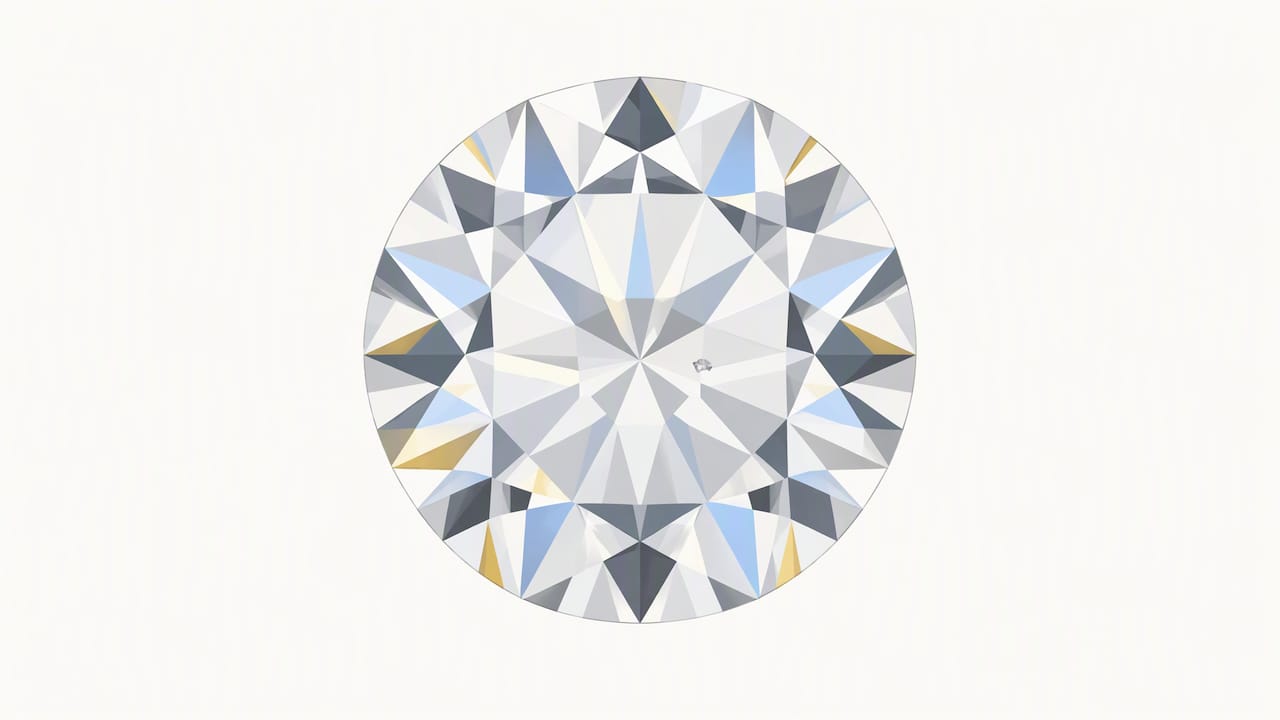
Step cuts, such as emerald and Asscher, work differently. Their large, open facets act like windows into the stone, so internal characteristics are easier to see. GIA suggests choosing at least VS2 for emerald cuts, and higher clarity is often wise for larger step-cut stones.
A simple way to apply this:
- Round, oval, pear, marquise: VS2 is usually a comfortable choice, especially when the report and video show no central inclusion.
- Emerald and Asscher, smaller sizes: VS2 can work, but inspect the video closely and favor VS1 if you want extra margin.
- Emerald and Asscher, over 2 carats: insiders advise higher clarity grades to keep an eye-clean look, so VS1 or better is the safer path.
- Any shape with a central inclusion: consider moving to another stone or a higher grade, whatever the shape.
Cut quality matters here too. A well-cut stone returns more light and hides more, which is why our diamond cut comparison guide is worth a read before you settle on a clarity grade.
How much more does VS1 cost than VS2, and where should your budget go?
Clarity is one of the four Cs, and stepping up a grade usually costs more. GIA commentary and industry pricing note that price differences between clarity grades can be significant, and retailer pricing sheets show material premiums when you move up. Because the visible gain from VS2 to VS1 is small for most people, that premium often buys the least visible improvement in the whole stone.
That is why many shoppers pick VS2 and send the savings somewhere they can actually see it. Experts frequently note that cut quality and carat weight have a more direct impact on brilliance and appearance than clarity does.
Stepping up a clarity grade often carries a material premium, and many shoppers choose VS2 to reallocate that money to cut or carat. The sparkle you notice most comes from the cut, not from the clarity line on the report.
A few ways to spend the savings:
- Move to a stronger cut grade for more fire and brilliance.
- Step up in carat weight for a larger look on the hand.
- Improve color if you plan to wear a white metal setting.
There are good reasons to pay the clarity premium, too:
- You are a perfectionist and want the cleanest technical grade.
- You are choosing an emerald or Asscher cut, where inclusions show more.
- You care about resale or collector appeal.
Our diamond quality 4Cs breakdown can help you balance all four Cs against your budget, and the color and clarity guide shows how those two interact.
What checklist should you use on a real diamond?
Once you have a specific stone in front of you, run it through the same steps every time. This keeps you focused on what you will see, not on a number on paper.
- Confirm the lab report. Make sure the diamond comes with an independent GIA report, and check that the report number matches the stone.
- Read the plotting diagram. Find the grade-setting inclusions and note where they sit.
- Watch a 360° video. Look for anything visible at normal viewing distance, not under zoom. If you are shopping in person, ask to inspect the stone yourself.
- Consider the setting. Prongs, halos, and bezels can hide small inclusions near the edges.
- Compare the premium to the visual gain. If VS1 costs noticeably more and looks the same, VS2 is the better value.
Some rules of thumb we share with customers: prefer VS2 for round and other brilliant cuts when the video looks clean, and consider VS1 for step cuts, for larger stones, or when you simply want the extra peace of mind.
Pro Tip: Halo and bezel settings, along with the right metal, can help mask or minimize minor inclusions. A halo draws the eye outward to the sparkle around the stone, away from tiny details inside it.
What should you ask a seller for before you buy?
Turn the checklist into requests. A seller who is confident in a diamond will gladly provide all of the following.
- An independent GIA report. Confirm the plot and any comments on the report. Check the clarity grade, the carat weight, and the listed characteristics against what you see in the video.
- A certificate you can verify. If you want a quick procedural walk-through, this partner guide covers what to verify on a certificate.
- High-resolution 360° video and face-up photos. Gemologists recommend verifying eye-clean status this way, because GIA grades under 10× magnification and does not grade for naked-eye visibility. View the video at roughly 10–12 inches from your screen and rotate the stone fully.
- Clear return and shipping terms. Confirm the return window and whether shipping is insured.
- Upgrade or warranty options. Ask whether the seller offers lifetime upgrades or similar protections.
Different labs also grade differently. Our diamond certification guide compares GIA, AGS, and IGI so you know what you are reading.
Our perspective on helping you choose a clarity grade
We are a family-owned jeweler, and we manufacture in-house, which means we can show you the plotting diagram, share video of a specific stone, and talk through setting options without a middleman in the way. When you ask us about VS1 and VS2, we usually start with your ring: the shape, the size, the setting, and the budget. Then we look at the video together. Often that conversation ends with a VS2 and a better cut, and sometimes it ends with a VS1 for an emerald cut where the extra margin makes sense. Either way, ask us about our shipping, return, and upgrade policies.
See certified diamonds and start your design with us
Browse our certified loose diamonds to compare VS1 and VS2 stones side by side. Pick one you like, then ask us for the GIA report and a 360° video of that exact diamond. If you are ready to build a ring around it, our engagement ring design guide walks you through the steps, and you can begin designing your own diamond ring right away. Our team is glad to talk through clarity, cut, and setting with you.

FAQ
Are VS2 diamonds good?
Yes, VS2 diamonds are a strong choice for most buyers. GIA says that in almost all cases, inclusions in VS grades are not visible to the naked eye. That makes VS2 an efficient value, especially in brilliant cuts like round.
What does VS1 diamond grading mean?
VS1 stands for “Very Slightly Included 1.” It means a skilled grader finds the inclusions difficult to see at 10× magnification. GIA places VS1 and VS2 in the same category, and both are usually eye-clean.
Is VS1 visibly better than VS2?
Usually not. The difference comes from how much effort a grader needs to find inclusions under magnification, and GIA notes that eye-clean is not an official grading term. For most people, the two look the same in a finished ring.
When should I choose VS1 instead of VS2?
Choose VS1 for step cuts like emerald and Asscher, for larger stones, or when you want extra peace of mind. GIA guidance suggests at least VS2 for emerald cuts, and higher clarity often makes sense in big step-cut stones.
Recommended
- G vs H Diamonds: Save $2,500–$3,000 at 2 Carats
- Diamond Color & Clarity Explained: What to Buy
- Cut First, Then Color vs Clarity for Engagement Rings
- Diamond Quality 4Cs Breakdown: Your Buying Guide

Deep Mehta is the Co-Owner of USA Jewels, a family-owned jewelry business she has led since 2013 in Deerfield Beach, Florida. With over 13 years of hands-on experience in fine jewelry retail, manufacturing, and diamond importing, Deep specializes in engagement rings, wedding bands, and custom jewelry design. She also co-manages Kaash Group Talent Acquisition. Deep is a University of Florida graduate and oversees every aspect of USA Jewels’ operations, from product development to marketing.
Fine Jewelry Collection

You May Also Like
Platinum vs Gold Engagement Rings: Pick by Priority
Double the Original Price? Estimate Your Diamond Trade In Credit