Avoid Overpaying: How HPHT vs CVD Diamonds Change What the 4Cs Mean
Both HPHT and CVD produce real, chemically identical diamonds, certified as such by GIA and IGI. Neither method is objectively “better.” The 4Cs and a proper lab report matter more than growth method for value or beauty. As a rule of thumb, CVD tends to win out for large, high-purity solitaires, while HPHT is the workhorse for melee and small-stone production.
TL;DR:
- CVD diamonds are typically more suitable for large, high-purity solitaire pieces, while HPHT is more efficient for producing small melee stones due to faster growth cycles.
- Both growth methods can leave microscopic features visible only under specialized equipment, making lab reports essential for verifying the diamond’s origin.
- The price and resale value depend more on the 4Cs, with growth method influencing sourcing consistency and matching in jewelry sets.
- No growth method is universally ethical, as their environmental impacts vary based on energy sourcing and manufacturing practices, not the technology itself.
- Future advances will likely see continued convergence in size and speed, with both methods maintaining distinct roles in diamond production.
Table of Contents
- How Are HPHT Diamonds Made Compared to CVD?
- What Do HPHT and CVD Diamonds Look Like Under Inspection?
- Which Method Suits Which Piece of Jewelry Better?
- Does Growth Method Affect Price and Resale Value?
- How Should You Choose Between HPHT and CVD?
- Do Post-Growth Treatments Change a Diamond’s Value?
- Are There Ethical Differences Between HPHT and CVD Diamonds?
- Where Is HPHT and CVD Diamond Technology Headed?
- How Usa Jewels Guides Buyers Through This Decision
- Ready to Choose Your Diamond?
- Sources
- FAQ
How Are HPHT Diamonds Made Compared to CVD?
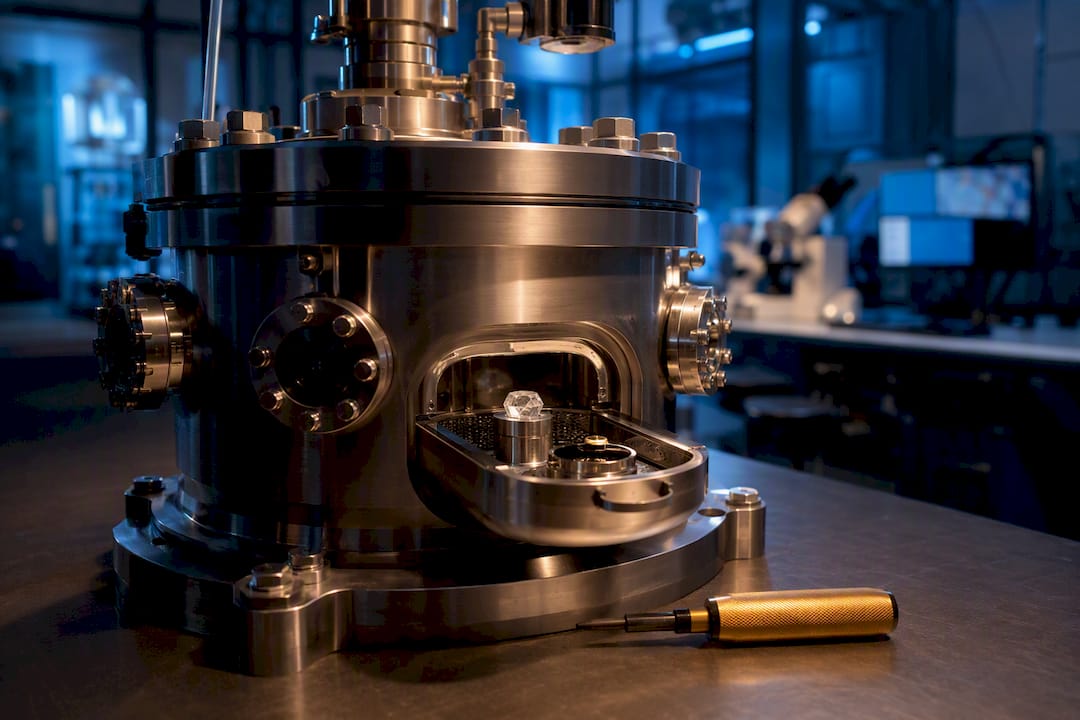
HPHT stands for “high pressure, high temperature,” and it recreates the conditions found deep in the earth where natural diamonds form. A small diamond seed sits in a chamber alongside a carbon source and a molten metal catalyst, then gets squeezed and heated to extremely high pressure and temperature conditions, approximately 1.5 million pounds per square inch and temperatures between 1,400 and 1,600 degrees Celsius [GIA]. Carbon atoms bond to the seed and build outward, often finishing a rough stone in days rather than weeks, according to GIA’s description of HPHT and CVD growth processes.
CVD, or chemical vapor deposition, works differently. A thin diamond seed plate sits inside a vacuum chamber filled with carbon-rich gas, which is ionized into plasma. Carbon atoms rain down and settle onto the seed layer by layer, growing the crystal from the bottom up over days to weeks depending on the target size, per GIA’s research on CVD-grown diamond properties.
The practical differences that follow from these two processes:
- HPHT’s metal catalyst can leave trace metallic inclusions, since the growing crystal sits in molten metal.
- CVD’s plasma environment tends to produce cleaner, high-purity Type IIa material because there’s no metal bath involved.
- Both methods sometimes need post-growth annealing (a controlled reheating step) to correct color before a stone reaches a jeweler.
- Equipment footprint differs too: HPHT presses are compact and fast-cycling, while CVD reactors take up more room and run longer per batch.
What Do HPHT and CVD Diamonds Look Like Under Inspection?
Most buyers will never see a meaningful visual difference between these two lab-created diamond types at the grades sold in engagement rings and fine jewelry. The differences that do exist show up mainly to trained gemologists using specialized equipment, not to the naked eye across a counter.
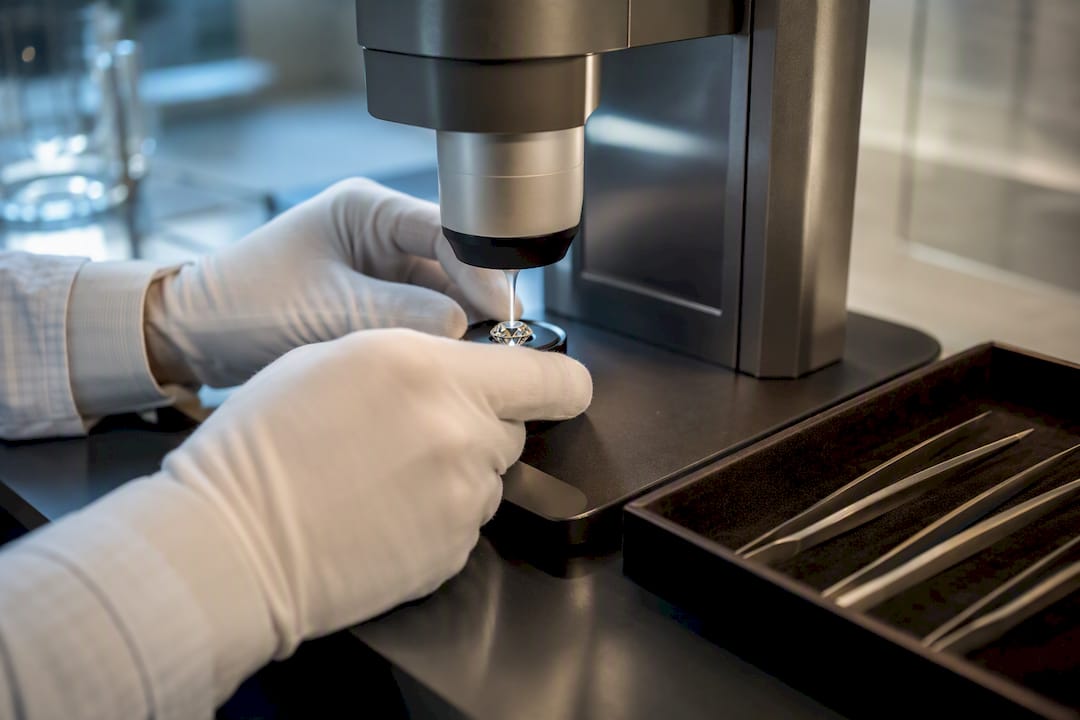
CVD diamonds skew toward Type IIa purity, meaning they contain little to no measurable nitrogen, which produces even, consistent coloration. HPHT diamonds sometimes carry nitrogen-related tints or a subtle blue nuance depending on the exact catalyst chemistry used, a pattern GIA’s material research on CVD properties confirms is tied to the growth environment rather than any flaw.
Inclusion types tend to split along predictable lines:
- CVD stones may show graphite pinpoints or faint growth striations, sometimes called graining, from the layer-by-layer build.
- HPHT stones can carry tiny metallic flux inclusions left behind by the catalyst, occasionally paired with geometric color zoning.
- Both can display strain patterns visible only under polarized light or specialist screening.
The reality buyers need to know: gemological features like strain patterns and metallic inclusions are typically invisible without lab tools like DiamondView or spectroscopy. That’s exactly why a graded report, not a jeweler’s loupe, is the reliable way to confirm growth method.
Which Method Suits Which Piece of Jewelry Better?
Durability is a non-issue in this debate. Both HPHT and CVD diamonds score a full 10 on the Mohs hardness scale, identical to mined diamonds, so day-to-day wear, scratch resistance, and longevity are the same regardless of how the stone grew.
Where growth method actually matters is production efficiency and consistency:
- CVD’s tendency toward Type IIa purity and reproducible clarity makes it easier for jewelers to match multiple center stones or build matched melee sets, which is valuable for large solitaires or side-by-side pieces.
- HPHT’s faster growth cycle makes it economically efficient for producing the smaller stones used in pavé bands, halo settings, and tennis bracelets.
- A rare edge case worth knowing: some HPHT diamonds with residual metallic flux can show a faint reaction near a strong magnet, a quirk almost never seen in CVD material or in mined diamonds.
Pro Tip: If you’re building a multi-stone piece like a halo ring or eternity band, ask your jeweler which growth method supplied the melee. Consistent sourcing matters more for color matching than which method made any single stone.
Does Growth Method Affect Price and Resale Value?
The 4Cs, cut, color, clarity, and carat, drive price far more than whether a diamond grew under pressure or in a vapor chamber. Growth method is a secondary factor that mostly affects how easily a jeweler can source matching stones, not the sticker price of an individual gem.
Wholesale lab-grown diamond prices have fallen sharply as production has scaled up industry-wide, a trend ProDiam’s market comparison of natural, lab-grown, and moissanite diamonds documents as production capacity has expanded globally. That downward pressure has made lab-grown stones dramatically more accessible than they were a decade ago.
What this means for resale: the secondary market for lab-grown diamonds remains far thinner than for mined stones, so buyers should treat these purchases primarily as jewelry to enjoy rather than an investment to flip later. If sustainability factors into your decision, it’s fair to ask a seller about their energy sourcing and production transparency. Our lab-grown versus natural diamonds guide breaks down these value trade-offs in more detail.
How Should You Choose Between HPHT and CVD?
Growth method should be your second question, not your first. Start with the certificate, then work through the details that actually affect how the stone looks and wears.
- Check the lab report first. A GIA or IGI report should list the report number, the full 4Cs breakdown, and explicit disclosure of growth method, whether HPHT or CVD.
- Ask for magnified images. Any reputable seller can show you the stone under magnification so you can see clarity characteristics before you buy.
- Ask about post-growth treatments. Confirm whether the stone was annealed or otherwise treated, and make sure that treatment appears on the report itself.
- For matched sets, ask about batch sourcing. CVD stones are generally easier to match across multiple pieces because of their purity consistency; for melee, ask how the seller maintains consistent color and cut across the batch.
- Ask trust-building questions. Return policy, any buyback or upgrade program, and where the stones were actually grown are all fair to ask before you commit.
Pro Tip: Treat “no lab report” as an automatic red flag, no exceptions. Vague answers about treatments or unverifiable sustainability claims should send you looking elsewhere. You can review the full 4Cs breakdown before you start comparing listings.
— Joseph
Do Post-Growth Treatments Change a Diamond’s Value?
Many lab-grown diamonds, both HPHT and CVD, go through a post-growth annealing step, a controlled reheating process used to adjust or stabilize color before the stone ever reaches a cutter. This is standard practice, not a defect, and it’s a normal part of how both growth methods reach market-ready color grades.
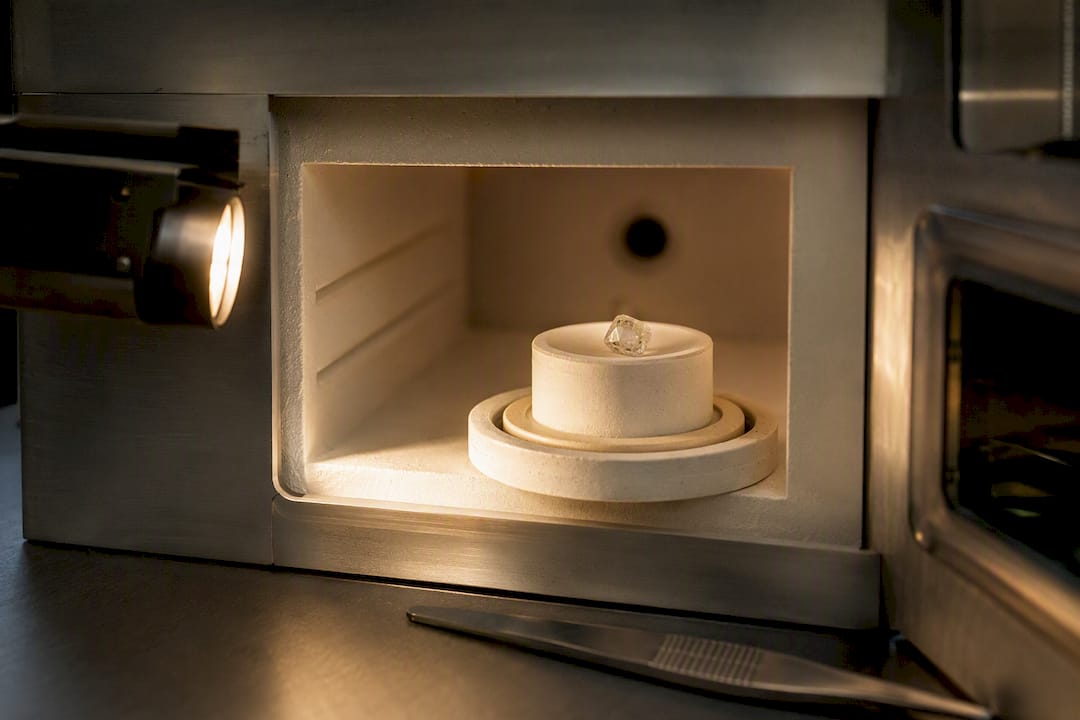
The value question isn’t whether a treatment happened. It’s whether the treatment is disclosed. A stone that’s been annealed and properly documented on its GIA or IGI report is priced and graded exactly like any other stone at its color and clarity grade. Undisclosed treatment is a different story entirely; it undermines trust in the report and can leave a buyer overpaying for a grade the stone doesn’t consistently hold.
Some treatments do carry longer-term appearance considerations. Certain color adjustments in both HPHT and CVD stones are considered stable under normal wear, but it’s still worth asking directly whether a treatment is permanent or whether specific care steps (avoiding extreme heat, for instance) help preserve the color over years of daily wear. A seller who can answer that question specifically, rather than deflecting, is one you can trust with the rest of the transaction. This is also where a diamond evaluation resource can help you understand how grading professionals assess treated versus untreated stones side by side.
Are There Ethical Differences Between HPHT and CVD Diamonds?
Both methods sidestep the mining-related environmental disruption and supply-chain opacity associated with some natural diamond sourcing, since neither requires digging into the earth. That’s the shared ethical selling point of lab-grown diamonds generally, and it applies to HPHT and CVD equally.
Where the two methods start to diverge is energy use. HPHT presses run at extreme pressure and require substantial electricity to maintain those conditions, though cycles are relatively short. CVD reactors run at lower pressure but for longer stretches, since vapor deposition is a slower, more gradual process. Total energy draw depends heavily on the specific facility, its equipment efficiency, and its power source, so broad claims that one method is “greener” than the other don’t hold up without facility-specific data.
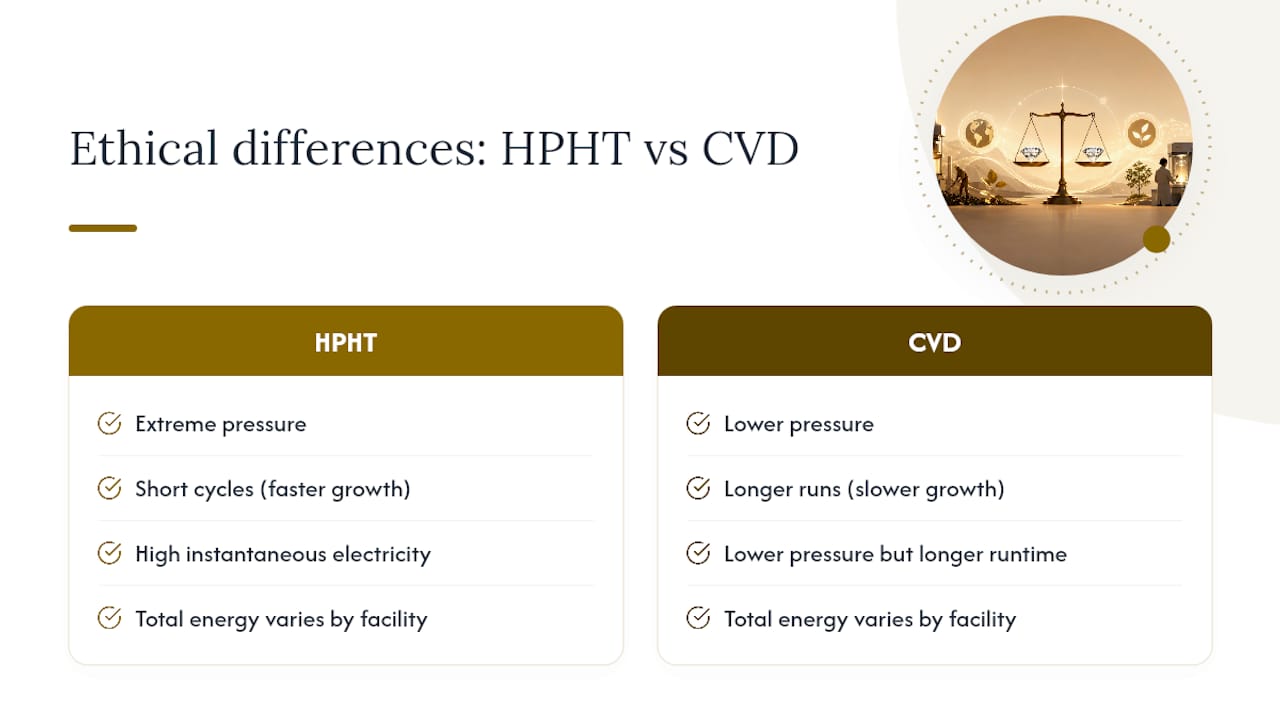
If sustainability genuinely matters to your purchase, the honest move is to ask sellers directly about their energy sourcing and production transparency rather than accepting a marketing claim at face value. A seller willing to discuss their supply chain specifically, rather than offering a vague “eco-friendly” label, is giving you something you can actually verify. Neither growth method has a universal ethical edge over the other. The differences that exist live in the specifics of each producer’s operation, not in the underlying technology itself.
Where Is HPHT and CVD Diamond Technology Headed?
Production efficiency has been the biggest storyline in both methods over the past several years. CVD reactors have gotten better at growing larger rough in a single run, which has narrowed what used to be a meaningful size gap between the two methods. HPHT presses, meanwhile, have gotten faster and more precise at controlling catalyst chemistry, which helps reduce the nitrogen-related tinting that once made HPHT stones easier to spot.
Detection technology has kept pace on the laboratory side. Instruments like DiamondView and advanced spectroscopy have become more sensitive at reading the strain patterns and growth signatures unique to each method, which is exactly why growth-method disclosure on lab reports has become standard practice rather than an optional add-on.
Looking ahead, expect continued convergence: CVD chasing larger, faster-grown solitaires, and HPHT continuing to dominate high-volume melee production where speed and cost efficiency matter most. Neither method looks likely to fully replace the other. They’re settling into complementary roles based on what each does best, and that specialization is likely to deepen rather than fade as production scales further.
How Usa Jewels Guides Buyers Through This Decision
Our family has built pieces in-house since 1999, and we walk every customer through certified reports and the 4Cs before growth method ever enters the conversation. Whether you want a CVD solitaire or HPHT melee, we help you request the specific stone type you want, back it with a graded report, and back your purchase with our lifetime diamond upgrade program.
Ready to Choose Your Diamond?
Reading about HPHT and CVD is one thing. Holding a certified stone next to your hand is another. You have an option beyond generic online marketplaces or traditional retail markups: a team that builds your piece and lets you specify exactly which growth method, clarity grade, and metal you want.

When you design your own piece with us, you can request a specific growth method, whether CVD for a large center stone or HPHT for consistent melee, and we’ll make sure the certificate reflects it before your order ships. Every stone comes with proper lab documentation, so you know exactly what you’re buying. If colored stones catch your eye instead, our blue diamond jewelry and black diamond jewelry collections apply the same certification standards.
Browse our fine diamond jewelry collection today, or reach out to start designing a custom piece with the exact growth method, cut, and clarity you have in mind.
Sources
For deeper technical detail, GIA’s pages on HPHT and CVD growth processes and laboratory-grown diamond grading explain exactly how labs disclose growth method and treatments on certificates.
FAQ
Is CVD Better Than HPHT?
Neither is objectively better. CVD tends to suit large, high-purity solitaires, while HPHT is efficient for melee and small-stone production; the 4Cs and the lab report matter more than growth method.
What Are the Disadvantages of CVD Diamonds?
CVD growth takes longer than HPHT, often days to weeks versus days, and its reactors require more space, which can make CVD stones costlier to produce for certain sizes despite falling wholesale prices industrywide.
Are HPHT Diamonds Worth Anything?
Yes. HPHT diamonds are real, certified diamonds valued primarily by the 4Cs, just like CVD or mined stones; growth method itself has only a secondary effect on price.
Will a CVD Diamond Pass a Diamond Tester?
Yes. Standard thermal diamond testers measure conductivity and carbon structure, and CVD diamonds pass because they’re chemically identical to mined diamonds. Only specialized lab equipment like DiamondView can distinguish growth origin.
Recommended
- Diamond Quality 4Cs Breakdown: Your Buying Guide
- Diamond Buying Guide: The 4 C’s Explained
- Diamond Pricing Guide: What Diamonds Cost
- Diamond Color & Clarity Explained: What to Buy

Deep Mehta is the Co-Owner of USA Jewels, a family-owned jewelry business she has led since 2013 in Deerfield Beach, Florida. With over 13 years of hands-on experience in fine jewelry retail, manufacturing, and diamond importing, Deep specializes in engagement rings, wedding bands, and custom jewelry design. She also co-manages Kaash Group Talent Acquisition. Deep is a University of Florida graduate and oversees every aspect of USA Jewels’ operations, from product development to marketing.
Fine Jewelry Collection


You May Also Like

Guide to Popular Wedding Ring Styles

How to Choose a Certified Ethical Diamond Jeweler