Trellis vs Basket Setting: How to Choose Your Ring
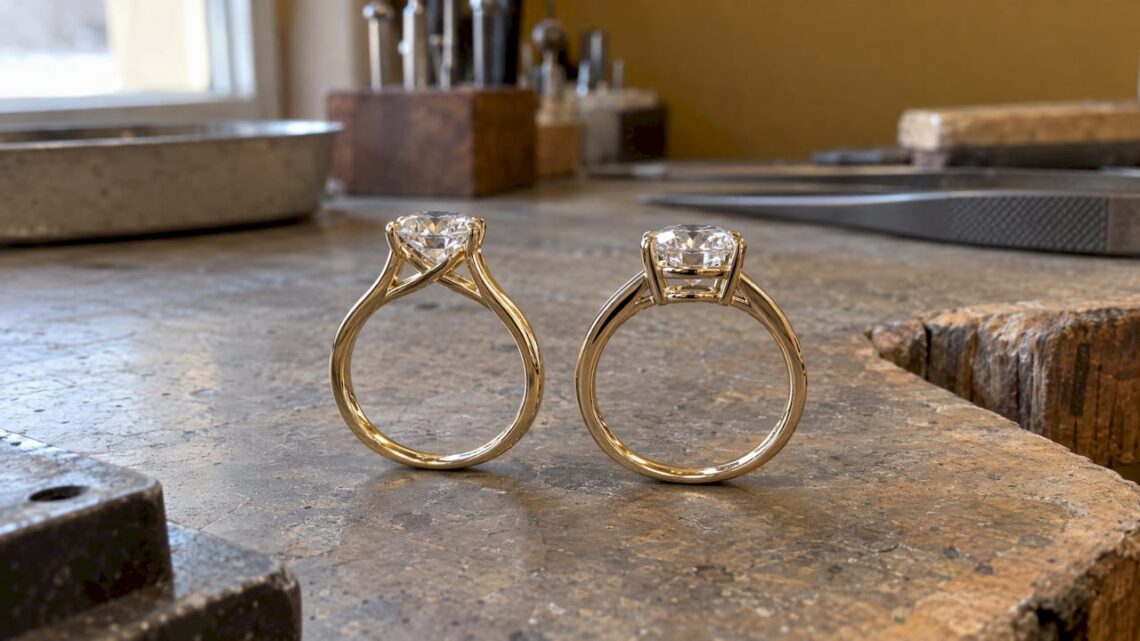
A trellis setting holds the diamond with prongs that cross over each other, so you see woven metal from the side. A basket setting joins the prongs with a horizontal band of metal beneath the stone, so the diamond sits in a cradle. Choose a trellis if you love the woven, sculptural look. Choose a basket if you want a snug, protective hold for everyday wear. Both are classic, and both can be made beautifully.
We are a family jewelry maker, and we have been building rings in-house since 1999. Below is how we explain the two styles to couples who sit down with us, in plain words and with the practical details that matter after the proposal.
TL;DR
- Trellis: prongs interweave or cross, creating a lattice you can admire from the side. It is lower and more open, and often paired with a solitaire diamond.
- Basket: a horizontal bar of metal connects the prongs under the stone, forming a cradle. It reads as more enclosed and secure.
- Wedding bands: both styles can leave a gap under a straight band. Plan the band at the same time as the ring, or ask for a shaped or contoured band.
- Care: have the prongs checked on a regular schedule, whichever style you choose.
- Not sure? Design the ring yourself and see both options with your own diamond shape and metal.
Table of Contents
- What a trellis setting is
- What a basket setting is
- Trellis vs basket setting at a glance
- How they look: profile, height and sparkle
- Security and everyday wear
- Wedding bands: will a straight band sit flush?
- Which setting suits which person
- Cleaning and caring for a trellis or basket ring
- A trellis or basket ring at every budget
- Design it your way with us
- Our point of view
- FAQ
- Sources
What a trellis setting is
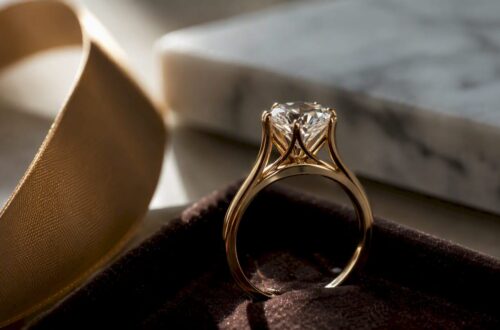
The word “trellis” describes a garden lattice, and the setting borrows the picture. Four prongs rise from the band, cross over one another, and grasp the edge of the diamond. Some versions use six or eight prongs, and some have a U-shaped look where the stone sits in the middle of the weave.
The effect is most visible from the side. Where a classic four-prong setting shows four straight posts, a trellis shows an X or a woven pattern under the stone. Looking down at the ring, you see a clean solitaire. Looking across the table, you see detail.
Trellis settings work with most diamond shapes. Rounds, ovals, pears and cushions all sit comfortably in the weave. If you are still deciding on a shape, our diamond shapes guide shows every cut side by side.
What a basket setting is
A basket setting looks like what its name says. The prongs rise from the band, and a horizontal ring or bar of metal runs around them beneath the diamond. The stone sits above or inside that cradle, a little like an egg in a cup.
That bar can be plain polished metal, or it can carry small accent diamonds. If you like extra sparkle at the side of the ring, a pavé bar is a lovely way to add it. Our guide to pavé versus micro pavé explains how those small stones are set.
Because the stone sits snugly within the cradle, baskets tend to be a popular pick for people who work with their hands, travel, or simply want the ring to feel settled and sure.
Trellis vs basket setting at a glance
| Feature | Trellis setting | Basket setting |
|---|---|---|
| How the diamond is held | Prongs cross over or weave together | Prongs joined by a horizontal bar under the stone |
| Side view | Lattice or X pattern | A cradle or cup shape |
| Overall feel | Open, sculptural, delicate | Enclosed, snug, protective |
| Sparkle extras | Pavé can be added along the band | Pavé can be added on the basket bar |
| Light under the stone | More open view of the lower part of the diamond | Bar can cover part of the lower diamond |
| Everyday wear | Comfortable, with prong care | Comfortable, with a secure-feeling hold |
| Wedding band fit | Often needs a contoured or notched band | Often leaves a small gap under a straight band |
The differences are real but small. Both are prong-based, and both can hold a diamond for decades when they are made well and looked after.
How they look: profile, height and sparkle
Profile
A trellis tends to sit lower and show its craftsmanship in the weave. A basket gives a cleaner, rounder line from the side, with the bar acting as a visual base for the diamond.
Height depends on how the ring is made. A diamond can sit high for more presence or low for a snag-free profile. Either setting can be built either way. When you design your own diamond ring, you decide how the setting is shaped around the stone you picked.
Sparkle
Diamonds sparkle when light enters through the top and returns to your eye. Any metal beneath the stone can block some of the light that comes in from the side. A basket bar sits closer to the lower part of the diamond, so it covers more of that area than a trellis does. A trellis leaves more openings between its prongs.
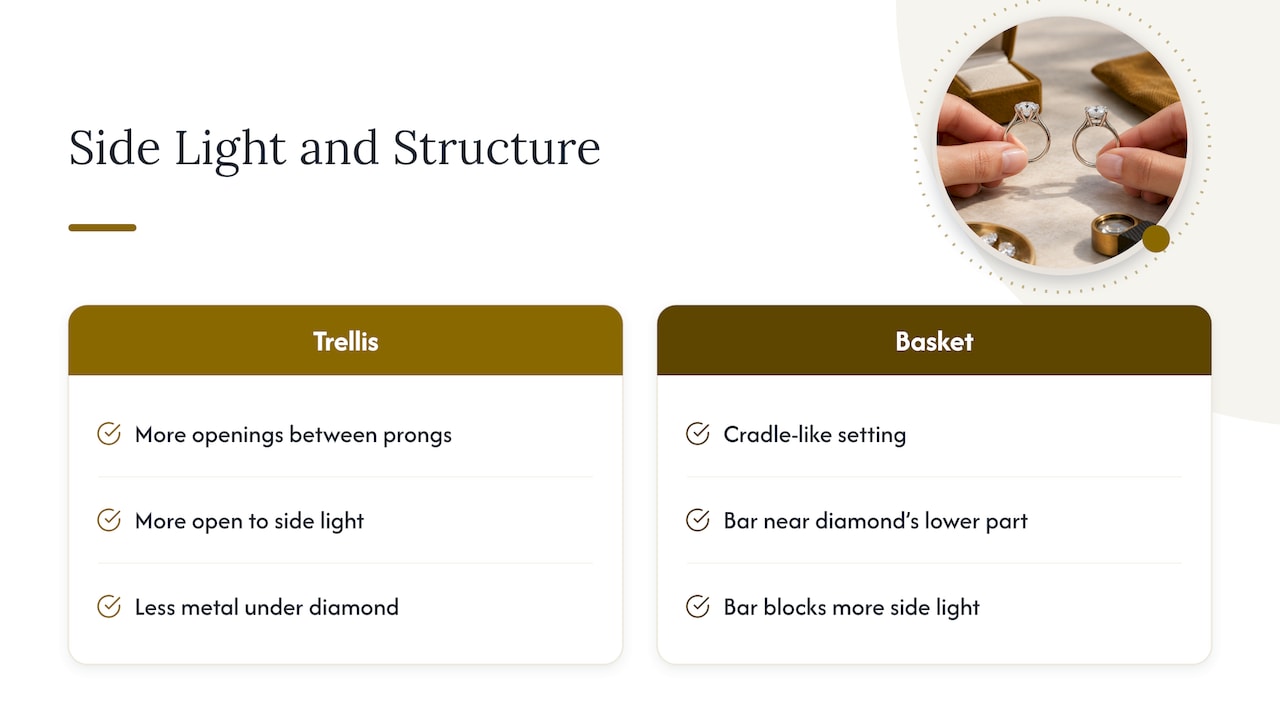
In practice, a well-cut diamond looks lively in either setting. A pavé basket can even add its own glimmer. If maximum light is your top priority, a trellis is the more open design. If you like the cradle look and a bit of added shine on the side, a basket is lovely.
Metal choice
Metal changes how both settings look. White gold and platinum give a cool, bright lines. Yellow and rose gold give a warmer feel and make a woven trellis look more vintage. Browse our platinum jewelry and gold jewelry collection to see how each metal changes the character of a ring. Our pieces are solid, not hollow or plated.
Security and everyday wear
Both settings hold the diamond with prongs, so the same basic rules apply. Prongs are the small metal claws that grip the stone, and they matter more than anything else about how safely a diamond is held.
Two things keep a prong setting safe:
- Well-made prongs. The jewelers’ training body GIA gives bench guidance on prong height for round brilliant stones in traditional angled prongs: finished prong height should be 75 to 85 percent of the table height. That is the kind of detail a skilled bench jeweler builds in without you ever noticing.
- Regular checks. Prongs can be damaged or loosen, so they should be checked periodically and tightened or repaired if needed.
A basket’s bar gives the lower part of the stone a surrounding frame, which many wearers find reassuring. A trellis gets its strength from the crossing prongs, which support each other and spread the grip around the stone. For a very active lifestyle, either can be made sturdy with six prongs instead of four.
If you want a closer look at how prong count and shape affect wear, see our engagement ring prong style guide.
Wedding bands: will a straight band sit flush?
This is the question we hear most from couples after they choose a setting, and it is worth settling before you buy.
A straight, plain band sits flush against a ring only when the engagement ring’s base is flat. Trellis and basket settings both have metal that rises or bulges beneath the diamond, which often leaves a small gap between the two rings. Neither one prevents a perfect fit, but each needs a plan.
Here are your main options:
- A contoured or curved band. It bends around the base of the setting and sits close to the engagement ring.
- A notched band. A small cut-out lets the engagement ring’s basket or crossing prongs nest into the band.
- A band built together with the ring. If you design both at the same time, the two can be shaped to match from the start.
- A little space, on purpose. Some couples like the small gap, or wear a stacking band with plain bands on either side of the engagement ring.
- A set of rings. Some couples wear the wedding band on the other side of the engagement ring at times, or choose a different style altogether.
The best step is to try the band shape with the ring before you commit. Our wedding jewelry collection is a good place to start, and our team can help you with matching.
Also think about thickness. A thin pavé band works well beside a delicate trellis, and a plain, slightly wider band can balance a basket with a pavé bar.
Which setting suits which person
There is no wrong answer here. These are the questions we ask.
Do you want to notice the details from the side? Choose a trellis. The weave is what makes it special.
Do you want a snug, tidy cradle? Choose a basket. It looks complete from every angle.
Do you want a little extra glitter? A pavé basket or a trellis with pavé down the band both do this well.
Do you work with your hands or play sports? Ask for a lower profile and consider six prongs. Either style can be made that way.
Do you plan to wear a wedding band right away? Decide on the band now. Both settings need a thoughtful pairing.
Are you buying for someone else? If you do not know their taste, a classic style with clean lines is the safe path. Our engagement ring settings guide walks through the other popular options, such as solitaire and halo. For a hybrid look, the basket and cathedral comparison shows how the two ideas can be combined.
Cleaning and caring for a trellis or basket ring
The woven prongs of a trellis and the bar of a basket both catch soap, lotion and everyday dust. That film dulls the shine, so a gentle cleaning goes a long way.
- Soak the ring in warm water with a few drops of mild dish soap.
- Brush softly with a soft toothbrush, getting under the diamond and between the crossing prongs or around the basket bar.
- Rinse well and pat dry with a lint-free cloth.
Be careful with machines. GIA notes that ultrasonic and steam cleaning affect stones differently, depending on the stone and the procedure. For a ring with a gemstone other than a diamond, or one with pavé, ask your jeweler before using either. Our guide to cleaning jewelry at home covers safe methods for every metal.
Schedule a prong check with a jeweler about once a year, and sooner if you feel the stone move, hear a faint rattle, or notice a prong catching on fabric.
A trellis or basket ring at every budget
The setting style does not decide the price. The diamond, the metal and the size do. Our engagement rings start from $346, and our design-your-own diamond ring starts from $399. If you want to pick the stone separately, certified loose diamonds start from $142. Those are starting prices, and the final cost depends on the choices you make.
Because we manufacture in-house and sell direct, there are no middlemen adding to the price. That is how we can offer solid gold and platinum rings at prices that feel fair.
When you choose the diamond, look for a grading report from an independent lab. Our diamond certification guide compares GIA, AGS and IGI. If lab-grown is on your list, we explain the process in our lab-created diamonds guide.
Design it your way with us
If you cannot decide between a trellis and a basket, build the ring and see. With our design tool you choose the diamond shape, the quality and the metal, and we make the ring in our own workshop. Our diamonds are certified and ethically sourced, we offer free insured shipping and a 30-day money-back guarantee, and our lifetime diamond upgrade program lets your ring grow with you.
Start with our design your own ring tool, or read our step-by-step design guide first. Prefer to browse? See our engagement ring collection.
Our point of view
We have seen thousands of couples choose a setting, and the happiest ones rarely chose the “best” one. They chose the one that felt like them.
Here is what we tell families who visit. A trellis is for the person who notices small, beautiful details. A basket is for the person who wants a ring that feels settled and complete. Both are made the same way at our bench: solid metal, careful prong work, and a diamond that is hand-selected and certified.
What we care about most is what happens after the proposal. Will the wedding band fit? Will the ring be comfortable at work? Will it still look right in twenty years? That is why we make rings to order and why we offer lifetime diamond upgrades. A ring should be able to change with your life.
If you are unsure, bring us your ideas and we will help you sort them out. That is how a family business works.
Joseph
FAQ
Is a trellis or basket setting more secure?
Both hold the diamond with prongs, and both are secure when made well and checked regularly. A basket adds a bar that surrounds the lower part of the stone, which many people find reassuring. A trellis gets its strength from prongs that cross and support each other. For extra peace of mind, ask for six prongs and book a yearly prong check.
Does a basket setting hide the diamond?
A basket covers some of the lower part of the stone, so it can let in a little less side light than an open trellis. A well-cut diamond still sparkles beautifully in a basket. If you want extra shine, a pavé bar adds small stones along the cradle.
Can I wear a straight wedding band with a trellis or basket ring?
You can, but there is often a small gap under the diamond where the setting rises. A contoured or notched band closes that gap. The easiest route is to choose the band with the ring so the two are shaped to match. Our team can help you plan this.
Can I change a basket setting to a trellis later?
Sometimes. Changing a setting means a jeweler rebuilds the head of the ring, and whether that works depends on the ring’s construction and the metal. Ask a qualified bench jeweler to look at your ring in person before you decide.
Which one costs more?
The setting style is a small part of the price. The diamond, the metal and any accent stones matter much more. See current prices on our engagement ring page.
Sources
- GIA Bench Tip: Avoid Stone Loss with Quality Assurance Benchmarks
- GIA 4Cs: White Metal Options for Your Engagement Ring
- GIA: Gemstone Durability, Design to Display
Recommended
- Basket vs Cathedral: Custom Hybrids Add Sparkle and Security
- Pick Ring Setting Style Guide for Every Buyer
- Engagement Ring Settings Explained: Solitaire, Halo & More
- Cathedral Ring Setting: What It Is and How to Choose One

Deep Mehta is the Co-Owner of USA Jewels, a family-owned jewelry business she has led since 2013 in Deerfield Beach, Florida. With over 13 years of hands-on experience in fine jewelry retail, manufacturing, and diamond importing, Deep specializes in engagement rings, wedding bands, and custom jewelry design. She also co-manages Kaash Group Talent Acquisition. Deep is a University of Florida graduate and oversees every aspect of USA Jewels’ operations, from product development to marketing.
Fine Jewelry Collection

You May Also Like
Cathedral Ring Setting: What It Is and How to Choose One
Basket vs Cathedral: Custom Hybrids Add Sparkle and Security