VVS vs VS: Which Diamond Clarity Should You Buy?
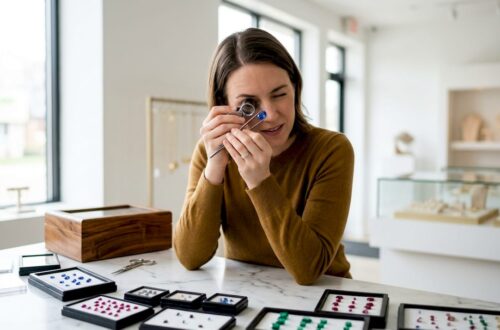
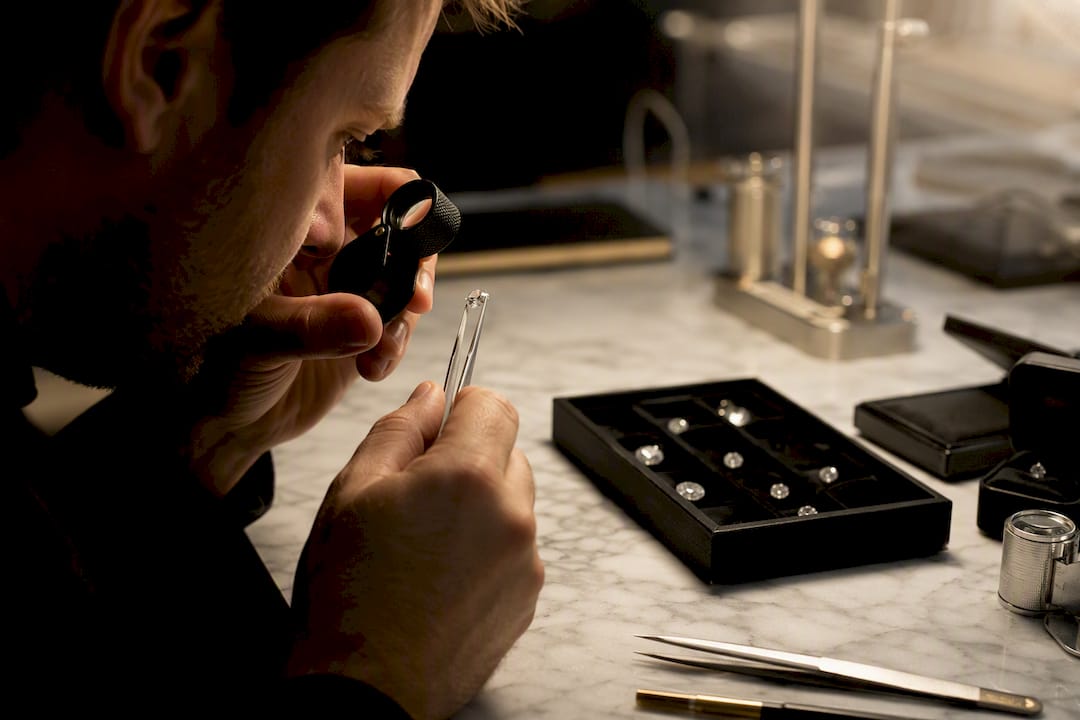
VVS (Very Very Slightly Included) ranks higher than VS (Very Slightly Included) on the GIA clarity scale. But higher doesn’t mean better for your ring. For most buyers, VS is the smarter purchase because it’s still eye-clean while leaving more of your budget for carat weight and cut quality. Under 10× magnification, a trained grader can tell them apart in seconds. Across a dinner table, almost nobody can.
Here’s what to do with that information:
- Choose VS1 or VS2 if you want the best-looking stone for your money and plan to wear a brilliant cut like round or cushion.
- Choose VVS1 or VVS2 if you’re buying a step-cut (emerald, asscher) or a large investment-grade stone where inclusions have nowhere to hide.
- Always request the GIA report and ask for loupe or microscope images before you buy, no matter which grade you choose.
Key Takeaways
VVS outranks VS on the GIA clarity scale, but VS delivers eye-clean results for most shapes at a meaningfully lower price.
| Point | Details |
|---|---|
| VVS ranks higher | VVS1 and VVS2 sit above VS1 and VS2 on the GIA scale, graded at 10× magnification. |
| VS is usually eye-clean | Most VS1 and VS2 diamonds show no visible inclusions without a loupe. |
| Premium runs around 10% | Typical VVS pricing sits above VS by about 10%, reaching close to 40% in D-color, large-carat cases. |
| Shape changes the math | Step-cuts like emerald and asscher benefit from VVS more than brilliant cuts do. |
| Usajewels offers certified flexibility | Usajewels provides GIA-certified stones, loupe photos on request, and a lifetime upgrade program. |
Table of Contents
- How Diamond Clarity Grading Actually Works
- What Does VVS Mean, and Is VVS1 Better Than VVS2?
- What Does VS Mean, and Should You Choose VS1 or VS2?
- VVS vs VS: A Side-by-Side Comparison
- How Much More Does VVS Cost Than VS?
- How to Choose Between VVS and VS
- Why We Recommend Value Over Perfection
- See Certified Clarity Options Before You Decide
- Sources
- FAQ
How Diamond Clarity Grading Actually Works
Clarity measures the inclusions and blemishes inside and on a diamond, graded on a scale that runs Flawless (FL), Internally Flawless (IF), VVS1, VVS2, VS1, VS2, SI1, SI2, and down through the I grades. Every step down means inclusions become easier to spot, either under magnification or, eventually, to the naked eye. The GIA’s clarity standard has been the industry benchmark for decades, and it’s built around one specific practice: examining the stone at 10× magnification, under controlled lighting, by a trained grader.
That 10× standard matters more than most buyers realize. A grader isn’t squinting at the diamond with their bare eye and guessing. They’re using a specific tool at a specific magnification level, which is exactly why a “VS2” from one seller should mean the same thing as a “VS2” from another, as long as both come from an accredited lab.
Graders evaluate five factors when assigning a clarity grade:
- Size of the inclusions relative to the stone
- Number of inclusions present
- Location, especially whether they sit under the table where light travels
- Nature, meaning the type of inclusion (feather, crystal, cloud, pinpoint)
- Relief, or how much the inclusion contrasts with the surrounding diamond
| Grade | What it means | Naked-eye visibility |
|---|---|---|
| FL / IF | No or virtually no inclusions | Never visible |
| VVS1 / VVS2 | Extremely difficult to see under 10× | Not visible |
| VS1 / VS2 | Minor inclusions, visible under 10× with effort | Rarely visible |
| SI1 / SI2 | Noticeable under 10×, sometimes without magnification | Occasionally visible |
What Does VVS Mean, and Is VVS1 Better Than VVS2?
VVS stands for Very Very Slightly Included, and it sits directly below Internally Flawless on the scale. Both VVS1 and VVS2 diamonds contain inclusions so minor that even an experienced grader has to hunt for them under 10× magnification. The difference between the two subgrades comes down to how quickly that grader finds the inclusion and how it affects the stone’s overall symmetry.
- VVS1 inclusions are typically visible only from the pavilion (the bottom of the stone), making them nearly impossible to spot even with a loupe in hand.
- VVS2 inclusions can usually be seen from the crown (the top), which makes them marginally easier to locate, though still invisible without magnification.
Common inclusions at this tier include pinpoints (tiny mineral crystals), faint clouds, or negligible feathers tucked near the girdle. None of these affect brilliance or durability. You’re paying for rarity and grading precision, not a visible upgrade in sparkle.
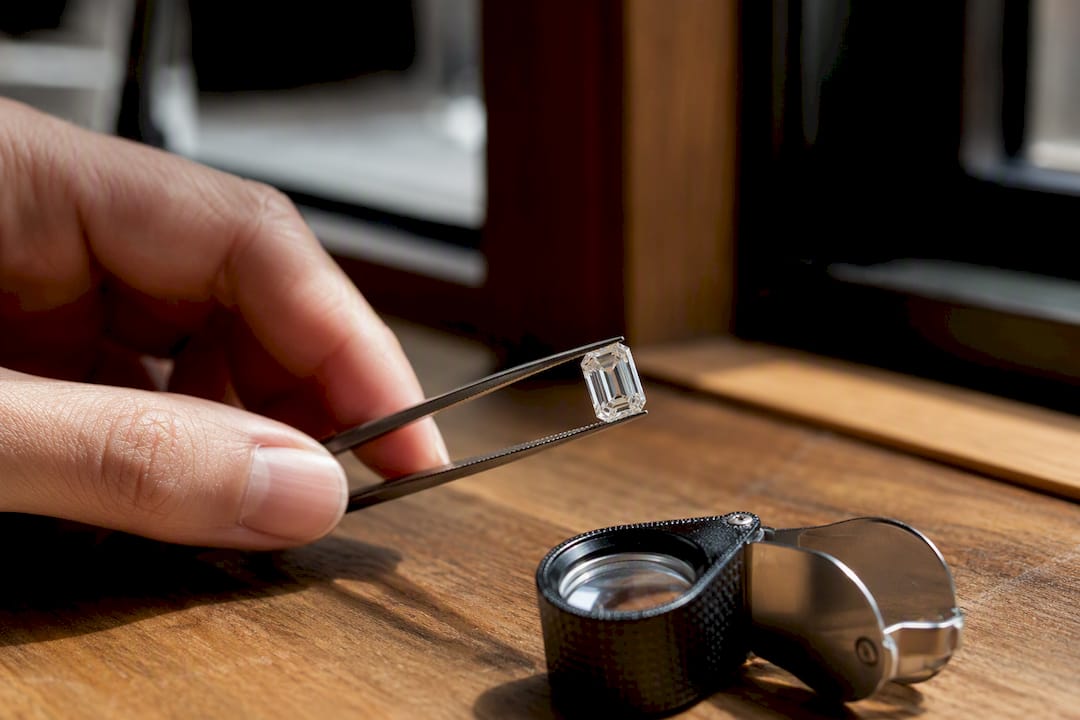
Pro Tip: If you’re buying a step-cut diamond like an emerald or asscher shape, VVS clarity earns its premium. The open facets on step-cuts act like a hallway of mirrors, so even VS-level inclusions can occasionally show through. Round brilliants and cushions hide inclusions far more effectively.
What Does VS Mean, and Should You Choose VS1 or VS2?
VS stands for Very Slightly Included, one full tier below VVS. Diamonds in this range still qualify as eye-clean in the vast majority of cases, meaning you won’t spot an inclusion without a loupe or microscope. The gap between VS1 and VS2 is more about ease of detection under magnification than any real difference in how the stone looks on your hand.
- VS1 inclusions require real effort to locate at 10×, sitting closer to the VVS tier in terms of visual security.
- VS2 inclusions are easier to find under magnification and, in larger stones (think 2 carats and up), can occasionally become visible without a loupe if they land under the table.
Typical VS inclusions include small crystals, faint clouds, or minor feathers. Buyer-focused clarity guides consistently note that both VS1 and VS2 are eye-clean for the overwhelming majority of stones and settings.
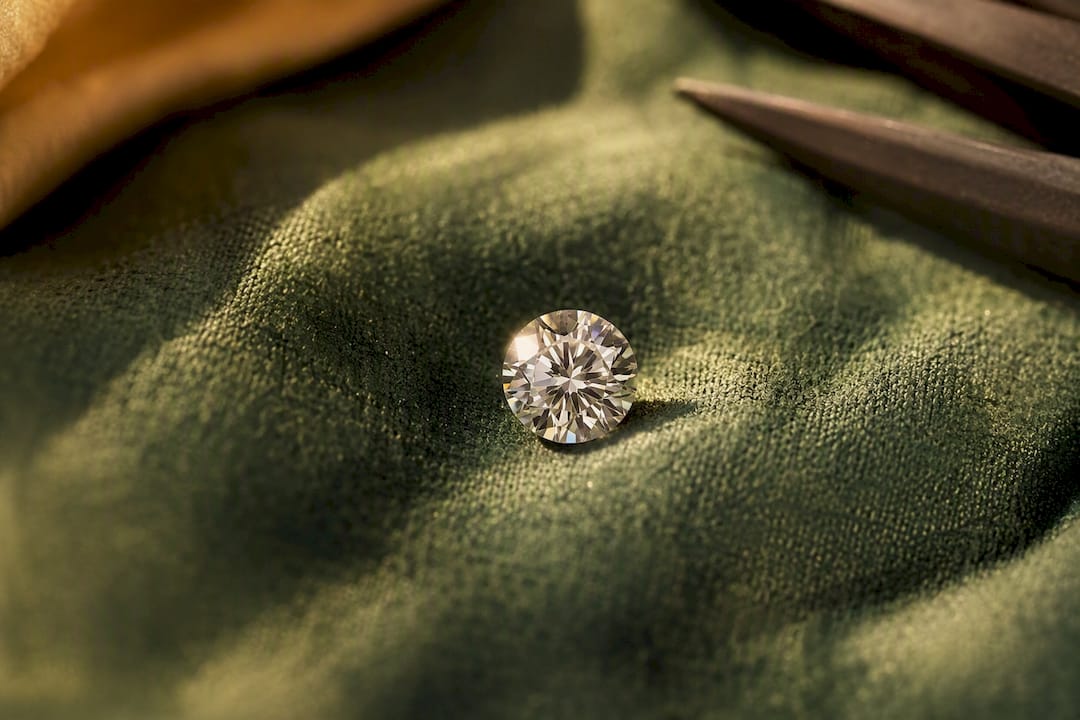
VS clarity makes the most sense when you’re working with a fixed budget and want to put more of it toward carat weight or a stronger cut grade. It’s also the practical choice for brilliant-cut shapes, round, princess, oval, cushion, where the facet pattern naturally camouflages minor inclusions.
VVS vs VS: A Side-by-Side Comparison
The real question isn’t which grade is “better.” It’s which grade earns its keep for the shape, size, and purpose of your specific diamond.
| Factor | VVS (VVS1/VVS2) | VS (VS1/VS2) |
|---|---|---|
| Visible to naked eye | No | Almost never |
| Visible at 10× magnification | Extremely difficult (VVS1) to slightly easier (VVS2) | Detectable with effort (VS1) to easier (VS2) |
| Typical inclusions | Pinpoints, tiny clouds, negligible feathers | Small crystals, faint clouds, minor feathers |
| Typical price impact | Premium tier | Value tier |
| Best for | Step-cuts, 2ct+ stones, investment pieces | Brilliant cuts, budget-conscious buyers, larger carat priority |
Three factors decide which grade actually makes sense for you: the shape you’ve chosen, the carat weight you’re targeting, and what you plan to do with the stone long-term (wear it daily, pass it down, or resell it). A 0.75 carat round brilliant in VS2 will look identical to a VVS2 version on almost every hand. A 3-carat emerald cut is a different story entirely.
Pro Tip: When shopping online, never take a clarity grade at face value. Ask for the GIA certificate number so you can look it up independently, then request loupe or microscope photos showing exactly where the inclusions sit relative to the table and girdle. A reputable seller will hand these over without hesitation.
How Much More Does VVS Cost Than VS?
The GIA has documented cases where a 1.00 carat D-color VVS1 diamond costs close to 40% more than an otherwise identical VS1 stone, driven by the combined rarity of top color and top clarity in the same package.
Two quick comparisons illustrate the pattern. A 1.00 carat D-color diamond jumps meaningfully in price as you move from VS1 up to VVS1, since flawless color amplifies the clarity premium. A 1.00 carat G to H color diamond, sitting in the “near colorless” range most buyers actually choose, shows a narrower gap between VS and VVS because the color grade itself isn’t commanding a premium.
The premium grows fastest when carat weight climbs above two carats, when color moves into the D to F range, and when the shape is a step-cut that puts inclusions on display. Detailed price breakdowns confirm this pattern across multiple shapes and sizes, which is why the same clarity jump can feel negligible on one ring and expensive on another.
How to Choose Between VVS and VS
Work through your priorities in this order, and clarity will usually fall into place on its own:
- Cut first. A well-cut diamond returns more light and looks more brilliant than a poorly cut stone with higher clarity or color.
- Carat second. Decide the size you want to wear, since this affects your budget more than any other single factor.
- Color third. Near-colorless grades (G through I) offer strong value before you even touch clarity.
- Clarity last. Once the first three are locked in, choose the clarity grade your remaining budget and chosen shape actually call for.
Before you buy, ask the seller these questions directly:
- Can you provide the GIA report number so I can verify it independently?
- Do you have loupe or microscope images showing the inclusion locations?
- Where exactly do the inclusions sit relative to the table and girdle?
- What is your return or upgrade policy if I’m not satisfied?
Watch for sellers who only offer in-house grading instead of an independent lab report, who can’t produce loupe photos on request, or who go quiet when you ask where an inclusion sits on a step-cut stone. Reviewing a jeweler’s independent standing before you commit is never a wasted five minutes. For a deeper breakdown of how clarity interacts with the other three Cs, our 4Cs buying guide walks through the trade-offs step by step.
Why We Recommend Value Over Perfection
I’ve spent enough time around loose diamonds to know that VVS clarity photographs beautifully on a certificate and means almost nothing to the eye. At Usajewels, we’re a family-owned operation with in-house manufacturing, and that gives us a front-row seat to how buyers actually react to stones side by side.
Nine times out of ten, once we hand someone a VS2 and a VVS2 of the same carat and cut, they can’t tell which is which without a loupe. Every stone we carry is ethically sourced and GIA-certified, and we’ll hand over loupe photos and full reports before you ever commit to anything.
See Certified Clarity Options Before You Decide
Usajewels gives you something most jewelers won’t: a direct look at certified inventory with no in-house-only grading and no pressure to upgrade clarity you don’t need. Because we manufacture in-house, you can design your own setting and choose the exact clarity grade, VS2 for value, VVS1 for a step-cut, without paying a middleman markup on top of the stone itself.
Every loose diamond and finished piece comes with GIA documentation, and we’ll send loupe images on request so you can see precisely where any inclusion sits before you buy. Our lifetime diamond upgrade program also means the clarity decision you make today isn’t permanent. If your priorities shift toward a larger stone or a higher grade down the road, you can trade up. If you’re building a ring around a specific shape, our diamond shapes guide will help you match clarity to cut before you finalize anything. And once your ring is ready, a quality jewelry safe is worth considering for everyday storage and travel.
Browse our certified diamond rings to see current inventory, request loupe photos on any stone that catches your eye, and start designing a setting that fits your budget and your clarity priorities.
Sources
- 4cs
- VVS vs VS Diamond Price Difference: Complete 2026 Guide – OM Jewels Inc
- VS1 vs VVS1: Diamond Clarity & Buying Guide | LearningJewelry
FAQ
Is VVS Higher Than VS1?
Yes. VVS1 and VVS2 both rank above VS1 on the GIA clarity scale, meaning VVS diamonds contain inclusions that are more difficult to detect under 10× magnification.
Is VS a Good Quality Diamond?
Yes. VS1 and VS2 diamonds are typically eye-clean, meaning inclusions aren’t visible without magnification, which makes VS a strong value choice for most buyers.
Is VS1 or VS2 Better?
VS1 is the higher subgrade, with inclusions that are harder to spot under 10× magnification than VS2. In practice, both usually look identical to the naked eye on brilliant-cut diamonds.
Is There Anything Higher Than VVS?
Yes. Internally Flawless (IF) and Flawless (FL) sit above VVS1 and VVS2 on the GIA scale, though these grades carry a substantial price premium for a difference almost no one can see without a loupe.
Recommended
- Lab-Created Diamonds: Process & Value | USA Jewels
- Diamond Color & Clarity Explained: What to Buy | USA Jewels
- Diamond Clarity Chart — FL to I3 Grades Explained | USA Jewels
- Diamond Quality 4Cs Breakdown: Your Buying Guide

Deep Mehta is the Co-Owner of USA Jewels, a family-owned jewelry business she has led since 2013 in Deerfield Beach, Florida. With over 13 years of hands-on experience in fine jewelry retail, manufacturing, and diamond importing, Deep specializes in engagement rings, wedding bands, and custom jewelry design. She also co-manages Kaash Group Talent Acquisition. Deep is a University of Florida graduate and oversees every aspect of USA Jewels’ operations, from product development to marketing.
Fine Jewelry Collection


You May Also Like
Why Diamond Certifications Differ Globally: 2026 Guide
3 Chain Types Every Jewelry Buyer Should Know to Match Pendant Weight