Necklace Length Guide: Find Your Perfect Fit
For most people, 18 inches is the safest length to buy: it sits about one to two inches below the collarbone, works with nearly every neckline, and flatters more body types than any other length. If you’re shopping for someone else or you’re unsure, choose an adjustable chain or one that falls between 16 and 20 inches.
Here’s the quick chart before you buy anything:
- 14 inches (collar): sits tight at the base of the neck, best for chokers with high necklines
- 16 inches (choker): rests right at the collarbone, great for crew necks
- 18 inches (princess): falls just below the collarbone, the most versatile length made
- 20 inches (matinee): drops to the top of the chest, good for business and layered looks
- 22–24 inches: sits mid chest, works well over blouses and sweaters
- 28–30 inches (opera): reaches the bust line, made for statement pendants
- 32–36 inches (rope): falls below the bust, best worn doubled or layered
We know that finding the right necklace length can feel like guesswork. If you’re buying a gift, stick with 16 to 18 inches or look for a chain with a built-in extender, which removes the guessing entirely.
Key Takeaways
Choosing the right necklace length comes down to matching your measured neck size and neckline to a standard length, most reliably 18 inches, then adjusting for pendant drop, layering spacing, and body proportions.
| Point | Details |
|---|---|
| Default to 18 inches | It’s the most versatile length and the safest choice when you’re unsure or buying a gift. |
| Measure before buying | Use a string or tape around your neck and add 2 to 4 inches for comfortable wear. |
| Match length to neckline | Keep the chain clearly above or below the neckline edge, never right on it. |
| Space layers by 2 inches | Start at 16 inches and add at least 2 inches per additional chain to avoid tangling. |
| Custom sizing available | Usajewels manufactures chains in-house and can adjust length, gauge, or add extenders to any piece. |
Table of Contents
- Necklace Length Guide: Reading the Standard Length Chart
- How Do You Measure Your Neck for a Necklace?
- Which Necklace Length Works Best With Your Neckline?
- How Should Body Type Change Your Necklace Length?
- What Are the Best Ways to Layer Necklaces?
- Which Chain Type Fits Your Necklace Length?
- How Does a Pendant Change Your Necklace Length?
- Quick Cheat Sheet for Choosing Necklace Length
- Caring for Your Necklace Based on Its Length
- Sources
- FAQ
Necklace Length Guide: Reading the Standard Length Chart
Every necklace length has a name, a typical spot on the body, and a job it does best. Once you understand the chart, you’ll never second-guess a length again.
| Length | Trade Name | Typical Placement | Best Uses |
|---|---|---|---|
| 14" | Collar | Base of the neck | High necklines, layering base |
| 16" | Choker | At the collarbone | Crew necks, casual layering |
| 18" | Princess | 1–2" below the collarbone | Most necklines, everyday wear |
| 20–24" | Matinee | Top of the chest | Business wear, medium pendants |
| 28–30" | Opera | At the bust line | Statement pendants, evening looks |
| 32–36" | Rope | Below the bust | Doubled styles, layered stacks |
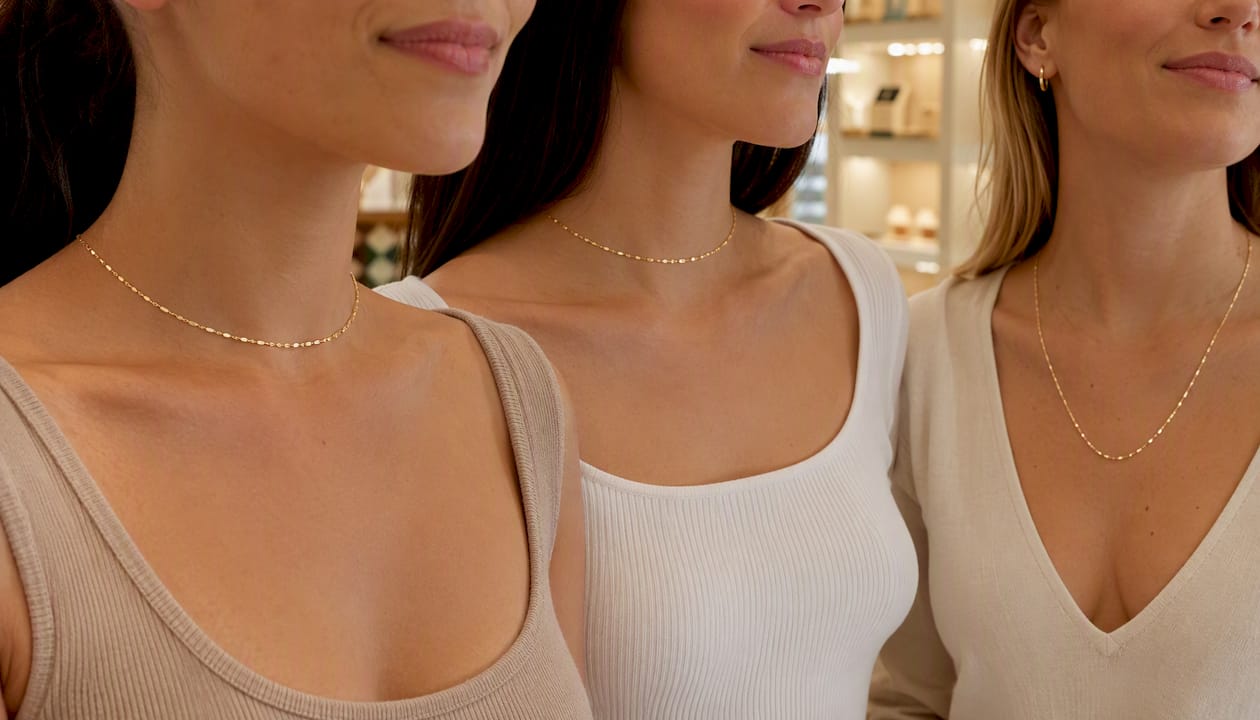
The most commonly sold length is 18 inches, and it’s popular for a reason. It’s long enough to avoid looking like a tight collar, short enough to stay visible under a jacket, and it pairs with almost any pendant size.
A few practical notes worth remembering:
- The 16 to 20 inch range covers the majority of what people actually wear day to day.
- Matinee lengths (20 to 24 inches) tend to photograph better for business headshots because they sit above most blouse necklines.
- Opera lengths can be worn long, doubled into a choker, or knotted for a completely different look.
Pro Tip: If you’re building a starter collection, buy 16", 18", and 22" first. That trio covers layering, solo wear, and gift-giving without overbuying.
How Do You Measure Your Neck for a Necklace?
Skip the guesswork with three quick checks:
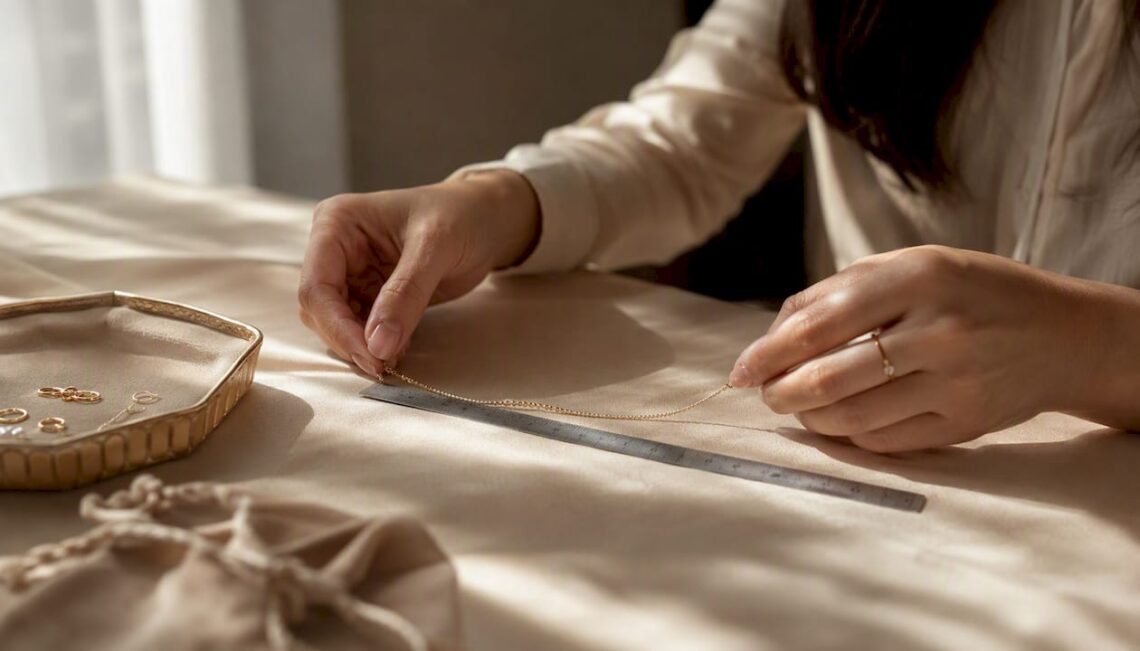
- Measure a necklace you already own. Lay it flat and measure end to end with a ruler or tape.
- Wrap a flexible tape or string around your neck where you want the necklace to sit, mark the spot, then measure that string flat.
- Hold the string against your outfit to see exactly where it will fall before you commit to a length.
For comfort, add 2 to 4 inches to your actual neck circumference. A 14 inch neck usually feels comfortable in a 16 to 18 inch chain.
Pro Tip: Buying for someone else? An adjustable chain or extender removes the risk entirely, since you won’t know their exact preference until they try it on.
Which Necklace Length Works Best With Your Neckline?
The rule is simple: your necklace should sit clearly above or clearly below the edge of your neckline, never right on top of it. A chain that lands exactly at the seam gets swallowed by fabric and loses all its visual impact.
Here’s how that plays out by neckline:
- Crew neck: 20 to 24 inches sits below the collar and stays visible.
- V-neck: 16 to 18 inches with a pendant follows the V and draws the eye down.
- Scoop or square neck: 16 to 18 inches sits just inside the curve without disappearing.
- Boat neck: 24 inches or longer clears the wide collarbone exposure.
- Turtleneck: 28 to 36 inches, worn over the fabric, is the only length that reads clearly.
- Strapless or halter: a 14 to 16 inch choker fills the bare neckline without competing with straps.
- Button-down shirt: 18 to 20 inches layers nicely between an open collar.
For occasion dressing, matinee lengths (20 to 24 inches) read as polished for the office, opera lengths (28 to 30 inches) suit evening wear and cocktail dresses, and chokers (14 to 16 inches) pair beautifully with strapless summer dresses. If you’re planning an outfit around a halter top, a halter neckline styling guide is worth a look before you pick your chain.
How Should Body Type Change Your Necklace Length?
Standard lengths are a starting point, not a rule carved in stone. Height and proportion shift what looks balanced.
- Petite frames: subtract 1 to 2 inches from the standard recommendation so the necklace doesn’t overwhelm a smaller frame.
- Taller frames: add 1 to 2 inches to hit the same visual placement that a standard length gives a shorter person.
- Shorter necks: avoid snug chokers, which can feel constricting; a princess length opens things up.
- Fuller busts: choose 18 to 22 inches so the pendant sits above the bust line instead of landing awkwardly on it.
- Narrower shoulders: shorter lengths, like a 16 inch choker, help balance proportions without adding visual weight.
If you’re gifting across different body types, a 16 to 18 inch adjustable chain is the one purchase that flexes for nearly anyone.
What Are the Best Ways to Layer Necklaces?
Layering looks intentional when the spacing is right and accidental when it isn’t. The core rule: start with a 16 inch base and add at least 2 inches for every chain that follows.
- Minimal stack: 16" + 18" — two chains, one clean look, easy for everyday wear.
- Classic three-layer: 16" + 18" + 22" — the most popular combination, giving each chain room to breathe.
- Choker stack: 14" + 16" + 18" — tight and modern, best for higher necklines.
- Statement stack: 18" + 24" + 30" — mixes a short base with a long, dramatic finish.
Keep at least a two inch gap between every layer so the chains don’t compete for the same space. Mixing textures, like pairing a smooth cable chain with a textured herringbone, also cuts down on tangling because the links don’t grab each other the same way. For a deeper dive into building a stack that actually holds up over a full day of wear, our layering guide walks through more combinations.
Which Chain Type Fits Your Necklace Length?
Chain style changes how a length reads on the body, so picking the right one matters as much as the inches themselves.
- Cable and rope chains: versatile, strong, and the easiest match for pendants at any length.
- Box and curb chains: flat, durable links that hold their shape well on longer, statement lengths.
- Figaro and Cuban chains: bolder link patterns that carry visual weight, making them better suited to 20 inch and longer pieces worn solo.
- Snake and herringbone chains: smooth and delicate, but prone to kinking on very long lengths, so they perform best at 16 to 20 inches.
Comparing a cuban vs curb chain comes down to weight and intent: cuban chains read as bolder statement pieces, while curb chains lie flatter and suit everyday layering. For heavier pendants, choose a thicker gauge cable or curb chain in a shorter length so the chain doesn’t stretch or sag under the weight. Browse our gold necklace collections to compare chain weights side by side.
How Does a Pendant Change Your Necklace Length?
A pendant adds visible length beyond the chain itself, and that math trips up a lot of shoppers.
- Measure the pendant from the top of the bail to the bottom.
- Add that drop to the chain length to find the actual visual fall. An 18 inch chain with a 2 inch pendant behaves visually more like 20 inches.
- Match chain length to pendant size: small charms suit 16 to 18 inches, medium pendants suit 18 to 20 inches, and larger pendants suit 20 to 24 inches.
Pro Tip: Always measure your pendant before choosing a chain length. It’s the step most people skip, and it’s why pendants sometimes land lower than expected.
Quick Cheat Sheet for Choosing Necklace Length
- Best gift length: 16 to 18 inches, or anything with an extender.
- Most versatile length: 18 inches, full stop.
- Neckline shortcut: above the edge for chokers, below the edge for everything else.
- Layering shortcut: 16 inch base, add 2 inches per additional chain.
- Memory aid: 18" is default, add 2" for taller frames, add 2" between layers.
Why This Necklace Length Guide Is Reliable
- Written with input from Joseph, USA Jewels’ in-house jeweler.
- USA Jewels has been family-owned and manufacturing in-house since 1999.
- Every piece comes with a lifetime diamond upgrade program and ethically sourced materials.
- Length recommendations are drawn from published sizing charts and direct measurement methods, not guesswork.
Caring for Your Necklace Based on Its Length
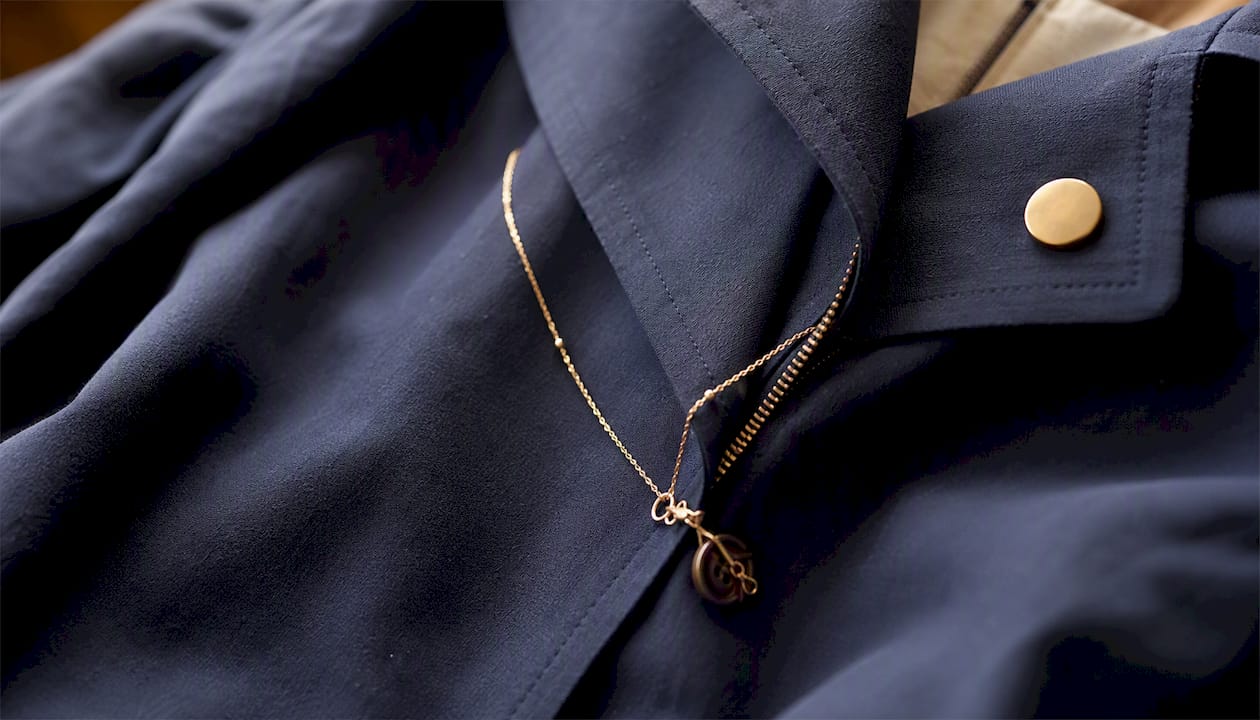
Longer chains face different risks than short ones, and the length you choose should shape how you store and wear it. A 30 inch rope chain has far more slack than a 16 inch choker, which means more opportunity for it to catch on buttons, zippers, or a bag strap during the day.
Tangling is the biggest complaint we hear about longer necklaces and layered stacks. Fine chains, like snake or herringbone styles, are especially prone to knotting because their tiny links can slip into each other when tossed loosely into a drawer. Store each chain separately, ideally hanging on hooks or laid flat in individual pouches, rather than piled together in one jewelry box compartment.
When you’re wearing a layered stack, clasp the chains one at a time and let them settle naturally instead of dropping them over your head as a bundle. This alone prevents most mid-day tangles. If a knot does form, work it loose with a needle or pin rather than pulling, since fine link chains stretch or snap under tension.
Longer chains also pick up more contact with skin, lotion, and fabric simply because there’s more length in motion throughout the day. Wipe chains down with a soft cloth after wearing, and store gold pieces away from humidity to keep the finish from dulling over time. A necklace that’s cared for properly will hold its shine and its shape regardless of whether it’s a 14 inch collar or a 36 inch rope.
A Note From Our In-House Jeweler
The mistake I see most often is buying based on a photo instead of a measurement. My rule: always test the string against your actual neckline before you commit to a length.
Get Help Finding Your Perfect Length
Once you know your ideal length, the next step is finding a piece built to last in it. Usajewels designs and manufactures every chain in-house, which means we can adjust length, swap chain gauge, or add an extender to a piece before it ever ships, something a big-box retailer selling pre-packaged chains simply can’t offer.

Whether you’re choosing between a delicate cable chain for a small pendant or a bolder curb style for a statement piece, our team can size it to your exact measurement rather than the closest standard length on a rack. Every piece also comes with our lifetime diamond upgrade program and ethically sourced materials, so the necklace you build today can grow with you. Browse our necklace collections to see current styles, or start with our fine jewelry catalog to request a custom length built around your measurements.
Sources
- Necklace Length Guide: Every Standard Length & Chart (2026) – AJLuxe
- Necklace Length Chart: 14 to 36 Inches Explained
- Necklace Lengths | Chart & Guide | JewelryLab
Measure before you buy, and lean on our necklace length education page if you want a deeper walkthrough.
FAQ
How Do I Know What Length Necklace to Get?
Measure your neck with a tape or string, add 2 to 4 inches for comfortable wear, and check that number against a length chart. If you’re unsure, 18 inches works for most people and most necklines.
What’s the Difference Between a 16 and 18 Inch Necklace?
A 16 inch chain sits at the collarbone as a choker style, while an 18 inch chain falls 1 to 2 inches below it. The 18 inch length tends to work with more necklines and pendant sizes.
What Necklace Length Is Best for a Pendant?
It depends on the pendant’s size: small charms suit 16 to 18 inches, medium pendants suit 18 to 20 inches, and larger pendants suit 20 to 24 inches once you add the pendant’s drop.
How Many Necklaces Can I Layer Together?
Three chains is the most common layering combination, typically 16, 18, and 22 inches, with at least a 2 inch gap between each to prevent tangling.
Should I Buy an Adjustable Necklace?
Yes, especially as a gift or when you’re unsure of the exact length someone prefers. An extender chain lets one necklace fit multiple lengths without buying separate pieces.
Recommended
- Necklace Length Guide: Find Your Perfect Fit | USA Jewels
- Necklace Length Guide: Best Necklaces for Every Neckline | USA Jewels
- Necklace Collections | Diamond & Gold Necklaces | USA Jewels
- Pendant & Necklace Guide: Styles & Chains | USA Jewels

Deep Mehta is the Co-Owner of USA Jewels, a family-owned jewelry business she has led since 2013 in Deerfield Beach, Florida. With over 13 years of hands-on experience in fine jewelry retail, manufacturing, and diamond importing, Deep specializes in engagement rings, wedding bands, and custom jewelry design. She also co-manages Kaash Group Talent Acquisition. Deep is a University of Florida graduate and oversees every aspect of USA Jewels’ operations, from product development to marketing.
Fine Jewelry Collection


You May Also Like

Why Lab-Grown Diamonds Cost Less: 2026 Price Guide
Diamond Fluorescence: Does It Actually Matter to You?