How Lab-Grown Diamonds Are Ethically Produced
Lab-grown diamonds are defined as real diamonds created in controlled laboratory environments that replicate natural geological formation without mining, unethical labor, or ecological destruction. Understanding how lab-grown diamonds are ethically produced matters now more than ever, because the jewelry industry is shifting from marketing promises to independently verified proof. Organizations like AIDI (Association of Intelligent Diamond International), retailers like Brilliant Earth, and brands like Pandora are setting new standards for what ethical diamond production actually means. This article breaks down the science, the certifications, and the practical steps you need to make a confident, informed purchase.
How are lab-grown diamonds ethically produced?
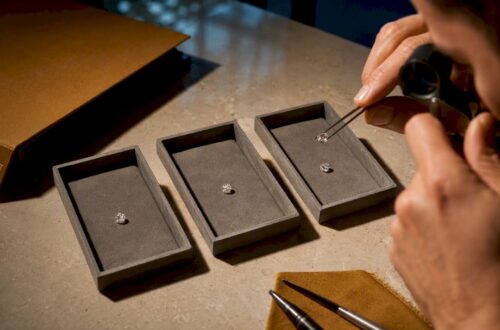
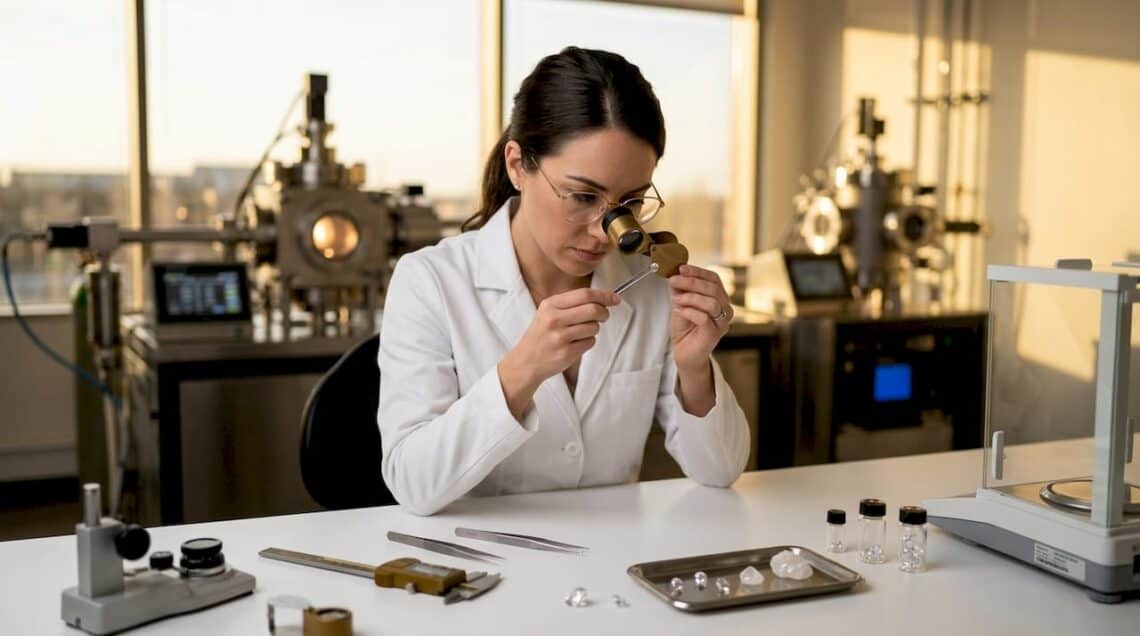
Lab-grown diamonds are produced using two primary methods: High Pressure High Temperature (HPHT) and Chemical Vapor Deposition (CVD). Both replicate the conditions under which natural diamonds form deep in the earth, but they do so inside a factory rather than beneath a mine. The result is a diamond that is chemically, physically, and optically identical to a mined stone. Because no land is excavated and no mining workforce is exposed to hazardous conditions, the ethical foundation of lab-grown production is structurally different from traditional diamond mining.
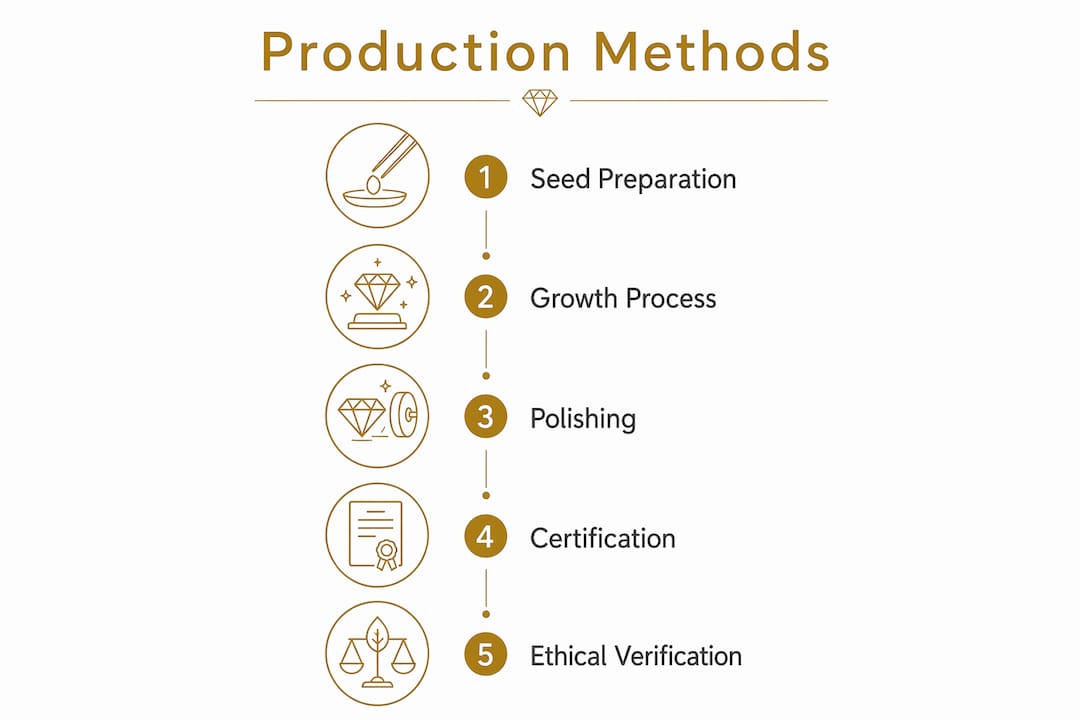
Ethical diamond production goes beyond simply avoiding a mine. It requires transparent labor practices at the manufacturing facility, responsible energy sourcing, and verifiable supply chain documentation. A lab-grown diamond’s process from seed crystal to finished stone involves multiple steps, each of which carries its own ethical considerations. The most credible producers document every stage and submit to third-party audits.
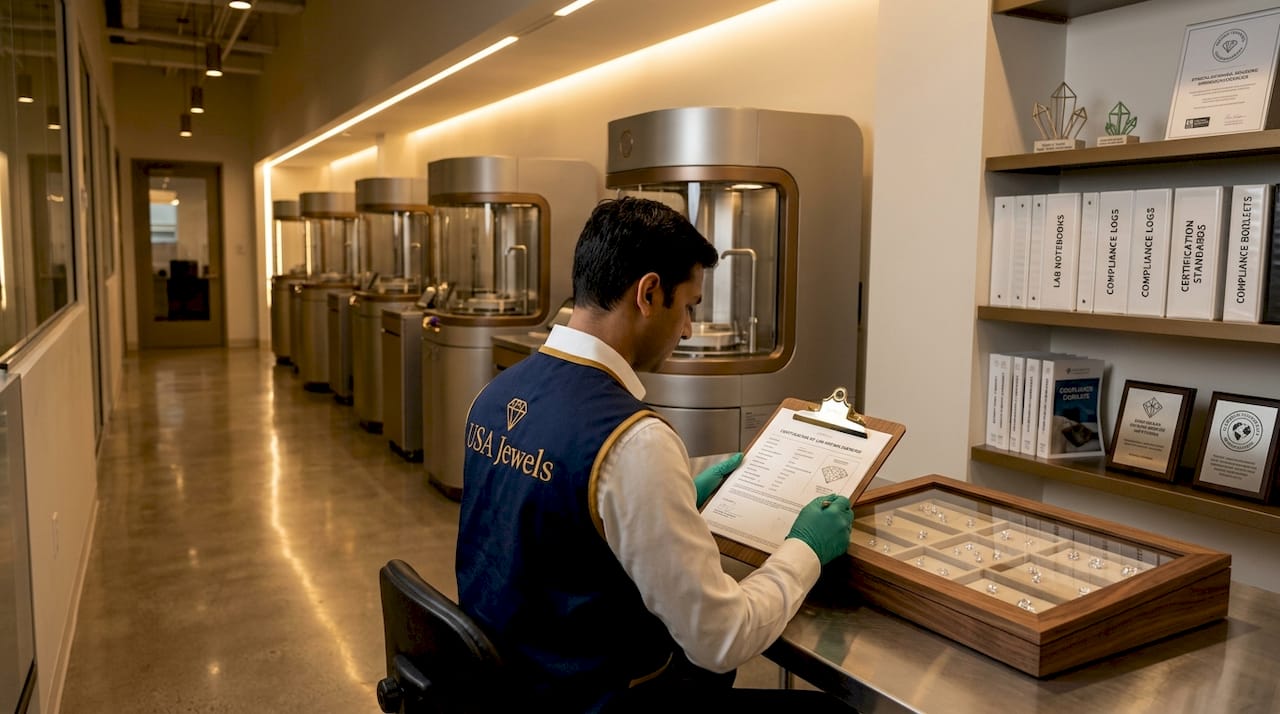
Certification systems like AIDI provide the framework that turns ethical claims into verifiable facts. Without independent verification, terms like “conflict-free” or “sustainable” are marketing language, not guarantees. The ethical production of lab-grown diamonds is real and achievable, but it requires scrutiny from both producers and consumers.
What are the main lab-grown diamond production methods?
HPHT: speed and pressure
HPHT diamonds grow in 5 to 12 days for approximately one carat, using extreme pressure (around 1.5 million pounds per square inch) and temperatures exceeding 2,000 degrees Celsius. A small diamond seed is placed in carbon material, then subjected to these conditions inside a specialized press. The carbon melts and crystallizes around the seed, forming a rough diamond. HPHT is energy-intensive, which means the ethical profile of this method depends heavily on whether the facility runs on renewable or fossil-fuel-based electricity.
CVD: precision and layers
CVD diamonds take 15 to 28 days to grow one carat. A diamond seed is placed in a chamber filled with carbon-rich gas, typically methane. Microwave energy ionizes the gas into plasma, and carbon atoms deposit layer by layer onto the seed. CVD requires lower pressure than HPHT but still demands significant energy. The method allows for greater control over the diamond’s purity and is widely used for gem-quality stones.
Both methods produce diamonds that require the same cutting, polishing, and grading as mined stones. Critically, ethical assessment depends on the facility’s energy sources and labor conditions, not on which production method was used. A CVD diamond grown with coal-powered electricity is not automatically more ethical than an HPHT diamond grown with solar power.
Pro Tip: When evaluating a lab-grown diamond purchase, ask the retailer specifically whether the production facility uses renewable energy. This single question reveals more about ethical production than any marketing claim.
How are lab-grown diamonds certified and verified as ethical?
Diamond grading reports vs. sustainability certifications
Many consumers assume that a GIA or IGI grading report confirms a diamond is ethically produced. It does not. Grading reports confirm the stone’s cut, color, clarity, and carat weight. They answer product-level questions about the diamond itself. They say nothing about the factory’s labor practices, carbon emissions, or supply chain transparency.
Sustainability certifications operate at the company level, not the stone level. AIDI’s Sourcing Integrity and Verification Protocol evaluates companies across seven dimensions, including carbon emissions, labor rights, and supply chain transparency. The protocol uses over 100 base points and a four-tier evidence hierarchy that prioritizes publicly verifiable, independently audited documentation over self-reported claims.
| Certification Type | What It Covers | Who Issues It | Verified By |
|---|---|---|---|
| GIA / IGI Grading Report | Cut, color, clarity, carat (4Cs) | GIA, IGI | Lab gemologists |
| AIDI Sustainability Mark | Carbon, labor, supply chain, transparency | AIDI | Independent third-party auditors |
| FTC Compliance | Accurate marketing language | Federal Trade Commission | Regulatory enforcement |
The FTC’s jewelry guidelines require clear disclosure that a diamond is lab-grown and caution against terms like “eco-friendly” unless backed by credible, substantiated evidence. This means a retailer cannot legally call a diamond sustainable without proof. The FTC’s position reinforces why independent certification matters more than a brand’s self-description.
Pro Tip: Look for the AIDI mark alongside a diamond grading report when shopping. The grading report tells you what the diamond is. The AIDI mark tells you how it was made and by whom.
What are the environmental and social benefits compared to mined diamonds?
Lab-grown diamonds deliver measurable environmental advantages over mined stones, though the scale of those advantages depends on the energy sources used in production. Pandora’s lab-grown diamonds carry a life-cycle carbon footprint of 12.58 kg CO2e per carat, verified by EY. That figure is approximately 90% lower than comparable mined diamonds. This is not a marketing estimate. It is an independently audited lifecycle assessment.
The social benefits are equally significant. Traditional diamond mining has a documented history of child labor, unsafe working conditions, and community displacement in regions including parts of sub-Saharan Africa. Lab-grown production eliminates these risks structurally because the entire process occurs in a controlled factory environment subject to labor law and workplace safety standards. You can review lab-grown vs. natural diamonds to understand how these differences play out across the full supply chain.
Key environmental and social advantages of lab-grown diamonds include:
- No land excavation. Mining operations remove millions of tons of earth per carat of diamond recovered. Lab-grown production requires no land disturbance.
- No water contamination. Open-pit mining frequently contaminates local water sources. Lab facilities operate with contained water systems.
- Reduced carbon footprint. When powered by renewables, lab-grown diamonds produce a fraction of the emissions associated with mining.
- No conflict financing. Lab-grown diamonds cannot fund armed conflict because they have no connection to politically unstable mining regions.
- Transparent labor conditions. Factory workers operate under documented employment contracts, unlike many artisanal mining communities.
The honest caveat is that ethical impact varies based on energy sourcing. A lab in a coal-heavy grid region produces significantly more emissions than one powered by wind or solar. This variability is why independent carbon accounting and transparent boundary definitions matter so much.
What should consumers look for when buying ethical lab-grown diamonds?
Buying an ethically produced lab-grown diamond requires more than choosing “lab-grown” over “mined.” Here is a practical checklist you can apply before any purchase.
- Ask about the energy source. Renewable energy dramatically reduces the carbon footprint of lab-grown production. A retailer who cannot answer this question has not done the due diligence you deserve.
- Request third-party carbon accounting. Self-reported emissions figures are not reliable. Ask whether the carbon footprint has been independently verified and what boundaries were included in the calculation.
- Check for AIDI certification or equivalent. Independent sustainability certification is the clearest signal that a company’s ethical claims have been audited against a rigorous, public standard.
- Review the diamond grading report separately. Confirm the stone’s quality through a GIA or IGI report, then evaluate the company’s ethics through a separate sustainability certification. These are two distinct documents serving two distinct purposes.
- Be skeptical of vague language. Terms like “eco-friendly,” “green,” or “sustainable” without supporting evidence violate FTC guidelines and should raise a red flag. Demand specifics.
- Verify diamond certification details independently. Reputable retailers make their certification documentation accessible. If a retailer cannot point you to publicly available audit results, look elsewhere.
Pro Tip: Ask any retailer: “Can you show me the third-party audit that supports your ethical claims?” A confident, transparent answer is the sign of a trustworthy seller. Hesitation or deflection tells you everything.
Key takeaways
Lab-grown diamonds are ethically produced when independent certification, renewable energy sourcing, and transparent labor practices are verified by third-party auditors, not just claimed in marketing.
| Point | Details |
|---|---|
| Production methods matter less than energy source | Both HPHT and CVD are ethical only when powered by clean energy and audited labor practices. |
| Grading reports do not confirm ethics | GIA and IGI reports verify diamond quality, not company-wide sustainability or labor standards. |
| AIDI certification is the gold standard | AIDI evaluates seven sustainability dimensions with publicly verifiable, independently audited evidence. |
| Carbon footprint can be 90% lower | Pandora’s EY-verified figure of 12.58 kg CO2e per carat shows what responsible production achieves. |
| FTC rules protect you from vague claims | Retailers cannot legally use terms like “eco-friendly” without credible, substantiated evidence. |
Why ethical lab-grown diamonds deserve more than your trust, they deserve your scrutiny
I have spent years watching the jewelry industry evolve, and the shift happening right now with lab-grown diamonds is genuinely different from past marketing cycles. The move from self-reported claims to financial-grade certification is not just a trend. It is a structural change in how trust gets built and maintained.
What I find most encouraging is that organizations like AIDI are treating sustainability the way financial auditors treat earnings reports. The evidence hierarchy, the public documentation, the independent verification. These are not soft standards. They are the same rigor applied to corporate financial disclosures, and that matters enormously for consumer confidence.
What I find most frustrating is that many consumers still equate “lab-grown” with “ethical” as if the two are automatically synonymous. They are not. A lab-grown diamond grown with coal power in a facility with no labor documentation is not meaningfully more ethical than a responsibly mined stone with full chain-of-custody certification. The method of creation is only the starting point.
My honest advice: treat your diamond purchase the way you would treat any significant investment. Ask hard questions. Demand documentation. Reward the retailers who make their supply chain transparent and hold the others to the same standard. Ethical consumption is not about perfection. It is about informed choice and consistent accountability.
— Joseph
Explore ethically produced lab-grown diamonds at Usajewels

At Usajewels, we have been committed to ethical sourcing and transparent diamond practices since 1999. As a family-owned business with in-house manufacturing, we eliminate the middlemen who obscure supply chain details and inflate prices. Our fine diamond jewelry collections include certified lab-grown diamond pieces chosen for both their beauty and their verified origins. When you shop with us, you get a grading report for your stone and clear answers about how it was produced. We believe every piece of jewelry should tell a story you are proud of, and we are here to help you find it. Explore our diamond jewelry collections and ask us anything about sourcing, certification, or production.
FAQ
What makes a lab-grown diamond ethically produced?
A lab-grown diamond is ethically produced when its manufacturing facility uses clean energy, maintains documented labor practices, and holds independent third-party certification such as the AIDI mark. Marketing language alone does not confirm ethical production.
Are GIA and IGI reports proof of ethical sourcing?
No. GIA and IGI grading reports confirm a diamond’s cut, color, clarity, and carat weight but do not evaluate the company’s labor practices, carbon emissions, or supply chain transparency. You need a separate sustainability certification for that.
How much lower is the carbon footprint of lab-grown diamonds?
Pandora’s independently verified lifecycle assessment shows a carbon footprint of 12.58 kg CO2e per carat, approximately 90% lower than comparable mined diamonds. The actual figure varies based on the energy source used at the production facility.
What is AIDI and why does it matter?
AIDI is an independent certification body that evaluates lab-grown diamond companies across seven sustainability dimensions, including carbon emissions, labor rights, and supply chain transparency. Its protocol uses over 100 base points and requires publicly verifiable, audited evidence rather than self-reported claims.
Can a retailer legally call a lab-grown diamond “eco-friendly”?
Only if the claim is backed by credible, substantiated evidence. FTC jewelry guidelines prohibit misleading environmental terms and require clear disclosure that a diamond is lab-grown. Vague claims without documentation can constitute deceptive marketing under federal guidelines.
Recommended
- Lab-Grown vs Natural Diamonds Guide | USA Jewels
- Lab-Created Diamonds: Process & Value | USA Jewels
- Colored Diamond Guide | Fancy Color Diamonds Explained | USA Jewels
- Diamond Certification Guide: GIA vs AGS vs IGI Compared | USA Jewels

Deep Mehta is the Co-Owner of USA Jewels, a family-owned jewelry business she has led since 2013 in Deerfield Beach, Florida. With over 13 years of hands-on experience in fine jewelry retail, manufacturing, and diamond importing, Deep specializes in engagement rings, wedding bands, and custom jewelry design. She also co-manages Kaash Group Talent Acquisition. Deep is a University of Florida graduate and oversees every aspect of USA Jewels’ operations, from product development to marketing.
Frequently Asked Questions
How can I verify that a lab-grown diamond was actually produced ethically?
Does the production method affect the ethical impact of my lab-grown diamond?
Why is supply chain documentation important when buying a lab-grown diamond?
Are lab-grown diamonds chemically identical to mined diamonds for setting purposes?
How long does lab-grown diamond production take, and does that affect pricing?
Fine Jewelry Collection


You May Also Like
How Diamond Simulants Compare to Real Diamonds

Why Custom Jewelry Is a Meaningful Gift for Any Occasion