Why 14K Gold Is Popular for Kids’ Jewelry
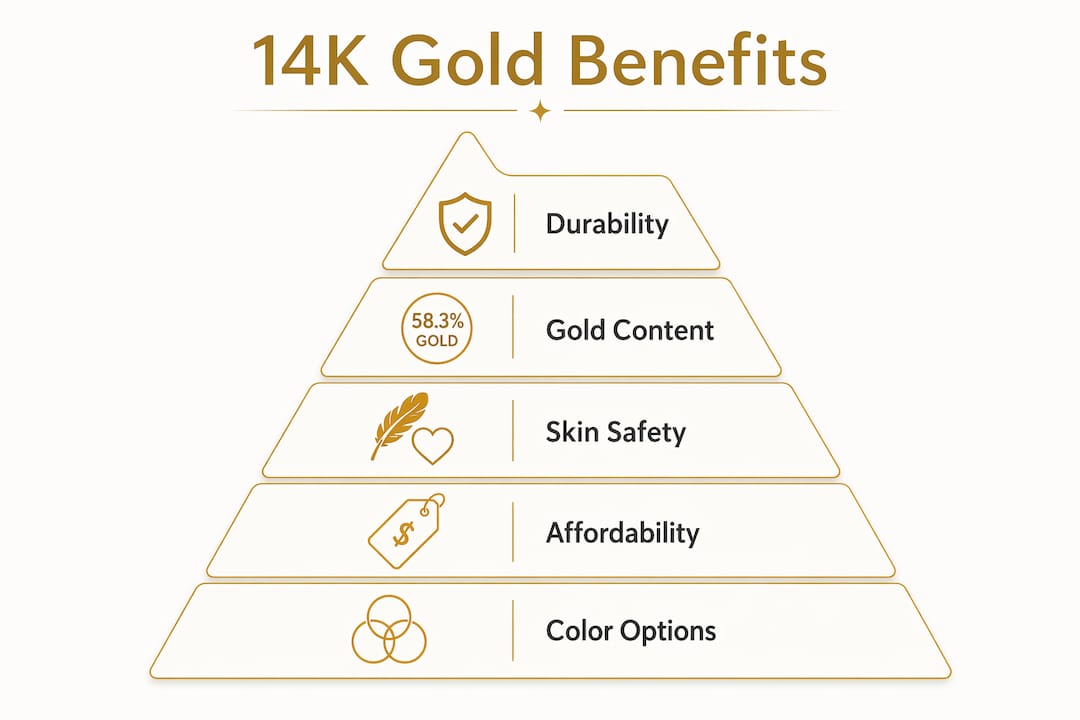
14K gold is defined as a metal alloy containing 58.3% pure gold blended with 41.7% strengthening metals, and it is the most widely recommended material for children’s fine jewelry in the United States. That composition is not an accident. It gives 14K gold a durability advantage over 18K or 24K gold while preserving enough real gold content to hold genuine value and a warm, recognizable color. For parents searching for quality yet affordable jewelry options for their children, understanding why 14K gold popular kids jewelry choices dominate the market comes down to three factors: strength, safety, and price. Usajewels has worked with families since 1999, and 14K gold remains the metal we trust most for children’s pieces.
Why 14K gold is the top choice for kids’ jewelry
The reason 14K gold dominates children’s fine jewelry is straightforward: it is harder and more scratch-resistant than 18K or 24K gold. Higher karat gold contains more pure gold, which is naturally soft. That softness makes 24K gold beautiful for investment bars but impractical for a bracelet worn by a seven-year-old at recess. The alloy metals blended into 14K gold, typically copper, silver, or zinc, increase structural strength without sacrificing the piece’s identity as real gold.
Children’s jewelry faces a punishment that adult jewelry rarely does. A child’s necklace gets tugged, tangled in hair, and dropped on tile floors. Earrings get snagged on pillowcases every night. A ring worn during soccer practice takes real impact. The alloy blend in 14K creates a metal that handles this daily stress far better than softer alternatives. Parents who invest in 14K gold pieces find they hold their shape and finish through years of active wear.
Here is what makes 14K gold specifically suited for kids’ active lives:
- Scratch resistance: The alloy content creates surface hardness that resists everyday scuffs from playground equipment, desks, and sports gear.
- Shape retention: Rings and bangles in 14K gold resist bending under pressure better than higher-karat pieces.
- Finish durability: Yellow, white, and rose gold finishes in 14K maintain their color longer because the alloy metals stabilize the surface.
- Closure strength: Lobster clasps and post backs hold more securely in 14K gold, reducing the risk of loss.
Pro Tip: When selecting 14K gold for a child with sensitive skin, ask the manufacturer specifically whether the alloy contains nickel. Copper and silver-based alloys are the safest choices for kids prone to skin reactions.
How 14K gold balances real value with affordability
14K gold carries 58.3% pure gold content, which means it qualifies as solid gold under Federal Trade Commission standards. That is not a minor distinction. It separates 14K gold from gold-plated or gold-filled pieces, which use a base metal core and can wear through over time. For parents, this matters because a 14K gold piece holds resale value, can be resized or repaired by any jeweler, and does not leave green marks on skin.
The cost difference between karat levels is significant. 18K gold contains roughly 22% more gold by weight than 14K, which translates directly into a higher price per gram. A 14K gold chain necklace for a child typically costs meaningfully less than the same design in 18K, while delivering better durability for everyday wear. 10K gold costs less than 14K but contains only 41.7% pure gold, giving it a paler, less warm color that many parents find less appealing for gift pieces.
| Karat | Gold Purity | Durability | Relative Cost | Best For |
|---|---|---|---|---|
| 10K | 41.7% | Highest | Lowest | Budget pieces, fashion jewelry |
| 14K | 58.3% | Very high | Moderate | Kids’ everyday fine jewelry |
| 18K | 75.0% | Moderate | Higher | Occasional wear, adult fine jewelry |
| 24K | 99.9% | Lowest | Highest | Investment, not wearable jewelry |
14K gold also comes in three color options that parents can match to a child’s preference. Yellow gold uses copper and silver as primary alloys. White gold uses palladium or nickel, then receives a rhodium plating for its bright finish. Rose gold uses a higher copper ratio for its warm pink tone. Each color is genuine 14K gold. The choice is purely aesthetic.
Is 14K gold safe for kids with sensitive skin?
Gold allergy in children is less common than most parents fear. Clinical research from Aalborg University found no allergic reactions to pure metallic gold micro-particles, while reactions to gold salts and alloy contaminants were observed. This means the gold itself is rarely the problem. The alloy metals blended into the piece, particularly nickel, are the more likely source of skin irritation.
This distinction matters practically. Two 14K gold earrings from different manufacturers can have very different alloy compositions. One may use a nickel-based white gold alloy; another may use palladium. The karat stamp tells you the gold percentage, but it does not tell you what fills the remaining 41.7%. Parents of allergy-prone children need to ask that second question.
Nickel release is regulated under EU REACH standards, which set thresholds of 0.2 µg/cm²/week for piercing parts and 0.5 µg/cm²/week for general skin contact. These limits exist specifically because piercing sites, like newly pierced earlobes, absorb metal ions more readily than intact skin. The US does not have a federal equivalent to REACH, so compliance with EU standards is a reliable benchmark to request from any jewelry manufacturer.
Key safety considerations for parents choosing kids’ jewelry:
- Alloy transparency: Request the specific alloy composition, not just the karat stamp.
- Nickel-free options: Yellow gold and rose gold pieces are more likely to be nickel-free than white gold.
- Piercing-part compliance: For earrings, ask whether the posts and backs meet EU REACH nickel release limits.
- Plating awareness: White gold earrings are rhodium-plated. When that plating wears, the underlying alloy contacts skin directly.
Pro Tip: For a child’s first earrings, choose yellow or rose 14K gold posts rather than white gold. Yellow and rose gold alloys typically use copper and silver rather than nickel, making them a safer starting point for sensitive ears.
How does 14K gold compare to other gold purities for children?
The gold purity spectrum runs from 10K at the low end to 24K at the top, and each karat level involves real trade-offs that matter differently for children’s jewelry than for adult pieces.
24K gold is 99.9% pure and genuinely beautiful, but it bends with light pressure and scratches from fingernails. No reputable jeweler recommends it for wearable children’s pieces. 18K gold, at 75% purity, is the standard for luxury adult fine jewelry in European markets. It has a richer, deeper gold color than 14K, but that extra softness shows up quickly on a child’s ring or bracelet. Scratches accumulate faster, and prongs on gemstone settings can bend out of position.
10K gold sits at the other end of the practical range. Its 41.7% gold content makes it the most durable option and the least expensive. The trade-off is color. 10K yellow gold looks noticeably paler and less warm than 14K, which some parents find less appealing for a gift piece meant to feel special. 10K is a reasonable choice for fashion-forward teen jewelry where trend matters more than longevity, but for a meaningful gift, the color difference is visible.
14K gold occupies the position where durability, color, and real gold value converge. It is accepted as solid gold under FTC standards, holds its finish through years of active wear, and carries enough gold content to maintain resale value. For a child’s first bracelet, a birthday necklace, or a set of everyday earrings, 14K gold delivers what parents actually need without requiring a trade-off on any front.
Design details matter as much as metal purity for children’s comfort. Smooth backs and secure closures reduce irritation and prevent snagging on clothing or hair. A technically perfect 14K gold earring with a sharp or poorly finished back will cause more discomfort than a well-designed piece. Parents should examine closure mechanisms and back finishes alongside the metal specification when selecting any piece for a child.
Key takeaways
14K gold is the best material for children’s everyday jewelry because it combines genuine gold content, superior durability, and manageable cost in a single alloy that outperforms both higher and lower karat options for active wear.
| Point | Details |
|---|---|
| Durability advantage | 14K gold is harder than 18K or 24K, making it resistant to scratches and bending during active play. |
| Real gold value | At 58.3% gold content, 14K qualifies as solid gold under FTC standards and holds resale value. |
| Allergy safety | Pure gold rarely causes reactions; ask manufacturers for alloy composition and nickel-release compliance. |
| Cost efficiency | 14K costs significantly less than 18K while delivering better durability for children’s everyday wear. |
| Design matters | Smooth backs and secure closures are as important as metal quality for a child’s comfort and safety. |
What I’ve learned from years of helping parents choose kids’ jewelry
I have had hundreds of conversations with parents who come in focused entirely on karat number. They want to know if 18K is “better” than 14K, or whether 10K is “good enough.” The karat question is real, but it is only half the conversation. The other half is alloy composition, and most parents have never been asked about it.
Here is what I tell them: a 14K gold earring made with a nickel-based white gold alloy can cause more irritation than a well-made 10K piece using copper and silver. The stamp on the metal tells you the gold percentage. It does not tell you what the rest of the piece is made of. For a child’s first earrings especially, that second question is the one that determines whether the jewelry gets worn or sits in a drawer.
I also push back gently on the idea that higher karat means better for kids. It does not. 18K gold scratches faster, bends more easily, and costs more. None of those qualities serve a child who wears their jewelry every day. 14K gold became the standard for American fine jewelry for good reason. It holds up. It looks beautiful. And it does not require parents to choose between quality and budget.
The last thing I always mention is design. A piece with a rough post back or a flimsy clasp will frustrate a child and a parent regardless of the metal. Look at the construction as carefully as you look at the karat stamp. The best kids’ jewelry combines solid 14K gold with thoughtful finishing, and that combination is what makes a piece last.
— Joseph
Explore 14K gold kids’ jewelry at Usajewels
Usajewels has been a family-owned fine jewelry source since 1999, and our in-house manufacturing model means you get direct pricing without middlemen. We carry a curated selection of 14K gold pieces designed with children in mind, from everyday earrings to meaningful gift necklaces and bracelets.

Every piece in our kids’ jewelry collections is crafted from solid 14K gold with alloy compositions we stand behind. We source ethically, build in-house, and back our work with lifetime service. Browse our fine jewelry selection to find a piece your child will wear and love for years.
FAQ
What does 14K mean in kids’ jewelry?
14K means the piece contains 58.3% pure gold and 41.7% alloy metals. That blend gives children’s jewelry genuine gold value combined with the hardness needed for everyday wear.
Is 14K gold safe for children with sensitive skin?
14K gold is generally safe, but alloy composition matters more than karat. Yellow and rose gold alloys typically avoid nickel, making them safer choices for sensitive skin than white gold options.
How does 14K gold compare to sterling silver for kids?
14K gold is harder than sterling silver, holds its color without tarnishing, and carries intrinsic resale value. Sterling silver costs less but requires more maintenance and can oxidize with regular wear.
What is the best gold karat for a child’s first earrings?
14K yellow or rose gold is the recommended choice for a child’s first earrings. The alloy composition avoids nickel in most cases, and the metal is durable enough to withstand daily wear without bending or scratching easily.
Does 14K gold tarnish or leave marks on skin?
Solid 14K gold does not tarnish and does not leave green marks on skin. Green discoloration from jewelry is caused by copper-heavy base metals in plated pieces, not solid gold alloys.
Recommended
- Gold Jewelry — 14K & 18K Chains, Rings & More | USA Jewels
- Custom Diamond Jewelry & Engagement Rings | USA Jewels
- Chain Buyers Guide | How to Choose Gold Chains | USA Jewels
- Jewelry Collections: Diamond & Gold | USA Jewels

Frequently Asked Questions
Is 14K gold safe for children with sensitive skin?
Why is 14K gold better than 18K or 24K gold for a child's bracelet?
Can a child's 14K gold ring be resized as they grow?
Will my child lose their 14K gold necklace easily?
How does the price of 14K gold compare to other solid gold options for kids' jewelry?
Fine Jewelry Collection


You May Also Like
Custom Jewelry Gift Surprise Planning: Your 2026 Guide

How Synthetic Diamond Creation Works: A Buyer’s Guide