Vintage Engagement Ring Styles: Your 2026 Era Guide
Vintage engagement ring styles are timeless designs rooted in distinct historical eras, each defined by signature metals, diamond cuts, and decorative motifs that modern couples continue to choose over contemporary alternatives. The five core eras, Victorian, Edwardian, Art Deco, Retro, and Midcentury, each tell a different story through their craftsmanship. Today’s renewed interest in these classic engagement rings is driven by a desire for individuality, ethical sourcing, and jewelry that carries real meaning. Lab-grown diamonds have made larger antique cuts more accessible than ever, and modern mounting techniques now give vintage aesthetics the durability they need for daily wear.
What are the main vintage engagement ring styles?
Vintage rings reflect styles from five major historical periods, each with its own metals, cuts, and motifs. Knowing the differences helps you shop with confidence and find the era that speaks to your personal taste.
| Era | Period | Signature Metal | Hallmark Diamond Cut | Key Motifs |
|---|---|---|---|---|
| Victorian | 1837–1901 | Yellow gold | Old mine cut | Flowers, serpents, hearts |
| Edwardian | 1901–1910 | Platinum | Old European cut | Filigree, lace, bows |
| Art Deco | 1920–1935 | Platinum or white gold | Emerald, asscher | Geometric, bold symmetry |
| Retro | 1935–1950 | Rose or yellow gold | Round brilliant | Bows, scrolls, large stones |
| Midcentury | 1950–1965 | Yellow or white gold | Round brilliant | Clean lines, subtle detail |
Victorian era rings
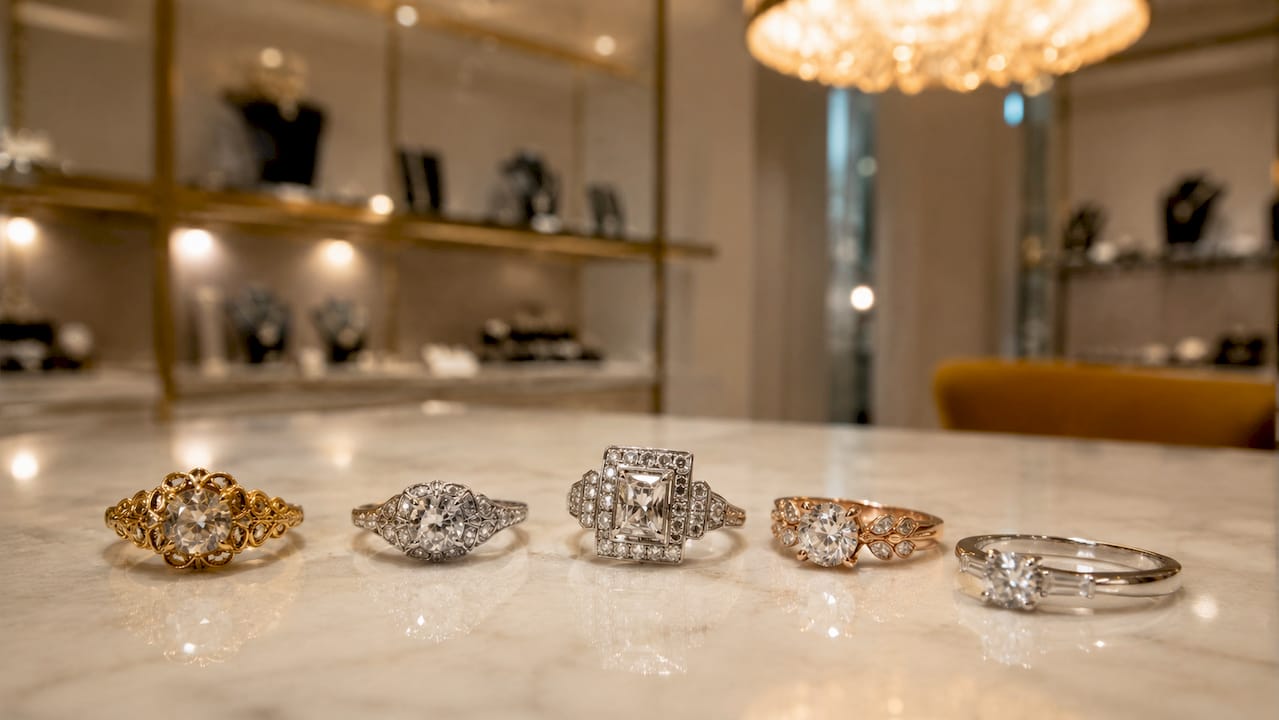
Victorian rings are the most romantic of all antique ring designs. Yellow gold was the dominant metal, and old mine cut diamonds were set in closed-back settings that gave stones a warm, candlelit glow. Common motifs included flowers, serpents symbolizing eternal love, and hearts. The craftsmanship was dense and decorative, reflecting the sentimental values of the era.
Edwardian era rings
Edwardian rings introduced platinum to fine jewelry, which allowed jewelers to create incredibly delicate filigree and lace-like openwork that yellow gold could not support. Old European cut diamonds were the stone of choice, prized for their deep pavilions and soft, romantic sparkle. Bows, garlands, and milgrain edging are hallmarks of this era. The overall effect is light, airy, and unmistakably feminine.
Art Deco engagement rings
Art Deco engagement rings are the most recognized of all retro ring styles. Bold geometric patterns, strong symmetry, and high contrast between white metal and colorless diamonds define this period. Emerald cuts and asscher cuts were favored because their step facets complement the angular design philosophy. Art Deco pieces feel architectural and confident, which is why they remain the top choice for buyers who want a vintage ring with a modern edge.
Retro era rings
Retro rings from the 1935–1950 period swung back toward warmth, using rose gold and yellow gold in large, sculptural designs. Bows, scrolls, and fan shapes were popular, and stones were often set high to maximize visual impact. This era produced some of the boldest and most theatrical pieces in vintage jewelry history. If you want a ring that commands attention, retro designs deliver.
Midcentury rings
Midcentury rings from the 1950s and early 1960s prioritized clean lines and wearability. Yellow and white gold were both common, and round brilliant diamonds were the standard center stone. The designs are less ornate than earlier eras but carry a quiet elegance. Midcentury rings suit buyers who want a vintage feel without heavy decoration.
How are modern vintage engagement rings evolving?
The vintage ring market in 2026 is not about strict historical replication. Industry experts now treat vintage as a living vocabulary, blending antique details with modern durability rather than copying period pieces exactly. That shift has opened the door to some genuinely exciting design developments.
The biggest change is stone size. Lab-grown diamonds allow buyers to purchase 2.5-carat antique-cut diamonds at prices previously associated with 1-carat mined diamonds. That accessibility has made larger center stones a realistic option for couples who want the drama of a vintage ring without an extraordinary budget.
Current trends shaping modern vintage rings include:
- Organic shapes over strict geometry. Ovals, pears, antique cushions, rose cuts, and old Europeans are replacing perfectly symmetrical modern cuts as the preferred pairing for vintage-style settings.
- Hybrid collet settings. Modern mountings combine bezel and prong features for both visual beauty and improved stone security, a clear upgrade over original antique settings.
- Bolder proportions. Chunkier, more sculptural designs are replacing the dainty, delicate aesthetic that defined earlier vintage revival trends. Celebrity influence and fashion cycles are driving this shift.
- Milgrain and filigree reinterpreted. These classic details now appear on lower-profile platinum mountings that protect the stone better than original high-set antique versions.
Pro Tip: If you love the look of an old European cut but want modern durability, ask your jeweler about a vintage-inspired setting with a lower profile platinum mount. You get the antique aesthetic with significantly better protection for daily wear.
Why choose vintage engagement rings today?
Consumer desire for meaningful luxury is the primary force behind the vintage ring resurgence. Buyers want jewelry that carries provenance, emotion, and a sense of individuality. A mass-produced solitaire cannot compete with a ring that references 150 years of design history.
Ethical sourcing is a second major driver. Vintage and antique rings carry no new mining footprint, and lab-grown diamonds in vintage-inspired settings offer a conflict-free alternative with full traceability. For couples who care about where their stone comes from, these options align values with aesthetics.
Practical considerations matter too. Here is what to keep in mind before you buy:
- Let the stone lead the design. Antique diamonds show more character and irregularities than modern cuts. The setting should be designed around the stone’s unique shape and inclusions, not the other way around.
- Plan for resizing carefully. Resizing antique rings requires expert care to avoid damaging delicate filigree or openwork. Always consult a specialist before any alteration.
- Choose a specialist jeweler. Not every jeweler has experience with antique-inspired settings. Work with someone who understands the quirks of vintage cuts and period-appropriate metalwork.
- Consider a custom engagement ring approach. Custom settings built around your specific stone solve the fit and security issues that come with non-uniform antique diamonds.
Pro Tip: Ask to see the ring under different lighting conditions before you commit. Antique cuts like old mine and old European perform very differently under candlelight versus fluorescent light, and that character is part of what makes them special.
How to choose the perfect vintage ring style for you
Choosing among vintage engagement ring styles comes down to three things: your personal aesthetic, your lifestyle, and your budget. Getting all three right means you will love the ring for decades.
Start with your aesthetic. If you are drawn to romance and warmth, Victorian and Edwardian styles suit you. If you prefer bold geometry and high contrast, Art Deco is the clear choice. If you want drama and scale, Retro delivers. If you prefer understated elegance, Midcentury is the right fit.
- Match the setting to your lifestyle. Filigree and openwork settings are beautiful but require more maintenance than simpler designs. If you work with your hands or lead an active life, a lower-profile setting with a bezel or hybrid collet mount will protect your stone better.
- Understand the budget implications. Carat size, stone type, and customization all affect price. Lab-grown antique cuts offer the most value per carat. A lab-grown diamond price guide can help you understand exactly what you are paying for.
- Prioritize the stone’s character. Antique diamonds have varied proportions and inclusions. Custom settings built around those quirks produce better results than forcing a non-uniform stone into a standard mount.
- Work with a jeweler who specializes in vintage. Ask to see examples of their previous vintage or antique-inspired work. Experience with period-appropriate details like milgrain, filigree, and collet settings is not universal.
- Think about the full ring set. A vintage engagement ring pairs best with a wedding band designed to complement its profile. Many antique-style rings have curved or irregular bases that require a custom-fitted band. You can explore options for a custom wedding ring set that fits your engagement ring perfectly.
The engagement ring buying process is personal. Take your time, handle rings in person when possible, and trust the style that genuinely moves you.
Key takeaways
The best vintage engagement ring is the one whose era, stone, and setting align with your personal values, aesthetic, and daily life.
| Point | Details |
|---|---|
| Five core vintage eras | Victorian, Edwardian, Art Deco, Retro, and Midcentury each offer distinct metals, cuts, and motifs. |
| Lab-grown diamonds expand access | Buyers can now afford 2.5-carat antique cuts at prices once reserved for 1-carat mined stones. |
| Modern settings improve durability | Hybrid collet and low-profile platinum mounts protect vintage-style stones better than original antique settings. |
| Let the stone lead | Custom settings built around each antique diamond’s unique shape produce the best aesthetic and security results. |
| Resizing requires a specialist | Delicate filigree and openwork demand expert care to avoid damage during any ring alteration. |
What I have learned from decades of vintage ring conversations
I have talked with hundreds of couples over the years about vintage rings, and the pattern is always the same. They come in thinking they want a specific era. They leave having fallen in love with a specific stone. That shift tells you everything about how vintage rings actually work.
The era gives you a starting point, not a destination. Art Deco geometry might draw you in, but an old mine cut with a warm, slightly asymmetrical face might be what you actually cannot stop thinking about. The best vintage-inspired rings I have seen are the ones where the jeweler built the setting around the stone’s personality rather than forcing the stone into a predetermined design.
The other thing I would push back on is the idea that vintage means fragile. Modern platinum mounts and hybrid collet settings have changed that equation entirely. You can have the visual language of an Edwardian ring with the structural integrity of a piece made in 2026. That combination is genuinely the best of both worlds.
My honest advice: do not buy a vintage ring because it is trending. Buy it because the craftsmanship, the story, and the stone mean something to you. That meaning is what makes a ring worth wearing every day for the rest of your life.
— Joseph
Explore vintage-inspired rings at Usajewels
At Usajewels, we have been crafting fine jewelry since 1999, and we understand that a vintage-inspired engagement ring is more than a purchase. It is a piece of your story. Our family-owned, in-house manufacturing model means you get direct pricing without middlemen, and our team works with you to design a ring that reflects your taste and values. We offer conflict-free lab-grown diamonds in antique cuts, including old European and old mine styles, paired with settings built for both beauty and daily wear. Browse our fine diamond jewelry collection to find vintage-inspired rings you can customize to your exact specifications. With over 222 five-star Google reviews and a lifetime diamond upgrade policy, we stand behind every piece we make.
FAQ
What defines a vintage engagement ring style?
Vintage engagement ring styles are designs inspired by specific historical eras, including Victorian, Edwardian, Art Deco, Retro, and Midcentury, each identified by distinct metals, diamond cuts, and decorative motifs.
Are vintage engagement rings durable enough for daily wear?
Modern vintage-inspired rings use platinum and low-profile hybrid collet settings that significantly improve durability over original antique pieces, making them practical for everyday wear.
Why are vintage engagement ring styles returning in popularity?
The resurgence is driven by consumer demand for individuality, meaningful luxury, and ethical sourcing. Lab-grown diamonds have also made larger antique cuts affordable, fueling renewed interest.
What is the difference between Art Deco and Edwardian rings?
Art Deco rings feature bold geometric patterns and high contrast in platinum or white gold, while Edwardian rings use delicate filigree and lace-like openwork with a softer, more romantic aesthetic.
Can you resize a vintage or antique engagement ring?
Resizing is possible but requires a specialist jeweler, since delicate filigree and openwork settings can be damaged by standard resizing techniques. Always consult an expert before any alteration.
Recommended
- Ring Guide: Engagement Settings & Styles | USA Jewels
- Engagement Ring Buying Guide: How to Choose the Perfect Ring | USA Jewels
- USA Jewels – Beauty, Style & Elegance
- How Engagement Ring Appraisal Works: 2026 Guide

Frequently Asked Questions
What's the difference between an old mine cut and an old European cut diamond?
Why did platinum become the preferred metal for Edwardian rings?
Are vintage engagement rings durable enough for daily wear?
How do lab-grown diamonds change the vintage ring shopping experience?
Which vintage era is best if I want a modern-looking engagement ring with antique appeal?
Fine Jewelry Collection


You May Also Like
Which Gold Chain Fits You: 1.5–3mm Rules, Purity, Custom Orders
Best Gemstone Alternatives to Diamonds for Rings