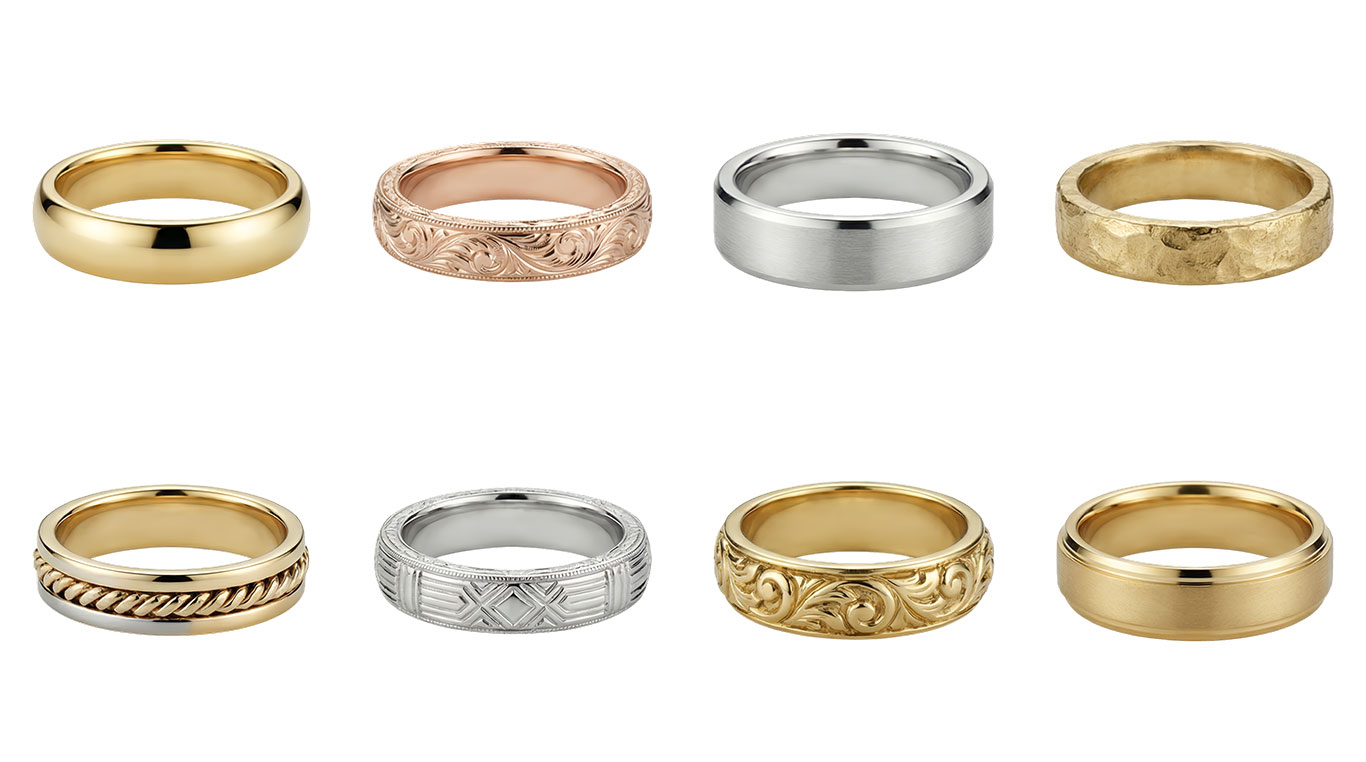
The metal you choose for your wedding ring affects its appearance, durability, comfort, maintenance requirements, and price. Since you will wear this ring every day, choosing the right metal is just as important as choosing the right style. Here is a comprehensive comparison to help you decide.
Precious Metals
Gold is the most traditional and popular wedding ring metal. Available in yellow, white, and rose, gold's warmth and versatility make it suitable for virtually any style.
- 14K Gold: 58.3% pure gold. The most popular choice in the US. Excellent balance of durability, beauty, and value. Harder and more scratch-resistant than 18K.
- 18K Gold: 75% pure gold. Richer, deeper color than 14K. Slightly softer but more valuable. Popular for luxury pieces.
- White Gold: Alloyed with white metals and rhodium-plated for a bright white finish. Requires replating every 1-2 years to maintain its bright white color.
- Rose Gold: Alloyed with copper for a romantic pinkish hue. Increasingly popular for its warm, distinctive color. Does not require replating.
Platinum is the most premium wedding ring metal. Naturally white (never needs replating), hypoallergenic, and incredibly durable. Platinum is denser and heavier than gold, which many people love for the substantial feel. It develops a natural patina over time that many find attractive. Platinum is the most expensive option but lasts a lifetime with minimal maintenance.
Palladium belongs to the platinum family and shares many of its properties — naturally white, hypoallergenic, does not tarnish — but at roughly half the weight and lower cost. An excellent alternative for those who love platinum's qualities but prefer a lighter ring or a more moderate price.
Alternative Metals
Tungsten Carbide: Extremely hard and scratch-resistant — the hardest metal used in jewelry. Tungsten maintains its polished appearance indefinitely because everyday wear simply cannot scratch it. Available in natural gunmetal gray, black, and white. Drawbacks: cannot be resized (you must buy a new ring if your size changes) and is very heavy.
Titanium: Aerospace-grade metal that is extraordinarily lightweight — about 60 percent lighter than platinum. Very strong, hypoallergenic, and resistant to corrosion. Available in natural gray and can be anodized in various colors. A popular choice for men who are not accustomed to wearing jewelry, as the featherweight feel is barely noticeable.
Cobalt Chrome: A bright, white metal that looks similar to white gold and platinum but at a fraction of the cost. More scratch-resistant than gold but less than tungsten. Hypoallergenic and does not tarnish or require replating.
Choosing the Right Metal
Consider your lifestyle, budget, and preferences. If resizability is important (and it often is — finger sizes change over decades), choose gold, platinum, or palladium. If maximum scratch resistance matters, tungsten is unbeatable. If weight is a concern, titanium is the lightest option. For a detailed guide on each metal, visit our metals education section.