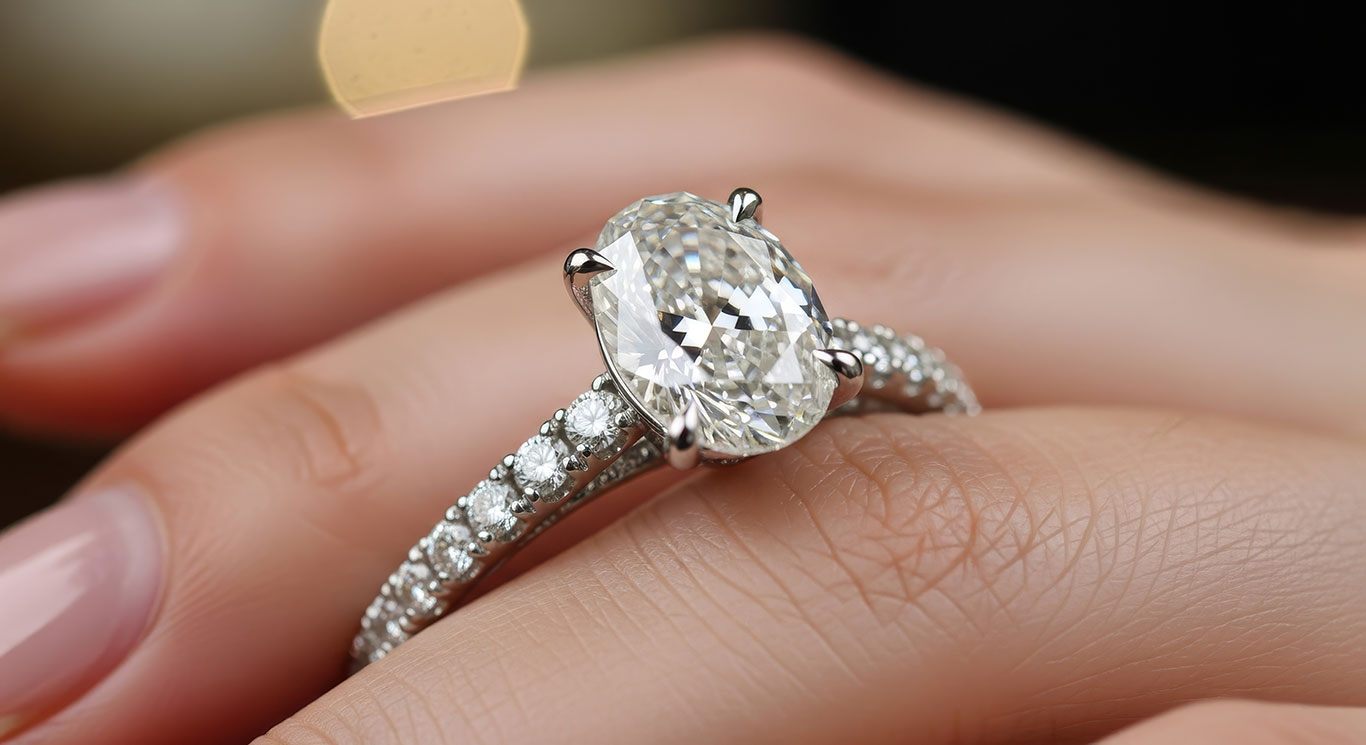
The setting is how your diamond is held in place on the ring. It affects the ring's appearance, how much of the diamond is visible, how secure the diamond is, and how practical the ring is for everyday wear. Understanding the different setting types helps you choose one that complements your diamond and matches your lifestyle.
Prong Setting
The most common setting for engagement rings. Metal claws (typically four or six) grip the diamond at its girdle, holding it above the band. This design maximizes light entry from all angles, making the diamond appear its most brilliant.
Four-prong: Shows more of the diamond, gives it a squarer appearance. Less metal covering the stone means more light return.
Six-prong: More secure, gives round diamonds a rounder appearance. The Tiffany-style six-prong is one of the most iconic engagement ring designs ever created.
Pros: Maximum brilliance, classic look, easy to clean. Cons: Prongs can snag on clothing, needs periodic inspection to ensure prongs remain tight.
Bezel Setting
A thin metal rim completely encircles the diamond's perimeter. This is the most secure setting — the diamond is virtually impossible to knock loose. The bezel creates a sleek, modern look and protects the diamond's edges from impact.
Pros: Extremely secure, protects the diamond, smooth profile that won't snag. Cons: Less light enters from the sides, diamond may appear slightly smaller due to metal border.
Channel Setting
Diamonds are set between two parallel strips of metal, creating a smooth surface with no prongs. Channel settings are most commonly used for accent diamonds along the band rather than center stones.
Pros: Very secure, smooth comfortable surface, protects diamonds. Cons: Harder to clean between stones, difficult to resize.
Pave Setting
Tiny diamonds are set into small holes drilled into the band, held in place by small beads of metal. The diamonds are set so closely together that the metal is barely visible, creating a surface that appears to be entirely made of diamonds.
Pros: Maximum sparkle, stunning visual impact. Cons: Small pave diamonds can loosen over time, requires careful maintenance.
Tension Setting
The diamond is held in place by the pressure (tension) of the metal band pressing against its sides. The diamond appears to float in the air with no visible support. This creates a strikingly modern, minimalist look.
Pros: Dramatic, unique appearance, maximum light entry. Cons: Difficult to resize, requires precise engineering, not all jewelers can service them.
Cathedral Setting
Arched metal supports rise from the band to hold the diamond, resembling the arches of a cathedral. This elevates the center stone, making it more prominent and creating an elegant profile.
Pros: Elegant, makes the diamond appear larger, provides good security. Cons: Higher profile may catch on things more easily.
Flush (Gypsy) Setting
The diamond is set directly into the metal of the band so that the top of the stone sits level with the metal surface. This creates the lowest possible profile and is extremely practical for active lifestyles.
Pros: Very secure, lowest profile, most practical for active wear. Cons: Diamond appears smaller, less light return, less traditional for engagement rings.
Choosing the Right Setting
Consider your lifestyle: if you work with your hands, exercise frequently, or prefer low-maintenance jewelry, a bezel or flush setting is more practical. If maximum brilliance and a classic look are your priority, a prong setting is ideal. For more detail on settings, visit our settings education page.