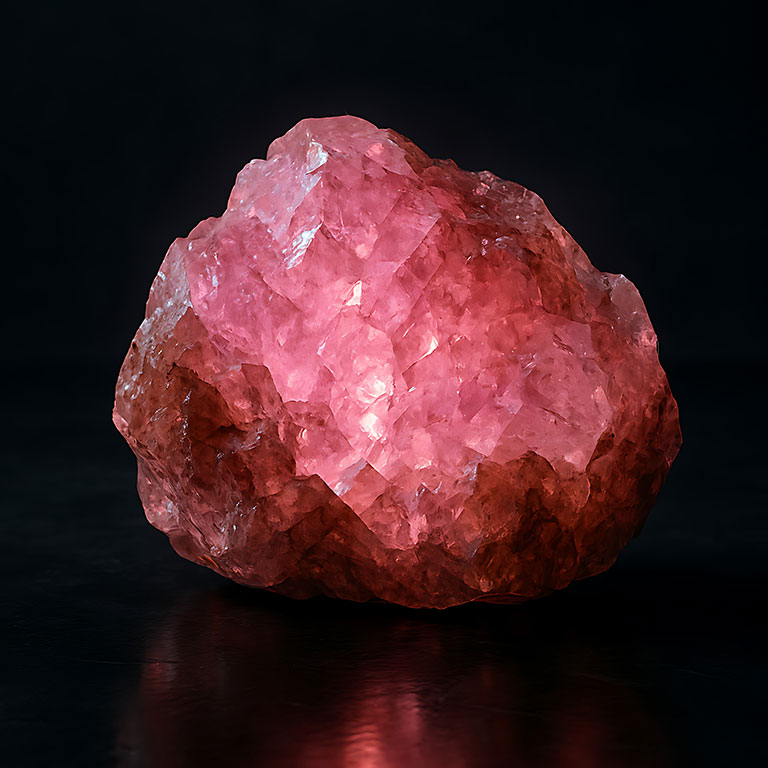
Tourmaline
| Property | Details |
|---|
| Mineral | Tourmaline (boron silicate) |
| Mohs Hardness | 7 – 7.5 |
| Refractive Index | 1.624 – 1.644 |
| Birthstone | October |
| Anniversary | 8th |
| Major Sources | Brazil, Mozambique, Nigeria, Afghanistan, Maine & California (USA) |
| Treatments | Heat treatment for some colors; Paraiba often heated |
Overview
Tourmaline is one of the most colorful gemstone families, occurring in virtually every color and even in multicolored crystals. Its extraordinary color range makes it a favorite of gem collectors and jewelry designers alike.
Major Varieties
Paraíba tourmaline: A neon blue-green caused by copper, among the world's most valuable colored gemstones. Discovered in 1989 in Paraíba, Brazil, with additional deposits found in Mozambique and Nigeria. Fine Paraíba can exceed $50,000 per carat. Rubellite: Red to hot pink, the most valued variety after Paraíba. The finest display a vivid cranberry red. Indicolite: Blue tourmaline, from pale to deep blue. Chrome tourmaline: Vivid green colored by chromium, found in East Africa. Watermelon tourmaline: Pink centers with green rims in a single crystal, often sliced into cross-sections for jewelry. Bi-color and parti-color: Multiple colors in a single crystal.
Quality & Value Factors
Color saturation is the primary value driver. Paraíba commands the highest prices due to its unique neon color and extreme rarity. After Paraíba, rubellite (red) and fine indicolite (blue) are most valued. Clarity expectations vary by color—red and pink tourmalines are expected to have more inclusions than green or blue varieties. Cut quality is especially important for tourmaline because the crystals are strongly pleochroic.
Care & Cleaning
Tourmaline ranks 7 to 7.5 on the Mohs scale and is suitable for all types of jewelry. Clean with warm soapy water and a soft brush. Avoid ultrasonic cleaners for heavily included stones. Tourmaline can become electrically charged when heated (pyroelectricity), which can attract dust.